I was standing in a tiny bakery in Portland last spring, waiting out a sudden rain shower, when the smell hit me. It wasn’t the sourdough or the olive oil that got me first—it was the rosemary and Parmesan together, that savory, almost nutty aroma that seemed to wrap around the whole room. And suddenly I was eight years old, sitting on a stool in my neighbor Mrs. Kowalski’s kitchen, watching her pull a tray of focaccia from the oven. She’d let me poke the dimples into the dough with my tiny fingers, and I remember thinking how strange it felt, like pressing into a soft, warm cloud.
I’d forgotten about that afternoon completely until that moment in Portland. Mrs. Kowalski moved away years ago, and I never got her recipe. But standing there, I felt this urgent need to recreate that exact bread—the one with the crispy edges and the soft, chewy center, the one that smelled like butter and herbs and something I couldn’t quite name.
So I started experimenting. Honestly, my first few attempts were disasters. Too dense, too flat, not enough flavor. I mean, I burned one batch so badly the smoke alarm went off and my neighbor knocked on the door to check on me. But I kept at it, because that focaccia—that specific combination of tangy sourdough, fragrant rosemary, and salty Parmesan—was a memory I couldn’t let go of.
This recipe is the result of those trials. It’s the version that finally made me close my eyes on that first bite, the one that tastes like a rainy afternoon in Portland and a warm kitchen in my childhood all at once. Maybe you’ve been there too, chasing a flavor you can almost but not quite remember. This is that bread.
Why You’ll Love This Recipe
This isn’t just another focaccia recipe. After testing this dough at least a dozen times—adjusting hydration, fermentation times, and baking temperatures—I can confidently say this is the most reliable, flavorful version I’ve ever made. Here’s what makes it special:
- Simple Ingredients: You probably already have flour, water, olive oil, and salt in your kitchen. The sourdough starter is the only special ingredient, and if you’ve been maintaining one, you’re golden.
- Perfect for Busy Schedules: The hands-on time is about 20 minutes. The rest is just waiting for the dough to do its thing while you go about your day.
- Crowd-Pleaser: I’ve brought this to potlucks, dinner parties, and even a book club meeting. It disappears every single time.
- Unbelievably Delicious: The combination of tangy sourdough, fragrant rosemary, and nutty Parmesan creates a flavor profile that’s both comforting and sophisticated.
- Healthier Choice: Sourdough fermentation breaks down gluten and phytic acid, making this bread easier to digest than your average store-bought loaf.
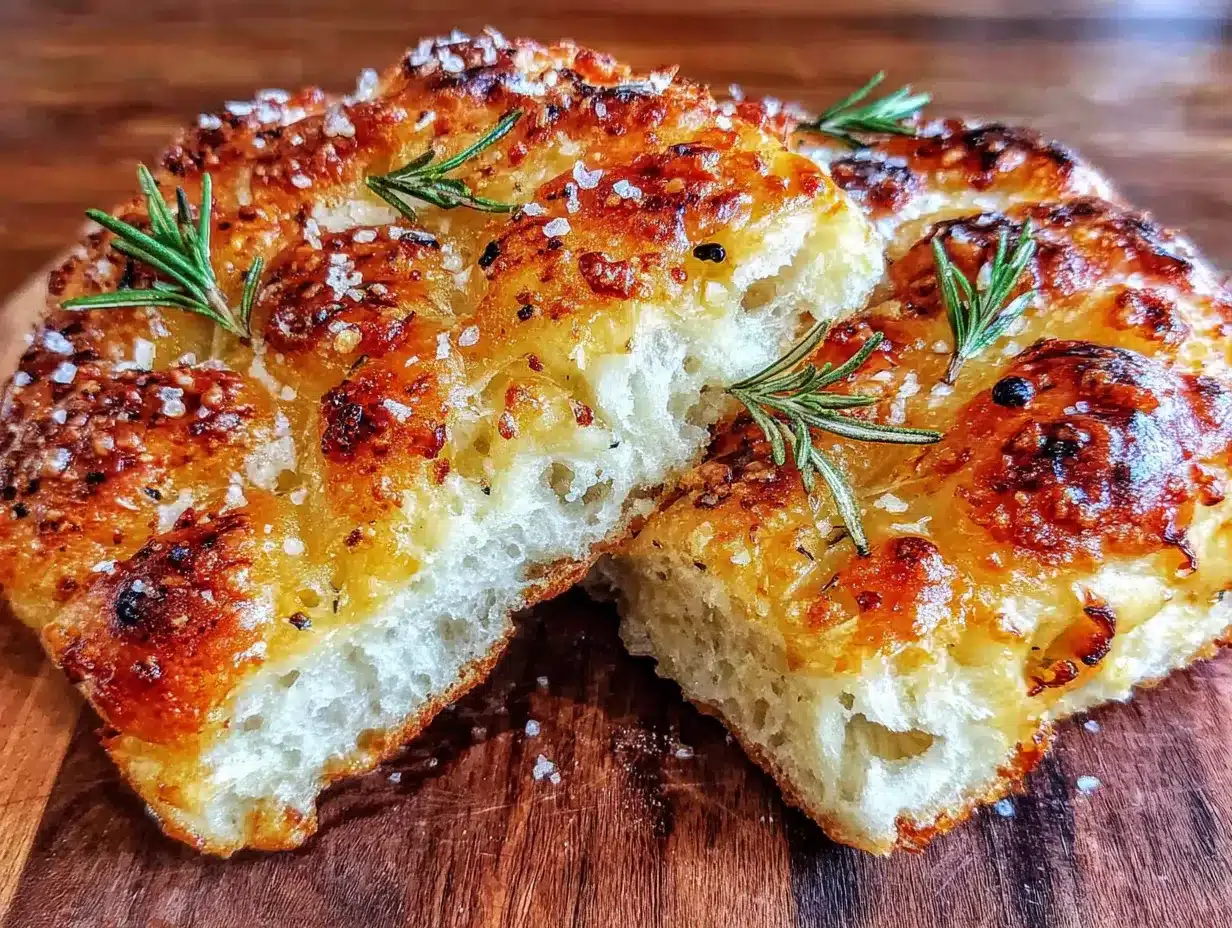
What sets this recipe apart is the technique. Instead of a complicated folding schedule, I use a simple stretch-and-fold method that builds structure without the fuss. The result is a focaccia with an airy, open crumb and a perfectly crisp, golden crust—the kind that shatters when you bite into it.
This is the bread that makes you slow down. The one you tear apart with your hands while it’s still warm, watching the steam rise. It’s comfort food reimagined—healthier, more intentional, but with the same soul-soothing satisfaction.
What Ingredients You Will Need
This recipe uses simple, wholesome ingredients to deliver big flavor. Most of these are pantry staples, which makes this focaccia perfect for those days when you want to bake but don’t want to run to the store.
- Bread Flour (500g / about 4 cups): I prefer King Arthur Bread Flour for its higher protein content, which gives the focaccia that perfect chewy texture. All-purpose flour works in a pinch, but the crumb won’t be quite as airy.
- Water (400g / about 1¾ cups), lukewarm: The temperature matters here—too hot and you’ll kill the good bacteria in your starter; too cold and fermentation will take forever. Aim for around 80°F (27°C).
- Sourdough Starter (150g / about ¾ cup), active and bubbly: This is your leavening agent. I feed my starter the night before baking so it’s nice and active by morning. If your starter is sluggish, your focaccia will be dense.
- Olive Oil (60g / about ¼ cup), plus extra for the pan: Use a good-quality extra virgin olive oil here—it’s a major flavor component. I like California Olive Ranch for its peppery finish.
- Fine Sea Salt (10g / about 2 teaspoons): Don’t skimp on salt. It controls fermentation and brings out the flavors of the other ingredients.
- Fresh Rosemary (2 tablespoons, finely chopped): Fresh is non-negotiable here. Dried rosemary just doesn’t have the same aromatic punch. I grow my own on the windowsill, but grocery store rosemary works perfectly.
- Parmesan Cheese (50g / about ½ cup), finely grated: Buy a block and grate it yourself. The pre-shredded stuff has anti-caking agents that prevent it from melting properly. I use Parmigiano-Reggiano for the best flavor.
- Flaky Sea Salt (for finishing): Maldon salt is my go-to. Those little crystals add a pop of salinity that makes the flavors sing.
Equipment Needed
You don’t need a professional bakery setup for this recipe. Here’s what you’ll actually use:
- Large Mixing Bowl: A glass or ceramic bowl works best. I’ve used plastic too, but it tends to hold onto odors.
- Digital Kitchen Scale: Honestly, this is the most important tool for consistent results. Measuring flour by volume is too inconsistent for sourdough. I use the OXO Good Grips scale and love it.
- 9×13-inch Baking Pan: A metal pan gives the best crust, but glass or ceramic work too. Just note that glass takes longer to heat up, so you might need an extra 5 minutes of baking time.
- Bench Scraper: This makes handling the sticky dough so much easier. A plastic one is gentler on your pans.
- Plastic Wrap or a Shower Cap: For covering the dough during bulk fermentation. A reusable shower cap actually works perfectly and saves on plastic waste.
- Cooling Rack: Essential for keeping the bottom crust crispy. If you let the focaccia cool in the pan, it’ll get soggy.
Preparation Method
This recipe follows a simple timeline. Start in the morning, and you’ll have warm focaccia by dinner. Or start the night before and bake it fresh for breakfast.
- Mix the Dough (10 minutes): In your large mixing bowl, combine 400g lukewarm water with 150g active sourdough starter. Stir until the starter is mostly dissolved. Add 500g bread flour and 10g fine sea salt. Mix with your hands or a dough whisk until no dry flour remains. The dough will be shaggy and sticky—that’s exactly what you want. Cover the bowl with plastic wrap and let it rest for 30 minutes. This autolyse step gives the flour time to absorb the water and develop gluten naturally.
- Stretch and Fold (5 minutes per round): After the rest, wet your hands slightly (this prevents sticking) and perform your first stretch and fold. Grab one side of the dough, stretch it up, and fold it over the center. Rotate the bowl a quarter turn and repeat. Do this 4 times total, covering all sides. Cover and rest 30 minutes. Repeat this process 3 more times, with 30-minute rests in between. By the fourth fold, you’ll notice the dough feels smoother and more elastic.
- Bulk Fermentation (4-6 hours at room temperature): Cover the bowl tightly and let the dough rise at room temperature. It should double in volume and be dotted with small bubbles on the surface. The time depends on your starter’s strength and your kitchen temperature. In my 72°F kitchen, it takes about 5 hours. If your kitchen is cooler, it might take longer—be patient.
- Prepare the Pan (5 minutes): Pour about 2 tablespoons of olive oil into your 9×13-inch baking pan. Use your fingers to spread it evenly across the bottom and up the sides. This generous coating ensures a crispy, golden crust.
- Transfer and Stretch (5 minutes): Gently turn the dough out into the oiled pan. Don’t punch it down—you want to preserve those air bubbles. Let it rest for 20 minutes, then gently stretch it toward the corners of the pan. If it resists, let it rest another 10 minutes and try again. The dough should fill the pan evenly.
- Second Rise (1-2 hours): Cover the pan with plastic wrap and let the dough rise until it’s puffy and nearly doubled in height. It should feel pillowy when you gently poke it.
- Dimple and Top (5 minutes): Preheat your oven to 425°F (220°C). Drizzle the top of the dough with another tablespoon of olive oil. Using your fingertips, press deep dimples all over the surface—go all the way down to the bottom of the pan. This isn’t just for looks; those dimples hold the oil and toppings. Sprinkle the chopped rosemary and grated Parmesan evenly over the top. Finish with a generous pinch of flaky sea salt.
- Bake (25-30 minutes): Place the pan on the middle rack and bake until the focaccia is deep golden brown on top and sounds hollow when you tap it. If the top is browning too quickly, tent it loosely with foil for the last 10 minutes.
- Cool (10 minutes minimum): Let the focaccia cool in the pan for 5 minutes, then transfer it to a cooling rack. This step is hard to resist, but if you cut into it too soon, the steam will make the interior gummy.
Cooking Tips & Techniques
I’ve made this recipe enough times to learn a few things the hard way. Here’s what I wish someone had told me:
Watch Your Water Temperature. I once used water that was too hot and killed my starter’s activity. The dough barely rose, and I ended up with a dense, flat focaccia that was more like a cracker. Now I always test the water temperature with my finger—it should feel like warm bathwater.
Don’t Skip the Autolyse. That 30-minute rest after mixing isn’t just a suggestion. It gives the flour time to hydrate fully, which makes the dough easier to handle and improves the final texture. I’ve skipped it when I was in a hurry, and the dough was noticeably harder to work with.
Be Generous with the Olive Oil. This isn’t the time to be stingy. The oil isn’t just for flavor—it helps create that crispy, almost fried crust on the bottom. I’ve had friends tell me their focaccia stuck to the pan, and it’s almost always because they didn’t use enough oil.
Trust Your Senses, Not Just the Timer. Ovens vary wildly. My oven runs hot, so I start checking at 22 minutes. Look for that deep golden color and listen for that hollow sound when you tap the bottom. A thermometer inserted into the center should read 200°F.
Multitask Strategically. The great thing about this recipe is that the active time is spread out. I usually mix the dough first thing in the morning, do the stretch and folds while I’m having coffee, and let it rise while I work. By dinner time, it’s ready to bake.
Variations & Adaptations
Once you’ve mastered the basic recipe, the possibilities are endless. Here are some variations I’ve tried and loved:
Herb and Garlic Focaccia: Swap the rosemary for a mix of fresh thyme, oregano, and basil. Add 3 thinly sliced garlic cloves on top before baking. The garlic gets sweet and almost caramelized in the oven.
Everything Bagel Focaccia: Skip the Parmesan and rosemary. Instead, brush the top with a beaten egg white and sprinkle generously with everything bagel seasoning. This version is amazing for breakfast sandwiches.
Caramelized Onion and Gruyère: While the dough is doing its second rise, caramelize 2 large sliced onions in butter until they’re deep golden brown. Spread them over the dimpled dough and top with shredded Gruyère instead of Parmesan. This is my go-to for holiday gatherings.
Gluten-Free Adaptation: Use a gluten-free bread flour blend (I like Cup4Cup) and add 1 teaspoon of xanthan gum if your blend doesn’t already include it. The dough will be wetter and harder to handle, but the result is surprisingly good.
Whole Wheat Version: Replace half the bread flour with whole wheat flour. You’ll need to add an extra 25g of water since whole wheat absorbs more liquid. The flavor is nuttier and more complex.
Serving & Storage Suggestions
This focaccia is best served warm, within an hour of baking. The contrast between the crispy crust and the soft, airy interior is at its peak when it’s fresh from the oven.
For serving, I like to cut it into squares or tear it into rustic pieces. It’s perfect alongside a bowl of tomato soup or a big Italian salad. I’ve also used it as the bread for turkey sandwiches the next day—it holds up beautifully and adds so much flavor.
If you have leftovers (which honestly doesn’t happen often in my house), store them in an airtight container at room temperature for up to 2 days. Do not refrigerate—the cold temperature will make the bread go stale faster. To reheat, pop it in a 350°F oven for 5 minutes, or toast it in a skillet with a little olive oil.
You can also freeze the baked focaccia. Wrap it tightly in plastic wrap, then foil, and freeze for up to 3 months. Thaw at room temperature and reheat in the oven. The texture won’t be quite as perfect as fresh, but it’s still delicious.
One thing I’ve noticed: the flavors actually develop more overnight. If you can resist eating it all on day one, day two is even better. The rosemary and Parmesan seem to meld together, and the tanginess of the sourdough becomes more pronounced.
Nutritional Information & Benefits
Per serving (1/8 of the recipe): approximately 280 calories, 8g fat, 44g carbohydrates, 3g fiber, 8g protein.
The sourdough fermentation process offers some real benefits. The natural fermentation breaks down gluten and phytic acid, which can make this bread easier to digest than conventional yeast breads. The lactic acid produced during fermentation also helps preserve the bread naturally, so it stays fresh longer without preservatives.
Rosemary isn’t just for flavor—it’s packed with antioxidants and anti-inflammatory compounds. And Parmesan cheese provides calcium and protein, though it’s also high in sodium, so keep that in mind if you’re watching your salt intake.
This focaccia fits well into a balanced diet. It’s not low-carb by any means, but the sourdough fermentation means the carbohydrates are broken down differently, potentially causing a slower rise in blood sugar compared to regular bread. Pair it with a protein-rich soup or salad for a satisfying meal.
Conclusion
This rosemary Parmesan sourdough focaccia is more than just bread—it’s a way to slow down and connect with the simple pleasure of making something with your hands. That first bite, when the crispy crust gives way to the soft, tangy interior, is worth every minute of waiting.
I hope you’ll try this recipe and make it your own. Maybe you’ll add more rosemary, or swap in a different cheese, or discover that you love it best with a drizzle of honey on top. The beauty of focaccia is that it’s forgiving and adaptable, just like the best recipes always are.
I’d love to hear how yours turns out. Drop a comment below and let me know—did you try a variation? Did your kitchen smell amazing? Did you burn the first batch like I did? Share your focaccia stories. And if you loved this recipe, please share it with a friend who needs some warm bread in their life.
Happy baking, friends. Your kitchen is about to smell incredible.
Frequently Asked Questions
Can I use active dry yeast instead of sourdough starter?
You can, but it won’t be the same recipe. If you want a yeasted focaccia, use 2 teaspoons of active dry yeast dissolved in the warm water with a pinch of sugar. Let it sit for 5 minutes until foamy, then proceed with the recipe. The flavor will be milder and less tangy.
My dough is very sticky. Is that normal?
Yes, absolutely. Sourdough focaccia dough is intentionally high-hydration, which means it’s wet and sticky. Resist the urge to add more flour. Wet your hands slightly before handling it, and use a bench scraper to help with transfers. The stickiness is what gives you that open, airy crumb.
Can I make this dairy-free?
Easily. Just skip the Parmesan or use a plant-based alternative. I’ve made it with nutritional yeast mixed with a pinch of salt as a substitute, and while it’s not identical, it’s still delicious. The rosemary and olive oil carry the flavor beautifully on their own.
Why didn’t my focaccia rise?
This usually comes down to your starter. If your sourdough starter isn’t active and bubbly when you use it, your dough won’t rise properly. Feed your starter 8-12 hours before baking and make sure it’s at least doubled in volume. Cold kitchen temperatures can also slow down fermentation significantly.
How do I get more bubbles in my crumb?
Higher hydration is the key. You can increase the water to 450g for an even more open crumb, but the dough will be harder to handle. Also, be gentle during the transfer to the pan—don’t deflate those precious bubbles. And make sure your bulk fermentation goes long enough; under-fermented dough will be dense.
Pin This Recipe!
Wholesome Rosemary Parmesan Sourdough Focaccia: Easy Best Recipe

This rosemary Parmesan sourdough focaccia is a reliable, flavorful bread with a crispy crust and soft, airy interior. It’s perfect for busy schedules, requiring only 20 minutes of hands-on time, and is a crowd-pleaser at any gathering.
- Prep Time: 20 minutes
- Cook Time: 25-30 minutes
- Total Time: 6-8 hours (including fermentation and rising)
- Yield: 8 servings 1x
- Category: Bread
- Cuisine: Italian
Ingredients
- 500g bread flour (about 4 cups)
- 400g lukewarm water (about 1¾ cups)
- 150g active sourdough starter (about ¾ cup)
- 60g olive oil (about ¼ cup), plus extra for the pan
- 10g fine sea salt (about 2 teaspoons)
- 2 tablespoons fresh rosemary, finely chopped
- 50g Parmesan cheese, finely grated (about ½ cup)
- Flaky sea salt for finishing (e.g., Maldon)
Instructions
- Mix the Dough: In a large mixing bowl, combine 400g lukewarm water with 150g active sourdough starter. Stir until mostly dissolved. Add 500g bread flour and 10g fine sea salt. Mix with hands or a dough whisk until no dry flour remains. Cover and rest for 30 minutes.
- Stretch and Fold: Wet your hands slightly. Grab one side of the dough, stretch it up, and fold it over the center. Rotate the bowl a quarter turn and repeat. Do this 4 times total. Cover and rest 30 minutes. Repeat this process 3 more times, with 30-minute rests in between.
- Bulk Fermentation: Cover the bowl tightly and let the dough rise at room temperature until doubled in volume and dotted with small bubbles, about 4-6 hours.
- Prepare the Pan: Pour about 2 tablespoons of olive oil into a 9×13-inch baking pan. Spread evenly across the bottom and up the sides.
- Transfer and Stretch: Gently turn the dough out into the oiled pan. Let it rest for 20 minutes, then gently stretch it toward the corners of the pan. If it resists, let it rest another 10 minutes and try again.
- Second Rise: Cover the pan with plastic wrap and let the dough rise until puffy and nearly doubled in height, about 1-2 hours.
- Dimple and Top: Preheat oven to 425°F (220°C). Drizzle the top with another tablespoon of olive oil. Using your fingertips, press deep dimples all over the surface. Sprinkle chopped rosemary and grated Parmesan evenly over the top. Finish with a generous pinch of flaky sea salt.
- Bake: Place the pan on the middle rack and bake until deep golden brown on top and sounds hollow when tapped, about 25-30 minutes. If browning too quickly, tent loosely with foil for the last 10 minutes.
- Cool: Let the focaccia cool in the pan for 5 minutes, then transfer to a cooling rack. Let cool for at least 10 minutes before cutting.
Notes
Use fresh rosemary for best flavor. Be generous with olive oil to prevent sticking and ensure a crispy crust. The dough is intentionally sticky; resist adding extra flour. For best results, use an active, bubbly sourdough starter. The flavors develop more overnight.
Nutrition
- Serving Size: 1/8 of the recipe
- Calories: 280
- Sugar: 1
- Sodium: 450
- Fat: 8
- Saturated Fat: 2
- Carbohydrates: 44
- Fiber: 3
- Protein: 8
Keywords: sourdough focaccia, rosemary Parmesan focaccia, easy focaccia recipe, homemade focaccia, sourdough bread