I’d claimed to hate stuffing for about fifteen years. Fifteen years of Thanksgiving tables where I’d politely scoop a spoonful onto my plate, push it around, and hope nobody noticed I wasn’t actually eating it. The texture always got me—that soggy, one-note bread mush that seemed to have no ambition beyond taking up space on the plate. I’d load up on mashed potatoes and call it a win.
Then last November, my sister-in-law asked me to bring a side dish for our family gathering. “Just make your famous stuffing,” she said, like it was the most normal request in the world. I laughed and told her I didn’t have a famous stuffing—I didn’t even have a mediocre one. But she insisted, and honestly, I couldn’t say no. So I spent three days testing versions in my tiny kitchen, trying to figure out what might actually make me want to eat the stuff.
And then I found it. The moment that brown butter hit the pan and those sage leaves started crackling, something clicked. I added crispy sourdough cubes, toasted pecans, and just enough broth to keep things tender without crossing into that dreaded mush territory. When I pulled that baking dish out of the oven, the smell alone had my neighbor knocking on the door to ask what I was making.
Here’s the thing—I made that stuffing “just for myself,” figuring I’d have a backup dish in case nobody else touched it. But halfway through dinner, I looked over and saw my nephew, age seven, sneaking thirds straight from the baking dish. My stuffing-hating self was caught red-handed, and honestly? I didn’t even care. This brown butter sage stuffing with sourdough changed everything I thought I knew about holiday sides.
Maybe you’ve been there—staring down a dish you’ve written off for years, wondering if it’s even worth the effort. Let me tell you, this one is.
Why You’ll Love This Recipe
This isn’t just another stuffing recipe that disappears into the holiday shuffle. This brown butter sage stuffing with sourdough has earned its spot at our table through years of testing, tweaking, and watching even the pickiest eaters come back for more. Here’s why it works so well for real families on real budgets:
- Affordable Ingredients: Stale sourdough, pantry staples, and a few fresh herbs—no fancy trips to specialty stores required. You probably have most of this in your kitchen right now.
- Kid-Approved Texture: The sourdough cubes stay crispy on top and tender underneath, which means no mushy complaints from little ones. My own kids went from “what’s that?” to “can we have this for dinner?”
- Reheats Beautifully: Made too much? Good. This stuffing actually tastes better the next day, which means your leftovers game just got a serious upgrade.
- Perfect for Busy Holidays: You can prep everything the day before and just bake it off when you’re ready. One less thing to stress about while the turkey rests.
- Picky Eater Friendly: The brown butter brings a nutty sweetness that even kids who “don’t like herbs” can’t resist. Trust me, I’ve tested this on some tough crowds.
What makes this version different from every other stuffing recipe out there? It’s the technique. Browning the butter first adds a depth of flavor that you just can’t get from tossing raw butter into bread cubes. The sage gets crispy and fragrant in that hot butter, infusing every single cube with savory goodness. And using sourdough instead of plain white bread? That tangy chewiness holds up against the broth without turning to paste.
This is the kind of side dish that makes people close their eyes after the first bite. It’s comfort food that doesn’t cost a fortune, doesn’t require a culinary degree, and somehow manages to please everyone from your gluten-avoiding aunt to your sugar-crazed toddler. That’s not easy to pull off, but this recipe does it every single time.
What Ingredients You Will Need
This brown butter sage stuffing relies on simple, everyday ingredients that come together to create something truly special. Most of these are pantry staples, which means you can whip this up without a last-minute grocery run.
For the Stuffing Base
- 1 large loaf sourdough bread, cut into 1-inch cubes (about 10 cups)—day-old or slightly stale works best; fresh bread can get too soft
- 1/2 cup unsalted butter—I prefer Kerrygold for its rich flavor, but any good-quality butter works
- 1/4 cup fresh sage leaves, roughly chopped—about 15-20 leaves; don’t skip fresh here, dried just isn’t the same
- 1 large yellow onion, diced (about 1 1/2 cups)
- 3 celery stalks, diced (about 1 cup)
- 3 cloves garlic, minced
- 1 1/2 cups low-sodium chicken or vegetable broth—homemade is lovely, but boxed works perfectly
- 1/2 cup toasted pecans, roughly chopped (optional but highly recommended)
- 1/4 cup fresh parsley, chopped
- 1 teaspoon kosher salt
- 1/2 teaspoon black pepper
For the Egg Mixture

- 2 large eggs, lightly beaten—these help bind everything together without making it heavy
- 1/4 cup heavy cream or whole milk—adds richness; you can use half-and-half in a pinch
Ingredient Selection Tips: Look for a sourdough loaf with a good crust and chewy interior—the kind that takes real effort to tear apart. That structure is exactly what you want because it holds up during baking. For the sage, grab a bunch with bright green leaves that smell fragrant when you rub them between your fingers. And if you’re watching your budget, skip the pecans—the stuffing is still incredible without them.
Substitution Guidance: Need this gluten-free? Use a good-quality gluten-free sourdough or rustic bread. Dairy-free? Substitute the butter with vegan butter or olive oil, and use unsweetened oat milk instead of cream. For a vegetarian version, vegetable broth works beautifully and doesn’t sacrifice any flavor.
Equipment Needed
You don’t need a fancy kitchen to make this brown butter sage stuffing shine. Here’s what you’ll actually use:
- Large baking dish (9×13-inch works perfectly) or a cast-iron skillet for extra crispy edges
- Large skillet or sauté pan for browning the butter and cooking the vegetables
- Large mixing bowl for combining everything
- Sharp knife and cutting board for prepping the bread and vegetables
- Whisk for the egg mixture
- Aluminum foil for covering during the first half of baking
If you don’t have a 9×13 dish, a 10-inch cast-iron skillet works beautifully and gives you those extra-crispy edges everyone fights over. I actually prefer the cast-iron method now because it cuts down on dishes and the results are fantastic. For a budget-friendly option, any oven-safe baking dish around that size will do—even a disposable aluminum pan works in a pinch for holiday travel.
One tip I learned the hard way: make sure your baking dish isn’t too small. I tried cramming everything into an 8×8 pan once, and the stuffing came out more like bread pudding—still tasty, but definitely not the texture we’re going for here. Give those bread cubes room to breathe.
Preparation Method
Let’s walk through this step by step. I’ve made this brown butter sage stuffing more times than I can count, so I’m sharing every little trick I’ve picked up along the way.
- Prep the bread (day before or early in the day): Cut your sourdough loaf into 1-inch cubes. Spread them on a large baking sheet and let them sit out uncovered for at least 6 hours or overnight. Stale bread is key here—fresh bread will soak up too much liquid and turn mushy. If you’re short on time, toast the cubes at 300°F for 10-12 minutes until dry but not browned.
- Brown the butter (this is where the magic happens): Place your 1/2 cup butter in a large skillet over medium heat. Let it melt completely, then continue cooking, swirling the pan occasionally. The butter will foam up, then the foam will subside, and you’ll start seeing brown specks forming at the bottom. This takes about 5-7 minutes. Watch carefully—brown butter can go from perfect to burnt in seconds. When it smells nutty and looks amber-colored, add your chopped sage leaves. They’ll crackle and crisp up immediately. Cook for 30 seconds, then pour everything into a heat-safe bowl. Don’t scrape the pan yet—leave those brown bits for maximum flavor.
- Cook the vegetables: In the same skillet (don’t wipe it out!), add your diced onion and celery. Cook over medium heat for 6-8 minutes until softened and starting to brown around the edges. Add the minced garlic and cook for 1 more minute until fragrant. Season with 1/2 teaspoon salt and 1/4 teaspoon pepper.
- Toast the pecans (if using): While the vegetables cook, toast your pecans in a dry pan over medium heat for 3-4 minutes, shaking frequently. You’ll know they’re done when they smell amazing and look slightly darker. Set aside to cool.
- Combine the dry ingredients: In your large mixing bowl, combine the stale bread cubes, cooked vegetables, toasted pecans, and fresh parsley. Toss gently to distribute everything evenly.
- Make the egg mixture: In a small bowl, whisk together the eggs and heavy cream until smooth. This is your binder—it helps the stuffing hold together without getting gluey.
- Bring it all together: Pour the brown butter-sage mixture over the bread cube mixture. Drizzle the egg mixture on top. Pour the broth over everything, starting with 1 cup and adding more as needed. Gently fold everything together with a spatula until all the bread cubes are evenly moistened. You want them hydrated but not swimming—if you squeeze a cube, it should release a drop or two of liquid.
- Let it rest (don’t skip this!): Let the mixture sit for 10-15 minutes before baking. This allows the bread to absorb the liquid evenly, which means no dry spots in your finished dish. Use this time to preheat your oven to 375°F.
- Bake to perfection: Transfer the mixture to your greased 9×13 baking dish. Spread it into an even layer. Cover tightly with foil and bake for 25 minutes. Then remove the foil and bake for another 20-25 minutes until the top is golden brown and crispy. The internal temperature should reach 165°F.
- Rest before serving: Let the stuffing sit for 5-10 minutes after baking. This helps it set up so you get nice clean pieces instead of a messy scoop. Sprinkle with a few fresh sage leaves for garnish if you’re feeling fancy.
Sensory Cues: When the butter is properly browned, it will smell like toasted nuts and caramel. The sage should be crispy enough to crumble between your fingers. Your kitchen should smell like a cozy holiday dinner by the time you pop this in the oven—if it doesn’t, you’re doing something right.
Cooking Tips & Techniques
After making this brown butter sage stuffing more times than I can count, I’ve collected a few hard-won lessons. Here are the ones that actually matter:
The biggest mistake I see people make is using fresh bread straight from the bag. I did this once when I was in a hurry, and the result was a soggy, dense mess that nobody touched. Stale bread is non-negotiable here. If you forget to leave it out overnight, cube it and toast it at 300°F for 10-12 minutes. It’s not quite the same, but it’s close enough to save the dish.
Don’t overmix. I know it’s tempting to keep stirring to make sure everything’s coated, but you’ll end up breaking the bread cubes into crumbs. Gently fold until just combined, then stop. Trust the process—the liquid will distribute evenly as it rests.
Watch your butter like a hawk. Brown butter can go from perfect to burnt in about 30 seconds. I learned this the hard way when I walked away to answer the phone and came back to black butter. The smell goes from nutty to acrid very quickly. Stay at the stove, swirl the pan, and pull it off the heat the second it reaches that amber color.
Here’s a timing trick for busy holidays: Prep everything the day before. Cube your bread, chop your vegetables, measure your seasonings. Store the bread cubes in a bag, the vegetables in a container, and the seasonings in a small bowl. On the day of, all you have to do is brown the butter and assemble. It shaves about 30 minutes off your prep time and keeps your stress levels manageable.
For extra crispy edges, spread the stuffing in a thinner layer. A 9×13 dish gives you a good balance of crispy top and tender interior, but if you want maximum crunch, use a larger dish or two smaller ones. Just adjust your baking time down by 5-10 minutes.
Variations & Adaptations
One of the best things about this brown butter sage stuffing is how adaptable it is. Here are some variations I’ve tried and loved:
Add Sausage for a Heartier Version: Brown 1/2 pound of breakfast sausage or Italian sausage in the skillet before cooking the vegetables. Crumble it up and add it to the bread cube mixture. This turns the stuffing into a full meal—perfect for when you want to skip the turkey and just have stuffing for dinner. My husband requests this version every year.
Make It Vegetarian: Use vegetable broth instead of chicken broth, and you’re good to go. The brown butter and sage provide so much flavor that nobody will miss the meat. I’ve served this to vegetarians and meat-eaters alike, and everyone goes back for seconds.
Try Different Breads: While sourdough is my favorite, this recipe works beautifully with other breads. A hearty whole wheat loaf adds a nutty flavor that pairs well with the brown butter. A rustic Italian loaf gives a slightly milder base. Avoid soft sandwich bread—it just doesn’t hold up.
Seasonal Swaps: In the fall, add diced apples or dried cranberries for a touch of sweetness. In the winter, throw in some chopped rosemary or thyme along with the sage. In the spring, fresh chives and lemon zest brighten things up beautifully.
Gluten-Free Option: Use a good-quality gluten-free sourdough or rustic bread. I’ve tested this with several brands, and the key is finding one that’s sturdy enough to hold its shape. Canyon Bakehouse and Schar both work well. Just be extra careful not to overmix, as gluten-free bread can be more delicate.
Dairy-Free Version: Substitute the butter with vegan butter or olive oil. For the cream, use unsweetened oat milk or full-fat coconut milk. The flavor shifts slightly, but it’s still delicious. I made this for a dairy-free friend last year, and she asked for the recipe before she even finished her first serving.
Serving & Storage Suggestions
This brown butter sage stuffing is versatile enough to serve alongside almost any holiday main dish, but it truly shines on the Thanksgiving table next to roasted turkey. The savory, nutty flavors complement the richness of gravy and the creaminess of mashed potatoes beautifully.
Serving Temperature: Serve this stuffing hot, straight from the oven. The contrast between the crispy top and the tender interior is at its peak within the first 15 minutes. If you need to hold it for a bit, keep it covered with foil in a warm oven (200°F) for up to 30 minutes.
Presentation Tips: Garnish with a few fresh sage leaves and a sprinkle of flaky sea salt right before serving. If you want to get fancy, drizzle a little extra brown butter on top—it makes for a gorgeous presentation and adds another layer of flavor.
What to Serve With It: This stuffing pairs beautifully with roasted turkey or chicken, but don’t limit yourself to holidays. It’s fantastic alongside a simple roast chicken for Sunday dinner, or even as a side for pork chops. For a complete holiday meal, serve it with mashed potatoes, green bean casserole, and cranberry sauce.
Storage Instructions: Leftover stuffing keeps well in an airtight container in the refrigerator for up to 4 days. The flavors actually meld together overnight, so day-old stuffing is often even better than fresh. I’ve been known to make a double batch just for the leftovers.
Reheating Tips: For best results, reheat stuffing in a 350°F oven for 10-15 minutes. This helps restore some of that crispy texture. The microwave works in a pinch, but the texture will be softer. If you’re reheating a large batch, add a splash of broth to keep it from drying out.
Freezer Instructions: This stuffing freezes beautifully for up to 3 months. Assemble the dish completely but don’t bake it. Cover tightly with foil and freeze. When you’re ready to serve, thaw overnight in the refrigerator, then bake as directed, adding 10-15 minutes to the covered baking time. Perfect for holiday prep!
Nutritional Information & Benefits
While this brown butter sage stuffing is definitely a comfort food indulgence, it does offer some nutritional benefits worth noting.
| Nutrient | Amount Per Serving (1 cup) |
|---|---|
| Calories | 285 |
| Total Fat | 16g |
| Saturated Fat | 8g |
| Cholesterol | 65mg |
| Sodium | 520mg |
| Total Carbohydrates | 28g |
| Dietary Fiber | 2g |
| Sugars | 3g |
| Protein | 7g |
Health Benefits: Sourdough bread is naturally fermented, which can make it easier to digest than regular bread. Sage has been used for centuries for its antioxidant properties, and it adds a wonderful flavor without any extra salt or fat. The pecans provide healthy fats and a bit of protein, while the onions and celery offer vitamins and fiber.
Dietary Considerations: This recipe contains gluten, dairy, and eggs. For a gluten-free version, use gluten-free bread. For a dairy-free version, substitute vegan butter and oat milk. For a vegan version, use a flax egg (1 tablespoon ground flaxseed mixed with 3 tablespoons water) and vegan butter.
Personal Wellness Note: I love that this stuffing feels special without being over-the-top indulgent. It’s the kind of side dish that fills you up with real food—bread, vegetables, herbs—rather than empty calories. When I serve this at holiday meals, I feel good knowing my family is eating something that tastes amazing and has some nutritional value too.
Conclusion
This brown butter sage stuffing with sourdough has completely changed my relationship with holiday sides. I went from a stuffing skeptic to someone who looks forward to this dish all year long. The nutty brown butter, the crispy sage, the chewy sourdough cubes—every element works together to create something that’s greater than the sum of its parts.
What I love most about this recipe is how forgiving it is. Whether you’re a seasoned cook or someone who only makes stuffing once a year, this recipe meets you where you are. You can dress it up with pecans and fresh herbs, or keep it simple with just the basics. Either way, it’s going to be delicious.
I’d love to hear how this stuffing turns out for you! Did your kids go back for seconds? Did you try any fun variations? Drop a comment below and let me know. And if you’re looking for more holiday side dishes that won’t break the bank, check out my creamy mashed potatoes and easy green bean casserole—they’re both family favorites around here.
Here’s to stuffing that actually lives up to the hype. Happy cooking, friends!
Frequently Asked Questions
Can I make this stuffing ahead of time?
Absolutely! You can assemble the entire dish the day before, cover it, and refrigerate. Just add about 10 minutes to the covered baking time since you’re starting from cold. This is my go-to strategy for busy holidays.
Can I use dried sage instead of fresh?
You can, but I really recommend fresh sage for this recipe. Dried sage has a more muted flavor and a different texture. If you must use dried, use about 1 tablespoon and add it to the butter as it browns rather than frying it separately.
Why did my stuffing turn out soggy?
Soggy stuffing usually means one of three things: your bread wasn’t stale enough, you added too much broth, or you overmixed it. Next time, start with less broth and add more only if needed. The bread should be moist but not swimming.
Can I cook this in a slow cooker?
Yes! Prepare the stuffing as directed, then transfer it to a greased slow cooker. Cook on low for 3-4 hours or on high for 1 1/2-2 hours. The top won’t get crispy, so you can transfer it to a baking dish and broil for 2-3 minutes at the end if you want that crunchy texture.
How do I make this stuffing dairy-free?
Substitute the butter with vegan butter or olive oil, and use unsweetened oat milk or full-fat coconut milk instead of heavy cream. The flavor will be slightly different, but it’s still absolutely delicious. I’ve made this version for dairy-free friends, and it always gets rave reviews.
Pin This Recipe!
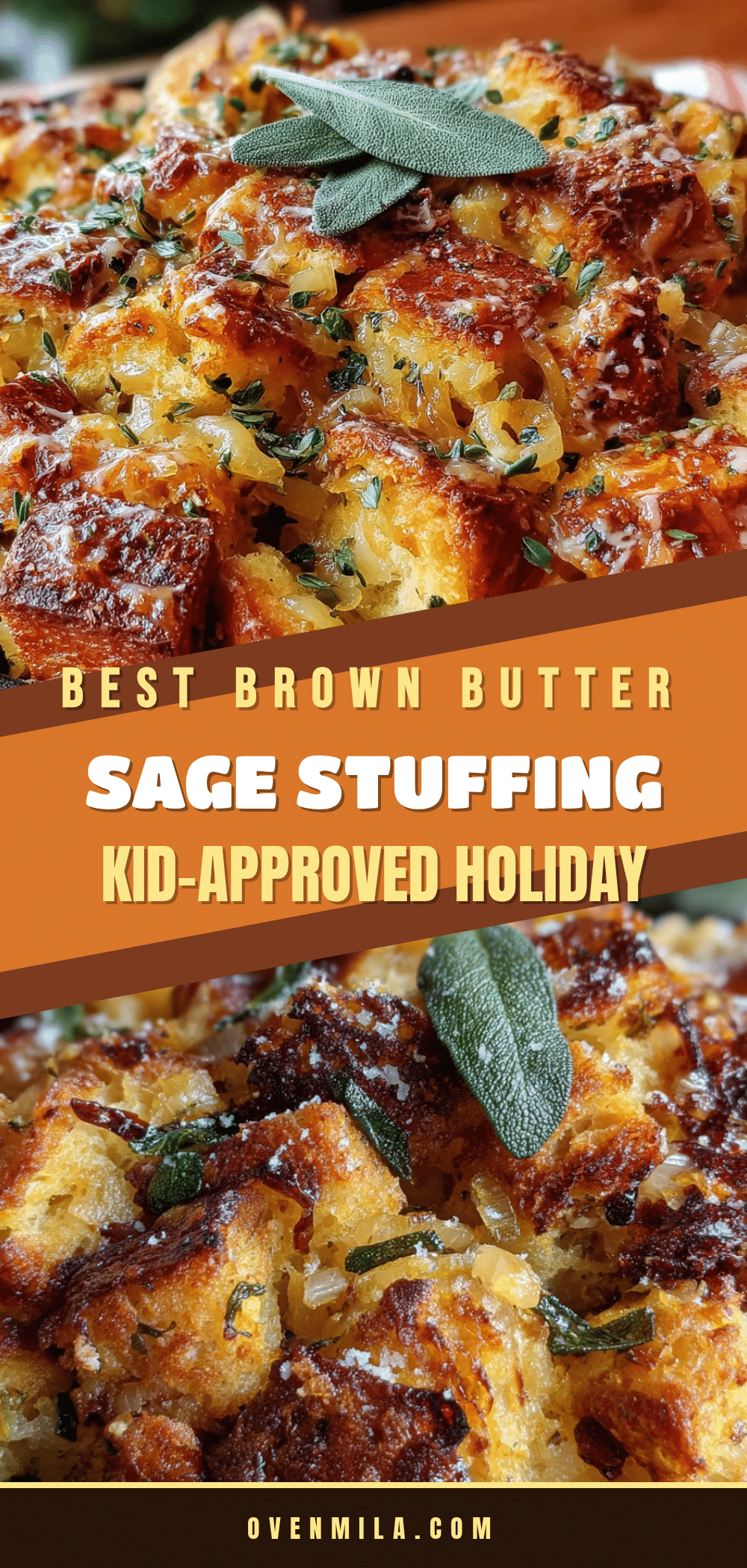
Best Brown Butter Sage Stuffing with Sourdough – Easy Holiday Side

This brown butter sage stuffing with sourdough is a game-changing holiday side dish featuring nutty brown butter, crispy sage, and chewy sourdough cubes. It’s affordable, kid-approved, and reheats beautifully.
- Prep Time: 30 minutes
- Cook Time: 45 minutes
- Total Time: 1 hour 15 minutes
- Yield: 8 servings 1x
- Category: Side Dish
- Cuisine: American
Ingredients
- 1 large loaf sourdough bread, cut into 1-inch cubes (about 10 cups)
- 1/2 cup unsalted butter
- 1/4 cup fresh sage leaves, roughly chopped (about 15–20 leaves)
- 1 large yellow onion, diced (about 1 1/2 cups)
- 3 celery stalks, diced (about 1 cup)
- 3 cloves garlic, minced
- 1 1/2 cups low-sodium chicken or vegetable broth
- 1/2 cup toasted pecans, roughly chopped (optional)
- 1/4 cup fresh parsley, chopped
- 1 teaspoon kosher salt
- 1/2 teaspoon black pepper
- 2 large eggs, lightly beaten
- 1/4 cup heavy cream or whole milk
Instructions
- Prep the bread (day before or early in the day): Cut sourdough loaf into 1-inch cubes. Spread on a large baking sheet and let sit out uncovered for at least 6 hours or overnight. If short on time, toast cubes at 300°F for 10-12 minutes until dry but not browned.
- Brown the butter: Place 1/2 cup butter in a large skillet over medium heat. Let melt completely, then continue cooking, swirling occasionally, until butter foams, foam subsides, and brown specks form (about 5-7 minutes). When it smells nutty and looks amber-colored, add chopped sage leaves. Cook for 30 seconds, then pour everything into a heat-safe bowl.
- Cook the vegetables: In the same skillet, add diced onion and celery. Cook over medium heat for 6-8 minutes until softened and starting to brown. Add minced garlic and cook for 1 more minute until fragrant. Season with 1/2 teaspoon salt and 1/4 teaspoon pepper.
- Toast the pecans (if using): Toast pecans in a dry pan over medium heat for 3-4 minutes, shaking frequently, until fragrant and slightly darker. Set aside to cool.
- Combine the dry ingredients: In a large mixing bowl, combine stale bread cubes, cooked vegetables, toasted pecans, and fresh parsley. Toss gently to distribute.
- Make the egg mixture: In a small bowl, whisk together eggs and heavy cream until smooth.
- Bring it all together: Pour brown butter-sage mixture over bread cube mixture. Drizzle egg mixture on top. Pour broth over everything, starting with 1 cup and adding more as needed. Gently fold with a spatula until all bread cubes are evenly moistened (they should release a drop or two of liquid when squeezed).
- Let it rest: Let mixture sit for 10-15 minutes before baking. Preheat oven to 375°F.
- Bake to perfection: Transfer mixture to a greased 9×13 baking dish. Spread into an even layer. Cover tightly with foil and bake for 25 minutes. Remove foil and bake for another 20-25 minutes until top is golden brown and crispy (internal temperature should reach 165°F).
- Rest before serving: Let stuffing sit for 5-10 minutes after baking. Garnish with fresh sage leaves if desired.
Notes
Stale bread is key to avoid soggy stuffing. If you forget to leave bread out overnight, cube and toast at 300°F for 10-12 minutes. Don’t overmix to avoid breaking bread cubes. Watch brown butter carefully as it can burn quickly. For extra crispy edges, spread stuffing in a thinner layer. Prep everything the day before to save time on busy holidays.
Nutrition
- Serving Size: 1 cup
- Calories: 285
- Sugar: 3
- Sodium: 520
- Fat: 16
- Saturated Fat: 8
- Carbohydrates: 28
- Fiber: 2
- Protein: 7
Keywords: brown butter sage stuffing, sourdough stuffing, holiday stuffing, Thanksgiving stuffing, easy stuffing recipe