The sourdough starter sat in the back of my fridge for two weeks before I finally admitted I needed a plan. Every Sunday, I’d pull it out, feed it, watch it bubble, and then shove it back into the cold darkness because I wasn’t ready to commit to another loaf of bread. The discard was piling up in a jar on the counter, and honestly, it was starting to feel like a science experiment I didn’t sign up for. My friend Jenna texted me a photo of her sourdough discard pancakes one morning, and I thought, okay, maybe there’s hope for this stuff after all. But pancakes felt too simple, too expected. I wanted something that tasted like fall, something that made the whole house smell like you’d been baking for hours even if you hadn’t. That’s when the can of pumpkin puree in my pantry caught my eye, and this whole thing started.
The first batch came out a little dense, a little shy on flavor, but the second try? That was the one. The sourdough discard gave the bread this subtle tang that played off the sweet pumpkin like they’d known each other forever. It wasn’t overpowering, just a quiet little note in the background that made you take another bite to figure out what was different. I slathered a slice with honey butter while it was still warm, and I swear, I stood at the counter and ate half the loaf before I even sat down. That’s the kind of recipe this is. It doesn’t demand your attention, but once you start eating, you can’t stop.
I’ve made this bread for neighbors, for book club, for a rainy Saturday when I needed something to do with my hands. Every time, someone asks for the recipe, and every time, I smile a little because I know they’re about to discover what happens when you stop worrying about your sourdough starter and just let it be useful. This isn’t complicated. It’s just good, honest baking that makes your kitchen feel like a hug.
Why You’ll Love This Recipe
This isn’t your standard pumpkin bread, and that’s exactly the point. The sourdough discard brings a depth of flavor that plain pumpkin bread just can’t touch. It’s the kind of thing that makes people pause mid-bite and say, “What’s in this?” in the best possible way. I’ve tested this recipe more times than I can count, tweaking the flour ratio, adjusting the sweetness, and figuring out exactly how long to let it rest so the crumb turns out tender every single time.
- Uses Up Sourdough Discard: No more guilt about tossing that unfed starter. This bread puts it to work in the most delicious way possible.
- Perfectly Moist: The pumpkin puree keeps everything soft and tender for days, which honestly never happens with most quick breads.
- Not Too Sweet: The honey butter adds just enough sweetness on top, so the bread itself stays balanced and not cloying.
- Simple Ingredients: You probably have most of this in your pantry right now, minus maybe the sourdough starter.
- Freezes Beautifully: Make two loaves, eat one now, and stash the other for a rainy day. Future you will be very grateful.
What makes this recipe different is the way the sourdough discard interacts with the pumpkin. The acidity in the discard tenderizes the gluten, giving you a loaf that’s soft without being gummy. I’ve tried versions without the discard, and they just don’t have the same complexity. This is the version I keep coming back to, the one I actually write down for friends instead of just saying “oh, I winged it.” It’s reliable, it’s forgiving, and it makes your whole house smell like October.
What Ingredients You Will Need
This recipe uses pretty standard baking ingredients, but a few of them do some heavy lifting in terms of flavor and texture. Here’s what you’ll need and why each one matters.
- All-purpose flour, 2 cups (260g): Regular all-purpose flour gives this bread the perfect structure. I use King Arthur Flour for consistent results, but any brand works fine.
- Baking soda, 1 teaspoon: Helps the bread rise and gives it that nice domed top.
- Baking powder, 1/2 teaspoon: Adds a little extra lift alongside the baking soda.
- Salt, 1/2 teaspoon: Don’t skip this. It balances the sweetness and brings out the pumpkin flavor.
- Pumpkin pie spice, 2 teaspoons: You can use store-bought or make your own with cinnamon, nutmeg, ginger, and cloves. I prefer the homemade version because it’s less clove-heavy.
- Cinnamon, 1 teaspoon: Because you can never have too much cinnamon in pumpkin bread.
- Unsalted butter, 1/2 cup (113g), melted and slightly cooled: Butter gives this bread richness and that soft, tender crumb. I’ve tried it with coconut oil, and it works, but butter is better.
- Brown sugar, 3/4 cup (150g), packed: Light or dark brown sugar both work. Dark brown sugar adds more molasses flavor, which I personally love with pumpkin.
- Granulated sugar, 1/4 cup (50g): A little white sugar helps with the structure and gives a slightly crisper top crust.
- Pumpkin puree, 1 cup (245g): Make sure you’re using pure pumpkin puree, not pumpkin pie filling. Libby’s is my go-to brand.
- Sourdough discard, 1 cup (240g), unfed and at room temperature: This is the star of the show. It can be straight from the fridge, just let it sit out for a bit so it mixes in more easily.
- Eggs, 2 large, at room temperature: Room temperature eggs emulsify better into the batter, giving you a more uniform crumb.
- Vanilla extract, 1 teaspoon: Pure vanilla extract adds warmth and depth. The artificial stuff works in a pinch, but pure is worth the splurge here.
- Milk, 1/4 cup (60ml): Whole milk gives the richest result, but 2% or even oat milk works fine.
For the honey butter:
- Unsalted butter, 1/2 cup (113g), softened: Let it sit out for at least 30 minutes so it’s spreadable.
- Honey, 3 tablespoons: Use a mild honey like clover or orange blossom so it doesn’t overpower the butter.
- Pinch of flaky sea salt: This little touch makes the honey butter absolutely irresistible.
Equipment Needed
You don’t need a fancy kitchen to make this bread, which is one of the reasons I love it so much. Here’s what you’ll need:
- 9×5-inch loaf pan: A standard loaf pan works perfectly. If you use a dark nonstick pan, keep an eye on the baking time because it tends to brown faster.
- Mixing bowls: One large bowl for the dry ingredients and one medium bowl for the wet ingredients.
- Whisk: For combining the dry ingredients and smoothing out the wet mixture.
- Rubber spatula: A flexible spatula is best for folding the wet and dry ingredients together without overmixing.
- Parchment paper: I line my loaf pan with parchment paper, leaving a little overhang on the sides. This makes lifting the bread out so much easier, and cleanup is a breeze. If you don’t have parchment, you can grease the pan well with butter and dust it with flour.
- Cooling rack: Let the bread cool in the pan for about 10 minutes, then transfer it to a wire rack to cool completely. If you leave it in the pan too long, the bottom can get soggy.
- Hand mixer or stand mixer (optional): You can make the honey butter by hand with a bowl and a spatula, but a mixer makes it fluffier and easier to spread.
Preparation Method
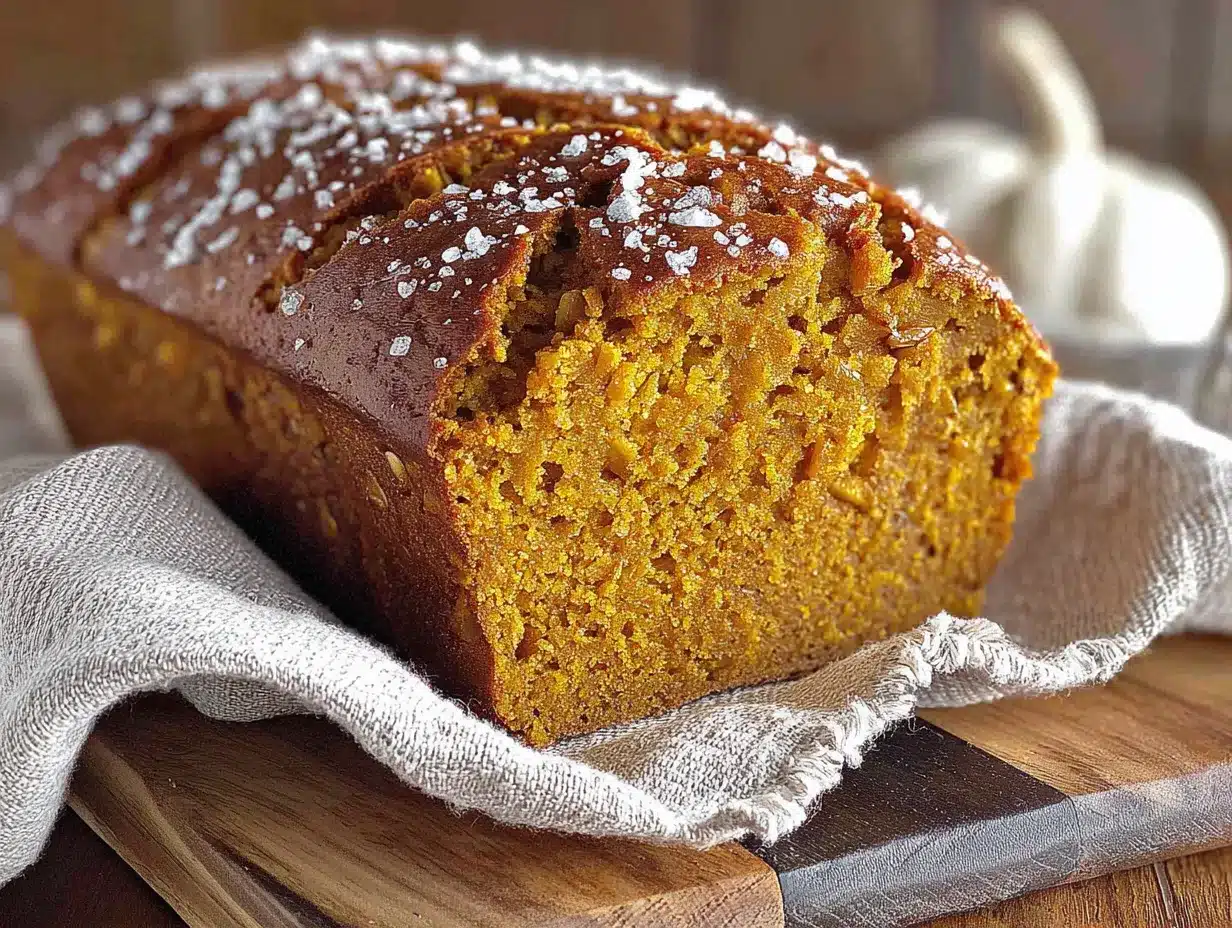
Preheat your oven to 350°F (175°C). Position the rack in the center of the oven so the bread bakes evenly. Line your loaf pan with parchment paper, leaving about two inches of overhang on the long sides. This little trick makes removing the bread so much easier later.
In a large mixing bowl, whisk together the all-purpose flour, baking soda, baking powder, salt, pumpkin pie spice, and cinnamon. Make sure everything is evenly distributed so you don’t end up with a pocket of baking soda in your finished bread. Set this bowl aside for now.
In a separate medium bowl, combine the melted butter and both sugars. Whisk them together until they look like wet sand, about 30 seconds. Add the pumpkin puree, sourdough discard, eggs, and vanilla extract. Whisk until everything is smooth and well combined. The mixture will look a little thick and glossy, which is exactly what you want.
Pour the wet ingredients into the bowl with the dry ingredients. Use your rubber spatula to fold them together gently. Start from the bottom and bring the mixture up and over, turning the bowl as you go. Stop as soon as you don’t see any more streaks of flour. A few small lumps are totally fine. Overmixing will make the bread tough, so resist the urge to keep stirring.
Pour the batter into your prepared loaf pan and spread it into an even layer. Give the pan a couple of gentle taps on the counter to release any air bubbles. Bake for 50 to 60 minutes, or until a toothpick inserted into the center comes out clean or with just a few moist crumbs attached. If the top is browning too quickly around the 40-minute mark, tent the pan loosely with aluminum foil.
Let the bread cool in the pan on a wire rack for about 10 minutes. Then use the parchment paper overhang to lift it out and transfer it to the rack to cool completely. I know it’s tempting to slice into it right away, but letting it cool fully gives you cleaner slices and a better texture. While the bread cools, make the honey butter.
For the honey butter, place the softened butter in a small bowl. Add the honey and a pinch of flaky sea salt. Mix with a spatula or a hand mixer until it’s light and fluffy. Taste it and add more honey or salt if you want. Store it in a small jar or dish at room temperature if you’re serving it within a few hours, or in the fridge for longer storage.
Cooking Tips & Techniques
The first time I made this bread, I used sourdough discard straight from the fridge, and the batter came out lumpy and cold. The bread still baked up fine, but it took a little longer and the texture wasn’t as even. Now I always let my discard sit out for about 30 minutes before mixing it in. Room temperature ingredients really do make a difference here, especially the eggs and the discard.
One mistake I made early on was overmixing the batter because I was worried about lumps. I wanted it perfectly smooth, so I kept stirring until there wasn’t a single speck of flour left. The bread came out dense and a little tough, like it had been overworked. Now I stop folding as soon as the flour disappears, even if there are a few small lumps. Those lumps bake out in the oven, I promise.
If you want a bakery-style domed top, let the batter rest in the pan for about 15 minutes before you put it in the oven. This gives the baking powder a head start and creates a more rounded top. I stumbled onto this trick by accident when I got distracted by a phone call, and now I do it every time.
For the honey butter, make sure your butter is truly softened, not melted. If it’s too cold, the honey won’t incorporate properly and you’ll end up with a greasy mess. If it’s too warm, the butter will separate. Let it sit at room temperature for at least 30 minutes, and if you’re in a hurry, cut it into small cubes to speed things up.
Variations & Adaptations
This recipe is pretty forgiving, so feel free to play around with it based on what you have or what you’re craving.
Gluten-Free Version: I’ve tested this with a 1:1 gluten-free baking flour blend, and it works surprisingly well. The texture is a little more delicate, so let the bread cool completely before slicing. I recommend Bob’s Red Mill 1:1 Baking Flour for the best results.
Add-Ins: Fold in a cup of chocolate chips, chopped pecans, or dried cranberries right before you pour the batter into the pan. I’ve done all three at different times, and each version has its own charm. The chocolate chips melt into little pockets of sweetness that pair beautifully with the tangy sourdough.
Dairy-Free Option: Substitute the butter with a good quality vegan butter stick, and use oat milk or almond milk instead of whole milk. The texture will be slightly less tender, but it’s still delicious. I’ve made this for a friend who’s dairy-free, and she asked for the recipe before she even finished her first slice.
Spice It Up: If you like things a little warmer, add a pinch of cardamom or a tiny bit of cayenne pepper to the spice mix. The heat is subtle, but it adds an interesting layer that makes people wonder what’s different.
If you love the combination of pumpkin and warm spices, you might also enjoy this cozy pumpkin sourdough bread with cinnamon honey butter for a more traditional loaf experience. And for something a little sweeter, these brown butter pumpkin cream cheese muffins with cinnamon streusel are absolutely worth the extra effort.
Serving & Storage Suggestions
This bread is best served warm, with a generous smear of honey butter that melts into every nook and cranny. I like to slice it thick, about an inch and a half, and toast it lightly in a skillet with a little extra butter. The edges get slightly crispy while the inside stays soft, and that contrast is honestly my favorite part.
For a cozy breakfast, serve it alongside a hot cup of coffee or chai tea. For dessert, a scoop of vanilla ice cream on top of a warm slice is absolutely decadent. If you’re feeling fancy, drizzle a little extra honey over the top and sprinkle on some flaky sea salt.
To store the bread, wrap it tightly in plastic wrap or aluminum foil and keep it at room temperature for up to 4 days. The moisture from the pumpkin actually helps it stay soft longer than most quick breads. If you live in a humid climate, you might want to store it in the fridge after day two to prevent mold.
This bread freezes beautifully. Let it cool completely, then wrap it tightly in plastic wrap, followed by a layer of aluminum foil. Freeze for up to 3 months. When you’re ready to eat it, thaw it at room temperature for a few hours, then warm it in a 300°F oven for about 10 minutes. The honey butter also freezes well. Scoop it into a small container or roll it into a log in parchment paper, then slice off pieces as needed.
I’ve found that the flavors actually deepen after the first day. The sourdough tang becomes more pronounced, and the spices settle into something more mellow and complex. So if you can resist eating it all on day one, day two is even better.
Nutritional Information & Benefits
This bread is a treat, no doubt about it, but it does have a few redeeming qualities. Pumpkin is packed with vitamin A and fiber, which is always a nice bonus. The sourdough fermentation process can also make the bread easier to digest for some people, since the natural acids break down some of the gluten and phytic acid.
Here’s an approximate nutritional breakdown per slice (based on 10 slices, without honey butter):
- Calories: 290
- Fat: 12g
- Carbohydrates: 42g
- Fiber: 2g
- Sugar: 22g
- Protein: 5g
If you’re watching your sugar intake, you can reduce the brown sugar to 1/2 cup and skip the granulated sugar entirely. The bread will be less sweet, but the honey butter will make up for it. For a lower-fat version, replace half the butter with unsweetened applesauce. The texture will be a little more cake-like, but it’s still very good.
This recipe contains gluten, dairy, and eggs. For a dairy-free version, see the variations section above. I haven’t tested an egg-free version, but a flax egg might work in a pinch if you’re experimenting.
Conclusion
This sourdough discard pumpkin bread with honey butter has become my go-to fall recipe for a reason. It’s the kind of bread that makes you slow down, pour yourself a second cup of coffee, and actually enjoy the moment. It uses up something that might otherwise go to waste, it fills your kitchen with the best possible smell, and it tastes like everything cozy about this season.
I really hope you give this one a try, especially if you’ve got a jar of sourdough discard staring at you from the fridge. Play around with the add-ins, adjust the spices to your liking, and don’t skip the honey butter. That sweet, salty, creamy finish is what takes this bread from good to unforgettable. When you make it, I’d love to hear how it turned out. Drop a comment below or tag me in your photos. Happy baking, friends.
Frequently Asked Questions
Can I use active sourdough starter instead of discard?
Yes, you can absolutely use active starter. The bread will rise a little more and have a slightly milder tang. Just keep in mind that the texture might be a touch lighter. I’ve done it both ways, and honestly, I prefer discard for this recipe because the flavor is more pronounced.
Why is my pumpkin bread dense and gummy?
This usually happens for one of two reasons: overmixing the batter or underbaking the loaf. Overmixing develops the gluten too much, which makes the bread tough. Underbaking leaves the center wet and gummy. Make sure you fold the batter just until the flour disappears, and always test with a toothpick before pulling it out of the oven.
Can I make this recipe into muffins instead of a loaf?
Absolutely. Grease a 12-cup muffin tin or line it with paper liners. Fill each cup about three-quarters full. Bake at 350°F for 18 to 22 minutes, or until a toothpick comes out clean. The baking time will be shorter, so start checking around the 18-minute mark. This is a great option if you want individual portions for breakfast or snack time.
How do I know when the bread is fully baked?
Insert a wooden toothpick or a skewer into the center of the loaf. If it comes out clean or with just a few moist crumbs attached, it’s done. If it comes out with wet batter, give it another 5 minutes and check again. You can also check the internal temperature with an instant-read thermometer. It should read around 200°F to 205°F in the center.
Can I use canned pumpkin pie filling instead of pure pumpkin puree?
I wouldn’t recommend it. Pumpkin pie filling is already sweetened and spiced, so using it will throw off the sugar and spice balance in this recipe. Stick with pure pumpkin puree for the best results. If you only have pumpkin pie filling on hand, reduce the sugar by half and skip the pumpkin pie spice, but the texture might still be a little off.
Pin This Recipe!
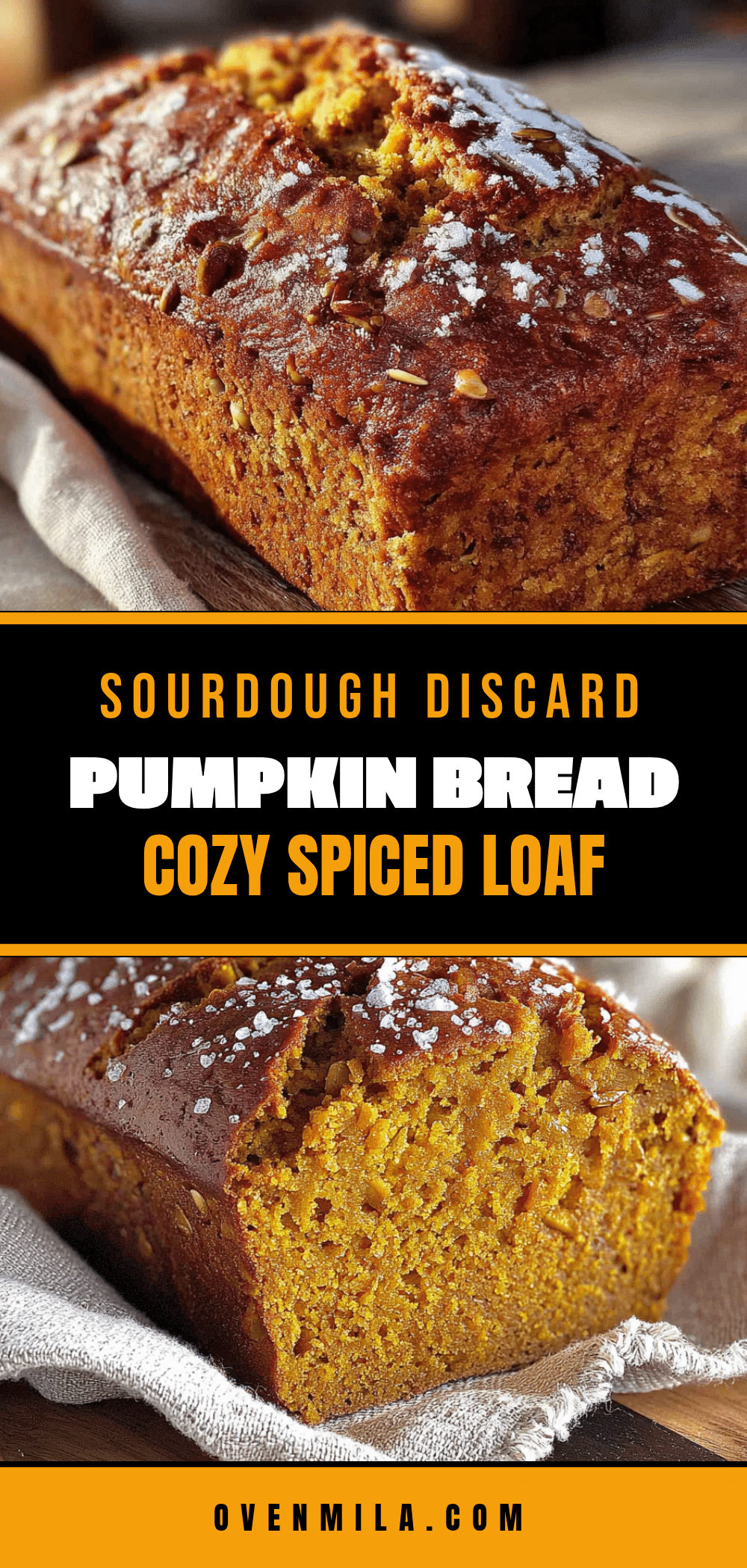
Cozy Sourdough Discard Pumpkin Bread with Honey Butter
This sourdough discard pumpkin bread is perfectly moist, not too sweet, and uses up your unfed starter in the most delicious way possible. Topped with a sweet and salty honey butter, it’s the ultimate cozy fall treat.
- Prep Time: 15 minutes
- Cook Time: 55 minutes
- Total Time: 1 hour 10 minutes
- Yield: 10 servings 1x
- Category: Quick Bread
- Cuisine: American
Ingredients
- 2 cups (260g) all-purpose flour
- 1 teaspoon baking soda
- 1/2 teaspoon baking powder
- 1/2 teaspoon salt
- 2 teaspoons pumpkin pie spice
- 1 teaspoon cinnamon
- 1/2 cup (113g) unsalted butter, melted and slightly cooled
- 3/4 cup (150g) packed brown sugar
- 1/4 cup (50g) granulated sugar
- 1 cup (245g) pumpkin puree
- 1 cup (240g) sourdough discard, unfed and at room temperature
- 2 large eggs, at room temperature
- 1 teaspoon vanilla extract
- 1/4 cup (60ml) milk
- For the honey butter:
- 1/2 cup (113g) unsalted butter, softened
- 3 tablespoons honey
- Pinch of flaky sea salt
Instructions
- Preheat your oven to 350°F (175°C). Position the rack in the center of the oven. Line a 9×5-inch loaf pan with parchment paper, leaving about two inches of overhang on the long sides.
- In a large mixing bowl, whisk together the all-purpose flour, baking soda, baking powder, salt, pumpkin pie spice, and cinnamon. Set aside.
- In a separate medium bowl, combine the melted butter and both sugars. Whisk until they look like wet sand, about 30 seconds.
- Add the pumpkin puree, sourdough discard, eggs, and vanilla extract to the butter-sugar mixture. Whisk until smooth and well combined.
- Pour the wet ingredients into the bowl with the dry ingredients. Use a rubber spatula to fold them together gently, starting from the bottom and bringing the mixture up and over. Stop as soon as no streaks of flour remain. Do not overmix.
- Pour the batter into the prepared loaf pan and spread it into an even layer. Gently tap the pan on the counter a couple of times to release air bubbles.
- Bake for 50 to 60 minutes, or until a toothpick inserted into the center comes out clean or with just a few moist crumbs attached. If the top is browning too quickly around the 40-minute mark, tent the pan loosely with aluminum foil.
- Let the bread cool in the pan on a wire rack for about 10 minutes. Then use the parchment paper overhang to lift it out and transfer it to the rack to cool completely.
- While the bread cools, make the honey butter: Place the softened butter in a small bowl. Add the honey and a pinch of flaky sea salt. Mix with a spatula or hand mixer until light and fluffy.
- Serve the bread warm with a generous smear of honey butter.
Notes
Let the sourdough discard sit out for about 30 minutes before mixing for better texture. Do not overmix the batter to avoid a dense loaf. For a bakery-style domed top, let the batter rest in the pan for 15 minutes before baking. The flavors deepen after the first day.
Nutrition
- Serving Size: 1 slice (without hon
- Calories: 290
- Sugar: 22
- Sodium: 280
- Fat: 12
- Saturated Fat: 7
- Carbohydrates: 42
- Fiber: 2
- Protein: 5
Keywords: sourdough discard, pumpkin bread, honey butter, fall baking, quick bread, sourdough pumpkin bread