There were a few autumns where I just accepted that apple cider donuts were going to be a roadside stand thing, not a home kitchen thing. You know the ones—dense, greasy, gone in three bites, and only available if you drove twenty minutes to the orchard on a Saturday morning before they sold out. I wanted something that actually tasted like real apple cider, not just cinnamon and sugar pretending. Something with a tender crumb and that unmistakable tangy-sweet apple flavor that sticks to your teeth. But every recipe I tried either came out dry or tasted like spice cabinet leftovers.
So I stopped trying to replicate the fried version and started thinking about what an apple cider donut wanted to be. A cake, maybe. Something you could slice and share. Something that didn’t require a deep fryer or a trip to the farm stand. I played around with reducing cider down to concentrate the flavor, swapped in a few pantry staples, and tested more bundt pans than I care to admit. (Honestly, the first three attempts went straight to the compost bin.)
This Easy Apple Cider Donut Bundt Cake with Cinnamon Sugar is where I landed. It’s the cake I make when I want the orchard experience without leaving my kitchen. The cider reduction does the heavy lifting—it gives you that deep, almost caramelized apple flavor without any artificial extracts. And the cinnamon sugar coating? That’s the part that makes you forget it’s a cake and not a donut. It’s the recipe I keep coming back to, and the one friends ask for by name. Not because it’s fancy, but because it actually delivers on what it promises.
Why You’ll Love This Recipe
This isn’t just another fall cake. It’s the kind of dessert that makes people close their eyes after the first bite, and I’m not exaggerating. Here’s why this one stands out from the rest:
- Tastes Like a Real Apple Cider Donut – The secret is reducing the cider down to a syrup. That concentrated flavor is what gives the cake that authentic, tangy apple taste without needing any extracts or artificial flavorings.
- No Frying Required – You get all the flavor of a classic apple cider donut without the mess of hot oil. It’s a bundt cake, so it bakes up beautifully in one pan.
- Simple Ingredients – Butter, sugar, eggs, flour, apple cider, and cinnamon. That’s it. No weird specialty ingredients or trips to three different stores.
- Perfect for Fall Gatherings – Whether it’s a Thanksgiving dessert table, a cozy brunch, or a casual get-together, this cake fits right in. It’s sturdy enough to transport and pretty enough to serve without frosting.
- Make-Ahead Friendly – This cake actually tastes better the next day. The flavors meld together and the cinnamon sugar coating stays perfectly crunchy for a full 24 hours.
- Crowd-Pleaser – I’ve brought this to potlucks, family dinners, and even a book club meeting. Every single time, people ask for the recipe. It’s one of those rare desserts that both kids and adults go crazy for.
I’ve tested this recipe more times than I can count, and I can tell you with confidence: this is the best version. It’s the one I make when I want comfort food that feels special but doesn’t require a pastry degree.
What Ingredients You Will Need
This recipe uses simple, wholesome ingredients to deliver bold apple flavor and a tender, donut-like texture. Most of these are pantry staples, which makes it perfect for spontaneous fall baking.
- Apple Cider (2 cups) – This is the star of the show. You’ll reduce it down to about ½ cup of concentrated syrup. Don’t use apple juice—it’s too sweet and lacks the tangy depth that makes this cake taste like a real cider donut. I prefer fresh, unfiltered cider from a local orchard when it’s in season.
- Unsalted Butter (1 cup, softened) – Butter gives the cake its rich flavor and tender crumb. Make sure it’s truly softened to room temperature—cold butter won’t cream properly and will leave you with a dense cake.
- Granulated Sugar (1 ½ cups) – Regular white sugar provides sweetness and helps create that light, fluffy texture when creamed with the butter.
- Light Brown Sugar (½ cup, packed) – Brown sugar adds moisture and a subtle molasses note that complements the apple cider beautifully. Don’t skip it—it makes a real difference in texture.
- Large Eggs (3, room temperature) – Eggs bind everything together and add structure. Room temperature eggs incorporate more easily into the batter, giving you a smoother, more even crumb.
- All-Purpose Flour (2 ½ cups) – Standard all-purpose flour works perfectly here. No need for cake flour or bread flour—this recipe is designed for what you already have in your pantry.
- Baking Powder (1 ½ teaspoons) – This is your leavening agent. Make sure it’s fresh—old baking powder won’t give you the lift you need.
- Baking Soda (½ teaspoon) – Baking soda helps neutralize the acidity from the cider reduction and contributes to a tender texture.
- Salt (½ teaspoon) – Salt balances the sweetness and enhances the overall flavor. I use fine sea salt for baking.
- Ground Cinnamon (1 teaspoon for the cake, plus more for coating) – Cinnamon is non-negotiable here. It’s the warm, aromatic spice that makes this taste like fall in a slice.
- Ground Nutmeg (¼ teaspoon) – Just a pinch adds that classic apple pie spice note. Freshly grated nutmeg is even better if you have it.
- Vanilla Extract (1 teaspoon) – Pure vanilla extract rounds out the flavors. Avoid imitation vanilla—it has a harsh, artificial taste that doesn’t play well here.
- Buttermilk (½ cup, room temperature) – Buttermilk adds tenderness and a slight tang that mimics the acidity of real donuts. If you don’t have buttermilk, you can make a quick substitute by adding 1 tablespoon of lemon juice or vinegar to ½ cup of milk and letting it sit for 5 minutes.
- For the Cinnamon Sugar Coating:
- Granulated Sugar (½ cup) – This forms the base of the coating.
- Ground Cinnamon (1 ½ tablespoons) – Be generous here. The coating is what gives this cake its donut-like crunch.
- Melted Butter (3 tablespoons) – Brushing the cake with melted butter helps the cinnamon sugar stick and adds extra richness.
Ingredient Tip: I’ve tested this with both store-bought and local orchard cider, and the local stuff always wins. It’s less filtered and has more apple solids, which means a deeper, more complex flavor after reduction. That said, any good-quality apple cider will work beautifully.
Equipment Needed
You don’t need a fancy kitchen to pull this off. Here’s what you’ll need:
- 10-cup Bundt Pan – This is essential. A standard 10-cup bundt pan gives the cake room to rise and creates those beautiful ridges. If you only have a 12-cup pan, the cake will be a bit shorter but still work. Avoid using a 6-cup mini bundt pan unless you adjust the baking time significantly.
- Saucepan (medium) – For reducing the apple cider. A wide saucepan works best because it increases the surface area and speeds up the reduction process.
- Stand Mixer or Hand Mixer – Creaming the butter and sugar properly is key to a light texture. A stand mixer with the paddle attachment makes it easy, but a hand mixer works just as well. You could even do it by hand with a wooden spoon, but your arm will get a workout.
- Mixing Bowls – You’ll need at least two: one for dry ingredients and one for wet ingredients.
- Whisk – For combining dry ingredients and making sure there are no lumps.
- Spatula – A rubber spatula is your best friend for scraping down the bowl and folding in the cider reduction.
- Cooling Rack – Essential for letting the cake cool evenly before you add the coating.
- Pastry Brush – For brushing the melted butter onto the cake. A silicone brush works best—it doesn’t shed bristles.
Budget-Friendly Tip: If you don’t own a bundt pan, you can bake this batter in a standard 9×13-inch cake pan. Just reduce the baking time to 30-35 minutes and check for doneness with a toothpick. The cake won’t have that signature donut shape, but it’ll taste just as good.
Preparation Method
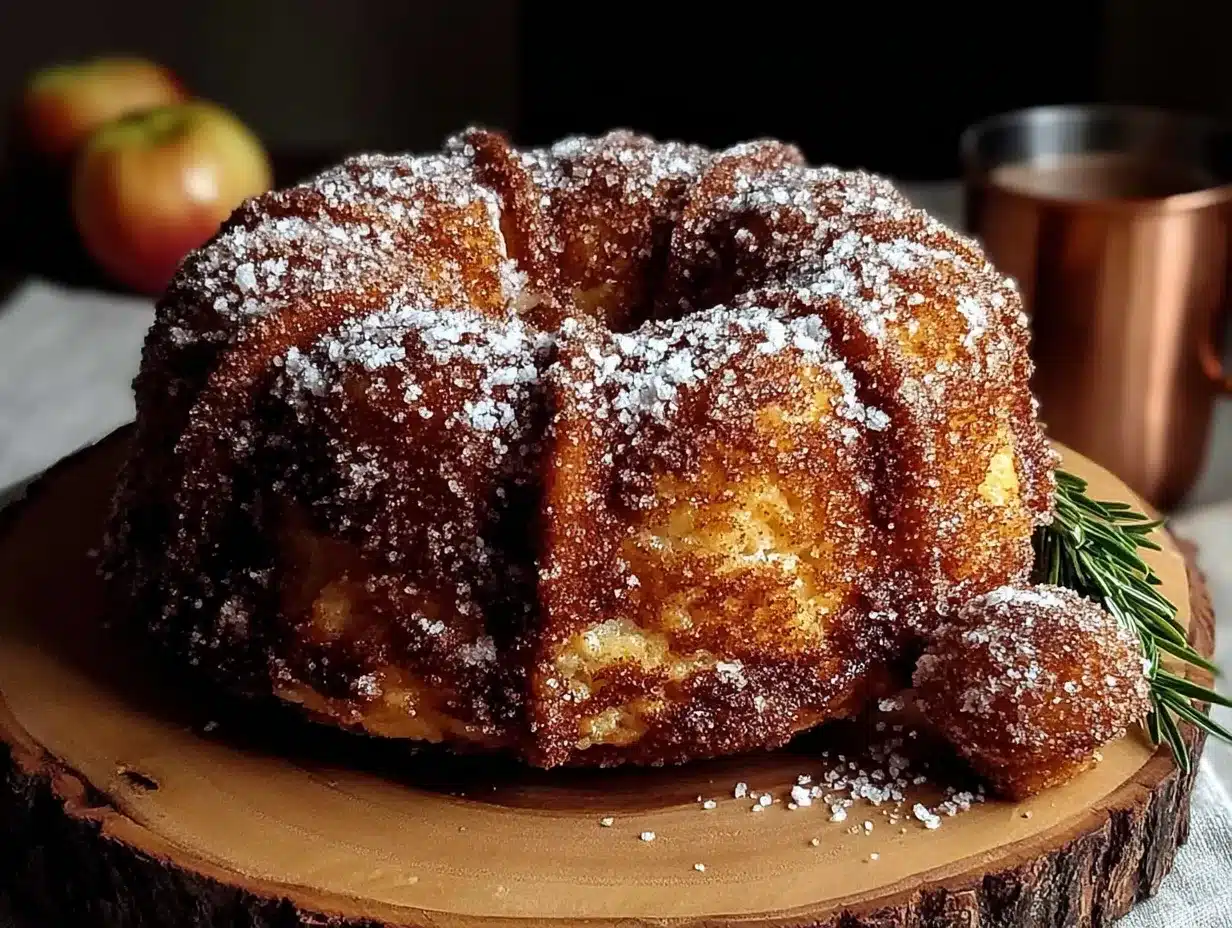
Let’s walk through this step by step. I’ve included all the little details that make the difference between a good cake and a great one.
- Reduce the Apple Cider – Pour 2 cups of apple cider into a medium saucepan. Bring it to a boil over medium-high heat, then reduce the heat to a steady simmer. Let it cook, stirring occasionally, until it reduces to about ½ cup. This takes 15-20 minutes. The cider will thicken slightly and smell intensely of apples. Set it aside to cool completely. (Don’t rush this step—if you add hot cider to the butter mixture, it’ll melt the butter and ruin the texture.)
- Preheat and Prep the Pan – Preheat your oven to 350°F (175°C). Generously grease your bundt pan with butter or non-stick baking spray. Make sure you get into all the nooks and crannies—there’s nothing sadder than a cake that sticks to the pan. If you’re nervous about sticking, dust the greased pan with a little flour and tap out the excess.
- Cream the Butter and Sugars – In a large mixing bowl, beat the softened butter, granulated sugar, and brown sugar together until light and fluffy. This takes about 3-4 minutes with a hand mixer, or 2-3 minutes with a stand mixer. Scrape down the sides of the bowl halfway through. The mixture should look pale and airy—that’s how you know you’ve incorporated enough air for a tender crumb.
- Add the Eggs and Vanilla – Add the eggs one at a time, beating well after each addition. Then mix in the vanilla extract. The batter might look slightly curdled at this point—that’s normal. It’ll come together once you add the dry ingredients.
- Combine the Dry Ingredients – In a separate bowl, whisk together the flour, baking powder, baking soda, salt, cinnamon, and nutmeg. Make sure there are no lumps. This step also aerates the flour, which helps keep the cake light.
- Alternate Adding Dry Ingredients and Buttermilk – With the mixer on low speed, add about one-third of the dry ingredients to the butter mixture. Mix until just combined. Then add half of the buttermilk and mix until incorporated. Repeat with another third of the dry ingredients, the remaining buttermilk, and finally the last third of the dry ingredients. Stop mixing as soon as the flour disappears—overmixing will make the cake tough.
- Fold in the Cider Reduction – Gently fold the cooled cider reduction into the batter using a rubber spatula. You want it evenly distributed, but don’t overmix. The batter will be thick and smell incredible at this point.
- Bake the Cake – Pour the batter into the prepared bundt pan and smooth the top with a spatula. Bake for 40-45 minutes, or until a toothpick inserted in the center comes out clean or with just a few moist crumbs. The top should be golden brown and the edges should be pulling away from the pan slightly.
- Cool in the Pan – Let the cake cool in the pan for 15-20 minutes. This is crucial—if you try to turn it out too soon, it’ll fall apart. If you wait too long, it might stick. 15-20 minutes is the sweet spot.
- Turn Out and Cool Completely – Place a cooling rack over the pan and carefully invert the cake. Lift the pan off gently. Let the cake cool completely on the rack before adding the coating. (If you add the cinnamon sugar while the cake is still warm, the butter will soak in too quickly and the coating won’t stay crunchy.)
- Make the Cinnamon Sugar Coating – While the cake cools, mix the granulated sugar and ground cinnamon together in a small bowl. Melt the 3 tablespoons of butter in a separate small bowl.
- Coat the Cake – Once the cake is completely cool, brush the entire surface with melted butter. Use a generous hand—every crevice should get a light coating. Then sprinkle the cinnamon sugar mixture all over the cake, using your hands to press it gently into the butter. Don’t be shy with the coating—this is what makes it taste like a donut.
Pro Tip: If you want an extra-thick coating, brush the cake with butter, sprinkle on half the cinnamon sugar, then brush with another layer of butter and add the rest of the sugar. It’s a little extra work, but the crunch factor is unreal.
Cooking Tips & Techniques
I’ve made this cake about a dozen times, and I’ve learned a few things along the way. Here are the tips that make a real difference:
Don’t Rush the Cider Reduction – I know it’s tempting to crank up the heat and try to speed things up, but low and slow is better. If you boil it too aggressively, the cider can scorch and develop a bitter taste. Keep it at a gentle simmer and stir every few minutes. The reduction is done when it coats the back of a spoon and has a syrupy consistency.
Room Temperature Ingredients Matter – Cold eggs and cold buttermilk won’t incorporate properly into the batter. You’ll end up with a lumpy, uneven texture. Take your eggs and buttermilk out of the fridge about 30 minutes before you start baking. If you forget, you can warm the eggs in a bowl of lukewarm water for 5 minutes and microwave the buttermilk for 10-15 seconds.
Check Your Bundt Pan – Not all bundt pans are created equal. Darker pans absorb more heat and can cause the cake to brown too quickly on the outside while staying raw in the middle. If you’re using a dark pan, reduce the oven temperature by 25°F and check for doneness a few minutes early.
The Toothpick Test is Your Friend – Ovens vary wildly, so don’t rely solely on the baking time. Start checking at 35 minutes. Insert a toothpick into the thickest part of the cake—if it comes out with wet batter, give it more time. If it comes out with a few moist crumbs, it’s perfect.
My Biggest Mistake: The first time I made this, I forgot to cool the cider reduction completely. I poured it into the batter while it was still warm, and the butter melted on contact. The cake came out dense and greasy—edible, but not the light, tender crumb I was after. Learn from my mistake: let that cider cool all the way down.
Variations & Adaptations
This recipe is flexible, and I’ve tried several variations over the years. Here are a few you might enjoy:
- Gluten-Free Version – Substitute the all-purpose flour with a 1:1 gluten-free baking flour blend. I’ve tested this with Bob’s Red Mill 1:1 Baking Flour and it works beautifully. The texture is slightly more delicate, so handle the cake gently when turning it out of the pan.
- Dairy-Free Adaptation – Use vegan butter (I like Miyoko’s) and substitute the buttermilk with ½ cup of unsweetened almond milk mixed with 1 tablespoon of lemon juice. The cake will be slightly less tender, but still delicious.
- Spiced Apple Cider Version – Add ½ teaspoon of ground ginger, ¼ teaspoon of ground cloves, and a pinch of allspice to the dry ingredients. This gives the cake a chai-like warmth that’s perfect for cold winter evenings.
- Caramel Drizzle – For an extra-indulgent version, drizzle a simple caramel sauce over the cake after coating it with cinnamon sugar. I’ve made this for Thanksgiving and it disappeared in minutes.
- Mini Bundt Cakes – If you have a mini bundt pan, this recipe makes about 6 mini cakes. Reduce the baking time to 18-22 minutes and check for doneness early.
- Apple Cider Donut Muffins – Pour the batter into a greased muffin tin and bake for 18-20 minutes. Brush with melted butter and roll in cinnamon sugar while still warm. They’re perfect for breakfast or lunchboxes.
Personal Variation: I once added a cup of finely diced fresh apple (Honeycrisp, peeled) to the batter just before baking. The little chunks of apple added a lovely texture and burst of freshness. If you try this, toss the diced apple in a tablespoon of flour first to keep it from sinking to the bottom of the cake.
Serving & Storage Suggestions
This cake is versatile enough for any occasion, but here’s how I like to serve it:
Serving Temperature: Serve at room temperature for the best texture. The crumb is tender and the cinnamon sugar coating stays perfectly crunchy. If you’ve stored the cake in the fridge, let it sit out for about 30 minutes before serving.
Presentation: Place the cake on a wooden board or a simple cake stand. Dust it with a little extra cinnamon sugar just before serving for a fresh, bakery-style look. A few apple slices or cinnamon sticks on the side make it look even more inviting.
Pairings: This cake is fantastic with a hot cup of coffee or a mug of spiced apple cider. For a dessert spread, I love serving it alongside a scoop of vanilla ice cream or a dollop of lightly sweetened whipped cream. If you’re hosting a fall gathering, try pairing it with a warm homemade pumpkin spice latte for the ultimate cozy combo.
Storage: Store the cake in an airtight container at room temperature for up to 3 days. The cinnamon sugar coating will stay crunchy for the first 24 hours, then gradually soften. If that happens, you can refresh it by brushing the cake with a little more melted butter and sprinkling on fresh cinnamon sugar.
Freezing: This cake freezes beautifully. Wrap it tightly in plastic wrap, then in a layer of aluminum foil, and freeze for up to 3 months. To serve, thaw it overnight in the refrigerator, then bring to room temperature before brushing with butter and adding the cinnamon sugar coating. (Freeze the cake before adding the coating for the best results.)
Flavor Development: Honestly, this cake tastes even better on day two. The apple flavor deepens and the spices meld together in a way that’s hard to describe. If you can resist eating it all on day one, you’re in for a treat.
Nutritional Information & Benefits
Here’s the approximate nutritional breakdown for one slice (based on 12 servings):
- Calories: 410
- Total Fat: 18g
- Saturated Fat: 11g
- Cholesterol: 85mg
- Sodium: 220mg
- Total Carbohydrates: 60g
- Dietary Fiber: 1g
- Sugars: 42g
- Protein: 5g
Health Benefits: While this is definitely a treat, it does have a few redeeming qualities. Apple cider is rich in antioxidants, particularly polyphenols, which support heart health and reduce inflammation. Cinnamon is known for its anti-inflammatory properties and can help regulate blood sugar levels. The eggs and butter provide a small amount of vitamin A and healthy fats.
Dietary Considerations: This recipe contains gluten, dairy, and eggs. For a gluten-free version, see the variations section above. For a dairy-free adaptation, use vegan butter and a buttermilk substitute. This cake is not suitable for a vegan diet due to the eggs, but I’ve seen successful vegan versions using flax eggs and plant-based butter.
My Perspective: I believe in balance. This cake is a celebration dessert, not an everyday breakfast. But when you’re going to indulge, it might as well be something homemade that brings you joy. A slice of this cake with a cup of coffee on a crisp fall morning? That’s a small moment of happiness worth every calorie.
Conclusion
This Easy Apple Cider Donut Bundt Cake with Cinnamon Sugar is the fall dessert you didn’t know you needed. It captures everything we love about apple cider donuts—the tangy apple flavor, the warm cinnamon spice, the satisfying crunch of sugar—in a simple, fuss-free cake that comes together in one bowl.
What I love most about this recipe is how forgiving it is. It doesn’t require any special skills or equipment. It doesn’t demand a trip to the orchard or a deep fryer. It’s just good, honest baking that delivers every single time. I’ve made it for Thanksgiving dinners, casual brunches, and quiet evenings at home, and it never disappoints.
I’d love to hear how yours turns out. Did you try a variation? Add a glaze? Serve it with ice cream? Drop a comment below and let me know—I read every single one. And if you share a photo on social media, tag me so I can see your beautiful creation. Happy baking, friends.
Frequently Asked Questions
Can I use apple juice instead of apple cider?
I don’t recommend it. Apple juice is sweeter and lacks the tangy, slightly tart flavor that makes this cake taste like a real cider donut. The reduction won’t have the same depth of flavor, and the final cake will be one-dimensional. Stick with real apple cider for the best results.
Why did my cake stick to the bundt pan?
This usually happens for one of two reasons: either the pan wasn’t greased thoroughly enough, or the cake was turned out too soon or too late. Make sure you grease every nook and cranny of your bundt pan, including the center tube. Let the cake cool for exactly 15-20 minutes before inverting—too soon and it’ll fall apart, too late and it’ll stick.
Can I make this cake ahead of time?
Absolutely. In fact, I prefer to make it a day ahead. Bake the cake, let it cool completely, and store it wrapped tightly at room temperature. Add the cinnamon sugar coating just before serving for the freshest crunch. The cake itself stays moist and flavorful for several days.
How do I know when the cider reduction is done?
You’re looking for the cider to reduce from 2 cups down to about ½ cup. It should have a syrupy consistency and coat the back of a spoon. The color will deepen to a rich amber, and the smell will be intensely apple-y. If you’re unsure, pour it into a liquid measuring cup—if you have about ½ cup, you’re good.
Can I add nuts or dried fruit to the batter?
Yes! Chopped pecans or walnuts would be lovely. Toss them in a tablespoon of flour before folding them into the batter to prevent them from sinking to the bottom. Dried cranberries or chopped dried apples would also work well. Start with about ½ cup and adjust from there.
Pin This Recipe!
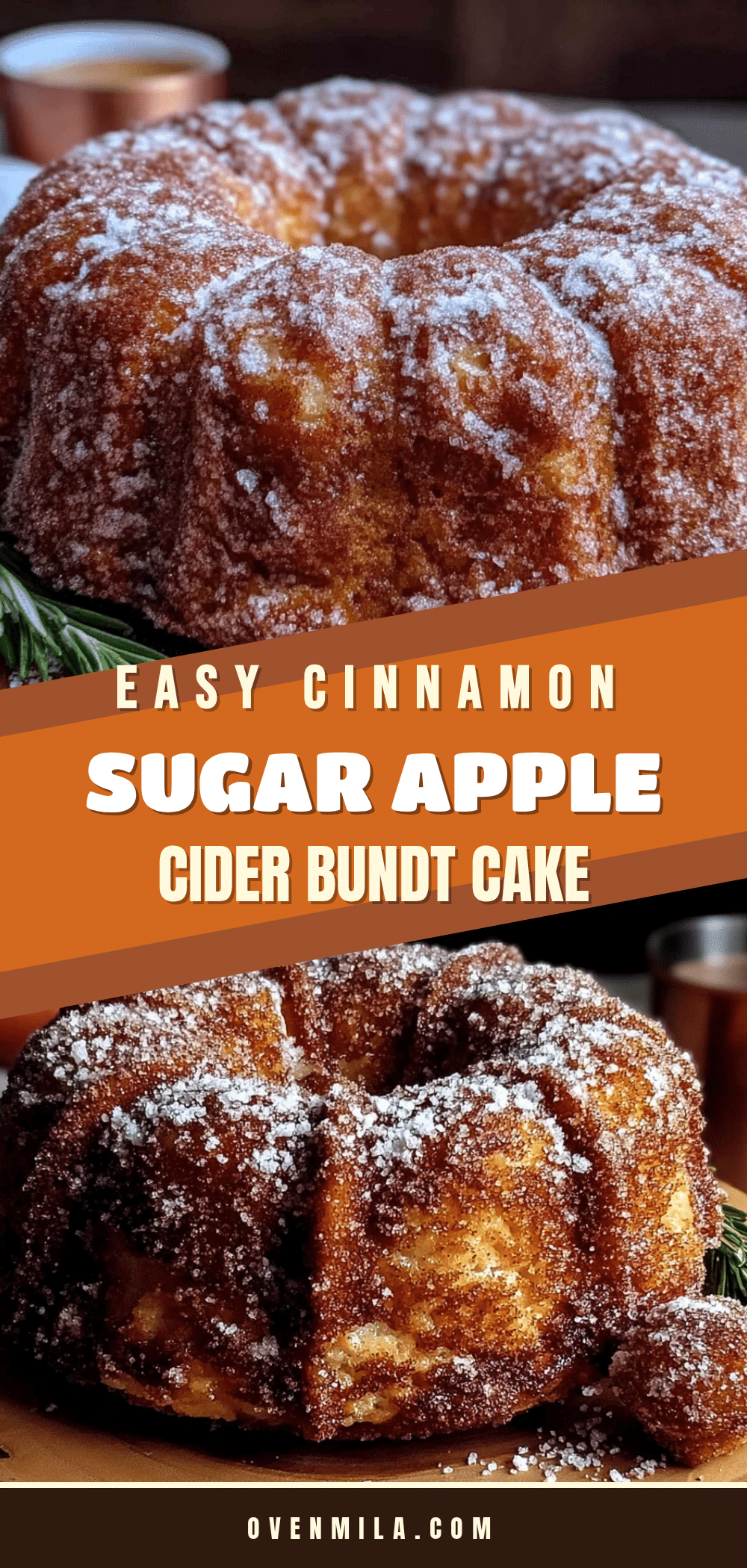
Easy Apple Cider Donut Bundt Cake with Cinnamon Sugar
This Easy Apple Cider Donut Bundt Cake with Cinnamon Sugar captures the tangy-sweet apple flavor of classic apple cider donuts in a simple, fuss-free cake. The secret is reducing apple cider to a syrup for concentrated flavor, then coating the cake in cinnamon sugar for that irresistible donut crunch.
- Prep Time: 20 minutes
- Cook Time: 45 minutes
- Total Time: 1 hour 5 minutes
- Yield: 12 servings 1x
- Category: Dessert
- Cuisine: American
Ingredients
- 2 cups apple cider
- 1 cup unsalted butter, softened
- 1 ½ cups granulated sugar
- ½ cup light brown sugar, packed
- 3 large eggs, room temperature
- 2 ½ cups all-purpose flour
- 1 ½ teaspoons baking powder
- ½ teaspoon baking soda
- ½ teaspoon salt
- 1 teaspoon ground cinnamon
- ¼ teaspoon ground nutmeg
- 1 teaspoon vanilla extract
- ½ cup buttermilk, room temperature
- For the Cinnamon Sugar Coating:
- ½ cup granulated sugar
- 1 ½ tablespoons ground cinnamon
- 3 tablespoons melted butter
Instructions
- Reduce the Apple Cider: Pour 2 cups of apple cider into a medium saucepan. Bring to a boil over medium-high heat, then reduce heat to a steady simmer. Cook, stirring occasionally, until reduced to about ½ cup (15-20 minutes). Set aside to cool completely.
- Preheat and Prep the Pan: Preheat oven to 350°F (175°C). Generously grease a 10-cup bundt pan with butter or non-stick baking spray. Optionally, dust with flour and tap out excess.
- Cream the Butter and Sugars: In a large mixing bowl, beat softened butter, granulated sugar, and brown sugar together until light and fluffy (3-4 minutes with hand mixer, 2-3 minutes with stand mixer). Scrape down sides halfway through.
- Add the Eggs and Vanilla: Add eggs one at a time, beating well after each addition. Mix in vanilla extract. Batter may look slightly curdled.
- Combine the Dry Ingredients: In a separate bowl, whisk together flour, baking powder, baking soda, salt, cinnamon, and nutmeg until no lumps remain.
- Alternate Adding Dry Ingredients and Buttermilk: With mixer on low, add one-third of dry ingredients to butter mixture, mixing until just combined. Add half of buttermilk and mix. Repeat with another third of dry ingredients, remaining buttermilk, and final third of dry ingredients. Stop mixing as soon as flour disappears.
- Fold in the Cider Reduction: Gently fold cooled cider reduction into batter using a rubber spatula until evenly distributed. Batter will be thick.
- Bake the Cake: Pour batter into prepared bundt pan and smooth top. Bake for 40-45 minutes, or until a toothpick inserted in center comes out clean or with a few moist crumbs. Top should be golden brown and edges pulling away from pan.
- Cool in the Pan: Let cake cool in pan for 15-20 minutes.
- Turn Out and Cool Completely: Place a cooling rack over pan and carefully invert cake. Lift pan off gently. Let cake cool completely on rack.
- Make the Cinnamon Sugar Coating: While cake cools, mix granulated sugar and ground cinnamon in a small bowl. Melt 3 tablespoons butter in a separate small bowl.
- Coat the Cake: Once cake is completely cool, brush entire surface with melted butter. Sprinkle cinnamon sugar mixture all over cake, pressing gently into butter.
Notes
Don’t rush the cider reduction; low and slow prevents scorching. Room temperature ingredients are crucial for proper incorporation. If using a dark bundt pan, reduce oven temperature by 25°F. The cake tastes even better the next day. For an extra-thick coating, brush with butter, add half the cinnamon sugar, brush with more butter, then add remaining sugar.
Nutrition
- Serving Size: 1 slice
- Calories: 410
- Sugar: 42
- Sodium: 220
- Fat: 18
- Saturated Fat: 11
- Carbohydrates: 60
- Fiber: 1
- Protein: 5
Keywords: apple cider donut bundt cake, cinnamon sugar bundt cake, fall dessert, apple cake, easy bundt cake