It was a Tuesday afternoon at the community garden plot I share with a few neighbors, and I was complaining—probably too loudly—about the sad, dry turkey breast I’d served the previous weekend. I was pulling up the last of the carrot tops, muttering about brine ratios and oven temperatures. A woman two plots over, knee-deep in her own kale patch, didn’t look up. She just said, “You’re overthinking it. You need something that fights back.” That was Marta. She’s been gardening in that spot for twenty years, and she doesn’t waste words. She wiped her hands on her jeans, walked over, and told me about the glaze her grandmother used to make for holidays back in her home country. It involved cranberries, oranges, and a secret splash of something she refused to name at first. I grabbed a dirty notepad from my bag and wrote down everything she said. Honestly, I was skeptical—fruit and poultry can go wrong fast. But the next time I made it, I sent Marta a photo of the golden, sticky result. She sent back a single thumbs-up emoji. That meant more than a five-star review.
This perfect cranberry orange glazed turkey breast has become my go-to for fall feasts, and I think you’re going to love it too. It’s the kind of recipe that looks like you spent all day in the kitchen but actually comes together with minimal fuss. You know that feeling when you want a holiday-worthy centerpiece without the stress of roasting a whole bird? That’s exactly why this works. The glaze does the heavy lifting—it caramelizes into this gorgeous, glossy coating that keeps the meat incredibly moist. I mean, I’ve served this at a casual Sunday dinner and again at a Friendsgiving, and both times people asked for the recipe before they even finished their first helping. Let me tell you, there’s something about that combination of tart cranberry and bright orange that just screams autumn. It’s like the season in a single bite.
Maybe you’ve been there—standing in the grocery aisle, staring at a whole turkey and wondering if you really have the energy for that production. This breast is your answer. It’s approachable, it’s forgiving, and it delivers that “wow” factor without the drama. Marta’s tip about not skipping the fresh orange zest? That’s the game-changer right there. I’ve been making this for three seasons now, and I keep coming back because it works every single time. The house smells incredible, the meat stays juicy, and you get that sticky-sweet glaze that makes every slice look like a food magazine cover. Honestly, it’s the recipe that made me stop being afraid of cooking poultry.
Why You’ll Love This Recipe
This isn’t just another turkey recipe—it’s the one that’ll earn a permanent spot in your fall rotation. I’ve tested it more times than I care to admit, tweaking the glaze ratios and roasting times until everything clicked. Here’s why I think you’ll feel the same way:
- Quick & Easy: From prep to plate in under two hours, with only about 15 minutes of active work. Perfect for a busy weeknight when you still want something special.
- Simple Ingredients: You probably already have most of these in your pantry. No weird specialty items or expensive imports—just honest, whole foods.
- Perfect for Fall Feasts: This is made for those crisp October evenings and November gatherings. It fits right in at Thanksgiving, but it’s also special enough for a random Sunday roast.
- Crowd-Pleaser: I’ve served this to picky eaters, health-conscious friends, and traditionalists who swear by whole turkey. Every single one of them went back for seconds.
- Unbelievably Delicious: The glaze creates this sticky, tangy-sweet crust that locks in moisture. The meat itself is tender and flavorful, not dry or bland like turkey can sometimes be.
What makes this recipe different from the rest? It’s that balance. Most cranberry glazes are either too sweet or too tart. This one hits that perfect middle note, thanks to the fresh orange juice and zest cutting through the cranberry’s natural sharpness. Plus, I’ve figured out the trick to getting the glaze to actually stick and caramelize without burning—it’s all about layering it at the right moments. This isn’t just another version; it’s the best version I’ve found after years of trial and error.
There’s a reason I keep coming back to this recipe. It’s the kind of meal that makes you slow down and actually taste what you’re eating. That first bite, where the sweet-tart glaze meets the savory, juicy meat—it’s comfort food that feels special. Whether you’re impressing guests or just treating yourself on a cozy fall evening, this turkey breast delivers every time.
What Ingredients You Will Need
This recipe uses simple, wholesome ingredients to deliver bold flavor and satisfying texture without the fuss. Most of these are pantry staples or easy to find at any grocery store. Here’s what you’ll need:
For the Turkey
- 1 bone-in, skin-on turkey breast (about 3-4 pounds) — I prefer bone-in for maximum flavor and moisture. The bone helps conduct heat evenly and keeps the meat from drying out. If you can only find boneless, reduce cooking time by about 15-20 minutes.
- 2 tablespoons olive oil — Helps the seasoning stick and promotes browning. A good quality extra virgin works fine here.
- 1 teaspoon salt — I use kosher salt for its clean flavor and easy pinchability. If using table salt, reduce to 3/4 teaspoon.
- 1/2 teaspoon black pepper — Freshly ground is always better. It makes a real difference in the final flavor.
- 1 teaspoon garlic powder — Adds savory depth without overwhelming the fruit notes. I recommend the brand Simply Organic for its consistent quality.
- 1/2 teaspoon dried thyme — Earthy and slightly floral, thyme pairs beautifully with both cranberry and orange.
For the Cranberry Orange Glaze
- 1 cup fresh or frozen cranberries — Fresh are ideal when in season (October through December), but frozen work perfectly too. No need to thaw them first. Avoid dried cranberries here—they won’t break down properly.
- 1/2 cup orange juice — Fresh-squeezed is noticeably brighter, but good-quality bottled juice works in a pinch. Look for one with no added sugar.
- 1/4 cup honey — Adds sweetness and helps the glaze caramelize. Local honey adds a lovely floral note, but any mild honey works. Maple syrup can be substituted for a slightly different flavor profile.
- 2 tablespoons brown sugar — Light or dark both work. Dark brown sugar adds a deeper molasses note that I personally love.
- 1 tablespoon orange zest — This is non-negotiable. The zest contains essential oils that give the glaze its bright, aromatic punch. Use a microplane or fine grater for best results.
- 1 tablespoon apple cider vinegar — Balances the sweetness and adds a subtle tang. You can substitute white wine vinegar if needed.
- 1 teaspoon Dijon mustard — Sounds weird, I know, but it adds complexity and helps emulsify the glaze. You won’t taste it directly.
- 1/4 teaspoon cinnamon — Just enough to warm up the flavor without making it taste like dessert. Trust me on this one.
- Pinch of cloves — Optional but recommended. It adds that unmistakable fall spice note.
For the Aromatics (Optional but Recommended)
- 1 orange, quartered — Stuff these inside the cavity or scatter around the roasting pan for extra moisture and flavor.
- 3-4 sprigs fresh rosemary — Adds a lovely piney aroma. Dried works too—use about 1 teaspoon.
- 3-4 sprigs fresh thyme — Complements the dried thyme in the rub. If you have them, use them.
- 1/2 onion, cut into wedges — Adds savory depth to the pan drippings, which you can use for gravy.
For the cranberries, I’ve found that fresh cranberries from the farmers’ market have a slightly more intense flavor than supermarket bags, but honestly, the frozen ones from the grocery store work just fine. If you’re making this outside of cranberry season, frozen is your best bet. For the orange juice, I really recommend squeezing a couple of fresh oranges. It takes two minutes and makes a noticeable difference in the brightness of the glaze. The zest is where the magic happens, so don’t skip it—use a microplane and only get the orange part, not the bitter white pith underneath.
If you need to make substitutions, here are a few that work well: swap the honey with maple syrup for a slightly earthier sweetness, use coconut sugar instead of brown sugar, or replace the Dijon mustard with a pinch of dry mustard powder. For a gluten-free version, this recipe is naturally gluten-free as written—just double-check your Dijon mustard label to be safe.
Equipment Needed
You don’t need a fancy kitchen to pull this off. Here’s what you’ll actually use:
- Roasting pan — A 9×13-inch baking dish works perfectly if you don’t have a dedicated roasting pan. I’ve used both and honestly can’t tell the difference.
- Wire rack — Optional but helpful. It lifts the turkey off the bottom of the pan so hot air circulates underneath, giving you more even cooking. If you don’t have one, just place the turkey directly in the pan—it’ll still be great.
- Small saucepan — For making the glaze. Any small pot works.
- Microplane or fine grater — For zesting the orange. A box grater’s fine side works too, but a microplane is easier.
- Meat thermometer — This is non-negotiable. An instant-read thermometer is best. I’ve ruined more turkey breasts than I care to admit before I started using one consistently. It’s the only way to guarantee perfectly cooked meat.
- Basting brush — For applying the glaze. A silicone brush is easiest to clean, but a pastry brush works fine too.
- Chef’s knife and cutting board — For prepping aromatics and carving the finished turkey.
- Aluminum foil — For tenting the turkey if it browns too quickly.
If you’re on a budget, skip the wire rack and just use a regular baking dish. The turkey will still cook beautifully. I actually prefer my ceramic baking dish for this recipe—it retains heat well and cleans up easily. Just make sure whatever pan you use has sides at least 2 inches high to catch the juices.
Preparation Method
Let’s walk through this step by step. I’ve included all the little details I wish someone had told me the first time I made this.
Step 1: Make the Glaze
In a small saucepan, combine the cranberries, orange juice, honey, brown sugar, orange zest, apple cider vinegar, Dijon mustard, cinnamon, and cloves. Bring to a simmer over medium heat, stirring occasionally. Let it cook for about 8-10 minutes, until the cranberries have burst and the mixture has thickened slightly. You’ll hear them pop—that’s how you know they’re breaking down. Remove from heat and let it cool while you prep the turkey. The glaze will continue to thicken as it cools. If you want a smoother glaze, you can mash the cranberries with a fork or blend it with an immersion blender, but I like the rustic texture of leaving some whole berries.
Step 2: Prep the Turkey
Remove your turkey breast from the refrigerator about 30 minutes before cooking. This takes the chill off and helps it cook more evenly. Pat it completely dry with paper towels—this is crucial for getting crispy skin. Don’t skip this step, I promise it matters. In a small bowl, mix the salt, pepper, garlic powder, and dried thyme. Rub the olive oil all over the turkey breast, then sprinkle the seasoning mixture evenly over all sides. Make sure you get underneath the skin too if you can—gently loosen it with your fingers and rub some seasoning directly onto the meat.
Step 3: Set Up for Roasting
Preheat your oven to 375°F (190°C). Place the seasoned turkey breast on a wire rack set inside your roasting pan, or directly in the pan if you don’t have a rack. Scatter the orange quarters, rosemary sprigs, thyme sprigs, and onion wedges around the turkey. These aromatics will infuse the meat with flavor as it roasts and create a beautiful base for the pan juices.
Step 4: Initial Roast
Roast the turkey breast uncovered for 45 minutes. During this time, the skin will start to turn golden and crisp up. Don’t open the oven door—every time you do, heat escapes and extends your cooking time. Use the oven light to check on it if you’re curious.
Step 5: Apply the Glaze
After 45 minutes, remove the pan from the oven. Brush a generous layer of the cranberry orange glaze all over the turkey breast. Don’t forget the sides and underneath if you can reach. Return the pan to the oven and continue roasting.
Step 6: Glaze Again and Monitor
After 15 more minutes (60 minutes total roasting time), apply another layer of glaze. At this point, check the temperature by inserting your meat thermometer into the thickest part of the breast without touching bone. You’re looking for 155°F (68°C). If the skin is browning too quickly, tent loosely with aluminum foil.
Step 7: Final Roast and Rest
Continue roasting, applying one more layer of glaze after another 10-15 minutes if desired, until the internal temperature reaches 160°F (71°C). This usually takes about 70-80 minutes total for a 3-4 pound breast, but ovens vary. Remove the turkey from the oven and let it rest right in the pan for 15-20 minutes. The temperature will continue to rise to 165°F (74°C) during resting. This step is critical—don’t skip it! Resting allows the juices to redistribute throughout the meat, so every slice is moist and tender.
Step 8: Carve and Serve
Transfer the rested turkey breast to a cutting board. Carve against the grain into 1/2-inch thick slices. Spoon any remaining glaze from the pan over the sliced meat. If you want to make a quick pan sauce, skim off some fat from the pan drippings, add a splash of chicken broth, and simmer for a few minutes—it’s incredible.
Warning: The glaze contains sugar, so it can burn if left unattended. If you notice the edges of the glaze darkening too much, tent the turkey with foil immediately. I learned this the hard way when I got distracted by a phone call and ended up with slightly charred corners. Still tasted good, but not my finest moment.
Cooking Tips & Techniques
After making this recipe more times than I can count, here are the things I wish I’d known from the start:
Don’t rush the drying step. Patting the turkey skin completely dry is the single most important thing you can do for crispy skin. I once got lazy and left some moisture on there, and the skin turned out rubbery instead of crackling. Now I use three paper towels and really get in there. Let it air-dry in the fridge uncovered for an hour if you have time—it makes a noticeable difference.
Use a thermometer, not a timer. I cannot stress this enough. Every oven runs differently, and turkey size varies. The difference between perfectly cooked and dry is about 5 degrees. I use my Thermapen instant-read thermometer and check in multiple spots. It’s the best investment I’ve made in my kitchen, honestly.
Layer the glaze strategically. Applying the glaze too early can cause it to burn because of the sugar content. That’s why I wait until the 45-minute mark. If you want extra-thick glaze, you can apply a fourth layer during the last 5 minutes of cooking, but watch it carefully. I’ve found that three layers is the sweet spot for a glossy, sticky finish without any burnt spots.
Let it rest properly. I know it’s tempting to dig right in, but that 15-20 minute rest is non-negotiable. I once carved a turkey breast immediately because guests were hungry, and the juices ran right out onto the cutting board, leaving the meat dry. Now I set a timer and resist the urge. The carryover cooking also ensures the meat reaches a safe temperature without overcooking.
Make extra glaze. I always double the glaze recipe. Half goes on the turkey during roasting, and the other half gets warmed up and served on the side. People love having extra to spoon over their slices. Plus, it’s amazing leftover on sandwiches the next day.
One mistake I still make: Forgetting to check the temperature in multiple spots. The thickest part of the breast might be done, but a thinner section could be overcooking. Now I check three places and go by the lowest reading.
Variations & Adaptations
This recipe is surprisingly flexible. Here are some ways I’ve adapted it over the years:
Spicy Cranberry Orange Glaze: Add 1/2 teaspoon of red pepper flakes or a minced jalapeño to the glaze while it simmers. The heat cuts through the sweetness beautifully. I tried this on a whim one night when I wanted something different, and it’s become my second-favorite version.
Herb-Crusted Version: Before applying the glaze, press a mixture of fresh chopped rosemary, thyme, and sage onto the seasoned turkey breast. The herbs create a fragrant crust that pairs wonderfully with the sweet-tart glaze. This is my go-to for Thanksgiving when I want to impress.
Slow Cooker Adaptation: Season the turkey breast as directed and place it in a slow cooker with the aromatics. Cook on low for 4-5 hours. During the last 30 minutes, brush with glaze and switch to high to let it caramelize slightly. The texture is different—softer, more braised than roasted—but it’s incredibly convenient for busy days.
Dietary Modifications: For a lower-sugar version, reduce the honey to 2 tablespoons and use a sugar-free brown sugar substitute. The glaze won’t caramelize as deeply, but the flavor is still excellent. For paleo, use maple syrup instead of honey and omit the brown sugar. For dairy-free, this recipe is already dairy-free as written.
Seasonal Swaps: In summer, try using fresh blueberries or raspberries instead of cranberries. In winter, add a splash of pomegranate juice to the glaze for a deeper color and flavor. I’ve even made this with fresh cherries in early summer—it was a revelation.
My favorite variation: I add a tablespoon of bourbon to the glaze during the last few minutes of simmering. It adds a warm, smoky depth that’s perfect for fall. Just cook it for an extra minute to burn off the alcohol. Don’t tell Marta, but I think she’d approve.
Serving & Storage Suggestions
This turkey breast is best served warm, right after its rest. The glaze is at its stickiest and most flavorful when fresh. Here’s how I like to present it:
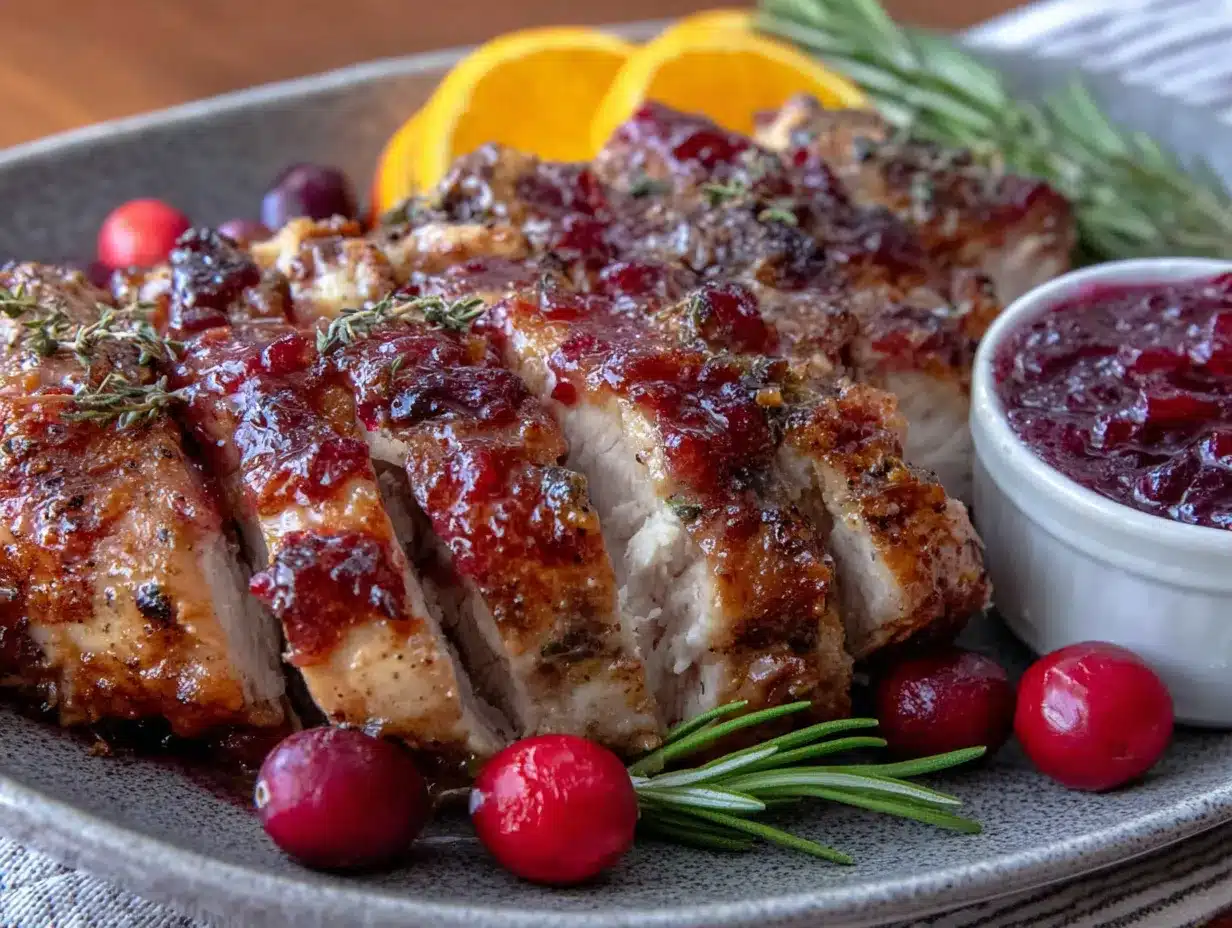
Arrange the sliced turkey on a large platter, overlapping the pieces slightly. Spoon a little extra glaze over the top and garnish with fresh orange slices, a few whole cranberries, and a sprig of rosemary. It looks gorgeous without much effort—perfect for when you want to impress without spending hours on presentation.
What to serve with it: This turkey pairs beautifully with roasted root vegetables like carrots, parsnips, and sweet potatoes. The sweetness of the vegetables echoes the glaze. A simple wild rice pilaf or mashed potatoes are classic choices. For greens, try roasted Brussels sprouts with balsamic or a simple arugula salad with lemon vinaigrette. The brightness of the salad cuts through the richness of the glaze. For drinks, a dry Riesling or a crisp apple cider works wonders.
Storage: Leftover turkey keeps well in an airtight container in the refrigerator for up to 4 days. The glaze will soften slightly, but the flavor remains excellent. I actually think it’s even better the next day—the flavors have time to meld.
Reheating: The best way to reheat is in a 300°F (150°C) oven, covered with foil, for about 15-20 minutes. This warms the meat gently without drying it out. Add a splash of chicken broth or leftover glaze to keep it moist. Avoid the microwave if you can—it tends to toughen the meat and make the skin rubbery. If you’re in a hurry, slice the turkey thin and warm it in a skillet with a little broth over medium heat for 2-3 minutes.
Freezer-friendly: This turkey breast freezes beautifully. Slice it and store in a freezer-safe container with some of the glaze. It’ll keep for up to 3 months. Thaw overnight in the refrigerator and reheat gently. The flavor actually holds up remarkably well—I’ve pulled this out for unexpected guests and no one knew it wasn’t freshly made.
Flavor development: Like many braised and roasted dishes, this turkey tastes even better the next day. The glaze continues to penetrate the meat, and the flavors deepen. If you’re planning ahead, you can roast the turkey a day in advance, slice it, and reheat it gently before serving. Just add a little extra glaze when reheating to bring back that sticky finish.
Nutritional Information & Benefits
Here’s an approximate nutritional breakdown per serving (based on 6 servings, including glaze):
- Calories: 380
- Protein: 42g
- Fat: 12g
- Carbohydrates: 22g
- Fiber: 2g
- Sugar: 18g
- Sodium: 520mg
Turkey breast is an excellent source of lean protein, which supports muscle health and keeps you feeling full. It’s also rich in B vitamins, particularly B6 and B12, which are important for energy metabolism. Cranberries are packed with antioxidants, especially proanthocyanidins, which support urinary tract health and may help reduce inflammation. Oranges provide a generous dose of vitamin C, which supports immune function—especially welcome during fall and winter months.
Dietary considerations: This recipe is naturally gluten-free and dairy-free. It can be made lower in sugar by reducing the honey and brown sugar (see variations above). For a lower-sodium version, reduce the salt to 1/2 teaspoon and rely more on the herbs and spices for flavor. The recipe is not suitable for low-carb or keto diets due to the sugar content in the glaze, but you can make a sugar-free version using a sugar substitute.
Potential allergens: This recipe contains no common allergens as written, but always check your Dijon mustard label for any additives if you have specific sensitivities. The honey can be substituted with maple syrup for those avoiding honey.
I love that this recipe feels indulgent but is actually quite balanced. You get a good serving of protein with minimal processed ingredients. It’s the kind of meal that makes you feel good about what you’re eating—and that matters, especially during the holiday season when rich foods are everywhere.
Conclusion
This perfect cranberry orange glazed turkey breast has become my secret weapon for fall gatherings, and I think it deserves a spot in your kitchen too. It’s forgiving enough for a beginner but impressive enough for a seasoned cook. The glaze does all the heavy lifting, turning simple ingredients into something that looks and tastes like you spent hours on it. Honestly, the hardest part is waiting for it to rest before you carve into it.
I love that this recipe honors Marta’s casual wisdom—the way she shared it without fuss, expecting nothing in return. Every time I make it, I think of that afternoon in the garden, and it makes the meal taste even better. That’s the thing about good recipes: they carry stories with them. I hope this one becomes part of your story too, whether it’s for a Thanksgiving table, a cozy Sunday dinner, or just a Tuesday when you need something special.
Don’t be afraid to make it your own. Play with the spices, try different citrus fruits, or add that splash of bourbon I mentioned. The best recipes are the ones you adapt to your own taste. And when you make it—because I hope you will—come back and let me know how it turned out. Did you change anything? Did your guests fight over the last slice? I’d genuinely love to hear about it. Leave a comment below or tag me in your photos. Happy cooking, and here’s to many delicious fall feasts ahead!
Frequently Asked Questions
Can I use a boneless turkey breast for this recipe?
Absolutely. Boneless turkey breasts work well, but they cook faster. Start checking the temperature at the 50-minute mark. The bone helps with moisture and flavor, so if you use boneless, consider brining it first for 2-4 hours to keep it juicy.
Can I make the glaze ahead of time?
Yes, and I often do. The glaze can be made up to 3 days in advance and stored in an airtight container in the refrigerator. Let it come to room temperature before using, or warm it slightly to make it easier to brush on.
What if my glaze starts to burn in the oven?
If you notice the edges of the glaze darkening too quickly, tent the turkey loosely with aluminum foil. This will prevent further browning while allowing the meat to continue cooking. Lower your oven temperature by 25 degrees if you’re concerned.
Can I use dried cranberries instead of fresh or frozen?
I don’t recommend it. Dried cranberries won’t break down properly and won’t release the same pectin that helps thicken the glaze. Stick with fresh or frozen for the best texture and flavor. If dried is all you have, rehydrate them in hot water for 15 minutes first.
How do I know when the turkey is fully cooked without a thermometer?
I really recommend using a thermometer for food safety, but if you don’t have one, look for these signs: the juices should run clear when you pierce the thickest part, the meat should feel firm but not hard when pressed, and the internal temperature should be hot to the touch. When in doubt, cook it a little longer—undercooked poultry isn’t worth the risk.
Pin This Recipe!
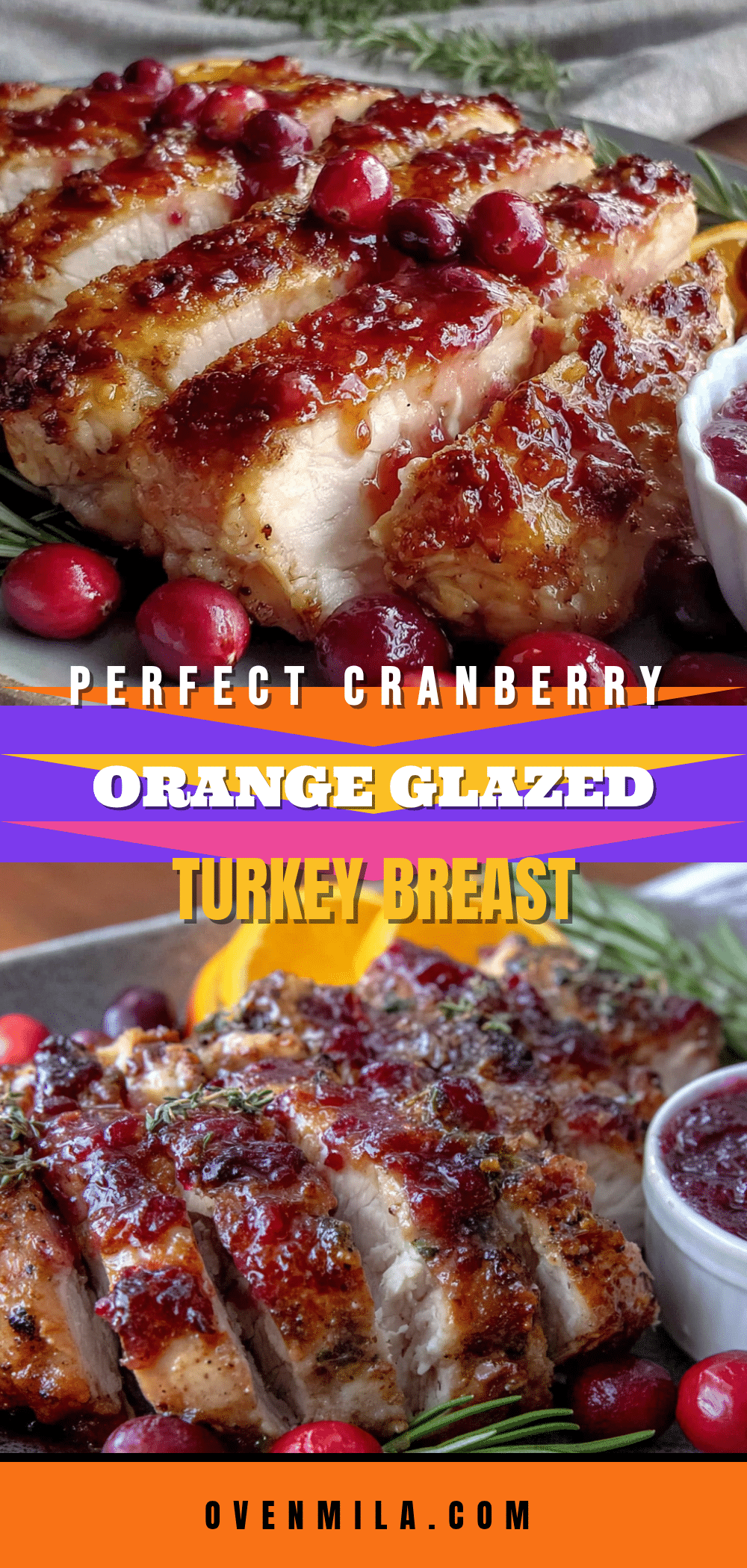
Perfect Cranberry Orange Glazed Turkey Breast for Easy Fall Dinner
This perfect cranberry orange glazed turkey breast has become my go-to for fall feasts. It’s the kind of recipe that looks like you spent all day in the kitchen but actually comes together with minimal fuss, with a gorgeous, glossy coating that keeps the meat incredibly moist.
- Prep Time: 15 minutes
- Cook Time: 70-80 minutes
- Total Time: 1 hour 45 minutes
- Yield: 6 servings 1x
- Category: Main Course
- Cuisine: American
Ingredients
- 1 bone-in, skin-on turkey breast (about 3–4 pounds)
- 2 tablespoons olive oil
- 1 teaspoon kosher salt
- 1/2 teaspoon black pepper, freshly ground
- 1 teaspoon garlic powder
- 1/2 teaspoon dried thyme
- 1 cup fresh or frozen cranberries
- 1/2 cup orange juice, fresh-squeezed preferred
- 1/4 cup honey
- 2 tablespoons brown sugar, light or dark
- 1 tablespoon orange zest
- 1 tablespoon apple cider vinegar
- 1 teaspoon Dijon mustard
- 1/4 teaspoon cinnamon
- Pinch of cloves (optional)
- 1 orange, quartered (optional, for aromatics)
- 3–4 sprigs fresh rosemary (optional, for aromatics)
- 3–4 sprigs fresh thyme (optional, for aromatics)
- 1/2 onion, cut into wedges (optional, for aromatics)
Instructions
- Make the Glaze: In a small saucepan, combine cranberries, orange juice, honey, brown sugar, orange zest, apple cider vinegar, Dijon mustard, cinnamon, and cloves. Bring to a simmer over medium heat, stirring occasionally. Cook for 8-10 minutes until cranberries burst and mixture thickens slightly. Remove from heat and let cool.
- Prep the Turkey: Remove turkey breast from refrigerator 30 minutes before cooking. Pat completely dry with paper towels. In a small bowl, mix salt, pepper, garlic powder, and dried thyme. Rub olive oil all over turkey, then sprinkle seasoning mixture evenly over all sides, including under the skin if possible.
- Set Up for Roasting: Preheat oven to 375°F (190°C). Place seasoned turkey breast on a wire rack set inside a roasting pan, or directly in the pan. Scatter orange quarters, rosemary, thyme, and onion wedges around the turkey if using.
- Initial Roast: Roast turkey breast uncovered for 45 minutes. Do not open the oven door during this time.
- Apply the Glaze: After 45 minutes, remove pan from oven. Brush a generous layer of cranberry orange glaze all over the turkey breast, including sides and underneath. Return to oven.
- Glaze Again and Monitor: After 15 more minutes (60 minutes total), apply another layer of glaze. Check internal temperature in the thickest part of the breast without touching bone—target 155°F (68°C). If skin is browning too quickly, tent loosely with aluminum foil.
- Final Roast and Rest: Continue roasting, applying one more layer of glaze after another 10-15 minutes if desired, until internal temperature reaches 160°F (71°C), about 70-80 minutes total. Remove from oven and let rest in pan for 15-20 minutes. Temperature will rise to 165°F (74°C) during resting.
- Carve and Serve: Transfer rested turkey to a cutting board. Carve against the grain into 1/2-inch thick slices. Spoon remaining glaze from pan over sliced meat. Optionally, make a quick pan sauce by skimming fat from drippings, adding chicken broth, and simmering for a few minutes.
Notes
Don’t rush the drying step—pat turkey skin completely dry for crispy skin. Use a thermometer, not a timer, for perfect doneness. Layer the glaze strategically starting at 45 minutes to prevent burning. Let the turkey rest properly for 15-20 minutes to redistribute juices. Make extra glaze to serve on the side. The glaze contains sugar and can burn if left unattended—tent with foil if browning too quickly.
Nutrition
- Serving Size: 6 servings
- Calories: 380
- Sugar: 18
- Sodium: 520
- Fat: 12
- Saturated Fat: 3
- Carbohydrates: 22
- Fiber: 2
- Protein: 42
Keywords: cranberry orange glazed turkey breast, fall dinner, Thanksgiving turkey, easy turkey recipe, holiday turkey, roasted turkey breast