The neighborhood Friendsgiving was in twelve hours and I’d completely forgotten. Everyone else would be bringing their signature dishes—Sarah’s legendary three-cheese baked ziti, Mark’s slow-roasted brisket that he’d probably started marinating three days ago. I had a single butternut squash sitting on my counter, a block of sharp cheddar, and a vague memory of a recipe I’d seen online months ago. Honestly, I was this close to just showing up with a bag of store-bought rolls. But then I spotted the sage plant on my windowsill, slightly wilted and looking as desperate as I felt. And that’s how this Creamy Butternut Squash Mac and Cheese with Crispy Sage was born—out of pure panic and a fridge full of mismatched ingredients. Maybe you’ve been there, staring at your pantry and wondering how you’re going to pull off a dinner party miracle. Let me tell you, the result was so good that Sarah asked for the recipe before I’d even set the dish down. The best part? It won the unofficial “best side dish” vote, and I didn’t even have to stress about it. It just worked. That’s the kind of recipe this is—one that makes you look like you planned it all along.
Why You’ll Love This Recipe
This isn’t just another mac and cheese recipe. It’s the one you’ll turn to when you want something that feels indulgent but secretly has a wholesome twist. I’ve tested this version more times than I can count—through failed rouxs, burnt sage mishaps, and one particularly sad batch where the squash was way too watery. Trust me, this is the final, perfected version.
- Quick & Easy: Comes together in under 45 minutes, making it perfect for busy weeknights or last-minute dinner party emergencies.
- Simple Ingredients: No fancy grocery trips needed. You likely have the pasta, cheese, and butter already. Just grab a squash and some sage.
- Perfect for Fall Gatherings: Great for Thanksgiving, Friendsgiving, or any cozy dinner where you want to impress without the stress.
- Crowd-Pleaser: Even picky eaters and kids gobble this up. The butternut squash blends in so smoothly, they won’t even know it’s there.
- Unbelievably Delicious: The combination of creamy, cheesy sauce and crispy, aromatic sage is pure comfort food magic.
What makes this recipe different? It’s the technique of roasting the squash first to concentrate its natural sweetness, then blending it into a silky puree that creates the most luscious sauce without needing a ton of heavy cream. It’s comfort food reimagined—healthier, faster, but with the same soul-soothing satisfaction. Perfect for impressing guests without stress, or turning a simple meal into something memorable.
What Ingredients You Will Need
This recipe uses simple, wholesome ingredients to deliver bold flavor and satisfying texture without the fuss. Most of these are pantry staples, but the fresh sage and butternut squash are the stars here.
- Butternut Squash: 1 medium (about 2-3 pounds), peeled, seeded, and cubed. Look for one that feels heavy for its size and has a firm, unblemished skin. (I find pre-cubed squash from the store works in a pinch, but roasting from fresh gives the best flavor.)
- Elbow Macaroni: 1 pound (about 4 cups). You can use any short pasta like cavatappi, shells, or penne. (I prefer De Cecco or Barilla for their texture.)
- Sharp Cheddar Cheese: 2 cups, freshly grated. Pre-shredded cheese has anti-caking agents that prevent smooth melting, so grate it yourself for the creamiest sauce. (Cabot or Tillamook are my go-to brands.)
- Gruyère Cheese: 1 cup, freshly grated. This adds a nutty, slightly sweet depth that pairs beautifully with the squash. (Emmental or Comté work well too.)
- Whole Milk: 2 cups. You can use 2% or even oat milk for a dairy-free version, but whole milk gives the richest sauce.
- Unsalted Butter: 4 tablespoons, divided. 2 tablespoons for the roux and 2 for frying the sage.
- All-Purpose Flour: 2 tablespoons. This thickens the sauce. For a gluten-free option, use a 1:1 gluten-free flour blend.
- Fresh Sage Leaves: 12-15 leaves. Fresh is non-negotiable here—dried sage won’t crisp up the same way. (I grow my own on the windowsill; it’s surprisingly easy!)
- Garlic: 2 cloves, minced. Adds a savory backbone to the sauce.
- Onion Powder: 1 teaspoon. Optional, but it rounds out the flavor nicely.
- Salt and Black Pepper: To taste. Use kosher salt for best results.
- Nutmeg: ¼ teaspoon, freshly grated if possible. It’s a classic pairing with squash and cheese that you don’t want to skip.
- Panko Breadcrumbs: ½ cup (optional, for a crunchy topping). I love the texture contrast, but it’s not required.
Equipment Needed
You don’t need a professional kitchen to pull this off. Here’s what you’ll need:
- Large Pot: For boiling the pasta. A 5-6 quart pot works perfectly.
- Baking Sheet: For roasting the squash. A rimmed sheet is best to catch any juices.
- Blender or Immersion Blender: For pureeing the squash into a silky sauce. I’ve used both—an immersion blender is easier for cleanup, but a countertop blender gives an ultra-smooth texture.
- Large Skillet or Dutch Oven: For making the cheese sauce. A heavy-bottomed pan prevents scorching.
- Small Skillet: For frying the sage leaves. Non-stick is ideal here.
- Box Grater: For shredding the cheese. Trust me, it’s worth the extra minute of effort.
- 9×13-inch Baking Dish: If you’re making a baked version with the breadcrumb topping. A 3-quart casserole dish also works.
- Wooden Spoon or Silicone Spatula: For stirring the roux and sauce without scratching your pans.
Budget-friendly tip: If you don’t have a blender, you can mash the roasted squash with a potato masher or fork. It won’t be as silky, but it still tastes amazing.
Preparation Method

- Roast the Squash: Preheat your oven to 400°F (200°C). Toss the cubed butternut squash with 1 tablespoon of olive oil, a pinch of salt, and a crack of black pepper. Spread it in a single layer on a baking sheet. Roast for 25-30 minutes, flipping halfway, until the squash is tender and lightly caramelized. You’ll know it’s done when a fork slides in easily. (I once under-roasted my squash and the sauce turned out grainy—don’t rush this step!)
- Cook the Pasta: While the squash roasts, bring a large pot of salted water to a boil. Cook the macaroni according to package directions until al dente—usually about 8 minutes. Drain and set aside. (Reserve about ½ cup of pasta water in case you need to thin the sauce later.)
- Make the Squash Puree: Transfer the roasted squash to a blender. Add ½ cup of the milk and blend until completely smooth. You may need to stop and scrape down the sides. Set aside.
- Start the Roux: In a large skillet or Dutch oven over medium heat, melt 2 tablespoons of butter. Add the minced garlic and cook for 30 seconds until fragrant. Whisk in the flour and cook for 1-2 minutes, stirring constantly. The mixture should be golden and bubbly. (This is where I’ve burned the roux before—keep the heat medium and don’t walk away!)
- Build the Sauce: Slowly pour in the remaining 1½ cups of milk, whisking continuously to prevent lumps. Bring to a gentle simmer—the sauce will thicken in about 3-4 minutes. Now, whisk in the squash puree, onion powder, nutmeg, and a generous pinch of salt and pepper. Stir until everything is combined and smooth.
- Add the Cheese: Reduce the heat to low. Gradually add the shredded cheddar and Gruyère, a handful at a time, stirring until each addition is fully melted before adding the next. The sauce should be glossy and velvety. Taste and adjust seasoning—you might want more salt or a crack of pepper.
- Combine with Pasta: Add the cooked macaroni to the cheese sauce and stir until every piece is coated. If the sauce seems too thick, add a splash of the reserved pasta water until it reaches your desired consistency.
- Fry the Sage: In a small non-stick skillet, melt the remaining 2 tablespoons of butter over medium heat. Add the sage leaves in a single layer (work in batches if needed). Fry for 20-30 seconds per side until they turn bright green and crispy. Transfer to a paper towel-lined plate to drain. (Don’t overcrowd the pan or they’ll steam instead of fry.)
- Optional Baking: If you want a crunchy topping, transfer the mac and cheese to a greased 9×13-inch baking dish. Sprinkle with panko breadcrumbs and dot with a little extra butter. Bake at 375°F (190°C) for 15-20 minutes until golden and bubbly.
- Serve: Spoon the mac and cheese into bowls and top with the crispy sage leaves. Serve immediately while it’s warm and gooey.
Cooking Tips & Techniques
I’ve made this recipe more times than I can count, and I’ve learned a few things the hard way. Here are my best tips:
- Don’t skip roasting the squash. I tried boiling it once to save time, and the sauce was watery and bland. Roasting concentrates the sugars and gives that deep, almost caramelized flavor that makes this dish sing.
- Grate your own cheese. I know it’s tempting to buy the pre-shredded bags, but they’re coated in cellulose to prevent clumping, which means they don’t melt as smoothly. Your sauce will be much creamier with freshly grated cheese.
- Keep the heat low when adding cheese. High heat can cause the cheese to seize up and become grainy. Patience is key here—low and slow is the way to go.
- Fry sage at the last minute. The crispy sage is the star topping, but it loses its crunch quickly. Fry it right before you’re ready to serve, or even let guests add their own.
- Multitask like a pro: While the squash roasts, cook the pasta and grate the cheese. This way, everything comes together in under 45 minutes without feeling rushed.
Variations & Adaptations
This recipe is wonderfully flexible. Here are some ways to make it your own:
- Make it Gluten-Free: Use gluten-free pasta and a 1:1 gluten-free flour blend for the roux. The rest of the ingredients are naturally gluten-free.
- Add Some Protein: Stir in 2 cups of shredded rotisserie chicken, cooked Italian sausage, or crispy bacon bits. It turns this side dish into a hearty main course.
- Boost the Veggies: Fold in 2 cups of steamed broccoli florets or sautéed spinach at the end. It’s a great way to sneak in extra greens.
- Change the Cheese: Swap the Gruyère for smoked Gouda or fontina for a different flavor profile. For a sharper bite, use extra-sharp cheddar instead of mild.
- Make it Dairy-Free: Use unsweetened oat milk, vegan butter, and dairy-free shredded cheese. The sauce won’t be as rich, but it’s still delicious.
- Try a Different Herb: If you can’t find sage, crispy fried rosemary or thyme leaves work beautifully too. Just keep an eye on them—they burn faster than sage.
I once made a version with roasted red pepper and smoked paprika instead of sage, and it was a completely different dish—but equally loved. Don’t be afraid to experiment!
Serving & Storage Suggestions
This mac and cheese is best served warm, straight from the pot or baking dish. The crispy sage adds a wonderful textural contrast, so don’t skip it. For a complete meal, serve it alongside a simple green salad with a lemon vinaigrette or some roasted Brussels sprouts. It also pairs beautifully with roasted chicken or pork chops.
Storage: Leftovers can be stored in an airtight container in the refrigerator for up to 4 days. The sauce will thicken as it sits, but don’t worry—it’s easy to fix.
Reheating: The best way to reheat is on the stovetop over low heat with a splash of milk or pasta water, stirring until creamy again. You can also microwave individual portions in 30-second bursts, stirring between each. For the baked version, reheat in a 350°F (175°C) oven for about 15 minutes, covered with foil.
Freezing: This recipe freezes surprisingly well. Transfer the cooled mac and cheese (without the crispy sage topping) to a freezer-safe container. It will keep for up to 3 months. Thaw overnight in the fridge, then reheat as directed. The flavors actually meld together even more after freezing!
Nutritional Information & Benefits
This isn’t a diet food, but it’s certainly a healthier take on classic mac and cheese. Here’s the estimated nutrition per serving (based on 8 servings):
- Calories: 420
- Fat: 22g
- Carbohydrates: 42g
- Fiber: 4g
- Protein: 16g
- Sodium: 480mg
The butternut squash is packed with vitamin A (great for eye health), vitamin C, and fiber. It also adds natural sweetness, which means you can use less cheese and still get a rich, satisfying sauce. The sage isn’t just for show—it’s known for its anti-inflammatory properties and adds a lovely earthy note. This dish is a great way to enjoy comfort food that also gives you a little nutritional boost.
Dietary Considerations: This recipe can be made gluten-free and dairy-free with simple swaps. It’s naturally vegetarian and can be made vegan with plant-based cheese and butter. Always check labels if you have specific allergies.
Conclusion
This Creamy Butternut Squash Mac and Cheese with Crispy Sage is the kind of recipe that makes you feel like a kitchen genius, even when you’re just trying to get dinner on the table. It’s comforting, flavorful, and just a little bit fancy—without being fussy. Whether you’re making it for a holiday gathering or a quiet Tuesday night, I hope it becomes a staple in your home like it has in mine.
I’d love to hear how it turns out for you! Did you add any fun variations? Did the crispy sage disappear before you could even take a photo? Drop a comment below and let me know. And if you loved this recipe, don’t forget to share it with a friend who needs a little comfort food in their life. Happy cooking!
Frequently Asked Questions
Can I use frozen butternut squash instead of fresh?
Yes, you can! Just thaw it first, pat it dry to remove excess moisture, and roast it as directed. Fresh squash gives a slightly better texture, but frozen works in a pinch.
Why is my cheese sauce grainy?
Grainy sauce usually happens when the cheese is added over high heat or when pre-shredded cheese is used. Always add cheese over low heat and grate it yourself for the smoothest result.
Can I make this ahead of time?
Absolutely! Assemble the mac and cheese (without the crispy sage topping) up to a day in advance. Cover and refrigerate, then bake or reheat just before serving. Add the crispy sage at the last minute.
What can I use instead of Gruyère?
Gruyère adds a nutty flavor, but you can substitute it with Swiss, Emmental, or even extra sharp cheddar. Smoked Gouda is also a delicious option.
How do I make the crispy sage ahead of time?
Crispy sage is best made fresh, but you can fry it up to a few hours ahead. Store it in an airtight container at room temperature—don’t refrigerate it, or it will lose its crunch.
Pin This Recipe!
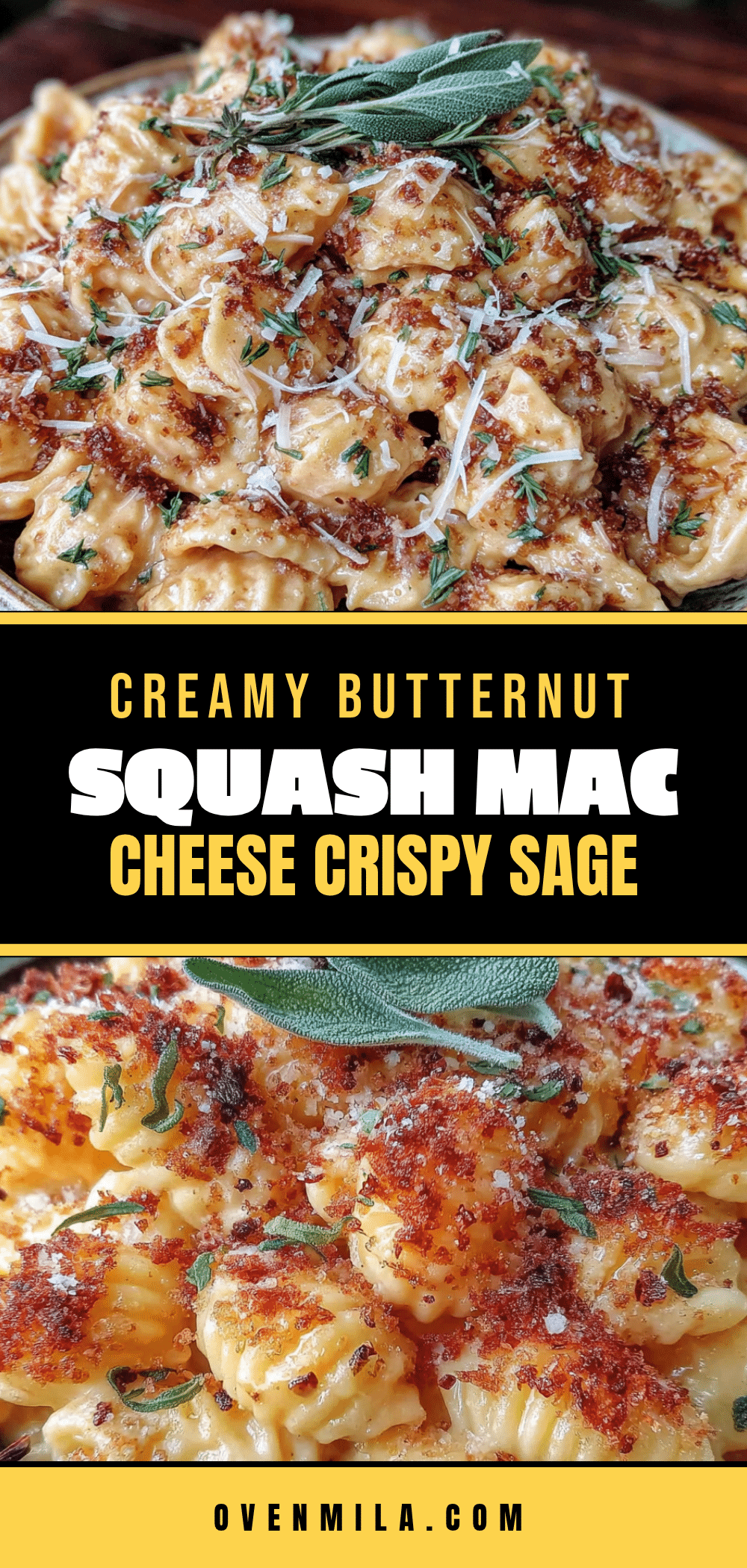
Easy Creamy Butternut Squash Mac and Cheese with Sage

This creamy butternut squash mac and cheese with crispy sage is a comforting, crowd-pleasing dish that comes together in under 45 minutes. It’s perfect for fall gatherings, busy weeknights, or last-minute dinner parties.
- Prep Time: 15 minutes
- Cook Time: 30 minutes
- Total Time: 45 minutes
- Yield: 8 servings 1x
- Category: Main Course
- Cuisine: American
Ingredients
- 1 medium butternut squash (about 2–3 pounds), peeled, seeded, and cubed
- 1 pound elbow macaroni (about 4 cups)
- 2 cups sharp cheddar cheese, freshly grated
- 1 cup Gruyère cheese, freshly grated
- 2 cups whole milk
- 4 tablespoons unsalted butter, divided
- 2 tablespoons all-purpose flour
- 12–15 fresh sage leaves
- 2 cloves garlic, minced
- 1 teaspoon onion powder (optional)
- Salt and black pepper to taste
- ¼ teaspoon freshly grated nutmeg
- ½ cup panko breadcrumbs (optional, for topping)
- 1 tablespoon olive oil (for roasting squash)
Instructions
- Preheat oven to 400°F (200°C). Toss cubed butternut squash with 1 tablespoon olive oil, a pinch of salt, and black pepper. Spread in a single layer on a baking sheet. Roast for 25-30 minutes, flipping halfway, until tender and lightly caramelized.
- While squash roasts, bring a large pot of salted water to a boil. Cook macaroni according to package directions until al dente. Drain, reserving ½ cup pasta water.
- Transfer roasted squash to a blender. Add ½ cup milk and blend until completely smooth. Set aside.
- In a large skillet or Dutch oven over medium heat, melt 2 tablespoons butter. Add minced garlic and cook for 30 seconds until fragrant. Whisk in flour and cook for 1-2 minutes, stirring constantly, until golden and bubbly.
- Slowly pour in remaining 1½ cups milk, whisking continuously. Bring to a gentle simmer; sauce will thicken in 3-4 minutes. Whisk in squash puree, onion powder, nutmeg, salt, and pepper until smooth.
- Reduce heat to low. Gradually add shredded cheddar and Gruyère, a handful at a time, stirring until each addition is fully melted. Adjust seasoning.
- Add cooked macaroni to cheese sauce and stir until coated. If too thick, add reserved pasta water as needed.
- In a small non-stick skillet, melt remaining 2 tablespoons butter over medium heat. Add sage leaves in a single layer; fry for 20-30 seconds per side until bright green and crispy. Transfer to paper towels to drain.
- Optional: Transfer mac and cheese to a greased 9×13-inch baking dish. Sprinkle with panko breadcrumbs and dot with extra butter. Bake at 375°F (190°C) for 15-20 minutes until golden and bubbly.
- Serve mac and cheese in bowls topped with crispy sage leaves. Serve immediately.
Notes
For best results, grate your own cheese and roast the squash fresh. Fry sage leaves just before serving to maintain crispness. Leftovers can be stored in the refrigerator for up to 4 days and reheated on the stovetop with a splash of milk.
Nutrition
- Serving Size: 1 serving (about 1 c
- Calories: 420
- Sugar: 8
- Sodium: 480
- Fat: 22
- Saturated Fat: 12
- Carbohydrates: 42
- Fiber: 4
- Protein: 16
Keywords: butternut squash mac and cheese, creamy mac and cheese, fall comfort food, easy mac and cheese, vegetarian mac and cheese, sage mac and cheese