My husband claimed for years that he hated stew. “It’s just sad meat in brown water,” he’d say whenever I’d mention making one. For a solid decade, I believed him. Then, last November, I made this slow cooker red wine beef stew on a rainy Tuesday, purely for myself while he was working late. I came back from the shower to find him standing at the counter, spoon in hand, eating straight from the crock. He didn’t even bother with a bowl.
I mean, I should have been annoyed. But honestly? I was too busy feeling smug. That’s the kind of power this stew has. It turns stew-haters into stew-sneakers. It makes you forget you’re eating something packed with carrots and celery because the broth is so rich and velvety you’ll want to drink it with a straw. Maybe you’ve been there—skeptical about a dish, convinced it’s not for you, only to have one bite change your whole mind. That’s this recipe.
I developed this version after a string of disappointing stews that were either too watery, too greasy, or just plain boring. The secret? A full bottle of decent red wine, a long, slow simmer, and a little patience. The beef gets fork-tender, the vegetables soak up all that savory goodness, and the broth thickens into something almost magical. It’s the kind of meal that makes your whole house smell like a cozy French bistro, even if you’re just in sweatpants. That rainy Tuesday turned into a weekly tradition, and I’ve been making it ever since.
Why You’ll Love This Recipe
Let me tell you why this slow cooker red wine beef stew has become my most-requested recipe by friends and family alike. It’s not just another stew—it’s the one that changes minds.
- Set It and Forget It : Toss everything in the slow cooker in the morning, and by dinner, you’ve got a meal that tastes like you’ve been slaving over the stove all day. No stirring, no watching, no stress.
- Real Ingredients, Real Flavor : No canned soups or mystery packets here. Just beef, vegetables, wine, and herbs. You probably have most of it in your kitchen right now.
- Perfect for Meal Prep : This stew actually gets better after a day or two in the fridge. Make it on Sunday, and you’ve got lunches or dinners sorted for half the week.
- Crowd-Pleasing Magic : I’ve served this to picky eaters, self-proclaimed stew-haters, and even my mother-in-law (who is notoriously hard to impress). Every single person went back for seconds.
- Healthy-ish Comfort Food : It’s loaded with vegetables and lean protein, but tastes so indulgent you won’t feel like you’re eating “healthy.” Perfect for those of us who want to feel good without sacrificing flavor.
What makes this version different from every other stew recipe out there? It’s the technique. Most recipes rush the browning step or skimp on the wine. I’ve tested this a dozen times to get the balance just right—enough wine to add depth without making it boozy, a long enough cook time to break down the collagen in the beef, and a simple flour slurry at the end to get that perfect, glossy thickness. This isn’t just a recipe; it’s my best version after years of trial and error.
What Ingredients You Will Need
This recipe uses simple, wholesome ingredients to deliver bold flavor and satisfying texture without the fuss. Most are pantry staples, but a few key players make all the difference.
- Beef chuck (2 lbs, cut into 1.5-inch cubes) : This is your best bet for stew. It’s marbled with fat that renders down during cooking, making the meat incredibly tender. I prefer buying a whole chuck roast and cubing it myself—pre-cut stew meat is often inconsistent in size and can be tougher. Look for bright red meat with nice white streaks of fat.
- Red wine (1 ½ cups, preferably a dry red like Cabernet Sauvignon or Merlot) : Don’t use cooking wine. Use something you’d actually drink. The wine reduces and concentrates, so a decent bottle makes a noticeable difference. I usually grab a $10-12 bottle of Cabernet—nothing fancy, but not the bottom shelf either.
- Beef broth (2 cups, low-sodium) : Low-sodium is key here because the wine and tomatoes add their own saltiness. I like Kitchen Basics or Swanson’s unsalted versions. You can also use bone broth for extra richness and protein.
- Tomato paste (3 tablespoons) : This adds umami and helps thicken the broth. I buy the kind in a tube so I can squeeze out just what I need without wasting a whole can.
- Yellow onions (2 medium, diced) : They melt into the broth, adding sweetness and body. No need to be precise with the dice—they’ll break down anyway.
- Carrots (4 large, peeled and cut into 1-inch chunks) : Go for thick, sweet carrots. Baby carrots work in a pinch, but they don’t have quite the same flavor. I like the ones with the tops still attached from the farmer’s market when they’re in season.
- Celery (3 stalks, cut into 1-inch pieces) : Adds that classic savory backbone. Leave the leaves on for extra flavor—they’re edible and tasty.
- Garlic (4 cloves, minced) : Fresh garlic is non-negotiable here. The jarred stuff just doesn’t have the same punch. I use a Microplane to grate it directly into the pot—it melts right in.
- Baby potatoes (1 lb, halved or quartered if large) : Yukon Gold or red potatoes hold up best. They don’t get mushy, and they soak up the broth beautifully. Leave the skins on for texture and nutrients.
- All-purpose flour (3 tablespoons) : For thickening the stew at the end. You can use cornstarch (mix with equal parts cold water) if you’re gluten-free.
- Fresh thyme (4 sprigs) and bay leaves (2) : Dried herbs work too, but fresh thyme adds a brightness that really lifts the dish. I keep a little pot of thyme on my windowsill just for recipes like this.
- Olive oil (2 tablespoons) : For browning the beef. Use a good quality extra virgin, but save the fancy finishing oil for salads—regular is fine here.
- Salt and black pepper : To taste. I use kosher salt and freshly cracked pepper. Season in layers—a little at each step, not all at the end.
Equipment Needed
You don’t need a professional kitchen to make this stew, but a few tools make the process smoother.
- Slow cooker (6-quart or larger) : This is the star of the show. I use a Cuisinart 6-quart model that I’ve had for years. If you’re using a smaller one, just make sure not to overfill it—leave at least an inch of space at the top.
- Large skillet or Dutch oven : For browning the beef. A cast-iron skillet works beautifully because it holds heat well. Don’t skip this step—browning is where the flavor lives.
- Cutting board and sharp knife : A good chef’s knife makes dicing onions and cubing beef a breeze. I use a Wusthof 8-inch, but any sharp knife will do. Dull knives are dangerous—they slip.
- Measuring cups and spoons : For the wine, broth, and flour. Eyeballing works for some things, but not here.
- Wooden spoon or spatula : For scraping up the browned bits from the skillet. Those bits are pure gold—don’t leave them behind.
- Small bowl : For mixing the flour slurry. A fork works better than a whisk for getting lumps out.
- Tongs : For turning the beef while browning. Much easier than a fork, which can pierce the meat and release juices.
If you don’t have a slow cooker, you can absolutely make this in a Dutch oven on the stovetop or in the oven at 325°F for about 2.5 to 3 hours. I’ve done it both ways, and honestly, the slow cooker version is more forgiving for busy days.
Preparation Method
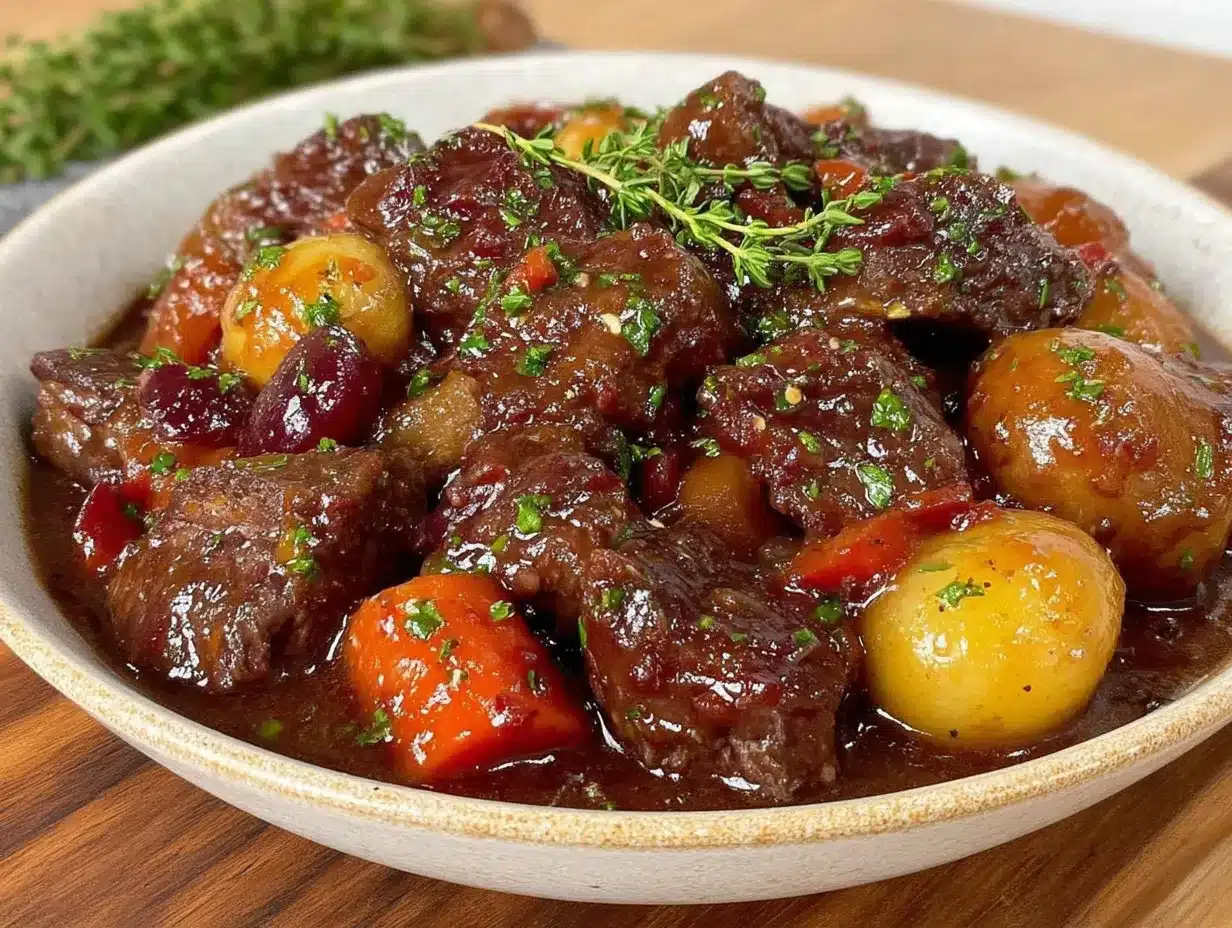
Alright, let’s get cooking. This recipe takes about 20 minutes of active prep time, then the slow cooker does the heavy lifting.
- Prep the beef (5 minutes) : Pat the beef cubes dry with paper towels. This is crucial—wet meat won’t brown properly. Season generously with salt and pepper. Don’t be shy here; you’re building the base flavor.
- Brown the beef (8-10 minutes) : Heat 1 tablespoon of olive oil in your large skillet over medium-high heat until it shimmers. Add the beef in a single layer—work in batches if needed. Crowding the pan steams the meat instead of browning it. Let each piece sit undisturbed for 2-3 minutes until a deep brown crust forms. Flip and repeat on all sides. Transfer the browned beef to the slow cooker. I usually do this in two batches to get a good sear on every piece.
- Sauté the aromatics (3-4 minutes) : Reduce the heat to medium and add the remaining tablespoon of olive oil to the skillet. Toss in the onions, carrots, and celery. Cook for 3-4 minutes, stirring occasionally, until the onions start to soften and turn translucent. Add the minced garlic and cook for 30 seconds more until fragrant. Don’t let the garlic burn—it turns bitter.
- Deglaze the pan (1 minute) : Pour about ½ cup of the red wine into the hot skillet. Use your wooden spoon to scrape up all those browned bits from the bottom. This is where so much flavor hides. Let it bubble for about 30 seconds, then pour the whole mixture—vegetables and all—into the slow cooker over the beef.
- Add the liquids (2 minutes) : Pour the remaining 1 cup of red wine and the beef broth into the slow cooker. Add the tomato paste, fresh thyme sprigs, and bay leaves. Give everything a gentle stir to combine. The tomato paste will mostly dissolve as it cooks.
- Slow cook (6-8 hours on low or 4-5 hours on high) : Cover and cook. I strongly recommend cooking on low for the full 8 hours if you can. The beef gets impossibly tender, and the flavors meld together in a way that high heat just can’t replicate. If you’re short on time, high for 4 hours works, but the meat won’t be quite as fork-tender.
- Add the potatoes (last 2 hours) : About 2 hours before serving, add the baby potatoes to the slow cooker. If you add them too early, they’ll turn to mush. Stir them in gently so they’re submerged in the broth.
- Thicken the stew (10 minutes before serving) : In a small bowl, whisk together the 3 tablespoons of flour with ¼ cup of cold water until smooth. Stir this slurry into the stew. Let it cook uncovered for the last 10-15 minutes on high, stirring occasionally. The broth will thicken into a glossy, velvety sauce. If you prefer a thinner stew, skip this step or use less flour.
- Finish and serve : Remove the thyme sprigs and bay leaves (they’re tough and woody). Taste and adjust seasoning with salt and pepper. I usually add another ½ teaspoon of salt and a good crack of pepper at this point. Ladle into bowls and serve hot.
A quick note: the stew will look quite liquidy before you add the slurry. Don’t panic—that’s normal. The flour thickens it beautifully, and the flavors concentrate as it sits.
Cooking Tips & Techniques
After making this slow cooker red wine beef stew more times than I can count, I’ve learned a few things the hard way. Here are my best tips to save you from my mistakes.
Don’t skip browning the beef. I know it’s tempting to just dump everything in the slow cooker raw. I’ve done it. The result is a pale, bland stew that tastes more like boiled meat than the rich, deep-flavored dish you’re after. That browning step is non-negotiable. It creates the Maillard reaction—the chemical process that gives browned food its complex, savory flavor. Yes, it adds 10 minutes to prep. It’s worth every second.
Use the right wine. I once made the mistake of using a sweet red blend because it was on sale. The stew came out tasting like grape jelly and beef—not a good combo. Stick with dry reds. If you wouldn’t drink it, don’t cook with it. That said, you don’t need to break the bank. A $10-12 bottle of Cabernet Sauvignon or Merlot works perfectly. If you’re not a wine drinker, you can substitute with additional beef broth plus 2 tablespoons of balsamic vinegar for acidity.
Season in layers. This is something professional chefs do that home cooks often forget. Season the beef before browning, season the vegetables as they cook, and season the stew at the end. Each layer builds on the last. If you wait until the end to add all the salt, you’ll end up with a flat-tasting stew that needs way more salt than it should.
Patience is key. The hardest part of this recipe is waiting. The stew smells incredible after just a few hours, and you’ll be tempted to dig in early. But that long, slow cook time is what breaks down the collagen in the beef into gelatin, giving you that melt-in-your-mouth texture. Trust the process. I’ve learned this the hard way more than once—rushing a stew never ends well.
Make it ahead. This stew is one of those rare dishes that actually tastes better the next day. The flavors continue to meld and deepen overnight. I often make it a day ahead, let it cool, and refrigerate it. Then I reheat it gently on the stovetop or in the slow cooker. The texture is even better, and the broth gets richer.
Variations & Adaptations
One of the best things about this slow cooker red wine beef stew is how adaptable it is. Here are some of my favorite variations.
Gluten-Free Version : Skip the flour slurry and use 2 tablespoons of cornstarch mixed with 2 tablespoons of cold water instead. Stir it in at the end and let it cook for 5 minutes to thicken. Make sure your beef broth is certified gluten-free too—some brands add wheat-based ingredients.
Low-Carb/Keto Adaptation : Leave out the potatoes entirely and add extra mushrooms or turnips instead. Mushrooms add that same earthy, savory quality without the carbs. You can also add cauliflower florets in the last hour of cooking—they soak up the broth beautifully.
Dairy-Free Option : This recipe is naturally dairy-free, so you’re good there. Just double-check that your beef broth doesn’t contain any dairy-based additives. Most don’t, but it’s worth a quick label read.
Herb Variations : I’ve made this with rosemary instead of thyme, and it’s lovely—more piney and aromatic. You can also add a parmesan rind (if you’re not dairy-free) to the broth for extra umami. Just fish it out before serving. A friend of mine swears by adding a cinnamon stick and star anise for a warming, winter-spiced version. I tried it once and it was surprisingly good.
Instant Pot Version : Use the sauté function to brown the beef and cook the vegetables, then pressure cook on high for 35 minutes with a natural release. Add the potatoes after the pressure cooking and use the sauté function to simmer them until tender. The flavor isn’t quite as deep as the slow cooker version, but it’s a great option when you’re short on time.
Serving & Storage Suggestions
This stew is a meal in itself, but a few simple sides take it over the top.
Serve it piping hot in deep bowls. I like to garnish with a sprinkle of fresh parsley (for color) and a crack of black pepper. A chunk of crusty bread is practically mandatory—it’s perfect for sopping up that rich, winey broth. If you’re feeling fancy, a dollop of horseradish cream or a sprinkle of gremolata (chopped parsley, lemon zest, and garlic) brightens up the whole dish.
For sides, a simple green salad with a tangy vinaigrette cuts through the richness nicely. Or go full comfort mode with buttery egg noodles or creamy mashed potatoes. I’ve even served this over polenta, and it was a hit.
Storage: Let the stew cool completely before transferring to airtight containers. It keeps in the refrigerator for up to 4 days. The flavors actually improve after a day or two—the beef gets even more tender, and the broth becomes more concentrated.
Freezing: This stew freezes beautifully. Portion it into freezer-safe containers or zip-top bags (lay them flat to save space). It keeps for up to 3 months. Thaw overnight in the refrigerator before reheating.
Reheating: Gently reheat on the stovetop over medium-low heat, stirring occasionally. Add a splash of beef broth or water if it’s too thick. You can also microwave individual portions in 30-second bursts, stirring in between. Avoid boiling—it can make the beef tough and the vegetables mushy.
One thing I love about this stew: it’s even better the next day. The flavors have time to settle and deepen. I often make it on a Sunday specifically so we can have leftovers for Monday’s dinner.
Nutritional Information & Benefits
This slow cooker red wine beef stew is comfort food that you can feel good about eating. Here’s a rough breakdown per serving (based on 6 servings):
| Nutrient | Amount per Serving |
|---|---|
| Calories | 420-450 |
| Protein | 35g |
| Fat | 18g |
| Carbohydrates | 28g |
| Fiber | 5g |
| Sugar | 8g |
| Sodium | 680mg (varies with broth) |
This stew is packed with protein from the beef, which helps keep you full and supports muscle health. The carrots and celery provide vitamin A, vitamin K, and fiber. Potatoes offer potassium and vitamin C. And the red wine? It contains antioxidants called polyphenols, particularly resveratrol, which has been linked to heart health benefits. Of course, the alcohol mostly cooks off during the long simmer, so you’re left with the flavor and the antioxidants.
It’s also relatively low in added sugars and preservatives—especially compared to canned or store-bought stews. If you’re watching your sodium, use low-sodium broth and go easy on the added salt. You can always add more at the table.
Conclusion
This slow cooker red wine beef stew is more than just a recipe—it’s a little piece of comfort that I genuinely look forward to making every fall and winter. It’s the meal that turned my stew-hating husband into a convert, the dish I bring to potlucks that gets devoured in minutes, and the dinner I make when I need something warm and reassuring after a long day.
What I love most about it is how forgiving it is. You can tweak the vegetables, swap the herbs, or adjust the wine, and it still turns out delicious. It’s a recipe that invites you to make it your own. So go ahead—throw in some extra mushrooms, skip the potatoes, or add a dash of smoked paprika. The slow cooker will take care of the rest.
I’d love to hear how yours turns out. Did you add your own twist? Did it convert a stew-skeptic in your life? Drop a comment below and let me know. And if you loved it, share it with a friend who needs a little comfort food in their life. Happy cooking!
Frequently Asked Questions
Can I make this stew without wine?
Absolutely. Substitute the red wine with an equal amount of beef broth plus 2 tablespoons of balsamic vinegar or red wine vinegar. The vinegar adds the acidity that the wine provides, though the flavor won’t be quite as complex.
Why is my stew tough?
Most likely, it hasn’t cooked long enough. Beef chuck needs time for the collagen to break down into gelatin. If your stew is tough, let it cook another 1-2 hours on low. Also, make sure you’re using the right cut—chuck is ideal. Leaner cuts like sirloin will stay tough no matter how long you cook them.
Can I add other vegetables?
Of course! Mushrooms, parsnips, turnips, and even sweet potatoes work well. Add firmer vegetables early in the cooking process and softer ones (like zucchini or peas) in the last 30 minutes.
How do I prevent the stew from being too watery?
Make sure you’re not adding too much liquid—the recipe calls for 1 ½ cups of wine and 2 cups of broth, which is plenty. Also, don’t skip the flour slurry at the end. If your stew is still thin, mix another tablespoon of flour with cold water and stir it in. Let it cook for 10 minutes more.
Can I cook this on high instead of low?
Yes, but the texture won’t be quite as tender. Cook on high for 4-5 hours instead of 6-8 on low. The beef will be cooked through, but it won’t have that melt-in-your-mouth quality that low-and-slow cooking provides. If you’re in a rush, it’s still delicious—just not quite as amazing.
Pin This Recipe!
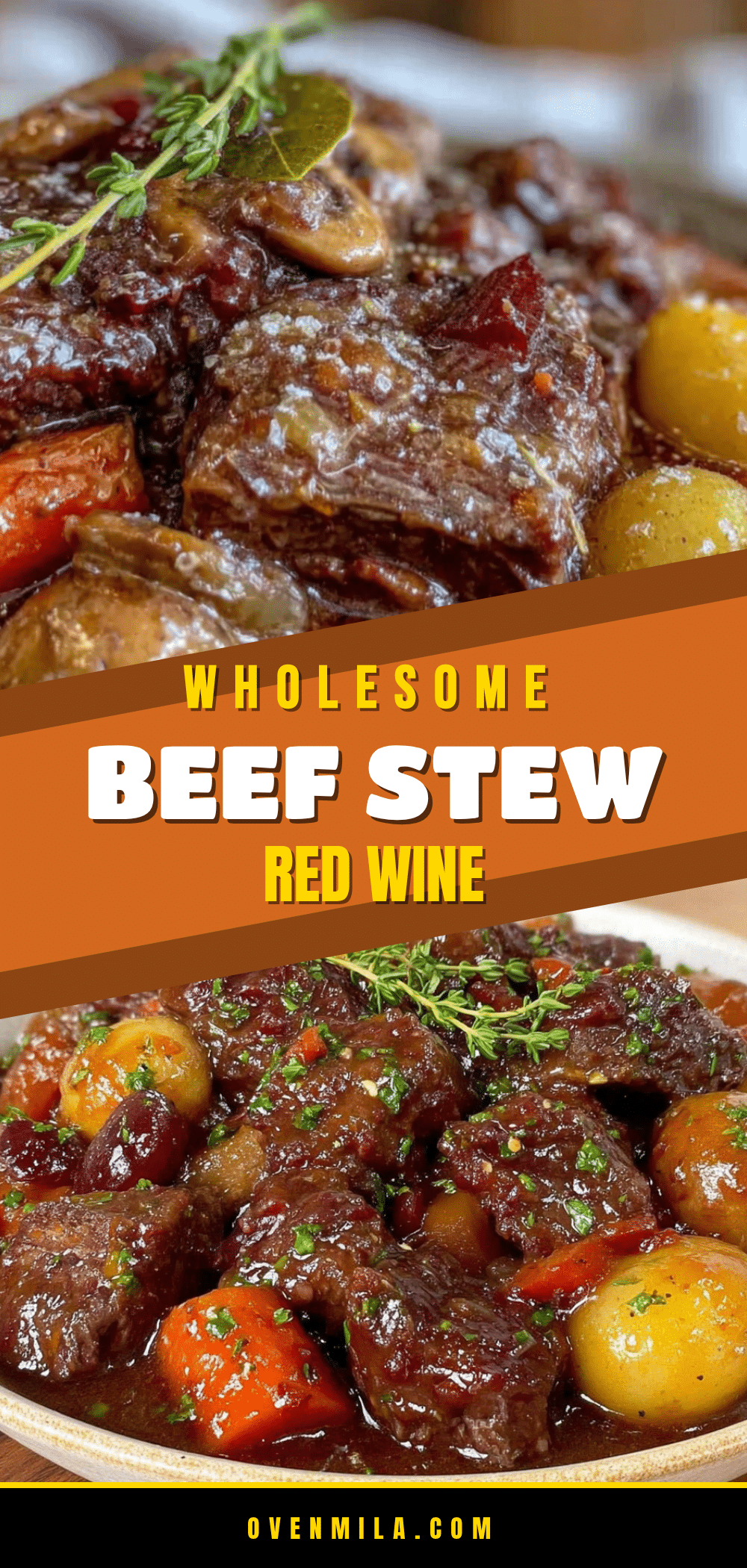
Slow Cooker Red Wine Beef Stew: Easy Homemade Comfort
This slow cooker red wine beef stew is a rich, velvety comfort food that turns stew-haters into fans. With tender beef, hearty vegetables, and a deeply flavorful broth, it’s the perfect set-it-and-forget-it meal for busy days.
- Prep Time: 20 minutes
- Cook Time: 6-8 hours (low) or 4-5 hours (high)
- Total Time: 6 hours 20 minutes to 8 hours 20 minutes
- Yield: 6 servings 1x
- Category: Main Course
- Cuisine: American
Ingredients
- 2 lbs beef chuck, cut into 1.5-inch cubes
- 1 ½ cups dry red wine (e.g., Cabernet Sauvignon or Merlot)
- 2 cups low-sodium beef broth
- 3 tablespoons tomato paste
- 2 medium yellow onions, diced
- 4 large carrots, peeled and cut into 1-inch chunks
- 3 stalks celery, cut into 1-inch pieces
- 4 cloves garlic, minced
- 1 lb baby potatoes (Yukon Gold or red), halved or quartered if large
- 3 tablespoons all-purpose flour
- 4 sprigs fresh thyme
- 2 bay leaves
- 2 tablespoons olive oil
- Salt and black pepper to taste
Instructions
- Pat the beef cubes dry with paper towels and season generously with salt and pepper.
- Heat 1 tablespoon olive oil in a large skillet over medium-high heat. Brown the beef in a single layer (work in batches if needed), letting each piece sit undisturbed for 2-3 minutes per side until a deep brown crust forms. Transfer browned beef to the slow cooker.
- Reduce heat to medium and add the remaining 1 tablespoon olive oil. Sauté onions, carrots, and celery for 3-4 minutes until onions soften. Add minced garlic and cook for 30 seconds more.
- Pour about ½ cup of the red wine into the skillet and scrape up browned bits with a wooden spoon. Let bubble for 30 seconds, then pour the vegetable mixture into the slow cooker over the beef.
- Add the remaining 1 cup red wine, beef broth, tomato paste, thyme sprigs, and bay leaves to the slow cooker. Stir gently to combine.
- Cover and cook on low for 6-8 hours or on high for 4-5 hours.
- About 2 hours before serving, add the baby potatoes to the slow cooker, stirring gently to submerge them in the broth.
- 10-15 minutes before serving, whisk together 3 tablespoons flour with ¼ cup cold water until smooth. Stir the slurry into the stew and cook uncovered on high, stirring occasionally, until thickened.
- Remove thyme sprigs and bay leaves. Taste and adjust seasoning with salt and pepper. Serve hot.
Notes
Don’t skip browning the beef—it creates deep flavor. Use a dry red wine you’d drink. Season in layers for best results. The stew tastes even better the next day. For gluten-free, substitute flour with 2 tablespoons cornstarch mixed with 2 tablespoons cold water.
Nutrition
- Serving Size: 1 serving (about 1.5
- Calories: 420450
- Sugar: 8
- Sodium: 680
- Fat: 18
- Saturated Fat: 6
- Carbohydrates: 28
- Fiber: 5
- Protein: 35
Keywords: slow cooker beef stew, red wine beef stew, comfort food, easy stew recipe, homemade stew