The woman at the community garden plot next to mine watched me staring at her collard greens for a good minute before she finally spoke. “You look like you’re trying to solve a puzzle, not pick a vegetable,” she said, wiping her hands on her apron. I laughed and admitted I was actually trying to figure out what to make for Thanksgiving—something that felt like home but didn’t require my grandmother’s three-day process. She nodded slowly, then said something I still think about: “The best dressing doesn’t come from a recipe book. It comes from knowing when to stop fussing.”
That conversation led to this Southern cornbread dressing recipe, and honestly, it changed my whole approach to holiday cooking. She didn’t hand me a written recipe—she just told me what she does, and I scribbled it down on the back of a seed packet. I’ve tweaked it over the years, adding a little here, taking away a pinch there, but the heart of it stays the same. You know that feeling when you’re rushing around on a Thursday night, the kids need homework help, and you still have to figure out dinner? This dressing works for those nights too, not just for holidays. I mean, who says you need a special occasion for cornbread dressing?
The first time I made it, I forgot to add the sage. I realized it halfway through baking and almost panicked, but you know what? It was still good. That’s the thing about this recipe—it’s forgiving. It doesn’t demand perfection. It just asks for good cornbread, some patience, and maybe a little conversation along the way. This is the dressing I make when I want to feel connected to something bigger than my own kitchen, and I think you’ll feel the same way.
Why You’ll Love This Recipe
Let me tell you why this Southern cornbread dressing has earned a permanent spot in my rotation—and why it’ll probably end up in yours too.
- Quick & Easy: This comes together in about 15 minutes of active prep time. The oven does the rest. It’s perfect for those weeknights when you want something comforting but don’t have hours to spend.
- Simple Ingredients: No fancy grocery trips needed. Cornmeal, buttermilk, onions, celery, chicken broth—these are things you probably already have or can grab without a second thought.
- Perfect for Weeknights and Holidays: I’ve served this on a random Tuesday with roasted chicken and at Thanksgiving dinner with all the trimmings. It works for both, and nobody judges.
- Crowd-Pleaser: My kids fight over the crispy edges, and my mother-in-law asked for the recipe—twice. That’s a win in my book.
- Unbelievably Delicious: The texture is what gets me every time. Soft and tender on the inside, golden and slightly crunchy on top. It’s comfort food that actually delivers.
What makes this different from other dressing recipes? It’s the buttermilk in the cornbread. That little tang cuts through the richness of the broth and creates a flavor that’s deeper and more interesting than plain cornbread. Plus, I use a mix of fresh and dried herbs, which gives you that bright, herby taste without needing to run to the store for fresh sage in December.
This recipe isn’t just good—it’s the kind that makes you close your eyes after the first bite. It’s Southern cooking made simple, with all the soul and none of the stress. Perfect for impressing guests without breaking a sweat, or turning a regular dinner into something you’ll remember.
What Ingredients You Will Need
This recipe uses simple, wholesome ingredients to deliver bold flavor and satisfying texture without the fuss. Most of these are pantry staples, which is exactly what you want on a busy weeknight.
For the Cornbread
- 1 cup yellow cornmeal (I prefer White Lily for its fine texture, but any brand works)
- 1 cup all-purpose flour (adds structure without making it tough)
- 1 tablespoon baking powder (make sure it’s fresh—test by dropping a pinch in hot water; if it fizzes, you’re good)
- 1 teaspoon salt
- 1 cup buttermilk (the secret to tender cornbread; if you don’t have it, add 1 tablespoon vinegar to regular milk and let it sit 5 minutes)
- 1 large egg (room temperature, so it mixes in smoothly)
- ¼ cup vegetable oil or melted butter (butter gives more flavor, oil makes it moister—your call)
For the Dressing
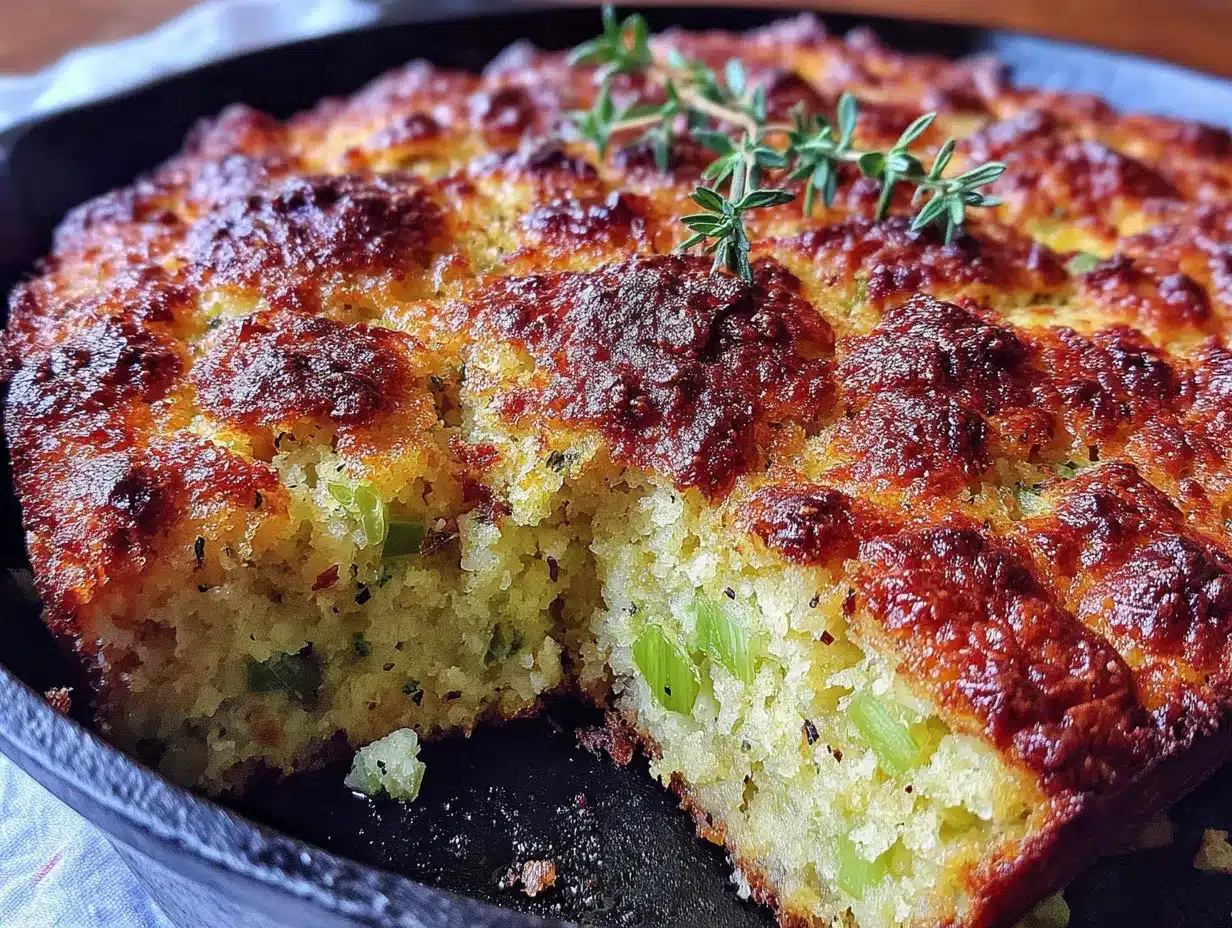
- 6 cups crumbled cornbread (day-old is best, but fresh works too—just let it cool completely)
- 1 cup finely chopped onion (about 1 medium onion; yellow or sweet both work)
- 1 cup finely chopped celery (about 3-4 stalks; include the leaves for extra flavor)
- 4 tablespoons unsalted butter (for sautéing the vegetables)
- 2 cups chicken or turkey broth (low-sodium so you control the salt; homemade is amazing, but store-bought is fine)
- 1 large egg, beaten (helps bind everything together)
- 1 teaspoon dried sage (or 1 tablespoon fresh, finely chopped)
- 1 teaspoon dried thyme (or 1 tablespoon fresh)
- ½ teaspoon black pepper (freshly ground if you have it)
- ½ teaspoon salt (adjust based on your broth’s saltiness)
Ingredient Tip: Look for stone-ground cornmeal if you can find it—it has a coarser texture that gives the dressing more body. I’ve used both, and the stone-ground version holds up better against the broth without turning mushy.
Substitution Guidance: Need it gluten-free? Swap the all-purpose flour with a 1:1 gluten-free blend. For a dairy-free version, use plant-based milk with a splash of lemon juice instead of buttermilk, and substitute the butter with olive oil or vegan butter. The texture will be slightly different, but the flavor still shines.
Equipment Needed
You don’t need a fancy kitchen for this one. Here’s what you’ll need:
- 9×13-inch baking dish (or any similar-sized casserole dish; glass or metal both work)
- Large skillet (for sautéing the vegetables; cast iron is ideal, but non-stick works)
- Mixing bowls (one medium for the cornbread batter, one large for the dressing mixture)
- Whisk (for the cornbread batter, though a fork works in a pinch)
- Wooden spoon or spatula (for stirring the dressing)
- Measuring cups and spoons (standard set is fine)
- Knife and cutting board (for chopping vegetables)
Budget-Friendly Tip: If you don’t have a 9×13 dish, use a cast-iron skillet for both baking the cornbread and the dressing. One less dish to wash, and the cast iron gives the dressing a gorgeous crust on the bottom. Just make sure to grease it well.
Personal Note: I’ve made this dressing in a disposable aluminum pan when I was traveling for Thanksgiving, and it turned out perfectly. Don’t overthink the equipment—this recipe is forgiving.
Preparation Method
Let’s get cooking. This method is broken into two parts: making the cornbread, then assembling the dressing. If you’re short on time, you can make the cornbread a day ahead—it actually works better when it’s slightly stale.
Step 1: Make the Cornbread
- Preheat your oven to 400°F (200°C). Grease your 9×13 baking dish or a 10-inch cast-iron skillet with butter or oil.
- In a medium bowl, whisk together 1 cup cornmeal, 1 cup flour, 1 tablespoon baking powder, and 1 teaspoon salt. Make sure there are no lumps—I use my fingers to break up any stubborn ones.
- In a separate small bowl, whisk together 1 cup buttermilk, 1 large egg, and ¼ cup melted butter or oil. The mixture should look smooth and slightly thick.
- Pour the wet ingredients into the dry ingredients and stir until just combined. Don’t overmix—a few lumps are fine. The batter should be thick but pourable, like a thick pancake batter.
- Pour the batter into your prepared dish and spread it evenly. Bake for 18-22 minutes, until the edges are golden brown and a toothpick inserted in the center comes out clean. The top should be lightly golden and the kitchen should smell like heaven.
- Let the cornbread cool completely. If you’re in a hurry, you can speed this up by cutting it into pieces and spreading them on a baking sheet. Once cool, crumble it into a large bowl. You should have about 6 cups of crumbled cornbread.
Step 2: Sauté the Vegetables
- While the cornbread cools, melt 4 tablespoons of butter in a large skillet over medium heat. The butter should sizzle gently when it hits the pan—if it’s smoking, the heat’s too high.
- Add 1 cup chopped onion and 1 cup chopped celery. Stir to coat them in the butter. Cook for 5-7 minutes, stirring occasionally, until the onions are translucent and the celery is softened. You should see the onions turning a pale, golden color—that’s when you know they’re ready.
- Remove from heat and let the vegetables cool slightly. This step is important—if you add hot vegetables to the cornbread, it can make the dressing gummy.
Step 3: Assemble the Dressing
- Preheat your oven to 375°F (190°C). Grease your baking dish again if you’re using the same one.
- To the bowl of crumbled cornbread, add the sautéed vegetables, 1 teaspoon dried sage, 1 teaspoon dried thyme, ½ teaspoon black pepper, and ½ teaspoon salt. Stir gently to combine—you want the herbs distributed evenly.
- In a small bowl, whisk together 2 cups chicken broth and 1 beaten egg. Pour this mixture over the cornbread mixture. Stir gently until everything is moistened. The mixture should look like a thick, scoopable batter—not soupy, not dry. If it looks dry, add a little more broth, ¼ cup at a time.
- Transfer the mixture to your greased baking dish and spread it evenly. The top should be relatively smooth, but a few peaks and valleys are fine—they’ll get crispy.
Step 4: Bake the Dressing
- Bake uncovered for 35-40 minutes, until the top is golden brown and the edges are crispy. The center should be set—if you jiggle the dish, it shouldn’t wobble.
- Let it rest for 5-10 minutes before serving. This allows the dressing to set up properly. If you cut into it too soon, it’ll be loose.
Sensory Cue: When it’s done, the top should be a deep golden brown, and you’ll see the edges pulling away slightly from the sides of the dish. The smell? Savory, buttery, and herbaceous—exactly what you want.
Cooking Tips & Techniques
After making this Southern cornbread dressing more times than I can count, I’ve learned a few things the hard way. Here’s what I wish someone had told me:
Don’t over-mix the dressing. I know it’s tempting to stir until everything is perfectly combined, but you’ll end up with a paste-like texture. Gently fold the ingredients together until they’re just moistened. A few lumps of cornbread are a good thing—they create those soft, tender pockets everyone loves.
Toast the cornbread first. If you have time, spread the crumbled cornbread on a baking sheet and toast it at 350°F for 10 minutes before mixing the dressing. This dries it out slightly, so it absorbs the broth better without turning mushy. I learned this after a particularly soggy Thanksgiving disaster—never again.
Watch your liquid ratio. Different cornbreads absorb liquid differently. If you used a particularly dry cornbread, you might need a little more broth. If your cornbread was very moist, start with less. The mixture should look like a thick, scoopable batter—not soupy. When in doubt, err on the side of slightly drier; you can always add a splash of broth before baking.
Use a thermometer for doneness. The internal temperature of the dressing should reach 165°F (74°C) when it’s fully cooked. This is especially important if you’re using raw eggs in the mixture. I use an instant-read thermometer for peace of mind.
Let it rest. I know the smell is intoxicating, but let the dressing rest for at least 10 minutes after it comes out of the oven. This allows the starches to set and the flavors to meld. Cutting into it too soon is the number one mistake I see people make—and it’s the difference between a perfect slice and a crumbly mess.
Variations & Adaptations
One of the best things about this recipe is how adaptable it is. Here are some ways I’ve changed it up over the years:
Dietary Variations
Gluten-Free: Use a gluten-free 1:1 flour blend in the cornbread and make sure your broth is gluten-free. The texture will be slightly more crumbly, but the flavor is still spot-on.
Dairy-Free: Substitute the butter with olive oil or vegan butter, and use unsweetened almond milk with a splash of lemon juice instead of buttermilk. The dressing will be a little less rich, but still delicious.
Flavor Twists
Add Sausage: Brown ½ pound of breakfast sausage or andouille, crumble it, and stir it into the dressing before baking. This makes it a meal on its own—I’ve done this for Sunday suppers and it’s always a hit.
Herb Swap: Not a fan of sage? Use fresh rosemary and parsley instead. Or add a teaspoon of poultry seasoning for a more traditional flavor profile.
Spicy Version: Add a diced jalapeño (seeds removed if you want less heat) to the sautéed vegetables, or stir in ½ teaspoon of cayenne pepper. My husband loves this version, especially with roasted chicken.
Cooking Method Adaptations
Slow Cooker: Assemble the dressing as directed, then transfer it to a greased slow cooker. Cook on low for 3-4 hours or on high for 1.5-2 hours. The top won’t get crispy, but you can broil it for 3-4 minutes at the end if you want that golden crust.
Make-Ahead: Assemble the dressing up to 24 hours in advance, cover it, and refrigerate. When you’re ready to bake, add 10-15 minutes to the cooking time since you’re starting from cold. This is my go-to for busy holidays—it saves so much stress.
Serving & Storage Suggestions
This Southern cornbread dressing is incredibly versatile when it comes to serving. Here’s how I handle it:
Serving Temperature: Serve it warm, straight from the oven. The contrast between the crispy top and the soft, tender interior is at its peak within the first 30 minutes. If you need to hold it, keep it covered with foil in a warm oven (200°F) for up to an hour.
Presentation: I like to serve it family-style in the baking dish, with a big spoon for scooping. Garnish with a sprinkle of fresh parsley or a few sage leaves if you’re feeling fancy. It’s rustic and beautiful without any fuss.
What to Serve With It: This dressing pairs beautifully with roasted chicken, turkey, or pork chops. For a complete meal, add a simple green salad or some roasted vegetables. I also love it alongside a bowl of soup—it’s like having a cornbread crouton in every bite.
Storage: Leftovers keep well in an airtight container in the refrigerator for up to 4 days. The flavors actually deepen overnight, so it’s even better the next day. To reheat, pop individual portions in the microwave for 30-60 seconds, or reheat the whole dish in a 350°F oven for 10-15 minutes.
Freezing: This dressing freezes beautifully. Let it cool completely, then wrap it tightly in plastic wrap and foil, or transfer it to a freezer-safe container. It keeps for up to 3 months. To serve, thaw overnight in the refrigerator and reheat in a 350°F oven until warmed through. I’ve done this for last-minute gatherings and nobody knew it wasn’t freshly made.
Nutritional Information & Benefits
Here’s a rough estimate of the nutritional content per serving (based on 12 servings):
- Calories: 220
- Fat: 10g
- Carbohydrates: 28g
- Protein: 5g
- Fiber: 2g
- Sodium: 480mg (varies based on broth)
Health Benefits: Cornmeal is a good source of complex carbohydrates and provides fiber, which supports digestive health. Celery adds vitamins K and C, plus antioxidants. The buttermilk contributes calcium and probiotics, which are great for gut health. While this isn’t a low-calorie dish, it’s made with whole ingredients and no artificial additives.
Dietary Considerations: This recipe contains gluten (from the flour) and dairy (from the butter and buttermilk). For gluten-free and dairy-free options, see the variations section above. It’s also nut-free and egg-free if you skip the egg in the dressing (though the texture will be slightly less firm).
Personal Wellness Note: I don’t believe in labeling food as “good” or “bad.” This dressing is comfort food, meant to be enjoyed in moderation. I serve it as part of a balanced meal with plenty of vegetables and lean protein. Life’s too short to count calories on Thanksgiving—or on a random Tuesday, for that matter.
Conclusion
This Southern cornbread dressing has become my go-to for everything from holiday feasts to ordinary weeknights. It’s the recipe that reminds me that good food doesn’t have to be complicated—it just has to be made with care and a little bit of patience. The woman from the community garden was right: the best dressing comes from knowing when to stop fussing and let the ingredients speak for themselves.
I hope you’ll give this recipe a try and make it your own. Add a little extra sage if that’s your thing, swap in different herbs, or throw in some sausage for a heartier meal. The beauty of this dressing is that it’s a starting point, not a rulebook. Play with it, experiment, and don’t be afraid to make mistakes—that’s how you learn what you love.
When you make it—and I hope you do—come back and let me know how it turned out. Did you add something unexpected? Did your family fight over the crispy edges? I’d love to hear your stories. And if you’re looking for more weeknight-friendly comfort food, check out our easy skillet chicken pot pie or our one-pot macaroni and cheese—both are lifesavers on busy nights.
Happy cooking, friend. I’m rooting for you and your dressing.
Frequently Asked Questions
Can I use store-bought cornbread for this dressing?
Absolutely. If you’re short on time, grab a loaf of prepared cornbread from the bakery section of your grocery store. Just make sure it’s plain cornbread—not the sweet, cake-like kind. You want it to be on the savory side so it doesn’t compete with the herbs and broth.
How do I keep my dressing from getting too dry or too soggy?
The key is the liquid ratio. Start with 2 cups of broth and add more if needed, ¼ cup at a time. The mixture should look like a thick, scoopable batter—not soupy. If it’s too dry, add more broth. If it’s too wet, add a little more crumbled cornbread or let it sit for 10 minutes before baking to absorb the liquid.
Can I make this dressing ahead of time?
Yes! You can assemble the dressing up to 24 hours in advance, cover it, and refrigerate. When you’re ready to bake, add 10-15 minutes to the cooking time since you’re starting from cold. This is a lifesaver for busy holidays or when you want to prep dinner in the morning.
What’s the difference between dressing and stuffing?
Great question! The main difference is how they’re cooked. Stuffing is cooked inside the turkey, while dressing is baked in a separate dish. This recipe is technically a dressing because it’s baked on its own. Cooking it separately gives you more control over the texture and ensures it’s fully cooked without worrying about the turkey’s internal temperature.
Can I freeze leftover dressing?
Yes, and it freezes beautifully. Let the dressing cool completely, then wrap it tightly in plastic wrap and foil, or transfer it to a freezer-safe container. It keeps for up to 3 months. To serve, thaw overnight in the refrigerator and reheat in a 350°F oven until warmed through. The texture will be almost as good as fresh.
Pin This Recipe!
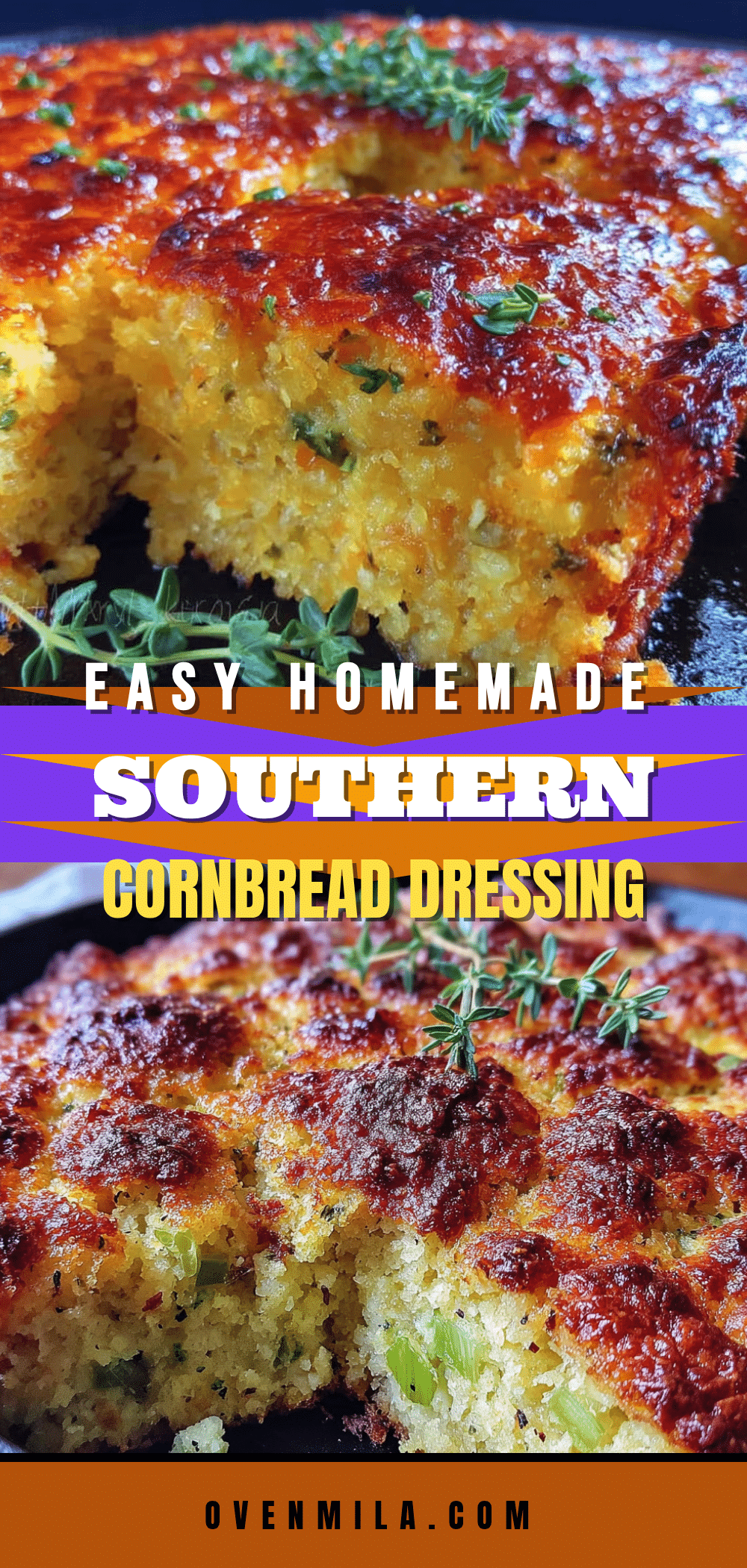
Best Easy Southern Cornbread Dressing Recipe

This Southern cornbread dressing is a forgiving, crowd-pleasing comfort food that works for both weeknights and holidays. Made with simple ingredients like cornmeal, buttermilk, and fresh herbs, it delivers a tender interior and golden, crispy top.
- Prep Time: 15 minutes
- Cook Time: 35-40 minutes
- Total Time: 50-55 minutes
- Yield: 12 servings 1x
- Category: Side Dish
- Cuisine: Southern
Ingredients
- 1 cup yellow cornmeal
- 1 cup all-purpose flour
- 1 tablespoon baking powder
- 1 teaspoon salt
- 1 cup buttermilk
- 1 large egg
- ¼ cup vegetable oil or melted butter
- 6 cups crumbled cornbread
- 1 cup finely chopped onion
- 1 cup finely chopped celery
- 4 tablespoons unsalted butter
- 2 cups chicken or turkey broth
- 1 large egg, beaten
- 1 teaspoon dried sage
- 1 teaspoon dried thyme
- ½ teaspoon black pepper
- ½ teaspoon salt
Instructions
- Preheat oven to 400°F (200°C). Grease a 9×13 baking dish or 10-inch cast-iron skillet with butter or oil.
- In a medium bowl, whisk together cornmeal, flour, baking powder, and salt.
- In a separate small bowl, whisk together buttermilk, 1 egg, and melted butter or oil.
- Pour wet ingredients into dry ingredients and stir until just combined (a few lumps are fine).
- Pour batter into prepared dish and bake for 18-22 minutes until edges are golden and a toothpick inserted in center comes out clean. Let cool completely, then crumble into a large bowl (about 6 cups).
- While cornbread cools, melt 4 tablespoons butter in a large skillet over medium heat. Add onion and celery; cook 5-7 minutes until onions are translucent and celery softened. Remove from heat and let cool slightly.
- Preheat oven to 375°F (190°C). Grease baking dish again.
- To the crumbled cornbread, add sautéed vegetables, sage, thyme, black pepper, and salt. Stir gently to combine.
- In a small bowl, whisk together 2 cups broth and 1 beaten egg. Pour over cornbread mixture and stir gently until moistened (mixture should be thick and scoopable, not soupy).
- Transfer mixture to greased baking dish and spread evenly.
- Bake uncovered for 35-40 minutes until top is golden brown and edges are crispy. Center should be set (no wobble).
- Let rest 5-10 minutes before serving.
Notes
For best texture, use day-old cornbread or toast crumbled cornbread at 350°F for 10 minutes before mixing. Start with 2 cups broth and add more if needed. Let dressing rest after baking to set properly. Can be assembled up to 24 hours ahead and refrigerated; add 10-15 minutes to baking time.
Nutrition
- Serving Size: 1 serving
- Calories: 220
- Sugar: 3
- Sodium: 480
- Fat: 10
- Saturated Fat: 4
- Carbohydrates: 28
- Fiber: 2
- Protein: 5
Keywords: cornbread dressing, southern dressing, thanksgiving dressing, cornbread stuffing, holiday side dish