This was supposed to be eggnog. I mean, that was the plan. It was December, I was in my tiny apartment kitchen, and I had this vision of making a creamy, spiced holiday drink from scratch. I had the eggs, the milk, the nutmeg. I was feeling very Martha Stewart, honestly. But somewhere between cracking the sixth egg and realizing I was out of heavy cream, the whole thing fell apart. I stood there, staring at a bowl of whisked eggs and sugar, and felt that familiar kitchen panic rising. You know that feeling when you’ve already committed and there’s no turning back?
I grabbed the wrong can from the pantry—condensed milk instead of evaporated—and then, in a moment of pure desperation, I spotted the can of coconut cream I’d bought for a curry I never made. I poured it in. I added cinnamon, vanilla, a splash of rum I had tucked away from a party months ago. I tasted it, and honestly, I laughed out loud. It was nothing like the eggnog I’d planned. It was better. It was creamy, tropical, and somehow felt like a warm hug in a glass. I didn’t know it then, but I’d just stumbled into making a very loose, very accidental version of Puerto Rican coquito.
That first batch was gone in two days. I made it again, this time on purpose, and started reading about the real thing. Coquito is a traditional Puerto Rican holiday drink—like a coconut eggnog, but way more interesting. It’s rich, spiced, and absolutely perfect for a slow evening at home when the weather is cold and you need something to fix a rough day. This recipe is the result of that happy accident and a whole lot of testing. It’s the kind of drink that makes you close your eyes after the first sip. Let me show you how to make it.
Why You’ll Love This Recipe
This cozy homemade Puerto Rican coquito isn’t just another holiday drink. It’s the one that will have your friends asking for the recipe before they finish their first glass. I’ve tested this version more times than I can count, tweaking the balance of coconut and spice until it was just right. It’s been family-approved by my neighbor Carmen, who grew up drinking the real deal in San Juan, and she gave it a nod of approval. That’s the kind of trust this recipe carries.
- Quick & Easy: Comes together in about 10 minutes of active prep. No cooking required, just mixing and chilling. Perfect for last-minute holiday gatherings or a cozy night in.
- Simple Ingredients: You don’t need a specialty grocery store. Coconut cream, condensed milk, cinnamon, vanilla, and rum—most of these are probably in your pantry or fridge right now.
- Perfect for Cozy Evenings: This is made for slow nights, cold weather, or days when you need a little comfort. It’s like a blanket in a glass.
- Crowd-Pleaser: I’ve served this at holiday parties and casual get-togethers. It disappears fast. Even people who say they don’t like coconut end up coming back for more.
- Unbelievably Delicious: The texture is silky and rich, the spices are warm without being overpowering, and the coconut flavor is front and center. It’s next-level comfort.
What makes this recipe different from the rest? It’s the balance. Some coquitos are too sweet or too thin. This one has the perfect ratio of creaminess to spice, and the secret is using a mix of coconut cream and condensed milk for that ultra-lush texture. It’s not just another version—it’s the one you’ll come back to year after year. Honestly, it’s the kind of drink that turns a simple evening into something memorable.
What Ingredients You Will Need
This recipe uses simple, wholesome ingredients that come together to create a drink that feels both luxurious and familiar. Most of these are pantry staples if you keep a well-stocked kitchen for baking or tropical cooking. Here’s what you’ll need:
- Coconut cream – 1 can (13.5 oz or 400 ml). This is the base of the coquito and gives it that thick, creamy texture. I prefer the brand Chaokoh or Goya for the richest consistency. Don’t confuse this with coconut milk—coconut cream is thicker and less watery.
- Sweetened condensed milk – 1 can (14 oz or 396 grams). This adds sweetness and body. It’s what makes the coquito feel indulgent. You can use a dairy-free condensed milk if needed, but the texture will be slightly thinner.
- Evaporated milk – 1 can (12 oz or 354 ml). This thins out the coquito just enough so it’s drinkable but still rich. It also adds a subtle caramelized flavor.
- Cream of coconut – 1/2 cup (about 120 ml). This is different from coconut cream—it’s sweetened and often used in cocktails. I like Coco López for this. It adds extra sweetness and a silky finish.
- White rum – 1 to 1.5 cups (240 to 360 ml), depending on your preference. Bacardi or Don Q work great. You can adjust the amount to make it as strong or mild as you like.
- Cinnamon sticks – 2 whole sticks. These infuse the coquito with a warm, spicy note as it chills. Don’t skip them—they make a big difference.
- Vanilla extract – 1 tablespoon. Use pure vanilla extract if you can. It rounds out the flavors and adds depth.
- Ground cinnamon – 1 teaspoon. For extra spice. I like to sprinkle a little on top when serving, too.
- Ground nutmeg – 1/2 teaspoon. Freshly grated is best, but pre-ground works in a pinch.
- Ground cloves – 1/4 teaspoon. Just a pinch—these are strong. They add that classic holiday warmth.
- Salt – A tiny pinch. This balances the sweetness and makes all the flavors pop.
Substitution guidance: If you want a dairy-free version, use full-fat canned coconut milk instead of evaporated milk and a dairy-free sweetened condensed milk. The texture will be a little thinner but still delicious. For a non-alcoholic version, simply leave out the rum and add an extra splash of coconut milk or water to adjust the consistency. You can also add a teaspoon of rum extract for that flavor without the alcohol.
Equipment Needed
You don’t need much to make this cozy homemade Puerto Rican coquito. That’s part of the charm. Here’s what I use:
- Large blender – A high-speed blender works best for getting that silky smooth texture. I use a Vitamix, but any blender will do. If yours is on the weaker side, just blend a little longer.
- Fine-mesh strainer – Optional, but I recommend it. Straining the coquito after blending removes any tiny bits of spice or undissolved coconut cream. It makes the final drink velvety smooth.
- Large pitcher or glass bottle – For storing the coquito in the fridge. I like using a glass swing-top bottle because it looks pretty, but a pitcher with a lid works just fine.
- Measuring cups and spoons – For accuracy. I’ve learned the hard way that eyeballing the rum can lead to a very strong batch.
- Rubber spatula – To scrape every last bit of coconut cream out of the can. Waste not, want not.
If you don’t have a blender, you can whisk everything together by hand in a large bowl, but you’ll need to make sure the coconut cream is fully incorporated. It takes a bit more elbow grease, but it works. I’ve done it before when my blender was on the fritz, and it turned out fine—just a little more textured.
Preparation Method
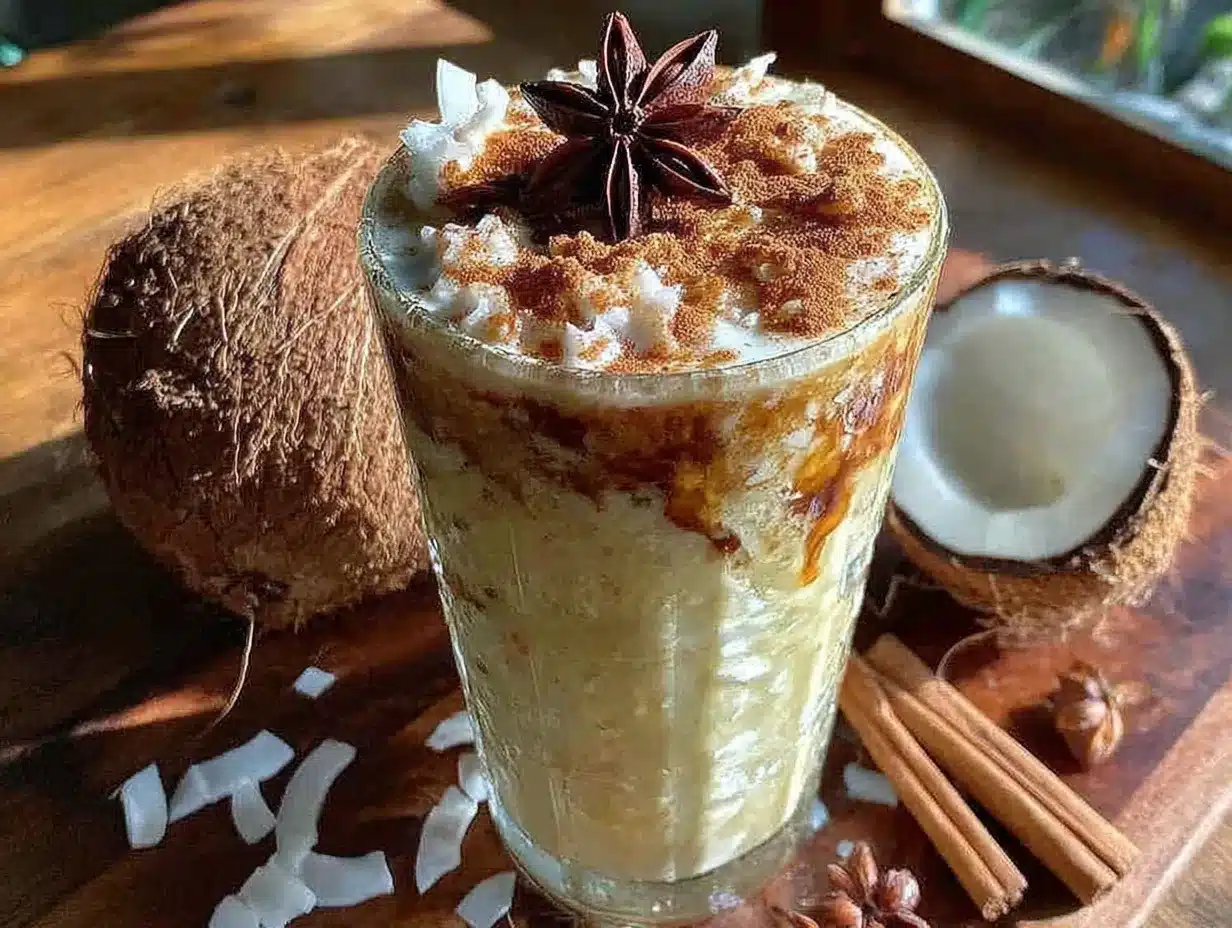
Making coquito is almost embarrassingly easy. The hardest part is waiting for it to chill. Here’s how I do it, step by step:
- Prep your ingredients. Take the cans of coconut cream and cream of coconut out of the fridge about 15 minutes before you start. You want them to be at room temperature so they blend smoothly. If they’re too cold, the cream can seize up and leave lumps.
- Blend the base. Add the coconut cream, sweetened condensed milk, evaporated milk, and cream of coconut to your blender. Blend on low for about 30 seconds until everything is combined. You’ll see it turn a pale, creamy white.
- Add the spices. Drop in the cinnamon sticks, vanilla extract, ground cinnamon, nutmeg, cloves, and a tiny pinch of salt. Yes, the whole cinnamon sticks go in the blender. Don’t worry—they’ll get broken down a bit, and you’ll strain them out later. Blend on medium for 45 seconds. The smell at this point is incredible. It’s like Christmas in a blender.
- Pour in the rum. Add 1 cup of white rum to start. Blend for another 15 seconds. Taste it. If you want it stronger, add another 1/4 to 1/2 cup and blend again. I usually go for 1.5 cups because I like a little kick, but you do you.
- Strain the mixture. Place your fine-mesh strainer over a large bowl or directly over your pitcher. Pour the coquito through the strainer. This catches the cinnamon stick pieces and any tiny clumps. Use a spatula to gently stir the mixture in the strainer to help it pass through. You’ll be left with a perfectly smooth liquid.
- Chill. Transfer the strained coquito to your pitcher or bottle. Seal it tight and place it in the refrigerator for at least 4 hours, but overnight is better. The flavors need time to meld and deepen. I know it’s hard to wait, but trust me—it’s worth it.
- Shake before serving. Coquito can separate a little as it sits, especially if it’s been in the fridge for a while. Give the bottle a good shake before you pour. Serve it cold in small glasses—like a shot glass or a small tumbler. It’s rich, so a little goes a long way.
- Garnish (optional). Sprinkle a little ground cinnamon or nutmeg on top. You can also add a cinnamon stick to each glass for presentation. It looks beautiful and adds a little extra aroma.
Troubleshooting tip: If your coquito tastes too sweet, add a splash more rum or a tiny bit of milk to balance it out. If it’s too thin, blend in a little more coconut cream. If it’s too thick, add a splash of evaporated milk or water. It’s very forgiving.
Cooking Tips & Techniques
I’ve made this cozy homemade Puerto Rican coquito at least a dozen times, and I’ve learned a few things along the way. Here are my best tips:
Don’t skip the straining step. I know it’s an extra step, and I’ve definitely been lazy and skipped it. The result was a coquito with little gritty bits of cinnamon and clove. It wasn’t bad, but it wasn’t as smooth. Straining takes 30 seconds and makes a huge difference in texture. Just do it.
Use room temperature ingredients. This is one of those lessons I learned the hard way. I once used cold coconut cream straight from the fridge, and it formed little lumps that wouldn’t blend out. Let everything sit out for 15 minutes before you start. Your blender will thank you.
Taste as you go. Everyone’s palate is different. Some people like their coquito very sweet, others prefer it more boozy. Start with the base recipe and adjust. I always taste after adding the first cup of rum and decide from there. You can always add more, but you can’t take it out.
Let it rest overnight. I know I said at least 4 hours, but honestly, overnight is the sweet spot. The first time I made it, I was impatient and tried it after 2 hours. It was good. But the next day? It was amazing. The spices had time to infuse, and the texture was perfectly uniform. Patience pays off here.
Keep it cold. Coquito is best served very cold. I like to pop the glasses in the freezer for 10 minutes before pouring. It keeps the drink frosty and refreshing, even though it’s rich and creamy.
Variations & Adaptations
One of the best things about coquito is how easy it is to customize. Here are a few variations I’ve tried and loved:
Spiced Coquito: Add a star anise pod or a strip of orange peel to the blender along with the spices. It gives the coquito a subtle, aromatic twist that’s perfect for the holidays. I did this for a Christmas party last year, and everyone asked what that “extra something” was.
Dairy-Free Coquito: Replace the evaporated milk with full-fat canned coconut milk and use a dairy-free sweetened condensed milk. The texture will be a little thinner, but the coconut flavor becomes even more pronounced. It’s still incredibly creamy and satisfying.
Chocolate Coquito: Add 1/4 cup of unsweetened cocoa powder to the blender with the other ingredients. It turns into a rich, chocolatey version that tastes like a boozy coconut hot chocolate. I made this for a New Year’s Eve party, and it was a hit. Just be sure to blend well to avoid cocoa lumps.
Less Sweet Version: If you’re not a fan of super sweet drinks, use light coconut milk instead of cream of coconut, and reduce the condensed milk to 3/4 of a can. Add a little extra rum to balance the sweetness. It’s still delicious, just more grown-up and less dessert-like.
I’ve also tried making a batch with spiced rum instead of white rum, and it was fantastic. The extra flavors from the rum complemented the cinnamon and cloves beautifully. Just be aware that spiced rum is usually a little sweeter, so you might want to adjust the condensed milk accordingly.
Serving & Storage Suggestions
Coquito is traditionally served cold, straight from the fridge. Pour it into small glasses—like a shot glass, a small tumbler, or even a cordial glass. It’s rich and decadent, so a little goes a long way. I like to serve it alongside a plate of crispy garlic chicken for a surprising but delicious holiday pairing—the savory, garlicky crunch balances the sweetness of the coquito perfectly.
For presentation, sprinkle a little ground cinnamon or nutmeg on top. You can also add a cinnamon stick to each glass for a festive touch. If you’re feeling fancy, a small star anise or a strip of orange peel makes a beautiful garnish.
Storage: Coquito keeps well in the refrigerator for up to 2 weeks. Store it in a tightly sealed bottle or pitcher. The flavors actually get better after a day or two as the spices continue to infuse. I’ve had batches that tasted even better on day 5 than on day 1.
Freezing: You can freeze coquito in an airtight container for up to 3 months. Thaw it in the refrigerator overnight and give it a good shake before serving. The texture might be slightly different after freezing, but it’s still delicious.
Reheating: Coquito is meant to be served cold, but if you prefer it warm, you can gently heat it in a saucepan over low heat. Don’t boil it, or it might curdle. Warm coquito is like a spiced coconut latte—perfect for a cold winter morning.
One thing I’ve noticed: the coquito tends to separate a little after a few days in the fridge. Don’t worry—that’s normal. Just give the bottle a good shake before pouring, and it will come back together.
Nutritional Information & Benefits
This cozy homemade Puerto Rican coquito is definitely an indulgence, but it has some redeeming qualities. Here’s a rough estimate per serving (about 4 ounces or 120 ml, assuming 12 servings per batch):
- Calories: Approximately 280-320
- Fat: 14-18 grams (mostly from coconut cream)
- Carbohydrates: 28-35 grams (from sugars in condensed milk and cream of coconut)
- Protein: 3-4 grams
- Alcohol: Varies based on rum amount
Health benefits: Coconut cream contains medium-chain triglycerides (MCTs), which are a type of fat that may support brain function and provide quick energy. Cinnamon is known for its anti-inflammatory properties and can help regulate blood sugar. Cloves are packed with antioxidants. Of course, these benefits are small in a drink like this, but it’s nice to know there’s some good stuff in there.
Dietary considerations: This recipe contains dairy and coconut. It’s gluten-free as written. For a dairy-free version, see the variations section. It’s also relatively low in protein, so it’s not a meal replacement—just a treat.
Allergens: Coconut (tree nut), dairy (milk). If you have a tree nut allergy, check your coconut cream label, as some brands are processed in facilities that handle other tree nuts.
I like to think of coquito as a holiday tradition that brings a little warmth and joy. It’s not health food, but it’s made with real ingredients, and that counts for something. Enjoy it in moderation, and savor every sip.
Conclusion
This cozy homemade Puerto Rican coquito started as a complete accident—a failed attempt at eggnog that turned into something I now make every single holiday season. It’s creamy, spiced, and absolutely perfect for those slow evenings when you need a little comfort. Whether you’re curled up by the fire, hosting a holiday party, or just trying to shake off a rough day, this drink delivers.
I love that it’s so easy to customize. You can make it stronger, sweeter, spicier, or dairy-free. It’s forgiving and flexible, which is exactly the kind of recipe I want in my life. And honestly, the way it fills your kitchen with the smell of cinnamon and coconut? That alone is worth making it.
I’d love to hear how yours turns out. Did you add a twist? Use a different rum? Serve it at a party? Drop a comment below and let me know. And if you’re looking for another cozy recipe to pair with it, try my cozy homemade Puerto Rican coquito—wait, that’s this one! How about my classic baked mac and cheese instead? It’s the perfect savory companion to this sweet, spiced drink.
Go ahead, make a batch. Pour yourself a glass. And remember: sometimes the best recipes come from the biggest mess-ups. Cheers!
Frequently Asked Questions
Can I make coquito without alcohol?
Absolutely. Just leave out the rum and add an extra splash of coconut milk or water to adjust the consistency. You can also add a teaspoon of rum extract for that flavor without the alcohol. It’s still delicious and perfect for kids or anyone who prefers a non-alcoholic version.
How long does coquito last in the fridge?
Coquito keeps well for up to 2 weeks in the refrigerator when stored in a tightly sealed container. The flavors actually deepen over the first few days, so it might taste even better on day 3 than on day 1. Just give it a good shake before serving, as it can separate slightly.
Can I freeze coquito?
Yes! Freeze coquito in an airtight container for up to 3 months. Thaw it overnight in the refrigerator and shake well before serving. The texture might be slightly different after freezing, but it’s still tasty. I’ve done this when I wanted to have a batch ready for unexpected guests.
Why is my coquito grainy?
Grainy coquito usually happens when the coconut cream is too cold or wasn’t blended enough. Make sure your ingredients are at room temperature before blending, and blend for a full 45-60 seconds. Straining the mixture through a fine-mesh strainer also helps remove any undissolved bits. If it’s still grainy, try adding a splash of warm milk and blending again.
Can I use light coconut milk instead of coconut cream?
You can, but the coquito will be much thinner and less creamy. Coconut cream is what gives coquito its signature rich texture. If you only have light coconut milk, you can try adding a little extra cream of coconut or condensed milk to thicken it up. It won’t be the same, but it will still taste good.
Pin This Recipe!
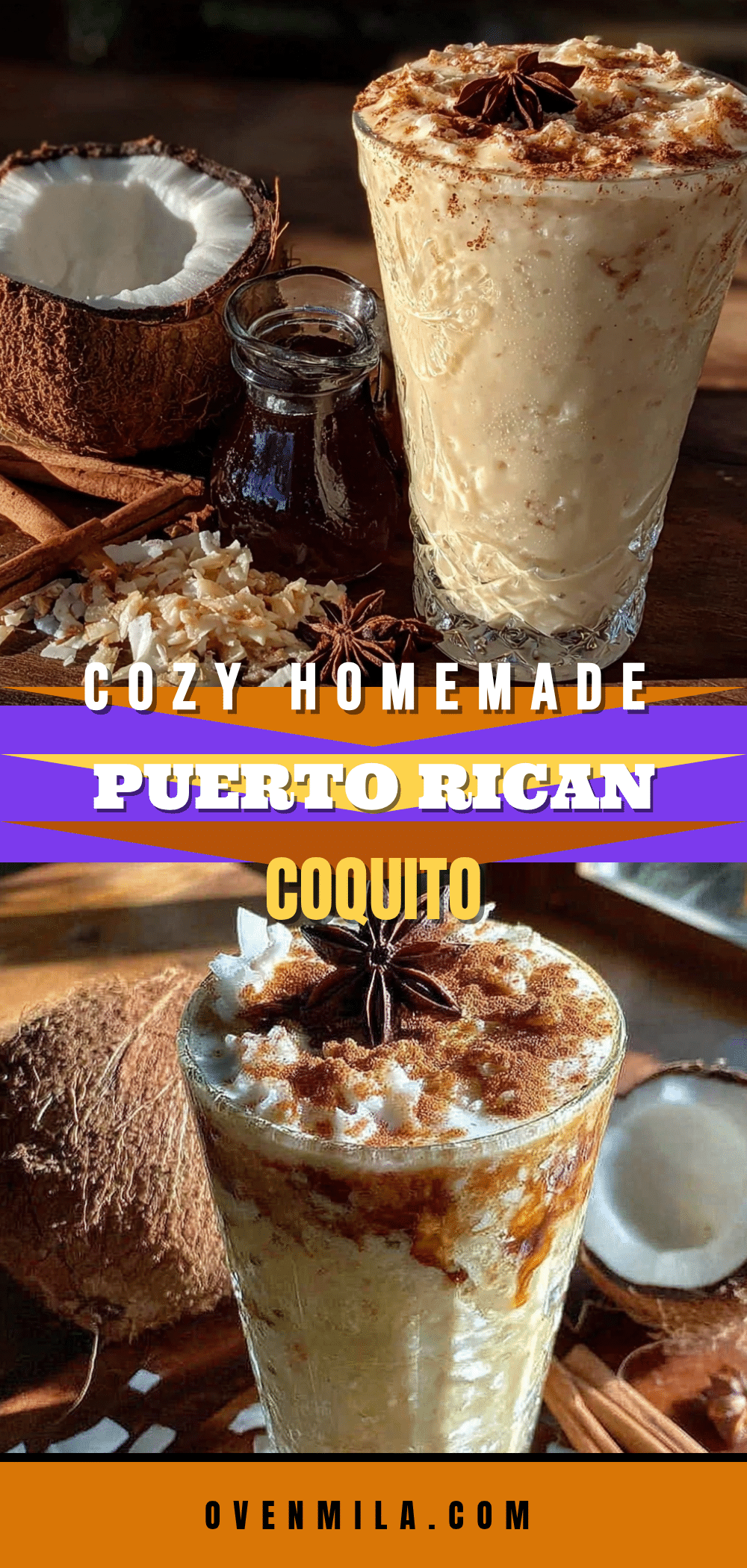
Cozy Homemade Puerto Rican Coquito – Best Easy Recipe
A creamy, spiced coconut holiday drink that’s like a warm hug in a glass. This easy no-cook recipe is perfect for cozy evenings and holiday gatherings.
- Prep Time: 10 minutes
- Cook Time: 0 minutes
- Total Time: 4 hours 10 minutes (includes chilling time)
- Yield: 12 servings 1x
- Category: Beverage
- Cuisine: Puerto Rican
Ingredients
- 1 can (13.5 oz) coconut cream
- 1 can (14 oz) sweetened condensed milk
- 1 can (12 oz) evaporated milk
- 1/2 cup cream of coconut (e.g., Coco López)
- 1 to 1.5 cups white rum (e.g., Bacardi or Don Q)
- 2 cinnamon sticks
- 1 tablespoon vanilla extract
- 1 teaspoon ground cinnamon
- 1/2 teaspoon ground nutmeg
- 1/4 teaspoon ground cloves
- A tiny pinch of salt
Instructions
- Take the cans of coconut cream and cream of coconut out of the fridge about 15 minutes before starting to bring them to room temperature.
- Add the coconut cream, sweetened condensed milk, evaporated milk, and cream of coconut to a blender. Blend on low for about 30 seconds until combined.
- Add the cinnamon sticks, vanilla extract, ground cinnamon, nutmeg, cloves, and a tiny pinch of salt. Blend on medium for 45 seconds.
- Add 1 cup of white rum and blend for another 15 seconds. Taste and add more rum if desired (up to 1.5 cups total), blending again.
- Place a fine-mesh strainer over a large bowl or pitcher. Pour the coquito through the strainer to remove cinnamon stick pieces and any clumps. Use a spatula to stir the mixture in the strainer to help it pass through.
- Transfer the strained coquito to a pitcher or bottle. Seal tightly and refrigerate for at least 4 hours, preferably overnight.
- Shake the bottle well before serving. Serve cold in small glasses. Optionally, garnish with a sprinkle of ground cinnamon or nutmeg, or a cinnamon stick.
Notes
For a dairy-free version, use full-fat canned coconut milk instead of evaporated milk and a dairy-free sweetened condensed milk. For a non-alcoholic version, omit the rum and add an extra splash of coconut milk or water, or use 1 teaspoon of rum extract. Let the coquito rest overnight for the best flavor. Shake before serving as it may separate.
Nutrition
- Serving Size: 4 ounces (120 ml)
- Calories: 300
- Sugar: 28
- Sodium: 80
- Fat: 16
- Saturated Fat: 12
- Carbohydrates: 31
- Fiber: 1
- Protein: 3.5
Keywords: coquito, Puerto Rican coquito, coconut eggnog, holiday drink, Christmas drink, coconut cocktail, easy coquito recipe