I burned the bottom crust of my focaccia at least three times before I finally got it right. Honestly, I never thought a no-knead bread like this could be crispy and flavorful without turning into a flat, soggy mess. The first few tries were a total disaster: dough sticking to the pan, undercooked centers, and a crust that tasted like it had been through a bonfire. But then, something clicked. I realized the secret was all in patience and the right baking surface, plus a modest sprinkle of sea salt and fresh rosemary that made all the difference. This Easy Crispy No-Knead Rosemary Sea Salt Focaccia didn’t just become another bread recipe in my collection—it turned into the one I reach for when I want something comforting yet effortless.
It’s funny because I’m not even a bread person by nature. I used to shy away from recipes that demanded kneading or complicated timing, but this focaccia taught me that homemade bread can be surprisingly simple. The smell of rosemary and olive oil filling the kitchen, combined with that irresistible crunch under your teeth, makes all those earlier burnt crusts worth it. It’s the kind of bread that feels like a small victory, a humble but satisfying reward after a long day.
What stuck with me, in the end, was how approachable this recipe is—no fancy equipment, no intimidating steps, just a few straightforward ingredients and a bit of patience. If you ask me, this recipe promises more than just bread; it’s a quiet moment of homemade goodness that you can savor anytime.
Why You’ll Love This Recipe
After testing this recipe multiple times (including those well-burned attempts), I can say it’s truly a keeper. Here’s why this Easy Crispy No-Knead Rosemary Sea Salt Focaccia stands out:
- Quick & Easy: The no-knead dough comes together in minutes, and the resting time does all the heavy lifting. Perfect for busy weeknights or last-minute cravings.
- Simple Ingredients: You don’t need a fancy pantry. Flour, yeast, olive oil, fresh rosemary, and sea salt are all it takes, and you probably have them on hand already.
- Perfect for Casual Gatherings: Whether it’s a cozy dinner or a spontaneous snack, this focaccia pairs well with everything from soups to salads or even as a base for sandwiches.
- Crowd-Pleaser: Friends and family always ask for seconds. The crispy exterior with a soft, airy inside is just plain irresistible.
- Unbelievably Delicious: The combination of fragrant rosemary and flaky sea salt on top makes every bite a little celebration of flavor.
What really sets this recipe apart is the balance between simplicity and texture. I’ve tried versions that use heavy kneading or multiple folds, but this one achieves that signature focaccia crust with barely any fuss. Plus, using coarse sea salt rather than fine salt on top gives it a subtle crunch and sharp saltiness that wakes up the flavors.
It’s the kind of recipe that makes you close your eyes after the first bite—comfort food without the guilt or hassle. Honestly, it’s become my go-to when I want homemade bread but don’t want to spend hours in the kitchen. If you’ve ever been intimidated by bread baking, this focaccia is your friendly introduction.
What Ingredients You Will Need
This Easy Crispy No-Knead Rosemary Sea Salt Focaccia uses simple, wholesome ingredients that come together to create bold flavor and a satisfying texture without fuss. Most of these are pantry staples, and the fresh rosemary adds that seasonal touch that makes it special.
- All-purpose flour (3 cups / 360 g) – The base of your dough. I prefer King Arthur for consistent texture.
- Instant yeast (1 teaspoon / 3 g) – No need to proof, just mix in directly.
- Warm water (1 ½ cups / 360 ml) – Room temperature works too; just avoid hot water that kills yeast.
- Extra virgin olive oil (¼ cup / 60 ml) – For the dough and drizzling; adds richness and helps crisping.
- Fine sea salt (1 teaspoon / 5 g) – Incorporated in the dough for balanced flavor.
- Fresh rosemary (2 tablespoons, chopped) – The star herb for aroma and flavor; use fresh for best results.
- Coarse sea salt flakes (1 tablespoon) – Sprinkled on top before baking for that signature salty crunch.
Optional Ingredients:
- Garlic powder (½ teaspoon) – If you want a subtle garlicky note, sprinkle over the dough with rosemary.
- Semolina flour – Dust the baking surface with this for extra crispiness.
If you want to swap things up, you can try using bread flour for a chewier crumb, or substitute the rosemary with thyme or oregano for a different herbal twist. For a gluten-free option, almond or oat flour won’t work as a direct substitute here, but you could try a gluten-free all-purpose blend, though texture will change.
Equipment Needed
- Large mixing bowl: Big enough to hold the dough as it rises; glass or stainless steel works well.
- Measuring cups and spoons: Precise measurement helps, especially for yeast and salt.
- Wooden spoon or spatula: For mixing the sticky dough without needing to knead.
- 12×16-inch baking sheet or rimmed pan: A sturdy pan ensures even browning; I’ve used both metal and stoneware with success.
- Parchment paper or silicone baking mat: Optional, but helps with easy removal and cleanup.
- Kitchen towel or plastic wrap: To cover the dough while it rises.
You don’t need a stand mixer or bread machine here, which is great if you’re working with limited equipment. If you don’t have fresh rosemary, dried will do—just use less since it’s more concentrated. Also, I find a rimmed sheet pan helps keep the dough contained as it spreads out.
Preparation Method
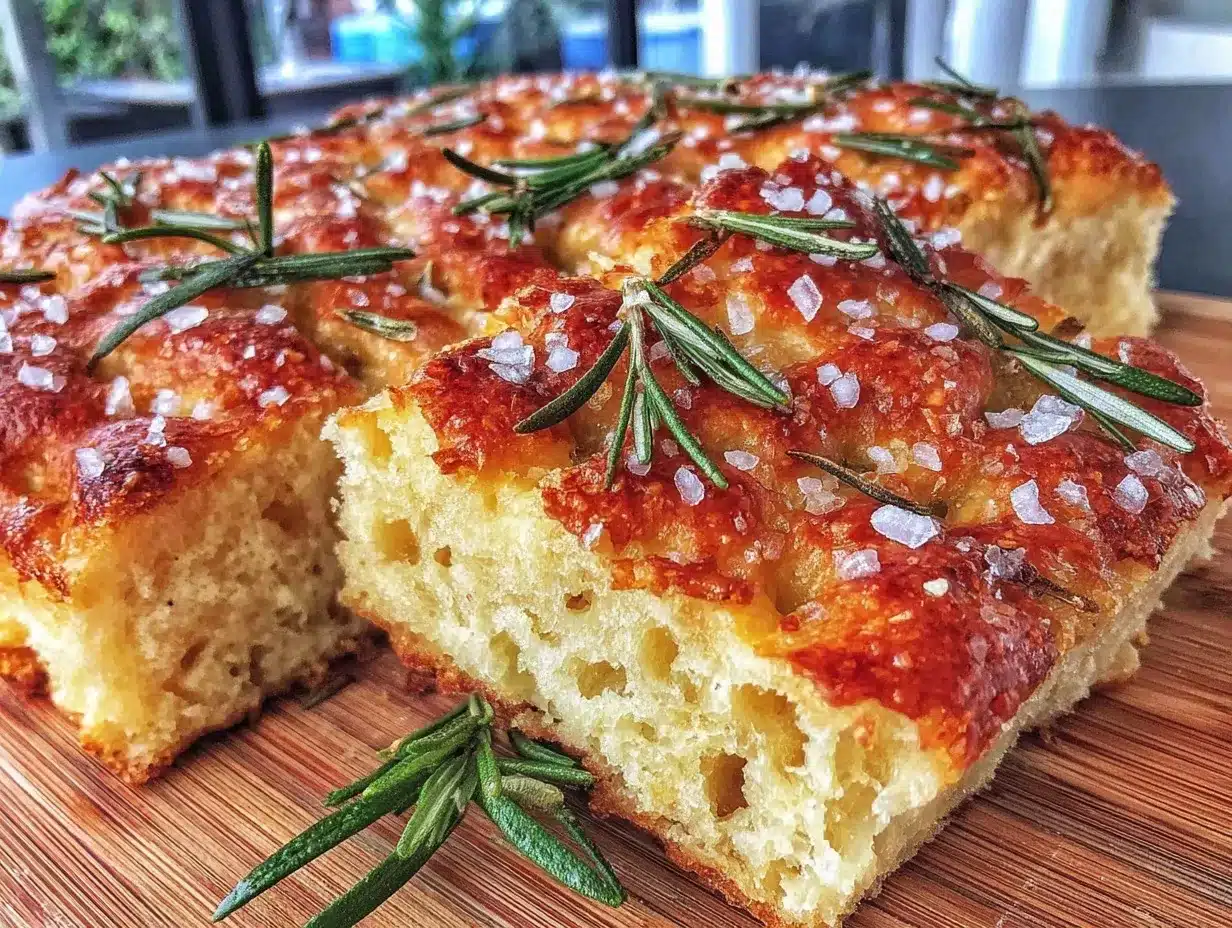
- Mix the dry ingredients: In a large bowl, combine 3 cups (360 g) of all-purpose flour, 1 teaspoon (3 g) of instant yeast, and 1 teaspoon (5 g) of fine sea salt. Stir well to distribute everything evenly. This step takes about 2 minutes.
- Add water and oil: Pour in 1 ½ cups (360 ml) of warm water and ¼ cup (60 ml) of extra virgin olive oil. Using a wooden spoon or spatula, stir until the dough is just combined. It will be wet and sticky—that’s exactly how it should be. Mixing takes about 3 minutes.
- First rise: Cover the bowl tightly with plastic wrap or a clean kitchen towel. Let the dough rest at room temperature for 12 to 18 hours. Honestly, this long fermentation is what develops flavor and gives that airy crumb. You’ll notice bubbles forming on the surface—that’s the yeast doing its magic.
- Prepare the baking sheet: Generously oil a 12×16-inch rimmed baking pan with olive oil. If desired, dust lightly with semolina flour for extra crunch. This should take just a minute.
- Shape the dough: After the dough has risen and doubled in size, transfer it to the prepared pan. Wet your fingers and gently stretch and press the dough across the pan evenly. Don’t worry about perfect edges; rustic is the point. This step takes 5-7 minutes.
- Second rise: Cover the dough loosely with a kitchen towel and let it rise again for 30 to 45 minutes. You want it puffy but not overproofed.
- Add toppings: Preheat your oven to 450°F (230°C). Just before baking, press your fingertips into the dough to create dimples all over. Drizzle with more olive oil, sprinkle 2 tablespoons of fresh chopped rosemary and 1 tablespoon of coarse sea salt flakes evenly on top. If you like, add a little garlic powder for extra flavor.
- Bake: Place the pan in the middle rack of the oven and bake for 20 to 25 minutes, or until the crust is golden brown and crispy. Rotate the pan halfway through for even baking. The top should smell fragrant, and the bottom should sound hollow when tapped.
- Cool and serve: Remove from the oven and let cool slightly in the pan for 10 minutes before transferring to a wire rack. This lets the focaccia finish crisping up. Slice and enjoy warm or at room temperature.
If you notice the dough spreading too thin, next time try using a slightly smaller pan or less olive oil on the surface to help it hold shape better. Also, don’t rush the fermentation—that’s key for the flavor and structure you want.
Cooking Tips & Techniques
This recipe’s charm is in its simplicity, but a few tips learned from trial and error will help you nail it every time.
- Don’t knead: The dough is very wet and sticky by design. Resist the urge to knead; just stir and let time do the work.
- Use instant yeast: It saves a step since there’s no need to proof, and it works well with the long rise.
- Room temperature matters: Avoid cold water or cold kitchen conditions that can slow yeast activity. Similarly, don’t use hot water that kills yeast.
- Generous olive oil: Don’t skimp on the oil in the pan and on top. It helps develop that crispy, golden crust and prevents sticking.
- Make dimples: Pressing your fingers into the dough traps olive oil and toppings, creating pockets of flavor and texture.
- Watch the oven: Ovens vary, so start checking the focaccia at 20 minutes. The crust should be crisp and golden, not burnt.
- Rest before slicing: Letting the bread cool slightly prevents it from tearing or becoming gummy inside.
One lesson I learned the hard way: rushing the rise or baking too soon yields dense bread. Patience is key—even if it tests your willpower.
Variations & Adaptations
If you want to change things up, here are some variations I’ve tried or recommend:
- Herb swaps: Substitute rosemary with fresh thyme, oregano, or sage for a different herbal profile.
- Cheesy focaccia: Sprinkle grated Parmesan or Pecorino cheese on top with the rosemary for an extra savory bite.
- Olive topping: Add halved Kalamata or green olives on top before baking to infuse a briny touch.
- Gluten-free adaptation: Use a gluten-free all-purpose blend designed for yeast breads. Texture will be different but still tasty.
- Whole wheat version: Swap half the all-purpose flour for whole wheat for a nuttier flavor and more fiber.
For cooking method changes, I’ve also baked this focaccia on a preheated pizza stone to get an even crisper crust with wonderful oven spring. Just be sure to transfer carefully using parchment paper.
Personally, I once made a version with sun-dried tomatoes and garlic, and it was a hit for a Mediterranean-themed dinner. Feel free to get creative!
Serving & Storage Suggestions
This focaccia is best served warm or at room temperature. I like to tear off generous chunks and dip them in olive oil or alongside a bowl of soup or salad.
It pairs wonderfully with Mediterranean flavors—think roasted vegetables, fresh tomato salads, or even this creamy dill cucumber sandwich bites for a light snack contrast.
Store leftover focaccia wrapped tightly in plastic wrap or in an airtight container at room temperature for up to 2 days. For longer storage, freeze slices wrapped in foil and placed in freezer bags for up to 3 months.
To reheat, pop slices in a toaster oven or regular oven at 350°F (175°C) for 5-10 minutes until crisp again. Microwave makes it soft but loses the crunch.
Flavors actually mellow and deepen the next day, so if you can wait, leftovers are even better.
Nutritional Information & Benefits
Each serving of this focaccia (about 1/8th of the recipe) contains roughly:
| Calories | 220 |
|---|---|
| Carbohydrates | 30 g |
| Fat | 8 g |
| Protein | 5 g |
| Fiber | 1.5 g |
The olive oil contributes healthy monounsaturated fats, and rosemary offers antioxidants and anti-inflammatory properties. Using fresh herbs adds flavor without salt or calories. This bread is naturally vegetarian and can be made vegan if you use olive oil and omit any optional cheese toppings.
It’s not low-carb, but it’s a satisfying, wholesome option when enjoyed in moderation. If you’re looking for a nourishing side bread without the fuss, this focaccia fits the bill.
Conclusion
This Easy Crispy No-Knead Rosemary Sea Salt Focaccia is proof that homemade bread doesn’t have to be complicated or intimidating. It’s a reliable recipe that delivers crunchy, fragrant bread with minimal effort and maximum comfort. Whether you’re new to bread baking or just want something quick and satisfying, this focaccia is a solid choice.
Feel free to tweak the herbs or toppings based on what you have on hand, and trust that the simple ingredients will come together beautifully. I keep coming back to this recipe because it’s honest, straightforward, and yields delicious results every time.
Give it a try, and don’t be shy about sharing your own twists or moments with this bread. After all, cooking is about making recipes your own and enjoying the process as much as the finished dish.
FAQs
Can I make this focaccia without fresh rosemary?
Yes, dried rosemary works too—just use about half the amount since it’s more concentrated. You can also substitute with other herbs like thyme or oregano.
How long does the dough need to rise?
The dough should rest for 12 to 18 hours at room temperature for the best flavor and texture. A second rise on the pan takes about 30 to 45 minutes before baking.
What if I don’t have coarse sea salt flakes?
You can use regular kosher salt as a substitute, but the texture won’t be quite the same. Coarse flakes add a nice crunch on top.
Can I bake this focaccia on a pizza stone?
Definitely! Preheat the stone in the oven and transfer the dough carefully on parchment paper. It helps achieve a crispier crust but requires careful handling.
How should I store leftover focaccia?
Wrap it tightly and keep at room temperature for up to 2 days or freeze slices wrapped in foil for up to 3 months. Reheat in the oven to restore crispness.
Pin This Recipe!
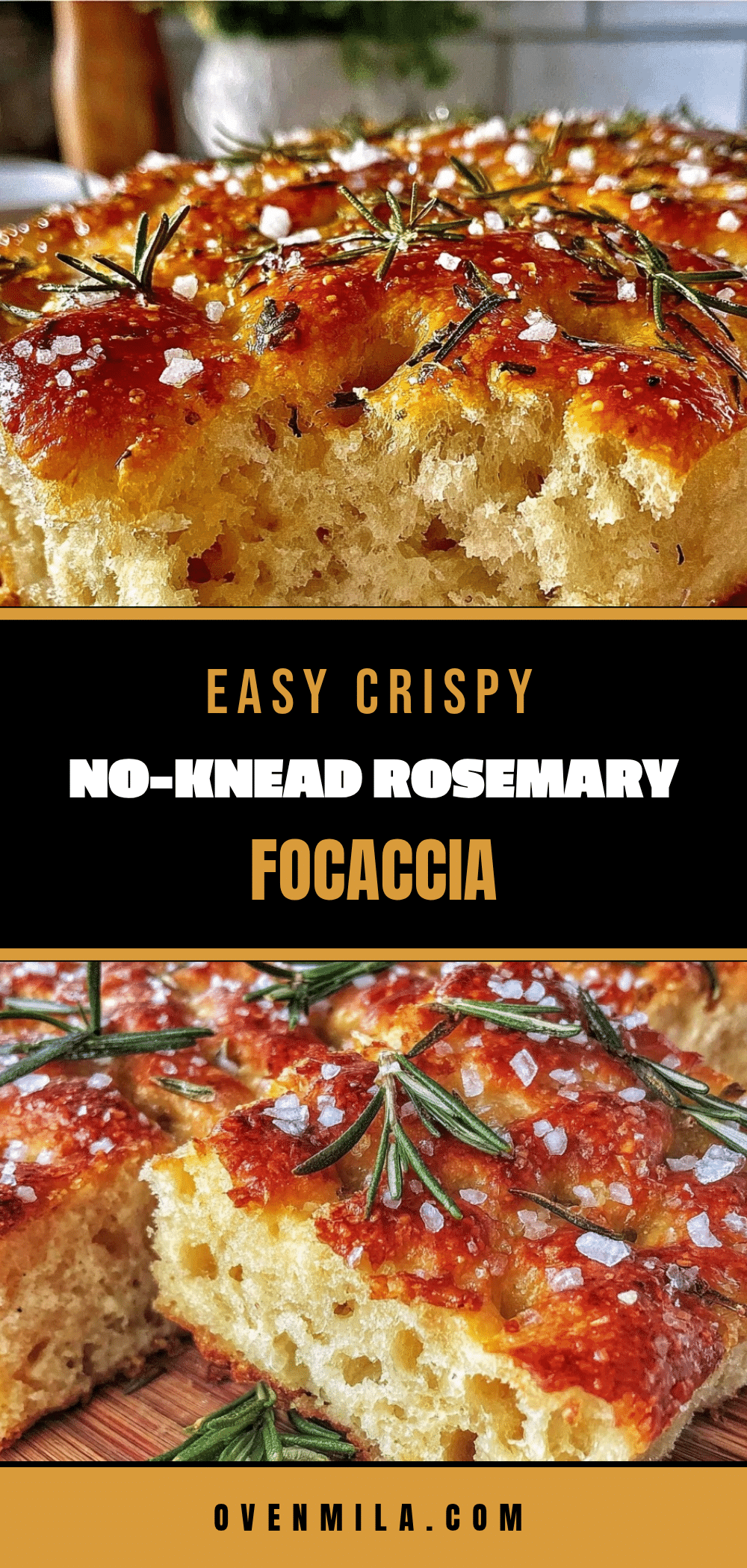
Easy Crispy No-Knead Rosemary Sea Salt Focaccia
A simple no-knead focaccia bread recipe with a crispy crust, fragrant rosemary, and sea salt flakes. Perfect for homemade bread lovers seeking an effortless yet flavorful bake.
- Prep Time: 15 minutes
- Cook Time: 25 minutes
- Total Time: 13 hours 40 minutes
- Yield: 8 servings 1x
- Category: Bread
- Cuisine: Italian
Ingredients
- 3 cups (360 g) all-purpose flour
- 1 teaspoon (3 g) instant yeast
- 1 ½ cups (360 ml) warm water
- ¼ cup (60 ml) extra virgin olive oil
- 1 teaspoon (5 g) fine sea salt
- 2 tablespoons fresh rosemary, chopped
- 1 tablespoon coarse sea salt flakes
- Optional: ½ teaspoon garlic powder
- Optional: semolina flour for dusting
Instructions
- In a large bowl, combine 3 cups (360 g) all-purpose flour, 1 teaspoon (3 g) instant yeast, and 1 teaspoon (5 g) fine sea salt. Stir well to distribute evenly (about 2 minutes).
- Add 1 ½ cups (360 ml) warm water and ¼ cup (60 ml) extra virgin olive oil. Stir with a wooden spoon or spatula until just combined; dough will be wet and sticky (about 3 minutes).
- Cover the bowl tightly with plastic wrap or a kitchen towel and let the dough rest at room temperature for 12 to 18 hours until bubbly and doubled in size.
- Generously oil a 12×16-inch rimmed baking pan with olive oil and optionally dust with semolina flour.
- Transfer the risen dough to the prepared pan. Wet your fingers and gently stretch and press the dough evenly across the pan. Rustic edges are fine (5-7 minutes).
- Cover loosely with a kitchen towel and let rise again for 30 to 45 minutes until puffy but not overproofed.
- Preheat oven to 450°F (230°C). Just before baking, press fingertips into the dough to create dimples. Drizzle with olive oil, sprinkle 2 tablespoons fresh rosemary and 1 tablespoon coarse sea salt flakes evenly on top. Optionally add garlic powder.
- Bake on the middle rack for 20 to 25 minutes until crust is golden brown and crispy, rotating pan halfway through.
- Remove from oven and let cool in pan for 10 minutes. Transfer to a wire rack to finish crisping. Slice and serve warm or at room temperature.
Notes
Do not knead the dough; it should be wet and sticky. Use instant yeast for convenience. Avoid cold water or hot water that kills yeast. Generous olive oil helps develop a crispy crust. Make dimples in the dough to trap oil and toppings. Watch the oven closely to avoid burning. Let bread cool before slicing to prevent tearing.
Nutrition
- Serving Size: 1/8th of the focacci
- Calories: 220
- Fat: 8
- Carbohydrates: 30
- Fiber: 1.5
- Protein: 5
Keywords: focaccia, no-knead bread, rosemary focaccia, sea salt bread, homemade bread, easy focaccia, crispy bread