My friend Jenna called me on a Tuesday night in a full-blown panic. Her in-laws were coming for dinner the next evening, and she had exactly one thing in the fridge—a pack of salmon fillets she wasn’t sure what to do with. “I can’t serve them plain,” she whispered, like the fish might hear her. I told her to relax and sent her a text with three words: lemon, dill, cream. She called me back an hour later, not panicked anymore, but confused. “That’s it?” she asked. “That’s it,” I said.
See, I used to think salmon needed a complicated marinade or some fancy pan sauce to be worth serving to company. I’d spend an hour on a single piece of fish, layering flavors that just ended up tasting muddled. Then I had a version of this quick lemon dill salmon with creamy sauce at a tiny restaurant near the water, and the simplicity of it stopped me mid-bite. The fish was flaky and bright, and the sauce was just… right. Not heavy. Not fussy. Just a little tangy, a little herbaceous, and completely satisfying.
I went home and recreated it that same week, tweaking the cream-to-lemon ratio until it felt balanced. This recipe is what came out of those tests. It’s the one I send to friends when they text me in a panic, and the one I make for myself on a random Wednesday when I need dinner to feel like more than just fuel. It’s honest food, and it works every single time.
Why You’ll Love This Recipe
This isn’t just another salmon recipe. This is the one that makes you look like you tried really hard when you actually didn’t try that hard at all. Here’s why it earns a permanent spot in your weekly rotation:
- Quick & Easy: From start to finish, you’re looking at about 25 minutes. The salmon cooks in under 15, and the sauce comes together while it rests. Perfect for those nights when you walk in the door hungry and need food on the table before you lose your mind.
- Simple Ingredients: You probably have most of this already. Lemon, dill, heavy cream, garlic, butter. No trips to a specialty store, no hunting down obscure spices. Just real food that works.
- Perfect for Company: This is the exact meal I’d serve to someone I wanted to impress without actually stressing out. It looks elegant on a plate—the bright green dill against the creamy white sauce, the golden-brown crust on the salmon—but it’s secretly one of the easiest things you can make.
- Crowd-Pleaser: I have yet to meet someone who doesn’t like this. Even people who claim they’re “not really salmon people” have gone back for seconds. The sauce does something magical—it softens the fishiness that some folks find off-putting and makes the whole thing feel indulgent.
- Unbelievably Delicious: The texture is where this recipe shines. The salmon gets a beautiful sear on the outside while staying tender and flaky inside. And the sauce? It’s creamy without being heavy, bright without being sour. It’s the kind of combination that makes you close your eyes after the first bite.
What sets this apart from other salmon recipes is the technique. Most versions either bake the salmon with the sauce (which makes the fish soggy) or serve the sauce on the side (which feels disconnected). Here, you sear the salmon first to get that crispy skin and golden crust, then build the sauce in the same pan, letting it pick up all those delicious browned bits. The result is a cohesive dish where every element complements the others.
Honestly, this recipe is comfort food that doesn’t weigh you down. It’s fancy enough for a date night but simple enough for a Tuesday. And that sauce? You’re going to want to put it on everything.
What Ingredients You Will Need
This recipe relies on a handful of fresh, pantry-friendly ingredients that come together to create something genuinely special. Each one plays a specific role, so here’s what to grab and why it matters.
For the Salmon
- 4 salmon fillets (6 oz each), skin on or off: I prefer skin-on for the extra crispy texture, but either works. Look for fillets that are roughly the same thickness so they cook evenly. If you can, go for wild-caught salmon—it has a cleaner flavor and firmer texture than farmed.
- 2 tablespoons olive oil: You need a neutral oil with a decent smoke point for searing. Olive oil works beautifully here and adds a subtle fruity note.
- Salt and black pepper, to taste: Don’t skimp on the salt. It’s what brings out the natural flavor of the fish and helps create that golden crust.
- 1 tablespoon butter: Adding butter at the end of cooking gives the salmon a rich, nutty finish and helps the seasoning stick.
For the Creamy Lemon Dill Sauce
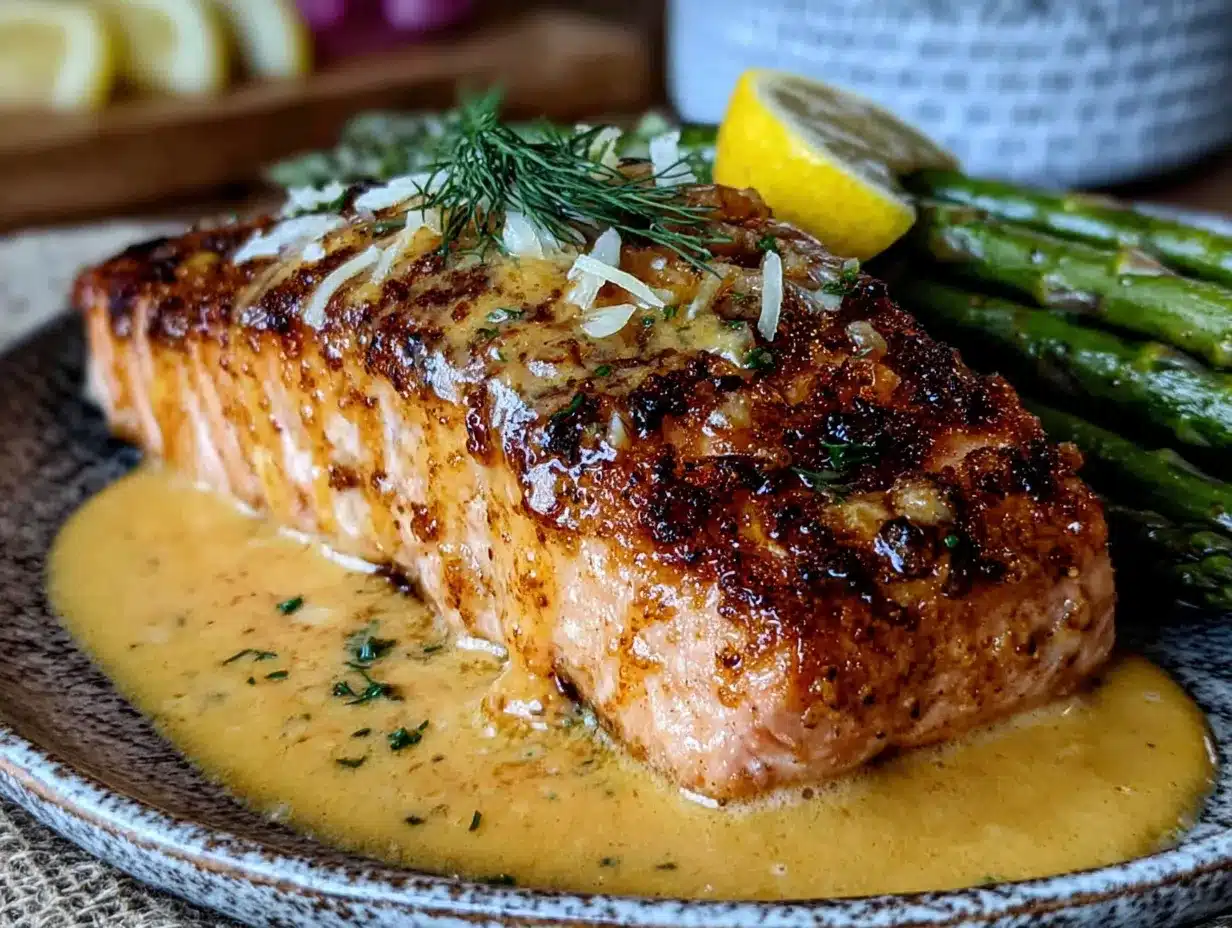
- 1 tablespoon butter: This forms the base of the sauce and picks up all the browned bits left from the salmon. Use unsalted so you can control the salt level.
- 3 cloves garlic, minced: Fresh garlic is non-negotiable here. The pre-minced stuff in a jar has a sharper, less sweet flavor that doesn’t meld as well with the cream.
- 1 cup heavy cream: This is what gives the sauce its luxurious texture. You can substitute half-and-half for a lighter version, but the sauce won’t be as thick or rich.
- 1/4 cup chicken or vegetable broth: A little broth thins the sauce just enough and adds savory depth. I prefer chicken broth for the extra flavor, but vegetable works fine.
- 2 tablespoons fresh lemon juice (about 1 lemon): Fresh juice is crucial. Bottled lemon juice has a flat, metallic taste that can ruin the bright, clean flavor of this sauce. Roll the lemon on the counter before juicing to get the most out of it.
- 1 teaspoon lemon zest: This adds a concentrated citrus aroma that juice alone can’t provide. Make sure you zest only the yellow part—the white pith is bitter.
- 2 tablespoons fresh dill, chopped: Fresh dill is a must. Dried dill has a much milder, hay-like flavor that won’t give you the same bright, herbaceous punch. If you absolutely have to substitute, use about 1 teaspoon of dried dill, but honestly, fresh is worth the trip to the store.
- Salt and black pepper, to taste: Season the sauce separately from the salmon. It needs its own salt to balance the cream and lemon.
Optional Garnishes
- Extra fresh dill sprigs: For a pretty finish that also adds a pop of fresh flavor.
- Lemon slices or wedges: A squeeze of extra lemon at the table brightens everything up.
- Red pepper flakes: If you like a little heat, a pinch of red pepper flakes in the sauce adds a subtle warmth that plays nicely with the dill.
When I’m picking out dill at the store, I look for bunches that are bright green and perky, not wilted or yellowing. The stems should be firm, and the fronds should look feathery and fresh. If the dill smells strongly of anise or licorice, that’s a good sign—it means the oils are potent.
For the salmon, I’ve had great luck with brands like Wild Alaskan or SeaBear, but any fresh-looking fillet from a reputable fish counter will do. Just give it a sniff—fresh salmon should smell like the ocean, not fishy or sour.
Equipment Needed
You don’t need a lot of fancy gear for this recipe, which is part of its charm. Here’s what you’ll want to have on hand:
- A large skillet or frying pan (12-inch recommended): A non-stick or well-seasoned cast iron skillet works best. You need enough surface area to sear the salmon without crowding the pan. If the fillets are too close together, they’ll steam instead of sear, and you’ll lose that beautiful golden crust.
- Fish spatula or thin metal spatula: A fish spatula is angled and slotted, which makes flipping delicate fillets much easier. If you don’t have one, a thin, flexible metal spatula works too. Avoid using a thick spatula—it can break the fish apart.
- Microplane or fine grater: For zesting the lemon. A box grater works in a pinch, but a microplane gives you finer, more aromatic zest that blends seamlessly into the sauce.
- Chef’s knife and cutting board: For mincing garlic and chopping dill. A sharp knife makes both tasks faster and safer.
- Measuring spoons and liquid measuring cup: Accuracy matters here, especially with the lemon juice and cream. Too much lemon and the sauce becomes sour; too little and it falls flat.
- Wooden spoon or silicone spatula: For stirring the sauce and scraping up the browned bits from the pan. A wooden spoon is sturdy and won’t scratch your pan.
- Tongs: For flipping the salmon and handling it gently. Tongs give you more control than a spatula when you’re moving the fillets around.
If you don’t have a cast iron skillet, don’t worry. A good non-stick pan works perfectly and makes cleanup even easier. Just make sure it’s large enough to hold all four fillets without overlapping. I’ve made this recipe in a stainless steel pan too, and it works fine—you just need to be a little more careful about sticking.
Preparation Method
Let’s get cooking. This recipe moves quickly, so I recommend reading through all the steps before you start. Once you get the hang of it, you’ll be able to make this on autopilot.
Step 1: Prep the Salmon
Take your salmon fillets out of the refrigerator about 15 minutes before you start cooking. This lets them come to room temperature, which helps them cook more evenly. Pat each fillet dry with paper towels—this is crucial for getting a good sear. Wet salmon will steam, not sear.
Season both sides generously with salt and black pepper. Don’t be shy here. Salmon is a fatty fish, and it needs a fair amount of salt to bring out its flavor. I use about 1/2 teaspoon of salt per fillet, but adjust based on your preference.
If your fillets have skin, score the skin lightly with a sharp knife—three shallow cuts across the skin side. This prevents the skin from curling up as it cooks and helps the heat penetrate more evenly.
Step 2: Sear the Salmon
Heat your skillet over medium-high heat for about 2 minutes. Add the olive oil and swirl to coat the bottom. The oil should shimmer but not smoke.
Place the salmon fillets in the pan, skin-side down if you’re using skin-on fillets. Lay them away from you to avoid any oil splatter. Listen for that satisfying sizzle—if you don’t hear it, the pan isn’t hot enough.
Cook the salmon without moving it for 4-5 minutes. You want the skin to turn golden brown and crispy. If you try to move the fish and it sticks, it’s not ready yet. Let it cook another 30 seconds and try again.
Flip the fillets carefully using your fish spatula or tongs. Add the 1 tablespoon of butter to the pan, tilting the pan so the butter melts and coats the fish. Cook for another 3-4 minutes for medium, or 5-6 minutes for well-done. The salmon is done when it flakes easily with a fork and the internal temperature reaches 145°F (63°C) at the thickest part.
Transfer the cooked salmon to a plate and tent loosely with foil to keep warm. Don’t wipe out the pan—those browned bits are gold for the sauce.
Step 3: Make the Creamy Lemon Dill Sauce
Reduce the heat to medium. Add the remaining 1 tablespoon of butter to the same pan. Once it melts, add the minced garlic and sauté for about 30 seconds, stirring constantly. You want the garlic fragrant but not browned—browned garlic turns bitter.
Pour in the chicken broth and use your wooden spoon to scrape up all those browned bits from the bottom of the pan. This is called deglazing, and it’s where a ton of flavor lives. Let the broth simmer for about 1 minute, until it reduces slightly.
Reduce the heat to low and slowly pour in the heavy cream, stirring constantly. Let the sauce simmer gently for 2-3 minutes, until it thickens enough to coat the back of a spoon. Don’t let it boil—boiling can cause the cream to separate and become grainy.
Stir in the fresh lemon juice, lemon zest, and chopped dill. Season with salt and black pepper to taste. I usually start with 1/4 teaspoon of salt and a few grinds of pepper, then adjust from there. The sauce should taste bright and creamy, with the lemon and dill coming through clearly.
Taste the sauce and adjust the seasoning. If it’s too tangy, add a tiny pinch of sugar to balance it out. If it’s too thick, add a splash more broth or cream. If it’s too thin, let it simmer another minute or two.
Step 4: Combine and Serve
Return the salmon fillets to the pan, nestling them into the sauce. Spoon some of the sauce over the top of each fillet. Let everything warm through together for about 1 minute.
Transfer the salmon to serving plates and spoon extra sauce over the top. Garnish with fresh dill sprigs and lemon slices if you’re feeling fancy.
The sauce will continue to thicken as it sits, so serve it right away for the best texture. If you need to hold it for a few minutes, keep it over the lowest possible heat and stir occasionally.
Cooking Tips & Techniques
I’ve made this recipe at least two dozen times, and I’ve learned a few things the hard way. Here are my best tips to help you nail it on the first try.
Don’t overcrowd the pan. This is the number one mistake people make with seared fish. If your skillet is too small, cook the salmon in batches. Overcrowding lowers the pan temperature and causes the fish to steam instead of sear. You want that beautiful golden crust, not pale, sad fish.
Let the salmon rest. After you sear the fillets, let them rest for a few minutes while you make the sauce. This allows the juices to redistribute throughout the fish, making it more tender and flavorful. If you cut into it right away, all those juices will run out onto the plate.
Watch the heat on the sauce. Cream sauces are temperamental. Keep the heat on low once you add the cream, and stir frequently. If the sauce starts to bubble aggressively, pull it off the heat for a few seconds. Curdled cream sauce is sad, and it’s hard to fix once it happens.
Fresh dill makes a difference. I know I’ve said this already, but it bears repeating. Dried dill has a completely different flavor profile—it’s more muted and slightly hay-like. Fresh dill is bright, slightly sweet, and has a delicate anise flavor that pairs perfectly with lemon and salmon. If you can only find dried, use 1 teaspoon and add it earlier in the cooking process so it has time to rehydrate.
Season as you go. Season the salmon before searing, season the sauce as it simmers, and taste everything before serving. Layering the seasoning throughout the cooking process creates a more complex, well-rounded flavor than seasoning everything at the end.
Don’t skip the lemon zest. The zest adds a concentrated citrus aroma that juice alone can’t provide. It’s like the difference between smelling a lemon and tasting one. The zest carries essential oils that brighten the entire dish.
I once made this recipe for a dinner party and forgot to add the lemon zest. The sauce was fine—good, even—but it was missing that little something. A friend asked if I’d changed the recipe, and that’s when I realized what I’d forgotten. The zest isn’t optional; it’s the secret weapon.
Variations & Adaptations
One of the best things about this recipe is how flexible it is. Here are some variations I’ve tried and loved.
Dietary Adaptations
Dairy-Free: Swap the heavy cream for full-fat coconut milk and use a dairy-free butter substitute or additional olive oil. The coconut milk adds a subtle sweetness that works surprisingly well with the lemon and dill. Just make sure you use the canned kind, not the carton—the carton version is too thin and won’t thicken properly.
Low-Carb/Keto: This recipe is already naturally low in carbs. Serve it with roasted asparagus or a simple green salad instead of rice or potatoes. The sauce is rich enough to stand on its own as a satisfying meal.
Gluten-Free: This recipe is naturally gluten-free. Just make sure your chicken broth is certified gluten-free if you have celiac disease or a severe sensitivity.
Flavor Variations
Herb Swap: Not a dill fan? Substitute fresh parsley, chives, or tarragon. Each herb brings a different personality to the dish. Parsley is bright and fresh, chives add a mild onion flavor, and tarragon has a subtle licorice note that pairs beautifully with salmon.
Spicy Kick: Add 1/4 teaspoon of red pepper flakes or a pinch of cayenne pepper to the sauce along with the garlic. The heat cuts through the richness of the cream and adds a nice warmth without overwhelming the other flavors.
Garlic Lovers: Roast a whole head of garlic and mash the cloves into the sauce for a deeper, sweeter garlic flavor. Roasted garlic is much milder and more complex than raw garlic, and it gives the sauce an almost nutty quality.
Cooking Method Variations
Baked Salmon: If you prefer not to pan-sear, you can bake the salmon at 400°F (200°C) for 12-15 minutes, then make the sauce in a separate pan. The texture will be different—less crispy on the outside—but the flavor will still be excellent.
Grilled Salmon: This recipe works beautifully on the grill. Grill the salmon over medium-high heat for 4-5 minutes per side, then make the sauce in a small saucepan on the stovetop or grill side burner. The smoky char from the grill adds another layer of flavor.
Sheet Pan Meal: For an even easier version, toss some asparagus or green beans with olive oil and salt, arrange them on a sheet pan with the salmon, and bake everything together at 400°F (200°C) for 15 minutes. Make the sauce while everything cooks.
Serving & Storage Suggestions
This salmon is versatile enough to work for any occasion. Here’s how to serve it and what to do with leftovers.
Serving Suggestions
Serve the salmon hot, straight from the pan, with extra sauce spooned over the top. The sauce will thicken slightly as it cools, so don’t wait too long to plate it.
This dish pairs beautifully with:
- Rice or quinoa: The grains soak up the extra sauce and make every bite satisfying. I love serving this over a bed of fluffy jasmine rice or nutty brown rice.
- Roasted or steamed vegetables: Asparagus, green beans, broccoli, or zucchini all work well. The bright green vegetables contrast nicely with the creamy sauce.
- A simple green salad: A light salad with a lemon vinaigrette cuts through the richness of the sauce and keeps the meal balanced.
- Crusty bread: For sopping up every last drop of that sauce. A good sourdough or French baguette is perfect.
For a complete meal, try serving this alongside a fresh Greek orzo pasta salad for a bright, tangy side that complements the creamy sauce. Or, if you’re in the mood for something heartier, a side of crispy smashed potatoes with garlic herb aioli makes for an indulgent pairing.
Storage Instructions
Store leftover salmon and sauce in an airtight container in the refrigerator for up to 3 days. The flavors actually meld and deepen overnight, so leftovers are often even better the next day.
To reheat: The best method is to gently reheat the salmon and sauce together in a skillet over low heat, adding a splash of broth or cream to loosen the sauce. Microwave reheating works in a pinch, but it can dry out the fish. If you must use the microwave, cover the dish with a damp paper towel and heat in 30-second bursts.
Freezing: I don’t recommend freezing this dish. The cream sauce can separate when thawed, and the texture of the salmon will suffer. If you have leftover sauce, you can freeze it separately for up to 1 month, but it’s best enjoyed fresh.
The sauce will thicken significantly when chilled. Don’t worry—it will loosen up again when you reheat it. Just add a little liquid and stir gently.
Nutritional Information & Benefits
This recipe strikes a nice balance between indulgence and nutrition. Here’s what you’re getting in each serving (based on 4 servings):
- Calories: Approximately 480-520 per serving
- Protein: 38-42g
- Fat: 32-36g (mostly healthy fats from salmon and olive oil)
- Carbohydrates: 4-6g
- Fiber: 0-1g
- Sugar: 2-3g (naturally occurring)
- Sodium: 450-550mg (varies based on salt used)
Health Benefits
Salmon is one of the best sources of omega-3 fatty acids, which are essential for brain health, reducing inflammation, and supporting heart health. A single serving of this recipe provides more than your daily recommended intake of omega-3s.
Lemon and dill both offer antioxidant properties. Lemons are packed with vitamin C, which supports immune function and helps your body absorb iron. Dill contains compounds that may aid digestion and have antimicrobial effects.
Garlic, even in small amounts, has been shown to support cardiovascular health and boost the immune system. And while heavy cream isn’t exactly a health food, the small amount used here adds richness without going overboard.
If you’re watching your sodium intake, use low-sodium chicken broth and go easy on the added salt. The lemon and dill provide plenty of flavor without relying on sodium.
This recipe is naturally low in carbohydrates and sugar, making it suitable for low-carb, keto, and diabetic-friendly diets. It’s also gluten-free and can easily be made dairy-free with the substitutions mentioned above.
Conclusion
This quick lemon dill salmon with creamy sauce has become my go-to for so many reasons. It’s fast enough for a weeknight, fancy enough for company, and forgiving enough for a beginner. The first time I made it, I was skeptical that something so simple could be so good. But that’s the thing about good cooking—it doesn’t need to be complicated to be memorable.
I love this recipe because it reminds me that the best food often comes from the simplest combinations. A good piece of fish, a bright lemon, some fresh herbs, and a little cream. That’s all it takes to make something that feels special.
I encourage you to make this recipe your own. Play with the herbs, adjust the lemon to your taste, serve it with whatever sides make you happy. Cooking should be flexible and fun, not rigid and stressful.
If you try this recipe, I’d love to hear how it went. Leave a comment below and let me know what you thought, or share your own variation. And if you’re looking for more quick and easy dinner ideas, check out this quick lemon butter shrimp scampi or this easy lemon herb salmon sheet pan dinner for more weeknight inspiration.
Happy cooking, friends. Go make something delicious.
Frequently Asked Questions
Can I use frozen salmon for this recipe?
Yes, you can use frozen salmon, but you need to thaw it completely first. Place the frozen fillets in the refrigerator overnight, or submerge them in cold water for about 30 minutes. Pat them very dry before seasoning and searing—frozen salmon holds more water, so extra drying is crucial for a good sear.
How do I know when the salmon is cooked through?
The most reliable method is using an instant-read thermometer. The FDA recommends an internal temperature of 145°F (63°C) at the thickest part. If you don’t have a thermometer, look for the fish to turn opaque and flake easily when gently pressed with a fork. The center should still be slightly translucent if you prefer medium-rare salmon.
Can I make the sauce ahead of time?
You can make the sauce up to 2 days in advance. Store it in an airtight container in the refrigerator. When you’re ready to serve, gently reheat the sauce in a small saucepan over low heat, adding a splash of broth or cream to thin it out if needed. Make the salmon fresh for the best texture.
What can I substitute for heavy cream?
Half-and-half works well for a lighter sauce, though it won’t be as thick or rich. Full-fat coconut milk is a great dairy-free option that adds a subtle sweetness. You can also use a combination of milk and a little flour or cornstarch to thicken, but the texture won’t be as luxurious.
How do I prevent the cream sauce from curdling?
Keep the heat on low once you add the cream, and stir frequently. Don’t let the sauce boil—a gentle simmer is all you need. If the sauce starts to look grainy, remove it from the heat immediately and whisk vigorously. Adding a splash of cold cream or broth can sometimes help bring it back together.
Pin This Recipe!
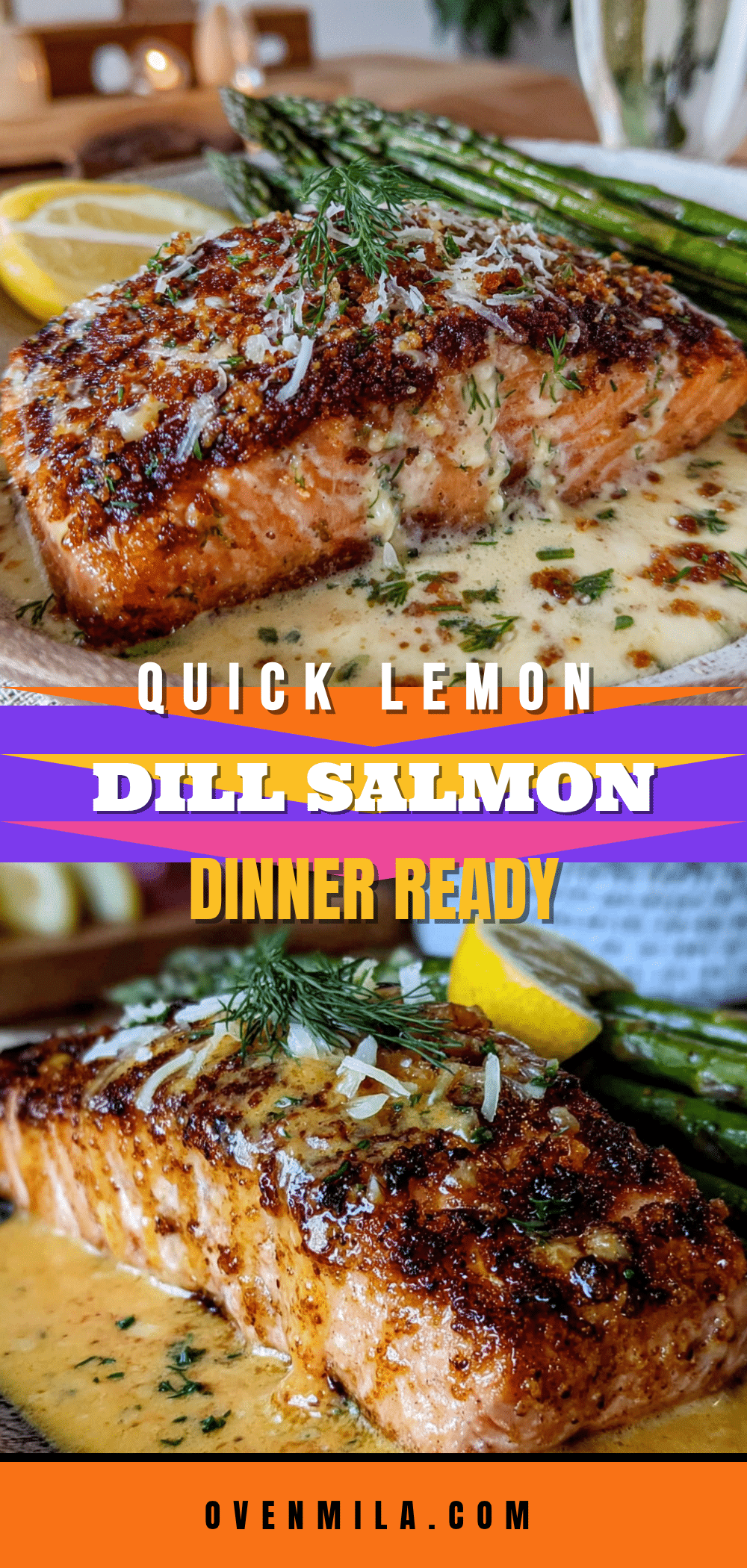
Easy Lemon Dill Salmon with Creamy Sauce
A quick and easy salmon recipe with a bright, creamy lemon dill sauce. Perfect for weeknights or impressing guests, this dish comes together in about 25 minutes with simple ingredients.
- Prep Time: 10 minutes
- Cook Time: 15 minutes
- Total Time: 25 minutes
- Yield: 4 servings 1x
- Category: Main Course
- Cuisine: American
Ingredients
- 4 salmon fillets (6 oz each), skin on or off
- 2 tablespoons olive oil
- Salt and black pepper, to taste
- 1 tablespoon butter
- 1 tablespoon butter
- 3 cloves garlic, minced
- 1 cup heavy cream
- 1/4 cup chicken or vegetable broth
- 2 tablespoons fresh lemon juice (about 1 lemon)
- 1 teaspoon lemon zest
- 2 tablespoons fresh dill, chopped
- Salt and black pepper, to taste
- Extra fresh dill sprigs (optional garnish)
- Lemon slices or wedges (optional garnish)
- Red pepper flakes (optional garnish)
Instructions
- Take salmon fillets out of the refrigerator about 15 minutes before cooking. Pat dry with paper towels. Season both sides generously with salt and black pepper. If skin-on, score the skin lightly with three shallow cuts.
- Heat a large skillet over medium-high heat for 2 minutes. Add olive oil and swirl to coat. Place salmon fillets skin-side down (if using skin-on) in the pan. Cook without moving for 4-5 minutes until skin is golden and crispy.
- Flip fillets carefully. Add 1 tablespoon butter to the pan, tilting to coat the fish. Cook for another 3-4 minutes for medium, or 5-6 minutes for well-done (internal temperature 145°F). Transfer salmon to a plate and tent with foil.
- Reduce heat to medium. Add remaining 1 tablespoon butter to the same pan. Add minced garlic and sauté for about 30 seconds until fragrant.
- Pour in chicken broth and scrape up browned bits from the pan. Let simmer for about 1 minute until slightly reduced.
- Reduce heat to low. Slowly pour in heavy cream, stirring constantly. Let simmer gently for 2-3 minutes until sauce thickens enough to coat the back of a spoon. Do not let it boil.
- Stir in fresh lemon juice, lemon zest, and chopped dill. Season with salt and black pepper to taste.
- Return salmon fillets to the pan, nestling them into the sauce. Spoon sauce over the top. Let warm through for about 1 minute.
- Transfer salmon to serving plates, spoon extra sauce over the top. Garnish with fresh dill sprigs and lemon slices if desired.
Notes
Don’t overcrowd the pan; cook salmon in batches if needed. Let salmon rest after searing. Keep heat low when making cream sauce to prevent curdling. Fresh dill is highly recommended over dried. Don’t skip the lemon zest.
Nutrition
- Serving Size: 1 salmon fillet with
- Calories: 500
- Sugar: 2
- Sodium: 500
- Fat: 34
- Saturated Fat: 16
- Carbohydrates: 5
- Protein: 40
Keywords: salmon, lemon dill salmon, creamy salmon, quick salmon recipe, easy salmon dinner, weeknight salmon, pan-seared salmon