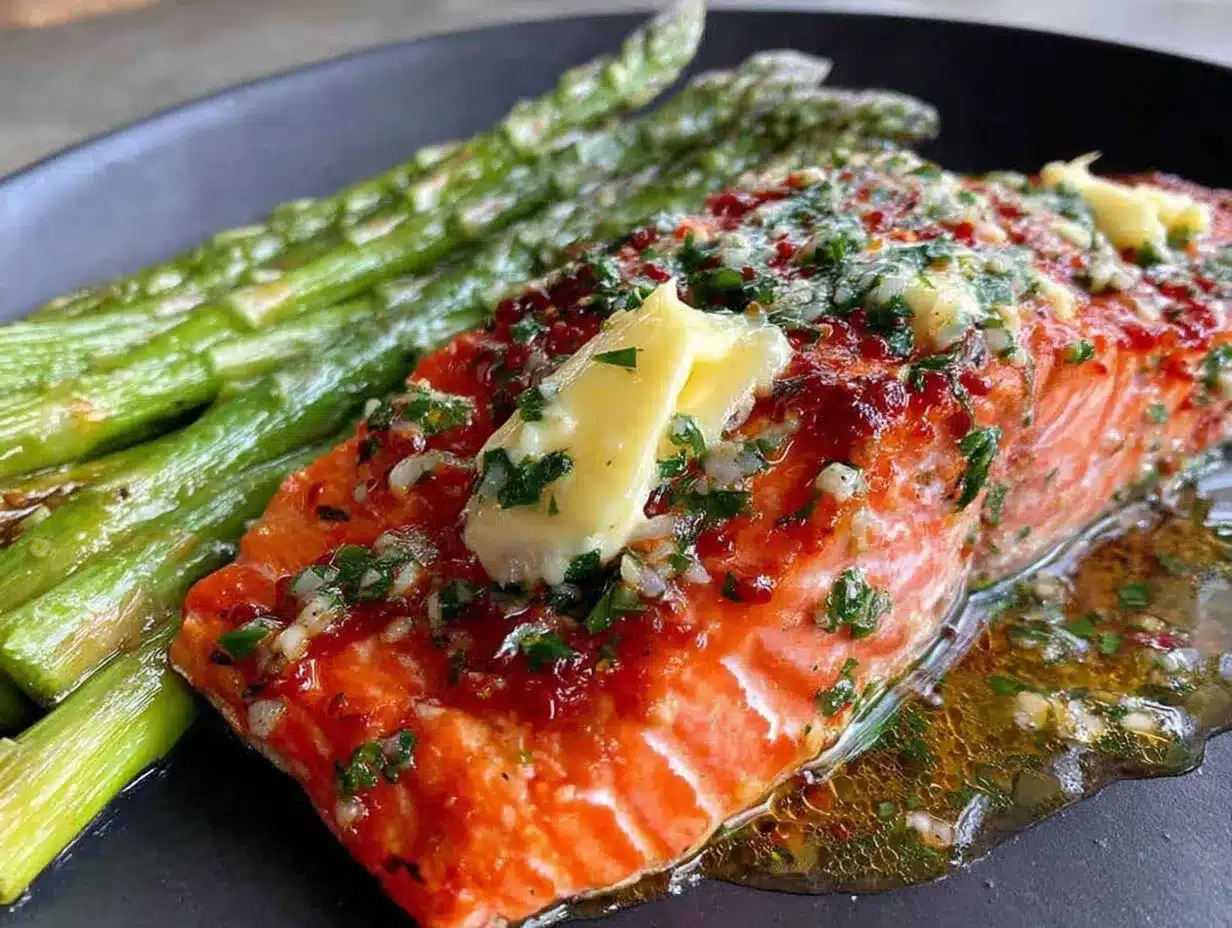
The butter pooling around the salmon fillets is what gets me every time. Not the sizzle, not even the smell of garlic hitting hot oil—but that moment when the butter melts into little golden puddles around the fish, soaking up all those brown bits from the pan. And honestly, that’s the whole point of this dish. You don’t make one-pan garlic butter salmon with asparagus for the complexity. You make it for that sauce. For the way the asparagus ends up slightly charred on one end and completely coated in garlic butter on the other.
I first threw this together on a Tuesday night when my fridge was looking sad and my energy levels were lower. I had two salmon fillets I’d forgotten to freeze, a bunch of asparagus that was starting to bend, and a half-used stick of butter staring at me from the door. No grand plan. No fancy marinade. Just a hot pan and a prayer that dinner wouldn’t take longer than a single episode of whatever show I was half-watching.
It turned into one of those meals that makes you wonder why you ever bother with complicated recipes. The salmon came out flaky. The asparagus stayed crisp. And that butter sauce? It was ridiculous in the best way—garlicky, a little lemony, just rich enough to feel indulgent without weighing you down. I scraped every last drop onto my plate and seriously considered licking it clean.
That’s the kind of dinner this is. It’s not trying to be impressive. It just is.
Why You’ll Love This Recipe
This easy one-pan garlic butter salmon with asparagus has saved my sanity more times than I can count. It’s one of those recipes that delivers restaurant-quality results with almost zero effort. You don’t need to be a chef to nail this. You just need a hot pan and a little patience.
Here’s why this recipe works so well:
- Quick & Easy: Dinner is ready in under 25 minutes. That’s faster than takeout delivery and way more satisfying.
- Simple Ingredients: You probably have most of this in your kitchen right now. Butter, garlic, lemon, salt, pepper—that’s it.
- Perfect for Busy Weeknights: When you’re tired and hungry and the last thing you want is a sink full of dishes, this recipe steps up.
- One Pan, Minimal Mess: Everything cooks in a single skillet. Protein and veggies together. Less cleanup, more eating.
- Crowd-Pleaser: Even people who swear they don’t like salmon end up asking for seconds. The garlic butter does something magical.
What makes this version different from all the others? I don’t overcrowd the pan. That’s the secret. Most recipes tell you to throw everything in at once, but that just steams the fish instead of searing it. I start the salmon first, get that golden crust going, then add the asparagus at the right moment so it stays crisp-tender. The butter goes in last, off the heat, so it stays silky instead of breaking.
I’ve tested this method at least a dozen times. I’ve burned the butter, undercooked the salmon, and made asparagus that was basically mush. This version? It’s the one I keep coming back to. The one that makes me close my eyes after the first bite and forget about whatever stressful thing happened that day.
It’s comfort food, but lighter. Indulgent, but not heavy. The kind of meal that makes you feel like you’ve got your life together, even when you definitely don’t.
What Ingredients You Will Need
This recipe keeps things simple. You don’t need a long grocery list or any hard-to-find ingredients. Just a handful of good-quality staples that work together beautifully.
For the Salmon:
- 2 salmon fillets (about 6 oz each): Look for fillets that are similar in thickness so they cook evenly. I prefer wild-caught when I can get it, but farm-raised works great too. Just pat them dry before cooking—wet salmon won’t sear properly.
- Salt and black pepper: Don’t skimp here. Season generously on both sides. The salt helps create that golden crust.
- 1/2 teaspoon garlic powder (optional): I add this sometimes for extra garlic flavor. Totally optional, but nice.
For the Asparagus:
- 1 bunch asparagus (about 12 oz): Look for spears that are bright green with firm tips. Thicker spears hold up better in the pan. Snap off the woody ends—they’ll naturally break where the tender part starts.
- 1 tablespoon olive oil: Toss the asparagus in this before adding to the pan. It helps them roast instead of steam.
- Pinch of salt: Just a little to bring out the flavor.
For the Garlic Butter Sauce:
- 3 tablespoons unsalted butter: Use unsalted so you control the salt level. Cut it into small pieces so it melts evenly.
- 4 cloves garlic, minced: Fresh garlic is non-negotiable here. The jarred stuff won’t give you the same flavor. Mince it fine so it melts into the butter.
- 1 tablespoon fresh lemon juice: About half a lemon. Fresh makes a difference—bottled lemon juice tastes flat.
- 1 tablespoon chopped fresh parsley (optional): For color and freshness. Not essential, but pretty.
- Red pepper flakes (optional): A pinch if you like a little heat. I add it about half the time.
Ingredient Tips from My Kitchen:
I’ve made this with frozen salmon more times than I’d like to admit. It works, but you need to thaw it completely and pat it really dry. Otherwise, it releases too much water and you end up poaching instead of searing. For the butter, I like Kerrygold or any European-style butter—it has a higher fat content and browns more beautifully. If you’re dairy-free, ghee works as a substitute, though the flavor will be slightly nuttier.
For the asparagus, don’t worry if the spears vary in thickness. Just add the thicker ones to the pan first, then the thinner ones a minute later. And if you’re not an asparagus fan? Green beans or broccoli work great as substitutes. I’ve tried both, and they’re equally delicious.
Equipment Needed
You don’t need much for this one. That’s part of the beauty.
- A large skillet or frying pan (12-inch): Cast iron is ideal—it holds heat well and gives you that beautiful sear. But a stainless steel or non-stick pan works perfectly too. Just make sure it’s large enough so nothing overlaps.
- Tongs: For flipping the salmon and moving the asparagus around. A spatula works, but tongs give you more control.
- A sharp knife: For mincing garlic and trimming asparagus. A dull knife makes everything harder.
- Cutting board: Any board will do. Just wash it well after handling raw fish.
- Paper towels: For patting the salmon dry. This step matters more than you think.
- A small bowl: For mixing the garlic butter sauce ingredients if you want to prep ahead.
I’ve made this in a cheap non-stick pan from the grocery store and it turned out fine. You don’t need fancy equipment. But if you have a cast iron skillet, this is the perfect recipe to use it for. The heat retention gives you that gorgeous golden crust that makes the salmon look like it came from a restaurant kitchen. Just make sure your pan is seasoned well so the fish doesn’t stick.
One tip: don’t use a pan that’s too small. If the fillets or asparagus are crowded, they’ll steam instead of sear. You want space between everything so the heat can do its job.
Preparation Method
Let me walk you through this step by step. I’ve made this so many times I could do it in my sleep, but I still follow these same steps every time. They work.
Step 1: Prep Your Ingredients (5 minutes)
Take the salmon out of the fridge about 10 minutes before cooking. This takes the chill off and helps it cook more evenly. Pat both fillets dry with paper towels—this is crucial for getting that golden crust. Season generously on both sides with salt, pepper, and garlic powder if using.
Trim the woody ends off the asparagus. The easiest way is to hold one spear at both ends and bend it gently—it will snap naturally where the tough part ends. Use that as a guide and trim the rest of the bunch to match. Toss the asparagus with olive oil and a pinch of salt.
Mince your garlic. Chop your parsley if using. Cut your lemon in half.
Step 2: Sear the Salmon (6-8 minutes)
Place your skillet over medium-high heat. Add 1 tablespoon of the butter. Let it melt and foam, then swirl the pan to coat the bottom. The butter should be sizzling but not browning.
Carefully place the salmon fillets skin-side down (if they have skin) or presentation-side down. Listen for that satisfying sizzle. If it doesn’t sizzle, your pan isn’t hot enough. Let them cook undisturbed for 4-5 minutes. Don’t poke at them. Don’t move them. Just let the heat do its thing.
You’ll know they’re ready to flip when the edges look opaque and the bottom is golden brown. Flip gently with tongs. Cook for another 2-3 minutes for medium, or 3-4 minutes for well-done. The internal temperature should reach 145°F (63°C) at the thickest part.
Transfer the salmon to a plate and tent loosely with foil. Don’t wipe out the pan—those brown bits are flavor gold.
Step 3: Cook the Asparagus (4-5 minutes)
Reduce the heat to medium. Add the remaining 1 tablespoon of butter to the pan. Once it melts, add the asparagus in a single layer. Let them cook for 2 minutes without moving them—you want some char marks.
Toss the asparagus and cook for another 2-3 minutes, depending on thickness. They should be bright green with some browned spots, still crisp when you bite into them. If they’re limp, you’ve gone too far.
Step 4: Make the Garlic Butter Sauce (2 minutes)
Push the asparagus to one side of the pan. Add the last tablespoon of butter and the minced garlic. Stir constantly for about 30 seconds until the garlic is fragrant but not browned. Garlic burns fast, so stay focused.
Remove the pan from the heat. Stir in the lemon juice and any accumulated juices from the resting salmon. Swirl everything together until the butter is melted and the sauce looks glossy.
Step 5: Bring It All Together (1 minute)
Return the salmon to the pan, nestling it among the asparagus. Spoon some of that garlic butter sauce over the top of each fillet. Sprinkle with parsley and red pepper flakes if using. Serve immediately.
Troubleshooting Notes:
If your salmon sticks to the pan, it probably wasn’t ready to flip. Give it another minute and try again. If the butter starts browning too quickly, reduce the heat. If the asparagus is cooking unevenly, cut thicker spears in half lengthwise next time. And if you’re worried about undercooking, use an instant-read thermometer—it takes the guesswork out completely.
Cooking Tips & Techniques
I’ve messed up this recipe more times than I’d like to admit. Here’s what I’ve learned the hard way so you don’t have to.
Don’t overcrowd the pan. This is the number one mistake people make. If your pan is too full, everything releases moisture and you end up steaming instead of searing. Use a large skillet or cook in batches if needed. The salmon needs space to develop that golden crust.
Pat the salmon dry. I cannot stress this enough. Wet salmon won’t sear. It will steam. And steamed salmon is fine, but it’s not what we’re going for here. Use paper towels and really get in there. Let the fish sit uncovered in the fridge for 10 minutes if you have time—that dries the surface even more.
Watch your heat. Medium-high is your friend, but don’t let it get too hot. If the butter starts smoking, your pan is too hot. If the salmon isn’t sizzling when it hits the pan, your pan isn’t hot enough. You’re looking for that sweet spot where the butter foams gently and the fish sizzles immediately.
Let the salmon rest. I know you’re hungry. But letting the salmon sit for a few minutes after cooking allows the juices to redistribute. If you cut into it right away, all those delicious juices run out onto the plate instead of staying in the fish.
Timing is everything. Here’s my multitasking strategy: while the salmon sears, trim the asparagus and mince the garlic. While the asparagus cooks, squeeze the lemon and chop the parsley. Everything comes together in a logical flow, and you’re not scrambling at the end.
One more thing: taste your sauce before you serve it. Add more salt, more lemon, or more garlic to suit your preferences. Cooking is about making things taste good to you, not following a recipe perfectly.
Variations & Adaptations
This recipe is endlessly adaptable. Here are some versions I’ve tried and loved.
Lemon Herb Version: Add 1 teaspoon of dried thyme or oregano along with the garlic. Use a full lemon’s worth of juice instead of half. The extra acidity brightens everything up beautifully.
Spicy Cajun Twist: Season the salmon with 1 teaspoon of Cajun seasoning instead of salt and pepper. Add a pinch of cayenne to the butter sauce. Serve with a wedge of lemon and some hot sauce on the side.
Dairy-Free Adaptation: Substitute the butter with 3 tablespoons of good quality olive oil or ghee. The flavor changes slightly—it’s less rich but still delicious. Add a splash of vegetable broth if the sauce seems thin.
Vegetable Swaps: No asparagus? Use green beans, broccoli florets, or zucchini slices. Adjust cooking time based on the vegetable. Broccoli takes a minute or two longer; zucchini cooks faster.
Sheet Pan Method: If you don’t feel like standing at the stove, this works great as a sheet pan meal. Preheat your oven to 400°F (200°C). Arrange the seasoned salmon and asparagus on a baking sheet. Drizzle with melted butter and garlic. Bake for 12-15 minutes, then broil for 2 minutes to get some color.
Garlic Butter Shrimp Version: Swap the salmon for 1 pound of large shrimp, peeled and deveined. Sear for 2 minutes per side instead of 4-5. Everything else stays the same. It’s ready in about 15 minutes flat.
I personally love the lemon herb version on nights when I want something light and fresh. The extra lemon cuts through the richness of the butter and makes the whole dish feel brighter. It’s perfect for spring or summer when you’re craving something that doesn’t weigh you down.
Serving & Storage Suggestions
This dish is best served immediately, straight from the pan to the plate. The salmon should be warm and flaky, the asparagus still crisp, and the butter sauce pooling around everything in a way that makes you want to mop it up with bread.
Serving Temperature: Serve hot, right off the stove. Let the pan sit for just a minute so the sauce settles, but don’t let it cool completely.
What to Serve With It: This is a complete meal on its own, but if you want to stretch it, serve with rice, quinoa, or crusty bread to soak up the sauce. A simple green salad on the side adds freshness. For a heartier meal, try it with creamy tomato basil soup as a starter—the flavors complement each other beautifully.
Storage Instructions: Leftovers keep in an airtight container in the refrigerator for up to 3 days. The asparagus will soften over time, but the flavor stays good. I don’t recommend freezing this dish—the texture of both the salmon and asparagus suffers.
Reheating Tips: The best way to reheat is in a skillet over medium-low heat with a splash of water or broth. Cover the pan to trap steam and warm gently for 3-4 minutes. The microwave works in a pinch, but it tends to overcook the salmon and make the asparagus mushy. If you must use the microwave, do it in 30-second bursts on low power.
How Flavors Develop: Honestly, this dish is best fresh. The garlic butter sauce loses its magic after sitting in the fridge. But if you have leftovers, try flaking the cold salmon over a salad the next day—it makes a pretty amazing lunch.
Nutritional Information & Benefits
Here’s the approximate nutritional breakdown for one serving (half the recipe, including the asparagus and butter sauce):
- Calories: 420-480
- Protein: 35-40g
- Fat: 28-32g
- Carbohydrates: 8-10g
- Fiber: 3-4g
- Sugar: 3-4g
- Sodium: 450-550mg
Health Benefits: Salmon is packed with omega-3 fatty acids, which are great for heart health and brain function. It’s also an excellent source of high-quality protein and vitamin D. Asparagus brings fiber, folate, and vitamins A, C, and K to the table. Garlic has anti-inflammatory properties, and butter provides fat-soluble vitamins like A and E.
Dietary Considerations: This recipe is naturally gluten-free and low-carb. It’s also keto-friendly if you skip any starchy sides. For dairy-free, use ghee or olive oil as mentioned above. It contains fish, so it’s not suitable for pescatarians who avoid seafood—wait, that’s not right. It’s not suitable for vegetarians or vegans.
Potential Allergens: Fish, dairy (butter). If you’re serving someone with allergies, make sure to check.
I’m not a nutritionist, so take these numbers as estimates. But I do love that this meal feels indulgent while still being packed with good-for-you ingredients. It’s the kind of dinner that satisfies your cravings and your body at the same time. No guilt, just goodness.
Conclusion
This easy one-pan garlic butter salmon with asparagus is the kind of recipe that becomes a regular in your rotation without you even planning it. It’s quick enough for a Tuesday night, fancy enough for a date night, and simple enough that you don’t need to think too hard about it. The salmon comes out perfectly flaky, the asparagus stays crisp, and that garlic butter sauce ties everything together in a way that feels like a warm hug on a plate.
I’ve made this for myself on solo dinner nights, for friends who stopped by unexpectedly, and for family gatherings where I needed something reliable. It never lets me down. And honestly, the best part is how little effort it takes for how good it tastes. No complicated techniques. No long ingredient lists. Just good food made simply.
If you try this recipe, I’d love to hear how it goes. Leave a comment below and let me know if you added your own twist—I’m always looking for new ideas. Maybe you swapped in green beans. Maybe you added extra garlic. Maybe you served it over rice. Whatever you did, share it. That’s how recipes grow and get better.
And if you’re looking for another quick and satisfying dinner, check out this easy cheesy ground beef and rice skillet—it’s another one-pan wonder that saves my weeknights regularly.
Happy cooking, friend. Go make something delicious.
Frequently Asked Questions
Can I use frozen salmon for this recipe?
Yes, just thaw it completely in the refrigerator overnight. Pat it very dry with paper towels before cooking to ensure a good sear. Frozen salmon releases more water, so don’t skip the drying step.
How do I know when the salmon is cooked through?
The easiest way is to use an instant-read thermometer. The internal temperature should reach 145°F (63°C) at the thickest part. If you don’t have a thermometer, look for opaque flesh that flakes easily with a fork.
Can I make this recipe dairy-free?
Absolutely. Substitute the butter with ghee or a good quality olive oil. The flavor will be slightly different—less rich, but still delicious. Add a splash of vegetable broth if the sauce seems thin.
What can I use instead of asparagus?
Green beans, broccoli florets, zucchini slices, or even haricots verts work great. Adjust the cooking time based on the vegetable. Broccoli takes a minute or two longer; zucchini cooks faster.
How do I prevent the garlic from burning?
Add the garlic to the pan off the heat or on very low heat. Garlic burns quickly, especially in butter. Stir constantly and remove the pan from the heat as soon as it becomes fragrant—about 30 seconds is all you need.
Pin This Recipe!
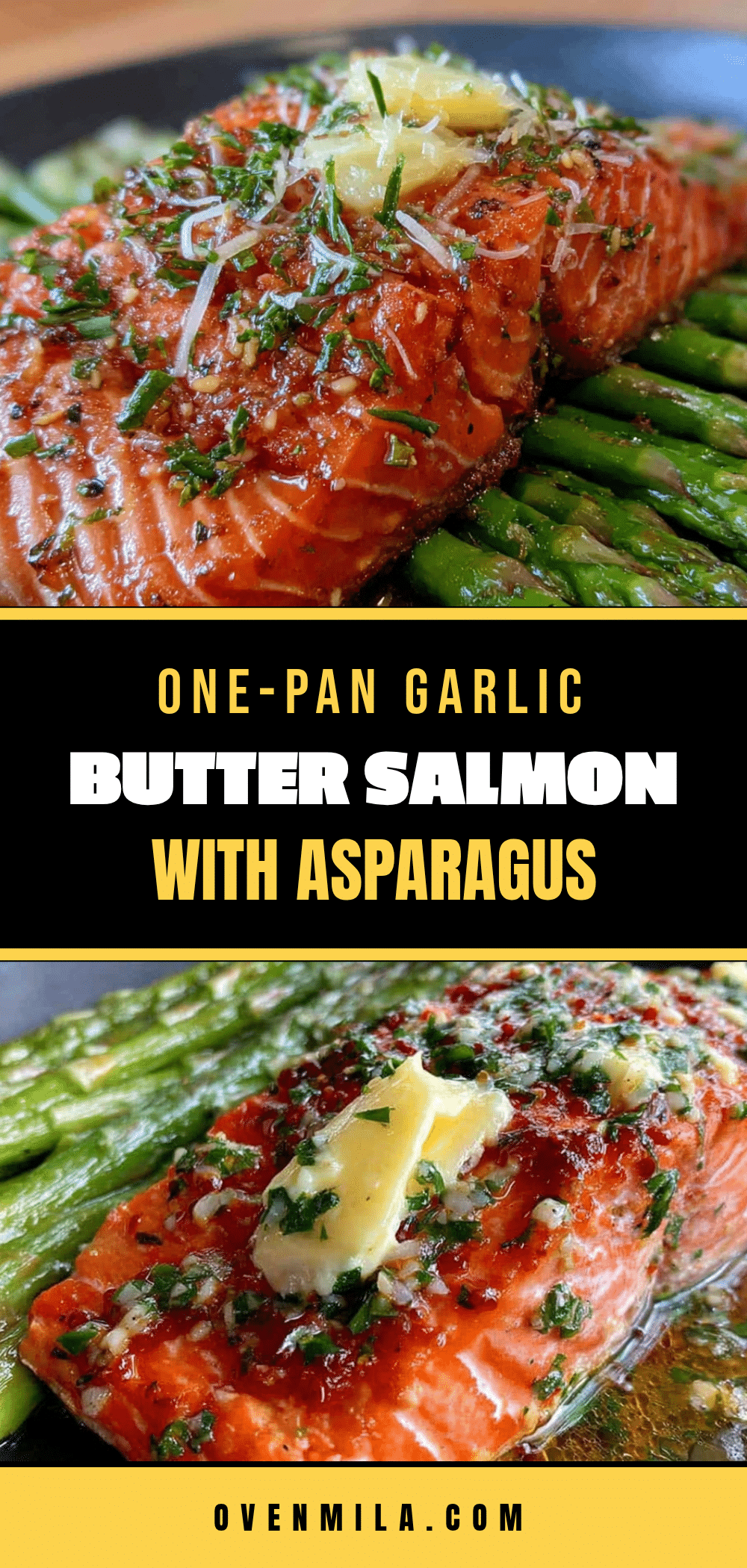
Easy One-Pan Garlic Butter Salmon with Asparagus
A quick and delicious one-pan meal featuring perfectly seared salmon and crisp asparagus, all coated in a rich garlic butter sauce. Ready in under 25 minutes, it’s perfect for busy weeknights.
- Prep Time: 10 minutes
- Cook Time: 15 minutes
- Total Time: 25 minutes
- Yield: 2 servings 1x
- Category: Main Course
- Cuisine: American
Ingredients
- 2 salmon fillets (about 6 oz each)
- Salt and black pepper to taste
- 1/2 teaspoon garlic powder (optional)
- 1 bunch asparagus (about 12 oz), trimmed
- 1 tablespoon olive oil
- Pinch of salt
- 3 tablespoons unsalted butter, divided
- 4 cloves garlic, minced
- 1 tablespoon fresh lemon juice
- 1 tablespoon chopped fresh parsley (optional)
- Red pepper flakes (optional)
Instructions
- Prep your ingredients: Take salmon out of fridge 10 minutes before cooking. Pat dry and season with salt, pepper, and garlic powder. Trim asparagus and toss with olive oil and salt. Mince garlic, chop parsley, and cut lemon.
- Sear the salmon: Heat a large skillet over medium-high heat. Add 1 tablespoon butter. Once melted and foaming, place salmon skin-side down. Cook undisturbed for 4-5 minutes until golden. Flip and cook 2-3 minutes for medium or 3-4 minutes for well-done (internal temp 145°F). Transfer to a plate and tent with foil.
- Cook the asparagus: Reduce heat to medium. Add remaining 1 tablespoon butter. Add asparagus in a single layer. Cook 2 minutes without moving, then toss and cook 2-3 minutes more until bright green with char marks.
- Make the garlic butter sauce: Push asparagus to one side. Add last tablespoon butter and minced garlic. Stir constantly for 30 seconds until fragrant. Remove from heat. Stir in lemon juice and any accumulated salmon juices.
- Bring it together: Return salmon to the pan, nestling among asparagus. Spoon garlic butter sauce over fillets. Sprinkle with parsley and red pepper flakes if using. Serve immediately.
Notes
Pat salmon dry for best sear. Don’t overcrowd the pan. Let salmon rest before serving. For dairy-free, substitute butter with ghee or olive oil. Adjust cooking time based on asparagus thickness.
Nutrition
- Serving Size: 1 serving (half the
- Calories: 450
- Sugar: 4
- Sodium: 500
- Fat: 30
- Saturated Fat: 12
- Carbohydrates: 9
- Fiber: 4
- Protein: 38
Keywords: salmon, asparagus, garlic butter, one-pan, quick dinner, weeknight meal, healthy, low-carb, gluten-free