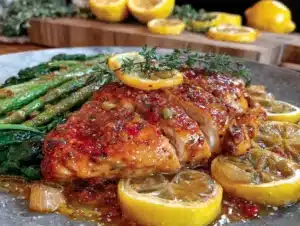
My neighbor swore she hated salmon. For years. Every time I’d mention making it for dinner, she’d make this face—you know the one—like I’d suggested we eat dirt. Then last April, on a Tuesday that felt more like July, I had a beautiful filet in the fridge and a bunch of asparagus that was about to go limp. I made this Spring Honey Garlic Baked Salmon with Asparagus just for myself, figuring I’d eat it on the porch while she was at work. I caught her standing at my screen door, fork in hand, asking if I had any leftovers. That was the moment the salmon-hater became a salmon-convert. Honestly, I wasn’t even trying to change her mind. I was just hungry and it was spring.
This recipe happened because I wanted something that tasted like the season—bright, fresh, and a little sweet—without standing over a hot stove. The honey garlic glaze does this magical thing where it caramelizes around the salmon and drips down onto the asparagus below, so the whole sheet pan comes out looking like a restaurant dish. I mean, you get perfectly flaky fish and tender-crisp veggies from one pan. That’s the kind of efficiency that makes you feel like a genius, even on a lazy Tuesday.
Let me tell you, there’s something about the smell of honey and garlic roasting together that just hits different in spring. It’s not heavy or winter-cozy. It’s light and promising, like the first warm day after a cold spell. The first time I made this, I forgot to line the pan with foil and spent twenty minutes scrubbing caramelized honey off the baking sheet. Total mess. But I kept making it because the taste was worth the cleanup. Now I know better—foil is your friend here. And honestly, that little mistake taught me more than any perfect first attempt ever could.
Maybe you’ve been there—standing in the grocery aisle, staring at salmon, wondering if you’ll actually cook it or let it sit in the fridge until it’s trash. I get it. That’s why this recipe works. It’s forgiving, it’s fast, and it makes you look like you tried harder than you actually did. The glaze comes together in one bowl. The veggies just need a quick toss in oil and salt. And the whole thing bakes in under twenty minutes. That’s less time than it takes to order takeout and wait for delivery.
Why You’ll Love This Recipe
I’ve tested this Spring Honey Garlic Baked Salmon with Asparagus at least a dozen times—through different oven temperatures, glaze ratios, and asparagus thicknesses. What I’m sharing is the version that worked every single time, even when I rushed or used ingredients straight from the fridge. You don’t need to be a chef to nail this one.
- Quick & Easy: From prep to plate in under 25 minutes. Perfect for those evenings when you want something impressive but don’t have the energy for a complicated recipe.
- Simple Ingredients: You probably have honey, garlic, soy sauce, and olive oil in your kitchen right now. The only grocery trip is for salmon and asparagus—both easy to find in spring.
- Perfect for Spring: This dish screams seasonal freshness. It’s light enough for warm evenings but still satisfying enough to feel like a real meal.
- Crowd-Pleaser: I’ve watched self-proclaimed salmon-haters (like my neighbor) go back for seconds. The honey garlic glaze is sweet, savory, and just sticky enough to win anyone over.
- Unbelievably Delicious: The combination of caramelized honey, roasted garlic, and flaky salmon is next-level comfort food. The asparagus soaks up all those drippings and becomes the best part of the plate.
What makes this recipe different from the rest? It’s the balance of the glaze—not too sweet, not too salty, with a tiny hint of garlic that doesn’t overpower the fish. I’ve tried versions that used too much honey (burnt sugar mess) or too much soy sauce (salt bomb). This one hits the sweet spot. Plus, cooking everything on one sheet pan means less cleanup and more time enjoying your dinner. It’s comfort food reimagined—healthier, faster, but with the same soul-soothing satisfaction. Perfect for impressing guests without stress, or turning a simple Tuesday into something memorable.
What Ingredients You Will Need
This recipe uses simple, wholesome ingredients to deliver bold flavor and satisfying texture without the fuss. Most of these are pantry staples, especially in spring when asparagus is at its peak and fresh salmon is easy to find.
For the Salmon and Glaze
- Salmon fillets – 4 (6-ounce) fillets, skin on or off (I prefer skin-on for extra moisture and crispy texture)
- Honey – ¼ cup (adds natural sweetness and helps the glaze caramelize beautifully)
- Soy sauce – 3 tablespoons (use low-sodium to control saltiness; tamari works for gluten-free)
- Garlic – 4 cloves, minced (fresh is non-negotiable here—pre-minced jarred garlic gets bitter when roasted)
- Olive oil – 2 tablespoons (for the glaze and for tossing the asparagus)
- Lemon juice – 1 tablespoon, fresh squeezed (brightens the whole dish and balances the honey)
- Dijon mustard – 1 teaspoon (adds a subtle tang and helps emulsify the glaze)
- Salt – ½ teaspoon, or to taste
- Black pepper – ¼ teaspoon, freshly ground
- Red pepper flakes – A pinch (optional, for a tiny kick of heat)
For the Asparagus
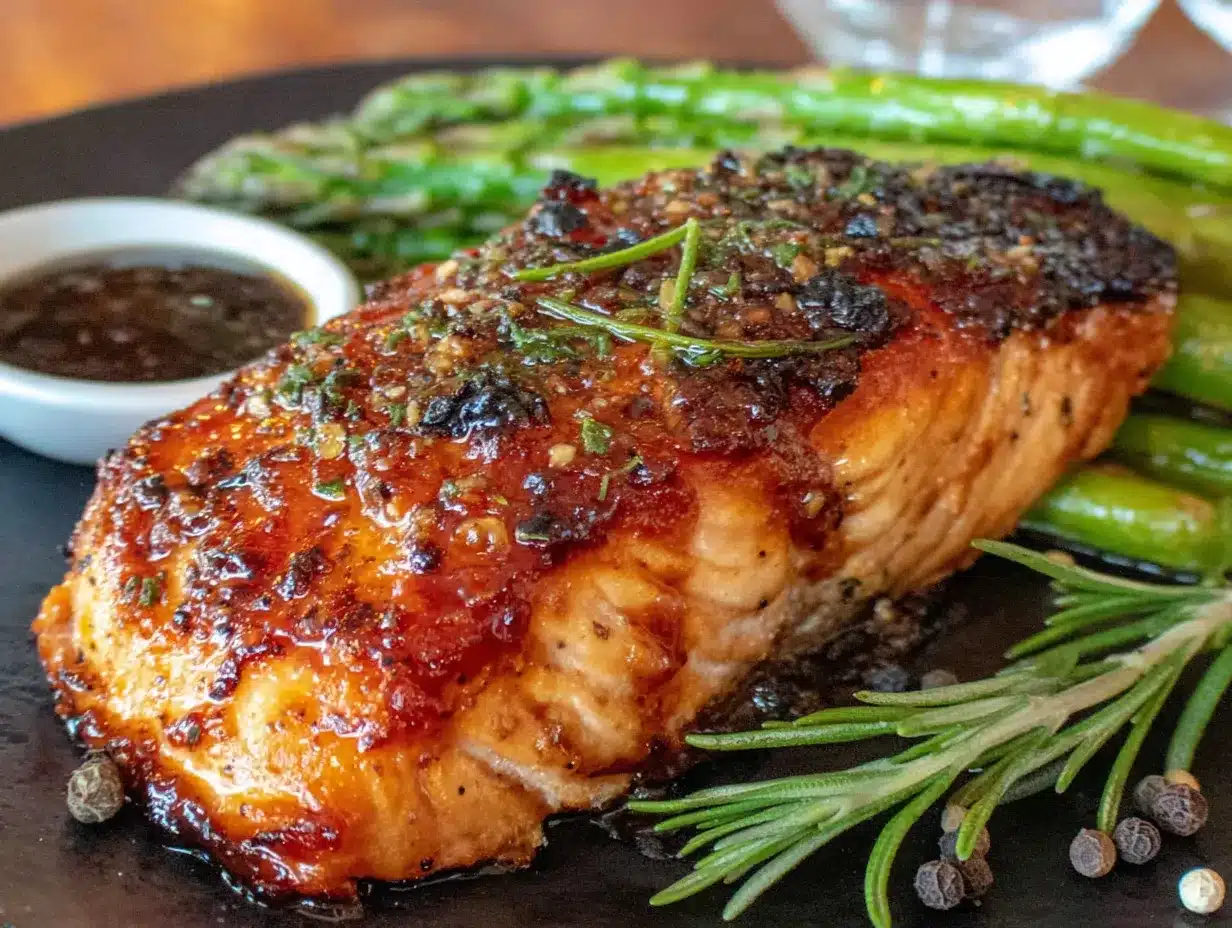
- Asparagus – 1 pound, woody ends trimmed (about 1 bunch; look for bright green stalks with firm tips)
- Olive oil – 1 tablespoon
- Salt – ¼ teaspoon
- Garlic powder – ¼ teaspoon (optional, but adds a nice extra layer)
For Garnish (Optional but Recommended)
- Sesame seeds – 1 tablespoon, toasted
- Fresh parsley or cilantro – 2 tablespoons, chopped
- Lemon wedges – For squeezing over the top
I recommend using wild-caught salmon if you can find it—it has a firmer texture and cleaner flavor than farmed. But honestly, I’ve made this with frozen-thawed filets and it still turned out great. Just pat them dry really well before glazing. For the asparagus, look for stalks that are about the same thickness so they cook evenly. If some are thicker, just snap off the woody ends and they’ll be fine. In early spring, you might find thinner asparagus that cooks even faster—keep an eye on it so it doesn’t turn mushy.
If you need substitutions: swap honey with maple syrup for a slightly different sweetness, use coconut aminos instead of soy sauce for a soy-free option, or replace Dijon with whole-grain mustard for more texture. The recipe is forgiving that way.
Equipment Needed
You don’t need fancy gadgets for this Spring Honey Garlic Baked Salmon with Asparagus. A sheet pan and a few basic tools are all it takes.
- Sheet pan – A half-sheet pan (18×13 inches) works best. Avoid dark nonstick pans if possible—they can cause the honey to burn faster. A light-colored aluminum pan is ideal.
- Parchment paper or aluminum foil – Trust me on this. Line your pan for easy cleanup. The honey glaze gets sticky when it caramelizes, and scrubbing that off is no fun.
- Small bowl – For whisking the glaze ingredients together.
- Whisk or fork – To combine the glaze smoothly.
- Chef’s knife and cutting board – For trimming asparagus and mincing garlic.
- Measuring cups and spoons – Precision matters with the glaze ratios.
- Tongs – For flipping the asparagus halfway through, if you want even browning.
- Instant-read thermometer – Optional but helpful. Salmon is perfectly cooked at 125°F to 130°F in the thickest part.
If you don’t have a sheet pan, a baking dish works too—just make sure the salmon isn’t crowded. And if you’re using foil, crimp the edges slightly to catch any glaze drips. I’ve used a cast iron skillet in a pinch, and it worked beautifully because it holds heat well. Just keep an eye on the cooking time since cast iron gets hotter.
Preparation Method
Let’s get cooking. This Spring Honey Garlic Baked Salmon with Asparagus comes together fast, so have everything ready before you start. I like to set a timer for each step to keep things moving.
Step 1: Preheat and Prep the Pan
Preheat your oven to 400°F (200°C). While it’s heating, line a large sheet pan with parchment paper or aluminum foil. If using foil, lightly spray it with cooking spray so the glaze doesn’t stick. This step saves you from scrubbing later—trust me, I learned the hard way.
Step 2: Make the Honey Garlic Glaze
In a small bowl, whisk together ¼ cup honey, 3 tablespoons soy sauce, 4 minced garlic cloves, 2 tablespoons olive oil, 1 tablespoon lemon juice, and 1 teaspoon Dijon mustard. Add a pinch of red pepper flakes if you want a little heat. Whisk until everything is combined and the mustard is fully incorporated. The glaze should look smooth and slightly thick. Set aside about 2 tablespoons of the glaze for brushing on the salmon halfway through baking.
Step 3: Prep the Asparagus
Rinse the asparagus and snap off the woody ends—they’ll naturally break where the tender part starts. Pat them dry with a paper towel. On the prepared sheet pan, toss the asparagus with 1 tablespoon olive oil, ¼ teaspoon salt, and ¼ teaspoon garlic powder (if using). Spread them in a single layer on one half of the pan, leaving room for the salmon.
Step 4: Prep the Salmon
Pat the salmon fillets dry with paper towels. This helps the glaze stick and ensures a nice sear. Place the fillets skin-side down (if using skin-on) on the other half of the sheet pan, nestled among the asparagus. Season the tops with a pinch of salt and pepper. Brush the tops generously with the honey garlic glaze, reserving the 2 tablespoons you set aside for later.
Step 5: Bake
Place the sheet pan in the preheated oven and bake for 8 minutes. After 8 minutes, remove the pan and brush the salmon with the reserved glaze. This double-glaze technique creates a thicker, more caramelized coating. Return the pan to the oven and bake for another 6 to 8 minutes, or until the salmon flakes easily with a fork and the asparagus is tender-crisp. Total baking time is usually 14 to 16 minutes for 1-inch thick fillets. If your fillets are thicker, add 2 to 3 minutes.
Step 6: Rest and Serve
Remove the pan from the oven and let it rest for 2 minutes. This allows the juices to redistribute. Sprinkle with toasted sesame seeds and fresh parsley or cilantro. Serve with lemon wedges on the side for squeezing. The salmon should be flaky and moist, with a sticky, caramelized top. The asparagus should be bright green and slightly charred at the tips.
Pro tip: If you like your asparagus with more char, switch the oven to broil for the last 1 to 2 minutes. Watch it closely—honey burns fast under the broiler. I’ve ruined a perfect batch by walking away for “just a second.”
Cooking Tips & Techniques
After making this Spring Honey Garlic Baked Salmon with Asparagus more times than I can count, I’ve picked up a few tricks that make a real difference.
Don’t skip patting the salmon dry. This is the number one mistake people make. Wet salmon steams instead of roasting, and the glaze slides right off. Pat it dry with paper towels, and you’ll get that beautiful sticky crust.
Use room temperature ingredients. If your salmon is straight from the fridge, it will cook unevenly. Let it sit on the counter for 10 to 15 minutes before glazing. Same with the honey—if it’s crystallized, warm it slightly so it mixes smoothly into the glaze.
Watch the garlic. Fresh garlic is amazing, but it can burn if it’s too finely minced or if the oven runs hot. I mince mine medium-fine—not paste, not chunks. And I always add it to the glaze, not directly on the fish, so it’s protected by the honey and oil.
Timing is everything. I used to put the salmon and asparagus in at the same time, but thicker asparagus needed a head start. Now I toss the asparagus in the oven for 3 minutes before adding the salmon. This way, everything finishes together. If your asparagus is very thin, skip this step—it’ll cook in the same time as the fish.
One thing I learned the hard way: Don’t overcrowd the pan. If the fillets are touching, they steam instead of roast, and you lose that caramelized edge. Give them space. Use two pans if you need to.
For consistent results, use an instant-read thermometer. Salmon is perfectly cooked at 125°F to 130°F in the thickest part. It will continue cooking slightly after you take it out of the oven, so pull it at 125°F for medium.
Variations & Adaptations
This Spring Honey Garlic Baked Salmon with Asparagus is a great base recipe—you can tweak it to fit your mood, diet, or what’s in season.
Dietary Adaptations
- Gluten-free: Use tamari or coconut aminos instead of soy sauce. Everything else is naturally gluten-free.
- Low-carb/Keto: The honey adds carbs, so swap it with a sugar-free honey substitute or use a monk fruit-based sweetener. The texture will be slightly different, but the flavor still works.
- Dairy-free: This recipe is already dairy-free. Just double-check your Dijon mustard—some brands add dairy, though most don’t.
Flavor Variations
- Spicy version: Add 1 teaspoon sriracha or chili garlic sauce to the glaze. The heat pairs beautifully with the honey.
- Citrus twist: Replace the lemon juice with orange juice and add a teaspoon of orange zest to the glaze. It gives a brighter, almost tropical flavor.
- Herbaceous version: Stir 2 tablespoons of fresh dill or thyme into the glaze before brushing. Dill and salmon are a classic combo for a reason.
Vegetable Swaps
Not an asparagus fan? No problem. This glaze works with broccoli florets, green beans, snap peas, or even thick slices of zucchini. Adjust cooking times based on the vegetable—broccoli might need an extra 2 minutes, while zucchini cooks faster. I’ve made this with roasted cherry tomatoes and bell peppers in late summer, and it was incredible.
Cooking Method Variations
- Air fryer: Cook the salmon at 375°F for 8 to 10 minutes, brushing with glaze halfway through. Cook the asparagus separately at 375°F for 5 to 7 minutes.
- Grill: Grill the salmon over medium-high heat for 4 to 5 minutes per side, brushing with glaze. Grill the asparagus in a grill basket for 6 to 8 minutes, turning occasionally.
My personal favorite variation is adding a sprinkle of toasted sesame seeds and a drizzle of sriracha mayo on top—it turns this into a weeknight dinner that feels like takeout. I’ve also tried it with a maple-miso glaze instead of honey, and it was fantastic. Don’t be afraid to experiment.
Serving & Storage Suggestions
This Spring Honey Garlic Baked Salmon with Asparagus is best served warm, right off the sheet pan. The contrast between the hot, flaky fish and the cool lemon squeeze is perfection.
Serving temperature: Serve the salmon warm, not piping hot. Let it rest for 2 minutes after baking so the juices settle. The asparagus should be warm but still crisp—if it’s been sitting too long, it’ll get limp.
Presentation: Arrange the salmon fillets on a platter with the asparagus alongside. Sprinkle with sesame seeds and fresh herbs. Add lemon wedges on the side for squeezing. If you’re serving guests, drizzle a little extra glaze over the top right before bringing it to the table.
Complementary dishes: This salmon pairs beautifully with:
- Fluffy white rice or quinoa (to soak up the extra glaze)
- A simple green salad with lemon vinaigrette
- Roasted baby potatoes or garlic bread
- A crisp white wine like Sauvignon Blanc or Pinot Grigio
Storage: Store leftover salmon and asparagus in an airtight container in the refrigerator for up to 3 days. The flavors actually meld together overnight, making it great for next-day lunches. I love flaking the cold salmon over a salad with the leftover asparagus.
Reheating: The best way to reheat is in a 300°F oven for 5 to 7 minutes, or until just warmed through. The microwave works in a pinch, but it can overcook the fish. If using the microwave, heat in 20-second bursts and stop as soon as it’s warm. The asparagus will soften, so don’t expect it to be as crisp as day one.
Freezing: I don’t recommend freezing this dish after cooking—the texture of both the salmon and asparagus suffers. However, you can freeze the glaze separately for up to 3 months. Just thaw it in the fridge and use it on fresh salmon later.
Flavor development: The glaze intensifies overnight. If you’re meal-prepping, cook the salmon and asparagus separately and store them apart. Combine them when reheating for the best texture.
Nutritional Information & Benefits
This Spring Honey Garlic Baked Salmon with Asparagus isn’t just delicious—it’s packed with nutrients that make you feel good about eating it.
Estimated nutritional values per serving (1 fillet + asparagus):
- Calories: 420
- Protein: 35g
- Fat: 22g
- Carbohydrates: 22g
- Fiber: 3g
- Sugar: 18g (mostly from honey)
- Sodium: 680mg
Health benefits:
- Salmon is rich in omega-3 fatty acids, which support heart and brain health. It’s also a great source of high-quality protein and vitamin D.
- Asparagus is packed with fiber, folate, and vitamins A, C, and K. It’s also a natural diuretic, which helps reduce bloating.
- Garlic has immune-boosting properties and may help lower blood pressure.
- Honey provides natural antioxidants and is a better alternative to refined sugar.
Dietary considerations: This recipe is naturally dairy-free and can be made gluten-free with a simple swap. It’s also relatively low in carbs compared to many comfort foods, making it suitable for moderate low-carb diets. If you’re watching your sodium, use low-sodium soy sauce and reduce the added salt.
Potential allergens: Contains fish (salmon) and soy (soy sauce). The Dijon mustard may contain trace amounts of gluten in some brands.
I personally love that this dish feels indulgent but is actually really good for you. It’s the kind of meal that leaves you satisfied without that heavy, sluggish feeling. Perfect for spring when you want to eat lighter but still enjoy your food.
Conclusion
This Spring Honey Garlic Baked Salmon with Asparagus is proof that you don’t need a complicated recipe to make something memorable. It’s quick, it’s forgiving, and it tastes like the season in the best possible way. The honey garlic glaze caramelizes into something almost magical, and the asparagus soaks up all that goodness while staying crisp and bright.
I hope you try this recipe and make it your own. Maybe you’ll add extra red pepper flakes for heat, or swap the asparagus for whatever vegetable is in your fridge. That’s the beauty of a simple recipe—it leaves room for your creativity. My neighbor, by the way, now asks me when I’m making “that salmon” again. She even bought her own sheet pan.
If you make this Spring Honey Garlic Baked Salmon with Asparagus, I’d love to hear about it. Drop a comment below and tell me how it turned out, or share a photo on Pinterest and tag me. Did you try a variation? Did your picky eater surprise you? Let me know! And if you’re looking for more spring-inspired recipes, check out my lemon herb chicken thighs or roasted spring vegetable bowl for more seasonal inspiration.
Until next time, happy cooking—and don’t forget the foil.
Frequently Asked Questions
Can I use frozen salmon for this recipe?
Yes, absolutely. Just thaw the fillets completely in the refrigerator overnight, then pat them very dry with paper towels before glazing. Frozen salmon tends to release more water, so drying is extra important. You might need to add 2 to 3 minutes to the baking time if the fillets are still slightly cold in the center.
How do I know when the salmon is done?
The easiest test is to gently press the top of the fillet with a fork. If it flakes easily and the center is opaque (not translucent), it’s done. For precision, use an instant-read thermometer—125°F to 130°F in the thickest part is perfect. Remember, the salmon will continue cooking for a minute or two after you take it out of the oven.
Can I make this recipe ahead of time?
You can prep the glaze and trim the asparagus up to a day ahead. Store the glaze in the fridge and the asparagus in a sealed bag with a damp paper towel. However, I recommend baking the salmon and asparagus fresh for the best texture. Leftovers are great for lunch the next day, but the asparagus won’t be as crisp.
What can I use instead of honey?
Maple syrup is the best substitute—it has a similar consistency and sweetness level. Agave nectar also works, though it’s thinner. For a low-carb option, use a sugar-free honey substitute or monk fruit syrup. Just note that different sweeteners caramelize at different rates, so keep an eye on the oven.
How do I prevent the honey glaze from burning?
Honey burns easily because of its high sugar content. To prevent this, don’t use the broiler unless you’re watching it constantly, and avoid dark nonstick pans that absorb more heat. Also, make sure your glaze isn’t too thick—if it feels syrupy, add a teaspoon of water to thin it out. If the edges of the pan start to darken too quickly, tent the salmon loosely with foil for the last few minutes of baking.
Pin This Recipe!
Spring Honey Garlic Baked Salmon with Asparagus
Perfectly flaky salmon and tender-crisp asparagus roasted together on one sheet pan with a sweet and savory honey garlic glaze. This quick and easy spring recipe comes together in under 25 minutes and is a guaranteed crowd-pleaser.
- Prep Time: 10 minutes
- Cook Time: 16 minutes
- Total Time: 26 minutes
- Yield: 4 servings 1x
- Category: Main Course
- Cuisine: American
Ingredients
- 4 (6-ounce) salmon fillets, skin on or off
- ¼ cup honey
- 3 tablespoons low-sodium soy sauce (or tamari for gluten-free)
- 4 cloves garlic, minced
- 2 tablespoons olive oil
- 1 tablespoon fresh lemon juice
- 1 teaspoon Dijon mustard
- ½ teaspoon salt, or to taste
- ¼ teaspoon freshly ground black pepper
- Pinch red pepper flakes (optional)
- 1 pound asparagus, woody ends trimmed
- 1 tablespoon olive oil (for asparagus)
- ¼ teaspoon salt (for asparagus)
- ¼ teaspoon garlic powder (optional, for asparagus)
- 1 tablespoon toasted sesame seeds (for garnish)
- 2 tablespoons fresh parsley or cilantro, chopped (for garnish)
- Lemon wedges (for serving)
Instructions
- Preheat oven to 400°F (200°C). Line a large sheet pan with parchment paper or aluminum foil. If using foil, lightly spray with cooking spray.
- In a small bowl, whisk together honey, soy sauce, minced garlic, 2 tablespoons olive oil, lemon juice, Dijon mustard, and red pepper flakes (if using). Set aside about 2 tablespoons of the glaze for brushing halfway through baking.
- On the prepared sheet pan, toss asparagus with 1 tablespoon olive oil, ¼ teaspoon salt, and garlic powder (if using). Spread in a single layer on one half of the pan.
- Pat salmon fillets dry with paper towels. Place skin-side down on the other half of the sheet pan. Season tops with salt and pepper. Brush generously with the honey garlic glaze, reserving the 2 tablespoons for later.
- Bake for 8 minutes. Remove pan from oven and brush salmon with reserved glaze. Return to oven and bake for another 6 to 8 minutes, or until salmon flakes easily with a fork and asparagus is tender-crisp (total 14-16 minutes for 1-inch thick fillets).
- Remove from oven and let rest for 2 minutes. Sprinkle with toasted sesame seeds and fresh herbs. Serve with lemon wedges.
Notes
Pat salmon dry for best glaze adhesion. For thicker asparagus, roast 3 minutes before adding salmon. Use an instant-read thermometer for perfect doneness (125°F to 130°F). Line pan with foil for easy cleanup. Watch closely if using broiler—honey burns fast.
Nutrition
- Serving Size: 1 salmon fillet with
- Calories: 420
- Sugar: 18
- Sodium: 680
- Fat: 22
- Saturated Fat: 4
- Carbohydrates: 22
- Fiber: 3
- Protein: 35
Keywords: baked salmon, honey garlic salmon, sheet pan salmon, spring salmon recipe, asparagus salmon, easy salmon dinner, healthy salmon recipe