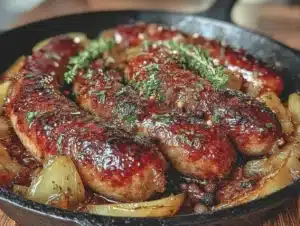
I ruined Oktoberfest dinner three years in a row before I figured out what I was doing wrong. Not the bratwurst itself—that part I actually had down pretty well. It was everything else. The sauerkraut turned out bitter and limp. The beer I used was too hoppy and left this weird, sharp aftertaste. And the onions? Let’s just say they were more charcoal than caramelized. I kept trying to force this complicated, restaurant-style version when all I really needed was to let the ingredients do their thing.
Honestly, that first year I was so frustrated I almost gave up on the whole idea. But then my neighbor (the one who actually grew up in Munich) handed me a cold wheat beer and said, “You’re thinking too hard. Bratwurst wants simple.” And she was right. This Best Bavarian Bratwurst Skillet with Sauerkraut for Oktoberfest is what came out of finally listening to her advice. It’s the kind of meal that tastes like you spent hours on it, but really it’s just good ingredients treated with a little respect.
There’s something about the way the bratwurst browns in the same pan as the onions and apples—the smells alone are enough to make you forget whatever else you had planned for the evening. And when you pile that tangy sauerkraut on top with a swipe of mustard? That’s when you know you’ve got something worth repeating. No more burnt pans, no more bitter kraut. Just a skillet full of everything Oktoberfest should be.
Why You’ll Love This Recipe
This isn’t just another sausage recipe you’ll forget about by Tuesday. This Best Bavarian Bratwurst Skillet with Sauerkraut for Oktoberfest has earned its spot in my regular rotation, and here’s why it’ll earn one in yours too.
- Quick & Easy : From start to finish, you’re looking at about 35 minutes. Perfect for those evenings when you want something special but don’t have two hours to babysit a stove.
- Simple Ingredients : You can find everything at a regular grocery store. No specialty butcher trips or obscure spice blends required.
- Perfect for Oktoberfest : Whether you’re hosting a party or just want to feel like you’re at a beer hall in Munich, this skillet delivers that authentic Bavarian vibe without the plane ticket.
- Crowd-Pleaser : I’ve served this to picky kids, meat-and-potatoes uncles, and vegan-curious friends. Everyone goes back for seconds.
- One-Pan Wonder : Less cleanup means more time enjoying your beer and company. That’s a win in my book.
What makes this recipe different from all the others? It’s the balance. Most versions either drown everything in beer until it’s soupy, or they overcook the bratwurst until it’s dry and sad. This method keeps the sausage juicy, the kraut tangy but not sour, and the apples just soft enough to melt into the onions. I tested it with five different beer styles before landing on the perfect one—a German-style lager that adds depth without bitterness.
This recipe is the kind that makes you close your eyes after the first bite. It’s comfort food with a German accent—hearty, honest, and deeply satisfying. Perfect for impressing guests without breaking a sweat, or turning a random Tuesday into something worth celebrating.
What Ingredients You Will Need
This recipe uses simple, honest ingredients that come together to create something truly special. Most of these are pantry staples or easy to find at any grocery store, especially during Oktoberfest season when stores stock up on German-style goodies.
- Bratwurst (4 links, about 1 pound) — Look for fresh bratwurst, not pre-cooked. I prefer Johnsonville or a local butcher’s house-made version. The fat content keeps them juicy during cooking. If you can find authentic German bratwurst, even better.
- Sauerkraut (14 ounces, drained) — Buy refrigerated sauerkraut, not canned. The refrigerated stuff has better texture and flavor. I like Boar’s Head or Frank’s. Rinse it briefly if you prefer less tang, but I leave it as-is for maximum authenticity.
- Yellow onion (1 large, thinly sliced) — A sweet onion like Vidalia works great here too. The onions melt into the kraut and add natural sweetness.
- Apple (1 medium, peeled and diced) — A firm, tart apple like Granny Smith or Honeycrisp holds its shape and balances the richness of the sausage. Don’t skip this—it’s the secret ingredient that ties everything together.
- German-style lager beer (1 cup) — This is important. Use a lager like Warsteiner, Bitburger, or even a good domestic lager like Yuengling. Avoid IPAs or stouts—they’ll make the dish bitter and heavy.
- Butter (2 tablespoons, unsalted) — Adds richness and helps everything brown beautifully. You can use olive oil if you prefer, but butter tastes more authentic.
- Caraway seeds (1 teaspoon) — Optional but highly recommended. Caraway is the classic German spice that pairs perfectly with sauerkraut. It adds a subtle anise-like warmth.
- Brown sugar (1 tablespoon, packed) — Just a touch to balance the acidity of the sauerkraut and beer. Don’t skip it—it’s not enough to make things sweet, just enough to round out the flavors.
- Whole grain mustard (for serving) — A must-have condiment. The texture and mild heat cut through the richness of the sausage perfectly.
- Fresh parsley (for garnish) — Adds a pop of color and freshness. Optional but pretty.
- Salt and black pepper (to taste) — Go easy on the salt since bratwurst and sauerkraut are already salty.
Equipment Needed
You don’t need a fancy German kitchen to make this recipe work. Here’s what you’ll actually use:
- Large skillet or cast-iron pan (12-inch) — Cast iron is ideal because it holds heat evenly and gives the bratwurst a beautiful sear. But any heavy-bottomed skillet works. I use my trusty Lodge cast iron that’s been seasoned for years.
- Tongs — For flipping the bratwurst without piercing them. Piercing releases the juices and dries them out.
- Sharp knife and cutting board — For slicing the onion and dicing the apple. A good chef’s knife makes this job quick and painless.
- Measuring cups and spoons — Nothing fancy, just standard ones for the beer, brown sugar, and caraway seeds.
- Wooden spoon or spatula — For stirring the sauerkraut and scraping up any browned bits from the pan.
- Lid or foil — For covering the skillet while the bratwurst finishes cooking. A tight-fitting lid works best, but foil in a pinch.
If you don’t have a cast-iron skillet, don’t sweat it. A stainless steel or non-stick pan works fine—just make sure it’s large enough to hold everything without crowding. Crowding leads to steaming instead of browning, and nobody wants pale bratwurst.
Preparation Method

- Prep your ingredients first. Thinly slice the onion (about ¼-inch thick). Peel and dice the apple into small cubes, about ½-inch. Drain the sauerkraut in a colander and give it a quick rinse if you want to mellow the tang. Pat the bratwurst dry with paper towels—dry sausage = better browning.
- Heat your skillet over medium heat. Add the butter and let it melt until it’s foamy but not browned. Swirl the pan to coat the bottom evenly. The butter should sizzle gently when you add the next ingredient.
- Sear the bratwurst. Place the bratwurst in the hot skillet, leaving space between each link. Let them cook undisturbed for 4-5 minutes, until the bottoms are deep golden brown. Flip with tongs (remember, no piercing!) and cook another 4-5 minutes on the second side. The bratwurst should look beautifully browned all over. Remove them to a plate and set aside.
- Cook the onions and apples. In the same skillet (don’t wipe it out—all that browned goodness is flavor), add the sliced onion and diced apple. Stir to coat in the butter and pan drippings. Cook for 6-8 minutes, stirring occasionally, until the onions are soft and starting to turn golden at the edges. The apples should be tender but still hold their shape.
- Add the sauerkraut and seasonings. Stir in the drained sauerkraut, caraway seeds, and brown sugar. Mix everything together until well combined. The brown sugar will melt into the kraut and help balance the acidity.
- Pour in the beer. Slowly pour the lager into the skillet, stirring gently to incorporate. Let it come to a gentle simmer. The beer will deglaze the pan, lifting all those flavorful browned bits from the bottom. This is where the magic happens.
- Return the bratwurst to the pan. Nestle the seared bratwurst into the sauerkraut mixture, pushing them down slightly so they’re partially submerged. The tops should still be visible.
- Cover and simmer. Reduce the heat to low, cover the skillet with a lid or foil, and let everything simmer gently for 15-20 minutes. The bratwurst will finish cooking through, and the sauerkraut will absorb all the beer and apple flavors. The liquid should reduce slightly but not evaporate completely—you want some saucy goodness left.
- Check for doneness. The bratwurst should be cooked through (internal temperature of 160°F/71°C if you want to be precise). If they’re not quite there, cover and cook another 5 minutes. The sauerkraut should be tender and fragrant, with most of the beer absorbed but still some moisture left.
- Rest and serve. Remove the skillet from heat and let it rest, uncovered, for 5 minutes. This allows the flavors to settle. Taste the sauerkraut and adjust seasoning with salt and pepper if needed. Garnish with fresh parsley and serve straight from the skillet with whole grain mustard on the side.
Pro tip from my burned-bratwurst days: If the sauerkraut looks too dry at any point, add a splash more beer or a couple tablespoons of water. You want it moist but not swimming. And if it’s too wet? Just remove the lid for the last 5 minutes of cooking to let some liquid evaporate.
Cooking Tips & Techniques
I learned most of these the hard way, so you don’t have to. Here’s what I wish someone had told me before my first Oktoberfest skillet disaster.
Don’t pierce the bratwurst. I know it’s tempting to poke them with a fork to check doneness, but resist. Every time you pierce the casing, those precious juices escape into the pan, leaving you with dry, sad sausages. Use tongs to flip them, and trust the cooking time. If you’re nervous, use an instant-read thermometer instead.
Get the pan hot enough. A common mistake is cooking bratwurst over medium-low heat because you’re afraid of burning them. But that low heat just steams the casings instead of browning them. Medium heat is your friend. The sizzle should be lively but not violent. If the butter burns before you add the bratwurst, your pan is too hot—wipe it out and start over.
Let the sauerkraut breathe. When you first open a bag of refrigerated sauerkraut, it can smell pretty pungent. Don’t let that scare you. Rinsing it briefly under cold water mellows the sharpness, and cooking it with the apple and beer transforms it completely. The final result is tangy and complex, not sour and aggressive.
Timing is everything. I used to try to do everything at once and ended up with burnt onions and undercooked sausage. Now I follow the order: sear the bratwurst first, then cook the aromatics, then build the sauerkraut mixture. It flows naturally and nothing gets neglected. While the covered skillet simmers, I set the table, pour the beer, and relax.
For consistent results every time: Use the same skillet and the same brand of bratwurst until you’re comfortable. Once you’ve made it a few times, start experimenting with different sausages and beer styles. But for your first attempt, stick with the recipe as written. It’s forgiving enough for beginners but satisfying enough for experienced cooks.
Variations & Adaptations
Once you’ve mastered the basic recipe, feel free to make it your own. Here are some variations I’ve tried and loved.
Dietary Adaptations: For a lighter version, use chicken or turkey bratwurst. They cook faster (about 3 minutes per side for searing) and work beautifully with the same sauerkraut mixture. For a gluten-free option, use a gluten-free lager or simply substitute the beer with chicken broth and a splash of apple cider vinegar. The flavor shifts slightly but remains delicious. For a dairy-free version, swap the butter for olive oil or vegan butter.
Seasonal Variations: In the fall, add a handful of thinly sliced fennel bulb along with the onions—it adds a subtle anise flavor that’s gorgeous with the caraway. In winter, stir in some shredded kale or spinach during the last 5 minutes of simmering for extra color and nutrients. In summer, swap the apple for a ripe pear and use a wheat beer instead of a lager. The pear adds a different kind of sweetness that’s lovely with the sauerkraut.
Flavor Twists: Add a sliced jalapeño or two when cooking the onions for a spicy kick. Stir in a tablespoon of Dijon mustard along with the beer for extra tang. Top the finished dish with crispy fried onions or crumbled bacon for texture. I once added a splash of apple brandy (Calvados) along with the beer, and let me tell you—that’s a game-changer for special occasions.
Cooking Method Variations: This recipe works great in a slow cooker too. Sear the bratwurst first, then transfer everything to the slow cooker and cook on low for 4-6 hours. The bratwurst will be incredibly tender. For a grill version, sear the bratwurst on the grill, then finish them in a foil packet with the sauerkraut mixture over indirect heat for about 20 minutes.
My personal favorite variation? I add a tablespoon of whole grain mustard to the sauerkraut mixture before simmering. It thickens the sauce slightly and adds those little pops of mustard seed that burst in your mouth. It’s not traditional, but it’s become my signature touch.
Serving & Storage Suggestions
Serving: Serve this Best Bavarian Bratwurst Skillet with Sauerkraut for Oktoberfest straight from the pan—it’s rustic and inviting that way. Spoon the sauerkraut onto plates, top with a bratwurst link, and add a generous dollop of whole grain mustard on the side. A sprinkle of fresh parsley adds color and freshness. The dish is best served hot, right after resting.
What to serve alongside: This skillet is a meal in itself, but it pairs beautifully with crusty rye bread or soft pretzels for sopping up the juices. A simple fresh Greek orzo pasta salad makes a bright, tangy counterpoint to the rich sausage. For a lighter side, try a crisp green salad with a sharp vinaigrette. And of course, a cold German-style lager or a dry Riesling is the perfect beverage companion.
Storage: Leftovers keep beautifully for 3-4 days in an airtight container in the refrigerator. The flavors actually meld and deepen overnight, so it’s one of those rare dishes that tastes even better the next day. I often make a double batch just for the leftovers.
Reheating: The best way to reheat is in a skillet over medium-low heat with a splash of water or beer to loosen the sauerkraut. Cover and heat for 5-7 minutes, stirring occasionally, until everything is hot. You can also microwave individual portions in 30-second bursts, but the texture won’t be quite as good. Avoid high heat—it’ll dry out the bratwurst.
Freezing: This recipe freezes surprisingly well. Let it cool completely, then transfer to a freezer-safe container. It will keep for up to 3 months. Thaw overnight in the refrigerator and reheat as directed above. The sauerkraut might be slightly softer after freezing, but the flavor remains excellent.
One more thing—the flavors develop over time. If you’re planning ahead, make the sauerkraut mixture a day in advance and refrigerate it separately from the bratwurst. Reheat everything together when you’re ready to serve. The caraway and apple really come into their own after a night in the fridge.
Nutritional Information & Benefits
While this is definitely a comfort food dish, it has some surprising nutritional benefits worth noting. Here’s the approximate breakdown per serving (one bratwurst link with about ¾ cup sauerkraut mixture):
- Calories: Approximately 450-500
- Protein: 22-25 grams
- Fat: 30-35 grams (mostly from the bratwurst)
- Carbohydrates: 18-22 grams
- Fiber: 4-5 grams
- Sugar: 8-10 grams (naturally occurring from apple and added brown sugar)
- Sodium: 800-1000 mg (varies by bratwurst and sauerkraut brand)
Health benefits: Sauerkraut is a fermented food packed with probiotics that support gut health. It’s also rich in vitamin C and vitamin K. The apple adds fiber and antioxidants, while the onions provide quercetin, a compound with anti-inflammatory properties. The caraway seeds aid digestion—which is helpful after a hearty German meal.
Dietary considerations: This recipe is naturally nut-free and egg-free. For a lower-sodium version, choose low-sodium bratwurst and rinse the sauerkraut thoroughly. For a lower-fat option, use chicken bratwurst and reduce the butter to 1 tablespoon. The dish is not low-carb due to the apple and brown sugar, but you can reduce both for a keto-friendly version.
Allergens: Contains dairy (butter) and gluten (beer and some bratwurst contain wheat). Check your bratwurst labels carefully—some brands use breadcrumbs as fillers. Use gluten-free beer and dairy-free butter alternatives as needed.
Personally, I love that this recipe feels indulgent but still has some redeeming qualities. It’s the kind of meal that satisfies your soul without making you feel like you need to run a marathon the next day. Balance, right?
Conclusion
This Best Bavarian Bratwurst Skillet with Sauerkraut for Oktoberfest has become my go-to for fall gatherings, lazy Sundays, and anytime I need a little taste of Germany without leaving my kitchen. It’s forgiving enough for beginners, impressive enough for company, and deeply satisfying every single time.
I love how this recipe lets you customize it based on what you have on hand or what you’re craving. Swap the apple for pear, the lager for wheat beer, the caraway for fennel seeds—it’s hard to go wrong once you understand the basic balance of savory, tangy, and sweet. The first time I made it correctly (without burning anything), I knew I’d found something special.
So grab your skillet, pour yourself a cold beer, and give this recipe a try. Whether you’re hosting an Oktoberfest party or just want to make a Tuesday night feel a little more festive, this skillet delivers. And when you take that first bite—the one where the juicy bratwurst meets the tangy kraut and sweet apple—you’ll understand why I kept coming back to this recipe until I got it right.
If you make this, I’d love to hear how it turns out. Drop a comment below and let me know your favorite variation, or tag me in your photos. Prost!
Frequently Asked Questions
Can I use pre-cooked bratwurst for this recipe?
You can, but the texture won’t be quite the same. Pre-cooked bratwurst are already fully cooked, so you’re really just reheating and browning them. They’ll still taste good, but fresh bratwurst have a juicier, more satisfying texture. If using pre-cooked, reduce the searing time to 2-3 minutes per side and the simmering time to 10 minutes.
What kind of beer works best for this recipe?
A German-style lager is your best bet—think Warsteiner, Bitburger, or even a domestic lager like Yuengling. The key is to avoid hoppy beers (IPAs) and dark, heavy beers (stouts, porters). Hoppy beers turn bitter when cooked, and dark beers overwhelm the delicate flavor of the bratwurst. If you don’t drink alcohol, use a non-alcoholic lager or chicken broth with a splash of apple cider vinegar.
Can I make this recipe in advance for a party?
Absolutely! This is actually one of those dishes that benefits from being made ahead. Prepare the entire skillet as directed, let it cool, and refrigerate in an airtight container for up to 3 days. Reheat gently in a skillet with a splash of beer or water. The flavors meld and deepen overnight, so it often tastes even better the next day. Just don’t add the fresh parsley garnish until right before serving.
How do I prevent the bratwurst from splitting while cooking?
The main culprit is high heat. When the heat is too high, the juices inside expand rapidly and burst through the casing. Keep your heat at medium, not high, and avoid piercing the sausages with a fork. Use tongs to flip them gently. If you see a bratwurst starting to split, immediately lower the heat and add a splash of beer to cool things down.
Is this recipe spicy?
Not inherently, no. The caraway seeds add a mild, aromatic warmth but nothing remotely spicy. If you want heat, add a sliced jalapeño or a pinch of red pepper flakes when cooking the onions. You can also serve it with spicy brown mustard or a horseradish sauce for extra kick. But the traditional version is mild and comforting, not spicy at all.
Pin This Recipe!
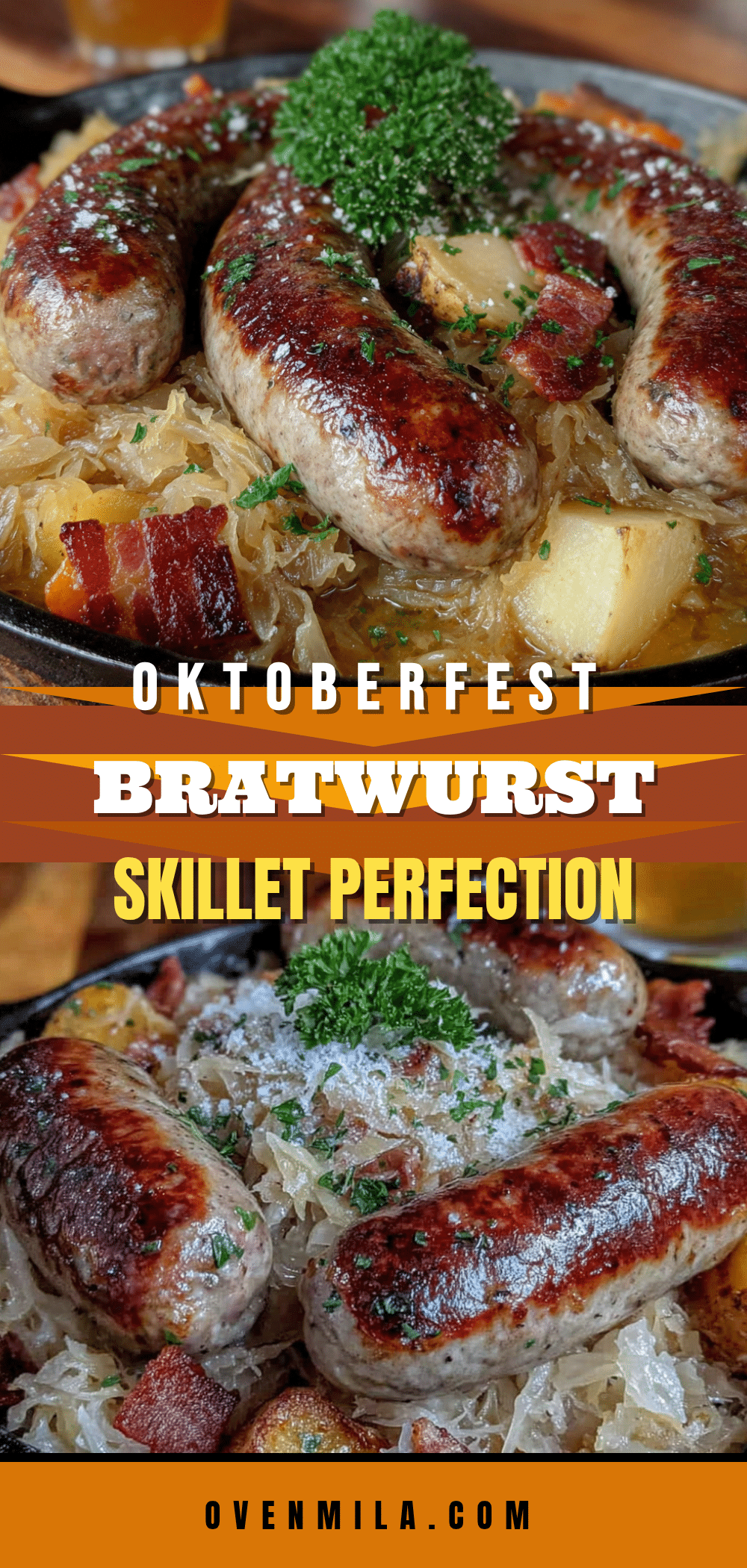
Best Bavarian Bratwurst Skillet for Oktoberfest

This Best Bavarian Bratwurst Skillet with Sauerkraut for Oktoberfest is a quick and easy one-pan meal featuring juicy bratwurst, tangy sauerkraut, sweet apples, and onions simmered in a German-style lager. It’s perfect for Oktoberfest celebrations or a comforting weeknight dinner.
- Prep Time: 10 minutes
- Cook Time: 25 minutes
- Total Time: 35 minutes
- Yield: 4 servings 1x
- Category: Main Course
- Cuisine: German
Ingredients
- 4 links bratwurst (about 1 pound)
- 14 ounces sauerkraut, drained
- 1 large yellow onion, thinly sliced
- 1 medium apple (Granny Smith or Honeycrisp), peeled and diced
- 1 cup German-style lager beer
- 2 tablespoons unsalted butter
- 1 teaspoon caraway seeds
- 1 tablespoon packed brown sugar
- Whole grain mustard, for serving
- Fresh parsley, for garnish
- Salt and black pepper, to taste
Instructions
- Prep your ingredients first. Thinly slice the onion (about ¼-inch thick). Peel and dice the apple into small cubes, about ½-inch. Drain the sauerkraut in a colander and give it a quick rinse if you want to mellow the tang. Pat the bratwurst dry with paper towels.
- Heat your skillet over medium heat. Add the butter and let it melt until it’s foamy but not browned. Swirl the pan to coat the bottom evenly.
- Sear the bratwurst. Place the bratwurst in the hot skillet, leaving space between each link. Let them cook undisturbed for 4-5 minutes, until the bottoms are deep golden brown. Flip with tongs (no piercing!) and cook another 4-5 minutes on the second side. Remove them to a plate and set aside.
- Cook the onions and apples. In the same skillet, add the sliced onion and diced apple. Stir to coat in the butter and pan drippings. Cook for 6-8 minutes, stirring occasionally, until the onions are soft and starting to turn golden at the edges. The apples should be tender but still hold their shape.
- Add the sauerkraut and seasonings. Stir in the drained sauerkraut, caraway seeds, and brown sugar. Mix everything together until well combined.
- Pour in the beer. Slowly pour the lager into the skillet, stirring gently to incorporate. Let it come to a gentle simmer to deglaze the pan.
- Return the bratwurst to the pan. Nestle the seared bratwurst into the sauerkraut mixture, pushing them down slightly so they’re partially submerged.
- Cover and simmer. Reduce the heat to low, cover the skillet with a lid or foil, and let everything simmer gently for 15-20 minutes. The bratwurst will finish cooking through, and the sauerkraut will absorb the flavors.
- Check for doneness. The bratwurst should be cooked through (internal temperature of 160°F/71°C). If not, cover and cook another 5 minutes.
- Rest and serve. Remove the skillet from heat and let it rest, uncovered, for 5 minutes. Taste the sauerkraut and adjust seasoning with salt and pepper if needed. Garnish with fresh parsley and serve straight from the skillet with whole grain mustard on the side.
Notes
If the sauerkraut looks too dry, add a splash more beer or water. If too wet, remove the lid for the last 5 minutes of cooking. For best results, use fresh bratwurst and a German-style lager. Avoid piercing the bratwurst to keep them juicy.
Nutrition
- Serving Size: 1 bratwurst link wit
- Calories: 475
- Sugar: 9
- Sodium: 900
- Fat: 33
- Saturated Fat: 12
- Carbohydrates: 20
- Fiber: 5
- Protein: 24
Keywords: bratwurst, sauerkraut, Oktoberfest, German, one-pan, skillet, apple, beer