My husband claimed he hated butternut squash for twelve years. Twelve years. Every fall, I’d roast it, mash it, toss it into soups, and he’d push it around his plate like a kid avoiding broccoli. Then last November, I made this lasagna “just for myself” on a rainy Tuesday, figuring I’d have leftovers for days. I caught him standing over the baking dish at 10 PM, fork in hand, eating it cold straight from the pan. He didn’t even bother with a plate.
That’s the thing about this butternut squash lasagna with sage brown butter. It doesn’t announce itself as a vegetable-forward dish. It just shows up looking like the most decadent, creamy, cheesy lasagna you’ve ever seen, and by the time anyone realizes there’s squash in there, they’re already reaching for seconds. Honestly, I’ve watched people who swear they “don’t do squash” go back for thirds at dinner parties. The secret is in the layering—and that nutty, sage-infused brown butter that ties everything together.
I remember the first time I tested this for a friend’s birthday dinner. I was so nervous about the bechamel breaking that I forgot to salt the pasta water. The noodles came out bland, but the filling was so ridiculously good that nobody noticed. Maybe you’ve been there, scrambling to fix something mid-recipe while pretending you meant to do it that way. This butternut squash lasagna is forgiving like that. It rewards you for trying, even when things go slightly sideways. And that’s why I keep coming back to it, season after season.
Why You’ll Love This Recipe
This isn’t just another lasagna recipe. It’s the one that makes people close their eyes after the first bite and ask, “What did you put in this?” Here’s why it stands out:
- Perfect for Hosting: You can assemble it the day before your dinner party, pop it in the fridge, and bake it while your guests sip wine. No last-minute stress.
- Simple Ingredients: No fancy grocery store trips. Butternut squash, sage, butter, lasagna noodles, and cheese—things you can find anywhere.
- Crowd-Pleaser: I’ve served this at potlucks, Thanksgiving dinners, and casual weeknight gatherings. It gets rave reviews from both kids and adults. Even the squash skeptics.
- Unbelievably Delicious: The combination of sweet roasted squash, savory browned butter, and creamy bechamel is pure comfort food magic. It’s rich without being heavy.
- Make-Ahead Friendly: This lasagna actually tastes better the next day. The flavors meld together overnight, making it ideal for busy hosts.
What makes this recipe different from others? It’s the sage brown butter. Most butternut squash lasagnas rely on heavy cream or tons of cheese for richness. This one uses brown butter as the flavor backbone, which adds a nutty, almost caramel-like depth that complements the squash perfectly. Plus, I’ve tested this dozens of times to get the bechamel just right—not too thick, not too thin, with just enough sage to make you notice it without overpowering everything else.
This is the kind of dish that makes you look like a rockstar in the kitchen without spending all day there. It’s comfort food reimagined—a little fancier, but just as soul-soothing as the lasagna you grew up eating.
What Ingredients You Will Need
This recipe uses simple, wholesome ingredients to deliver bold flavor and satisfying texture without the fuss. Most of these are pantry staples or easy to find at any grocery store.
- Butternut Squash (1 medium, about 2-3 pounds): Look for one that feels heavy for its size with firm, unblemished skin. You’ll peel, seed, and cube it. Pro tip: buy pre-cut cubes from the store if you’re short on time.
- Unsalted Butter (1/2 cup, 1 stick): Use unsalted so you can control the salt level. I prefer Kerrygold for its rich flavor, but any good-quality butter works.
- Fresh Sage Leaves (15-20 leaves): Don’t use dried sage here. Fresh sage is essential for that earthy, aromatic flavor that makes this dish special. Look for leaves that are bright green and not wilted.
- Whole Milk (4 cups): Whole milk creates the creamiest bechamel. You can use 2% in a pinch, but avoid skim—it will be too thin.
- All-Purpose Flour (1/3 cup): This thickens the bechamel. For a gluten-free version, use a 1:1 gluten-free flour blend.
- Lasagna Noodles (12-15 sheets): I use no-boil noodles for convenience, but regular lasagna noodles work too. Just cook them al dente first. I recommend Barilla no-boil noodles—they hold up well.
- Ricotta Cheese (15 ounces, full-fat): Full-fat ricotta gives the best texture. Part-skim can be watery. Look for fresh ricotta in the deli section for extra creaminess.
- Mozzarella Cheese (3 cups, shredded): Low-moisture mozzarella melts beautifully. Avoid fresh mozzarella balls—they release too much water.
- Parmesan Cheese (1 cup, grated): Use real Parmesan, not the stuff in the green can. Parmigiano-Reggiano adds the most flavor.
- Egg (1 large): This binds the ricotta mixture and adds richness.
- Garlic (3 cloves, minced): Fresh garlic is non-negotiable here. It adds a subtle savory note that balances the sweetness of the squash.
- Salt and Black Pepper: Kosher salt is best for seasoning. Use freshly ground black pepper for the most flavor.
- Nutmeg (1/4 teaspoon, freshly grated): Just a pinch in the bechamel brings out the nuttiness of the brown butter. Freshly grated is worlds better than pre-ground.
- Olive Oil (2 tablespoons): For roasting the squash. Use a good-quality extra virgin olive oil.
Substitution Guidance: For a dairy-free version, use plant-based butter, unsweetened almond milk for the bechamel, and dairy-free cheese shreds. The texture will be slightly different, but still delicious. For a gluten-free option, use gluten-free lasagna noodles and a 1:1 gluten-free flour blend for the bechamel.
Equipment Needed
You don’t need a professional kitchen to pull this off. Here’s what you’ll need:
- 9×13-inch Baking Dish: This is the standard size for lasagna. Glass or ceramic works best for even heating. I’ve used both Pyrex and Le Creuset with great results.
- Large Skillet or Saucepan: For making the bechamel and browning the butter. A heavy-bottomed pan prevents scorching.
- Baking Sheet: For roasting the butternut squash. Line it with parchment paper for easy cleanup.
- Chef’s Knife and Cutting Board: A sharp knife makes peeling and cubing the squash much easier. Trust me on this—dull knives are dangerous with hard squash.
- Vegetable Peeler: For removing the squash skin. A Y-shaped peeler works best.
- Medium Saucepan: For cooking the lasagna noodles if you’re using regular ones.
- Mixing Bowls: One for the ricotta mixture, one for the bechamel.
- Whisk: Essential for a smooth bechamel without lumps. A silicone whisk is my favorite—it won’t scratch your pans.
- Wooden Spoon or Spatula: For stirring the bechamel and assembling the lasagna.
- Measuring Cups and Spoons: Accurate measurements matter in baking and bechamel-making.
- Aluminum Foil: For covering the lasagna while it bakes to prevent the top from burning.
Budget-Friendly Tip: You don’t need a fancy baking dish. A disposable aluminum pan works fine for lasagna, especially if you’re bringing it to a potluck. And if you don’t have a whisk, a fork will do in a pinch—just be prepared to work those arm muscles.
Preparation Method
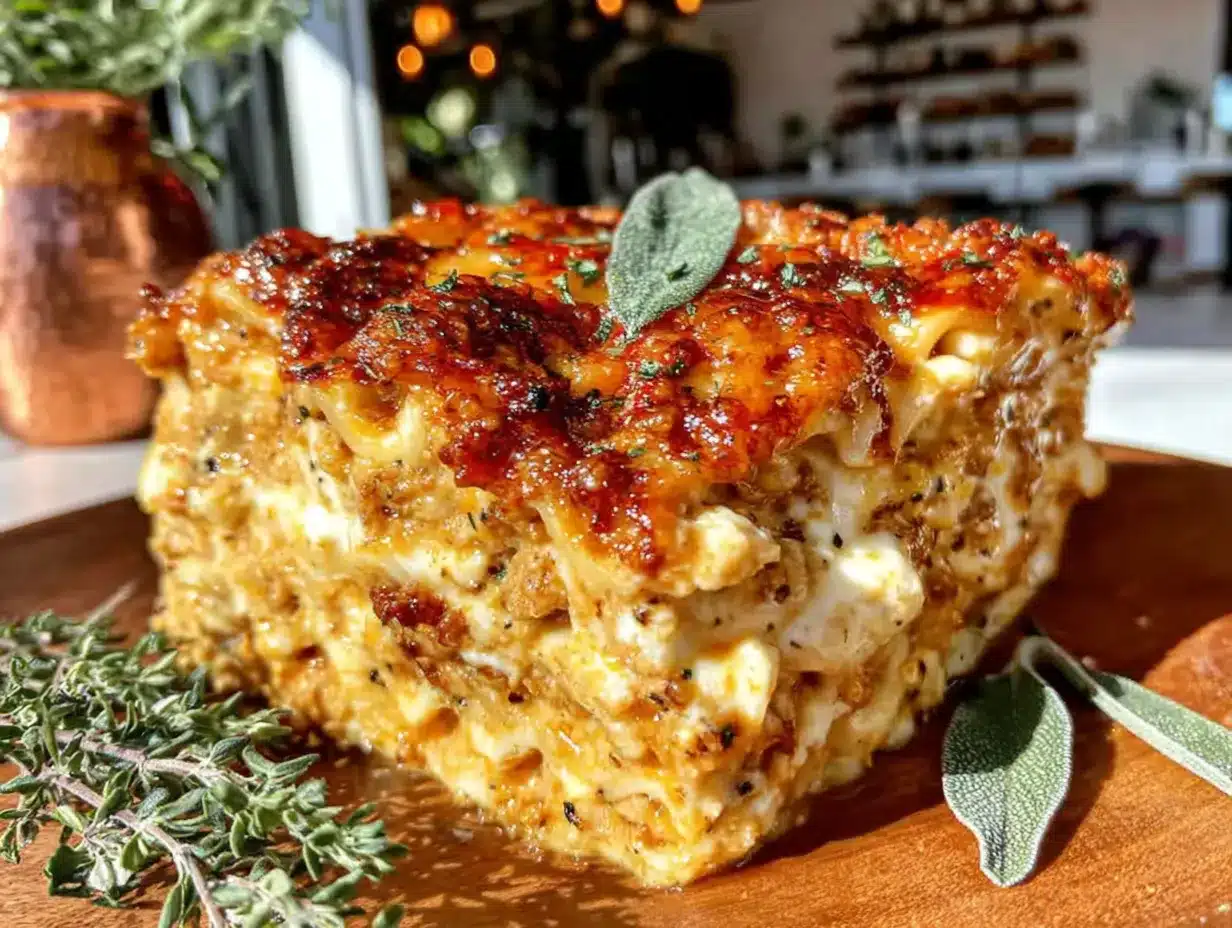
Let’s break this down step by step. I’ve included time estimates and sensory cues so you know exactly what to look for at each stage.
Step 1: Roast the Butternut Squash (40 minutes)
Preheat your oven to 400°F (200°C). Peel the butternut squash using a vegetable peeler, then cut it in half lengthwise and scoop out the seeds. Cut the squash into 1/2-inch cubes. Toss the cubes with 2 tablespoons of olive oil, 1/2 teaspoon of salt, and 1/4 teaspoon of black pepper. Spread them in a single layer on a parchment-lined baking sheet. Roast for 25-30 minutes, flipping halfway through, until the cubes are tender and lightly caramelized around the edges. They should be easy to pierce with a fork but not mushy. Let them cool slightly, then mash them with a fork or potato masher. You want a chunky puree, not baby food. Set aside.
Step 2: Make the Sage Brown Butter (10 minutes)
While the squash roasts, melt 1/2 cup of unsalted butter in a large skillet over medium heat. Add 15-20 fresh sage leaves. Cook, stirring constantly, until the butter turns a golden amber color and smells nutty and toasty—about 5-7 minutes. The sage leaves will become crispy and dark green. Watch carefully; brown butter can go from perfect to burnt in seconds. Remove the pan from the heat and use a slotted spoon to transfer the crispy sage leaves to a paper towel. Reserve the brown butter in a small bowl. You’ll use both the butter and the crispy sage later.
Step 3: Prepare the Bechamel Sauce (15 minutes)
In the same skillet you used for the brown butter (don’t wipe it clean—the browned bits add flavor), melt 3 tablespoons of the reserved brown butter over medium heat. Whisk in 1/3 cup of all-purpose flour and cook for 1-2 minutes, stirring constantly, until the mixture smells toasty and looks like wet sand. Slowly pour in 4 cups of whole milk, whisking continuously to prevent lumps. Bring the mixture to a gentle simmer, then reduce the heat to low. Cook for 5-7 minutes, whisking occasionally, until the sauce thickens enough to coat the back of a spoon. Stir in 1/2 teaspoon of salt, 1/4 teaspoon of freshly grated nutmeg, and a pinch of black pepper. Remove from heat and set aside. If the sauce seems too thick, whisk in a splash of milk. Too thin? Simmer for another minute or two.
Step 4: Make the Ricotta Mixture (5 minutes)
In a medium bowl, combine 15 ounces of ricotta cheese, 1 cup of grated Parmesan cheese, 1 large egg, 3 minced garlic cloves, 1/2 teaspoon of salt, and 1/4 teaspoon of black pepper. Mix until smooth and well combined. This mixture adds creaminess and helps bind the layers together.
Step 5: Assemble the Lasagna (15 minutes)
Preheat your oven to 375°F (190°C). Spread a thin layer of bechamel sauce (about 1/2 cup) on the bottom of your 9×13-inch baking dish. This prevents the noodles from sticking. Arrange a layer of lasagna noodles on top, slightly overlapping if needed. Spread half of the mashed butternut squash over the noodles, then dollop half of the ricotta mixture on top and spread it gently. Sprinkle 1 cup of shredded mozzarella cheese over the ricotta. Drizzle 2 tablespoons of the reserved brown butter over everything. Repeat the layers: noodles, remaining squash, remaining ricotta, 1 cup of mozzarella, and 2 more tablespoons of brown butter. Add a final layer of noodles, then pour the remaining bechamel sauce over the top, spreading it evenly. Sprinkle the remaining 1 cup of mozzarella and the crispy sage leaves on top. Drizzle the last of the brown butter over the surface.
Step 6: Bake the Lasagna (45 minutes)
Cover the baking dish with aluminum foil and bake for 30 minutes. Remove the foil and bake for another 15-20 minutes, until the top is golden brown and bubbly. The edges should be slightly crispy, and the center should be hot and bubbling. Let the lasagna rest for at least 15 minutes before slicing. This is crucial—if you cut into it too soon, it will fall apart into a soupy mess. I know it’s hard to wait, but trust me, the rest time allows the layers to set.
Cooking Tips & Techniques
Over the years, I’ve learned a few things the hard way so you don’t have to. Here are my best tips for lasagna success:
Don’t skip the squash roasting step. I tried shortcutting this once by boiling the squash instead of roasting it. The result was a watery, flavorless mess. Roasting concentrates the natural sugars and gives you that deep, caramelized sweetness that makes this dish sing. If you’re in a rush, you can roast the squash a day ahead and refrigerate it.
Watch your brown butter like a hawk. Brown butter can go from perfect to burnt in about 30 seconds. The moment you see it turn a deep amber color and smell that nutty aroma, pull it off the heat immediately. I learned this lesson when I walked away to answer the phone and came back to blackened butter. The whole kitchen smelled like burnt popcorn for hours.
Season every layer. This is the number one mistake home cooks make with lasagna. Each component—the squash, the bechamel, the ricotta mixture—needs its own salt and pepper. If you only season the top layer, you’ll end up with a bland interior. Taste as you go, and don’t be shy with the salt.
Let it rest. I cannot stress this enough. A lasagna that rests for 15-20 minutes will slice into clean, beautiful pieces. One that’s cut immediately will slide apart into a puddle. Use this time to set the table, toss a salad, or pour yourself a glass of wine.
Multitask like a pro. While the squash roasts, make the brown butter and bechamel. While the lasagna bakes, prep your salad and garlic bread. The active cooking time is about 45 minutes, but with smart timing, you can have everything ready to go at once.
Use no-boil noodles for consistency. I’ve used both regular and no-boil noodles, and I prefer no-boil for the texture. They absorb the bechamel perfectly and come out al dente. If you use regular noodles, cook them 2 minutes less than the package directions say—they’ll finish cooking in the oven.
Variations & Adaptations
This recipe is incredibly versatile. Here are some of my favorite ways to switch it up:
Vegetarian Version: It’s already vegetarian, but you can add more veggies for extra texture. Sautéed mushrooms, spinach, or caramelized onions make excellent additions. Layer them between the squash and ricotta for a heartier dish.
Gluten-Free Adaptation: Use gluten-free lasagna noodles and a 1:1 gluten-free flour blend for the bechamel. I’ve tested this with Capello’s gluten-free noodles, and they hold up beautifully. Just be careful not to overcook them—gluten-free noodles can get mushy faster.
Dairy-Free Version: Substitute the butter with plant-based butter (I like Miyoko’s), use unsweetened almond or oat milk for the bechamel, and replace the cheeses with dairy-free alternatives. The texture will be slightly different, but the flavor is still fantastic. Look for a mozzarella shred that melts well—Violife and Daiya both work.
Add Protein: For a heartier meal, add a layer of cooked Italian sausage, ground turkey, or shredded rotisserie chicken. Brown the meat first, then layer it between the squash and ricotta. This is perfect if you’re feeding a crowd of hungry guests.
Seasonal Twist: In the summer, swap butternut squash for roasted zucchini or eggplant. In the spring, try asparagus and peas. The bechamel and brown butter work with almost any vegetable combination.
Spice It Up: Add a pinch of red pepper flakes to the bechamel or ricotta mixture for a subtle kick. I did this once for a game day party, and it was a hit—the heat cuts through the richness beautifully.
Serving & Storage Suggestions
Serving: This lasagna is best served warm, not piping hot. Let it rest for 15-20 minutes after baking, then slice into squares using a sharp knife. Use a wide spatula to lift each piece onto plates. Garnish with extra crispy sage leaves or a sprinkle of fresh Parmesan for a restaurant-worthy presentation.
What to Serve Alongside: A simple arugula salad with lemon vinaigrette cuts through the richness of the lasagna perfectly. Garlic bread or crusty sourdough is great for sopping up any extra bechamel. For a full dinner party menu, start with a light appetizer like bruschetta and finish with a fruit-based dessert. A crisp white wine like Sauvignon Blanc or a light red like Pinot Noir pairs beautifully.
Storage: Leftover lasagna keeps well in the refrigerator for up to 5 days. Cover the baking dish tightly with foil or transfer individual portions to airtight containers. The flavors actually deepen overnight, so leftovers taste even better the next day.
Freezing: This lasagna freezes beautifully. Assemble the entire dish (without baking), cover it tightly with plastic wrap and foil, and freeze for up to 3 months. To bake, thaw overnight in the refrigerator, then bake as directed, adding 10-15 minutes to the covered baking time. You can also freeze baked leftovers in individual portions for quick lunches.
Reheating: For best results, reheat individual slices in a 350°F (175°C) oven for 15-20 minutes, covered with foil. The microwave works in a pinch, but the texture won’t be as good. If reheating from frozen, let it thaw first or add extra time in the oven.
Nutritional Information & Benefits
Here’s the estimated nutritional breakdown per serving (based on 8 servings):
- Calories: 520
- Protein: 22g
- Fat: 28g
- Carbohydrates: 48g
- Fiber: 5g
- Sugar: 12g
- Sodium: 780mg
Health Benefits: Butternut squash is packed with vitamin A (great for eye health), vitamin C (immune support), and fiber (digestive health). The sage in the brown butter has anti-inflammatory properties, and the garlic adds a boost to your immune system. This dish is also a good source of calcium from the cheese and milk.
Dietary Considerations: This recipe is vegetarian. For a lower-carb option, use thinly sliced zucchini or eggplant instead of lasagna noodles. For a lower-fat version, use part-skim ricotta and mozzarella, and reduce the butter to 1/4 cup. Keep in mind that the nutritional values are estimates and can vary based on specific brands and ingredient substitutions.
Allergen Note: This recipe contains dairy (butter, milk, cheese) and gluten (flour, noodles). It does not contain nuts, eggs (the egg is in the ricotta mixture, but it’s optional), or soy. Always check labels for hidden allergens.
Conclusion
This butternut squash lasagna with sage brown butter is more than just a recipe—it’s the dish that converted my husband, impressed my in-laws, and became my go-to for every fall gathering. It’s the kind of food that makes people lean in and ask, “What’s in this?” and then look at you with newfound respect when you tell them.
I hope you make this your own. Add more sage if you love it, swap the cheese if you need to, or throw in some mushrooms because you have them in the fridge. That’s the beauty of cooking—you get to play. And this recipe is forgiving enough to let you experiment without fear.
When you make it, I’d love to hear how it went. Drop a comment below and tell me who you served it to, what you served alongside, or if anyone in your house had a “but I don’t like squash” moment that ended with them asking for seconds. Share your photos on Pinterest and tag me—I love seeing your creations come to life. Happy cooking, friends. This one’s a keeper.
Frequently Asked Questions
Can I make this butternut squash lasagna ahead of time?
Absolutely. Assemble the lasagna completely, cover it tightly with foil, and refrigerate for up to 24 hours before baking. You may need to add 10-15 minutes to the baking time since you’re starting from cold. This is actually my preferred method for dinner parties—it takes all the stress out of hosting.
Can I use frozen butternut squash instead of fresh?
Yes, but there’s a catch. Frozen squash has more water content, so you’ll need to thaw it first and squeeze out the excess moisture with a clean kitchen towel. Otherwise, your lasagna could end up watery. Fresh roasted squash gives you better flavor and texture, but frozen works in a pinch.
How do I prevent my lasagna from being watery?
There are three secrets: roast the squash instead of boiling it, let the bechamel thicken properly, and let the lasagna rest for 15-20 minutes after baking. Also, avoid using fresh mozzarella balls—they release too much water. Stick with low-moisture shredded mozzarella.
Can I make this lasagna gluten-free?
Yes! Use gluten-free lasagna noodles and a 1:1 gluten-free flour blend for the bechamel. I recommend Capello’s or Barilla gluten-free noodles. Just be careful not to overcook them. The rest of the recipe stays the same.
What’s the best way to reheat leftover lasagna?
For the best texture, reheat individual slices in a 350°F oven for 15-20 minutes, covered with foil. The microwave works if you’re in a hurry, but the noodles can get a bit rubbery. If you’re reheating a whole lasagna, cover it with foil and bake at 350°F for 25-30 minutes.
Pin This Recipe!
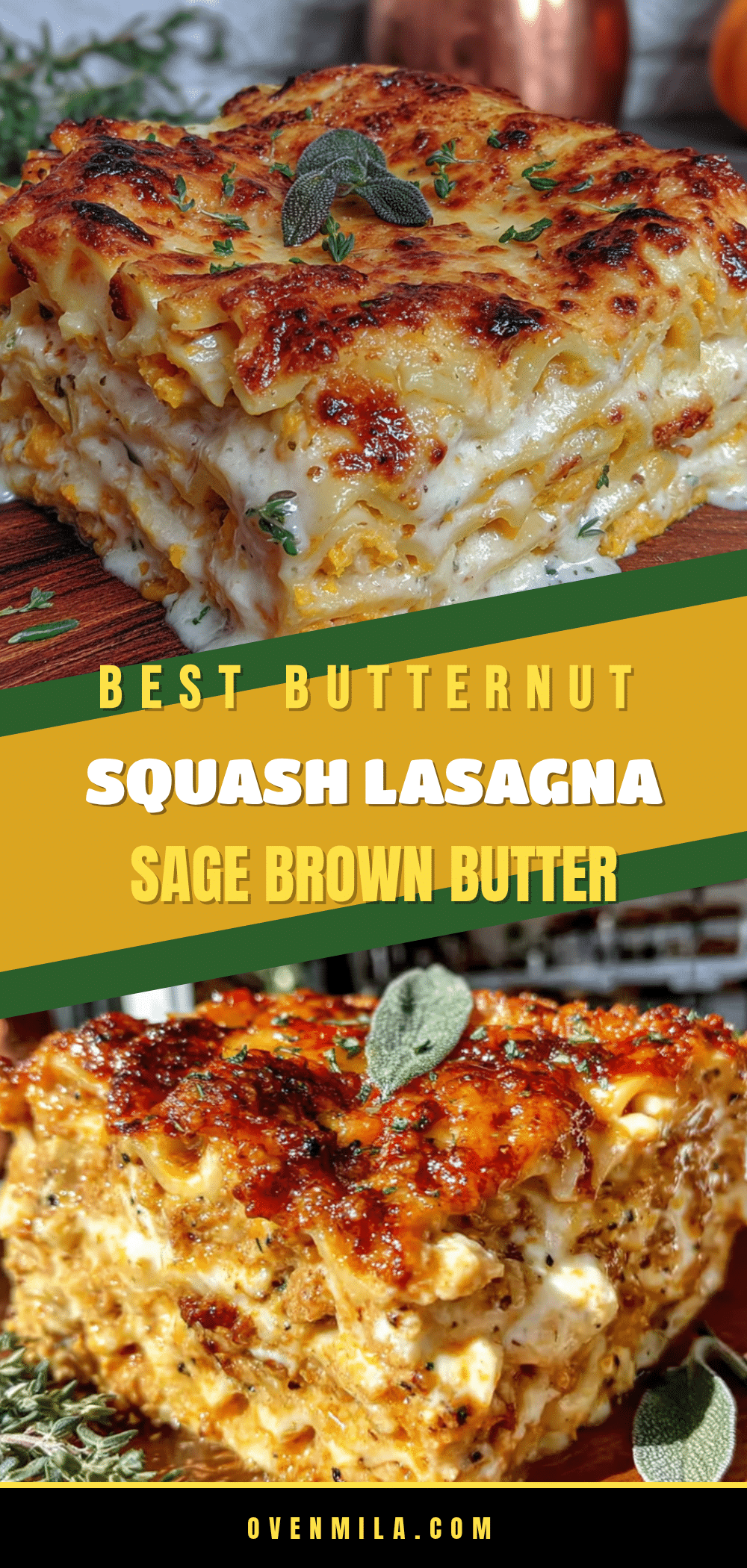
Best Butternut Squash Lasagna with Sage Brown Butter Recipe

This butternut squash lasagna with sage brown butter is a decadent, creamy, cheesy lasagna that converts even the biggest squash skeptics. The nutty, sage-infused brown butter ties everything together for a comforting, crowd-pleasing dish.
- Prep Time: 30 minutes
- Cook Time: 1 hour 15 minutes
- Total Time: 1 hour 45 minutes
- Yield: 8 servings 1x
- Category: Main Course
- Cuisine: Italian-American
Ingredients
- 1 medium butternut squash (about 2–3 pounds), peeled, seeded, and cubed
- 1/2 cup (1 stick) unsalted butter
- 15–20 fresh sage leaves
- 4 cups whole milk
- 1/3 cup all-purpose flour
- 12–15 lasagna noodles (no-boil preferred)
- 15 ounces full-fat ricotta cheese
- 3 cups shredded low-moisture mozzarella cheese
- 1 cup grated Parmesan cheese (preferably Parmigiano-Reggiano)
- 1 large egg
- 3 cloves garlic, minced
- Salt and black pepper to taste
- 1/4 teaspoon freshly grated nutmeg
- 2 tablespoons olive oil
Instructions
- Preheat oven to 400°F (200°C). Peel and cube butternut squash into 1/2-inch pieces. Toss with olive oil, 1/2 teaspoon salt, and 1/4 teaspoon black pepper. Spread on a parchment-lined baking sheet and roast for 25-30 minutes, flipping halfway, until tender and caramelized. Mash into a chunky puree and set aside.
- In a large skillet over medium heat, melt 1/2 cup butter. Add sage leaves and cook, stirring constantly, until butter turns golden amber and smells nutty (5-7 minutes). Remove crispy sage leaves with a slotted spoon and set aside. Reserve the brown butter.
- In the same skillet, melt 3 tablespoons of the reserved brown butter over medium heat. Whisk in flour and cook for 1-2 minutes until toasty. Slowly whisk in milk, bring to a gentle simmer, then reduce heat to low. Cook 5-7 minutes, whisking occasionally, until thickened. Stir in 1/2 teaspoon salt, nutmeg, and a pinch of pepper. Set aside.
- In a medium bowl, combine ricotta, 1 cup Parmesan, egg, garlic, 1/2 teaspoon salt, and 1/4 teaspoon pepper. Mix until smooth.
- Preheat oven to 375°F (190°C). Spread a thin layer of bechamel (about 1/2 cup) in a 9×13-inch baking dish. Layer noodles, half the squash, half the ricotta mixture, 1 cup mozzarella, and 2 tablespoons brown butter. Repeat layers. Top with final layer of noodles, remaining bechamel, remaining mozzarella, crispy sage, and last of the brown butter.
- Cover with foil and bake for 30 minutes. Remove foil and bake 15-20 minutes more until golden and bubbly. Let rest 15-20 minutes before slicing.
Notes
Don’t skip roasting the squash—it concentrates sweetness. Watch brown butter carefully as it can burn quickly. Season every layer. Let lasagna rest before slicing to prevent it from falling apart. Can be assembled a day ahead and refrigerated.
Nutrition
- Serving Size: 1 slice (1/8 of lasa
- Calories: 520
- Sugar: 12
- Sodium: 780
- Fat: 28
- Saturated Fat: 16
- Carbohydrates: 48
- Fiber: 5
- Protein: 22
Keywords: butternut squash lasagna, sage brown butter, vegetarian lasagna, fall recipe, comfort food, make-ahead lasagna