The prime rib roast was on the counter, still wrapped in butcher paper, and I had exactly four hours before my in-laws walked through the door. My husband had casually mentioned that his mom’s Christmas prime rib was legendary—she used a secret blend of herbs that took her years to perfect. I’d never made a prime rib in my life. Let me tell you, the panic was real. I stood there staring at this expensive cut of beef, wondering if I should just order pizza and pretend the oven broke. But I’d already spent the grocery budget on this thing, so there was no turning back. I grabbed my phone, called my neighbor Carol (who cooks everything on a charcoal grill, even in January), and she talked me through it while I frantically chopped rosemary and thyme. Honestly, the kitchen looked like a herb explosion had gone off. There was garlic butter on my glasses, salt crystals on the floor, and I’m pretty sure I used the wrong measuring spoon for the pepper. But when that roast came out of the oven, golden-brown and smelling like a fancy steakhouse, I felt like I’d pulled off a magic trick. My mother-in-law asked for the recipe. I just smiled and said it was a family secret. It’s not—I made it up that afternoon. But the best part? It worked. That roast was juicy, perfectly medium-rare, and the herb crust was so good people were eating it off the carving board. Maybe you’ve been in that spot—needing to impress without having a clue. This herb-crusted prime rib is your secret weapon. It’s easier than it looks, and I promise, nobody will ever know you were sweating bullets.
Why You’ll Love This Recipe
This isn’t just another prime rib recipe you’ll scroll past. I’ve tested this method at least a dozen times—for Christmas, for anniversaries, and once just because we had a really good Tuesday. Each time, it delivers the same result: a perfectly cooked roast with a gorgeous, flavorful crust that makes everyone at the table go quiet for a minute. Here’s what makes it stand out:
- Foolproof Method: Even if you’ve never cooked a large roast before, this recipe walks you through every step. The low-and-slow technique takes the guesswork out of doneness.
- Simple Ingredients: You don’t need a specialty butcher or exotic spices. Fresh herbs, garlic, butter, salt, and pepper—that’s it. Most of these are probably in your kitchen right now.
- Perfect for a Special Family Dinner: This roast feels like a celebration. It’s the centerpiece that makes any occasion—birthday, holiday, or just a Sunday dinner—feel truly special.
- Crowd-Pleaser: I’ve served this to picky eaters, meat-and-potato types, and even a vegetarian who “just wanted a bite.” Everyone loves it. The leftovers are just as good, if not better.
- Unbelievably Delicious: The herb crust creates a savory, aromatic shell that locks in all the juices. The meat is so tender it practically falls apart, and the flavor is rich, beefy, and absolutely satisfying.
What makes this recipe different from all the others? It’s the resting time. I know, I know—everyone says to rest your meat. But I’m telling you, a full 30-minute rest under a foil tent is non-negotiable here. That’s what turns a good roast into a great one. This isn’t just another version of prime rib; it’s the one that will become your family’s tradition. It’s comfort food at its finest—rich, warm, and made with love, even if you’re still a little nervous at the start.
What Ingredients You Will Need
This recipe relies on a handful of quality ingredients to build deep, savory flavor. The beauty is that nothing here is fussy or hard to find. Let’s break down what you’ll need and why each ingredient matters.
For the Herb Crust
- 1/4 cup fresh rosemary, finely chopped (adds a piney, aromatic flavor that pairs beautifully with beef; if you only have dried, use 2 tablespoons)
- 1/4 cup fresh thyme leaves, chopped (earthy and slightly floral; fresh is best here, but 2 tablespoons dried works in a pinch)
- 6 cloves garlic, minced (the backbone of the crust; I prefer fresh garlic over jarred for the punch it brings)
- 3 tablespoons unsalted butter, softened (helps the herbs stick and adds richness; you can use salted butter, just reduce the added salt slightly)
- 2 tablespoons olive oil (helps the crust brown evenly and adds moisture)
- 1 tablespoon kosher salt (I use Diamond Crystal; if using table salt, reduce to 2 teaspoons)
- 1 teaspoon freshly ground black pepper (freshly ground makes a difference in flavor)
For the Prime Rib Roast
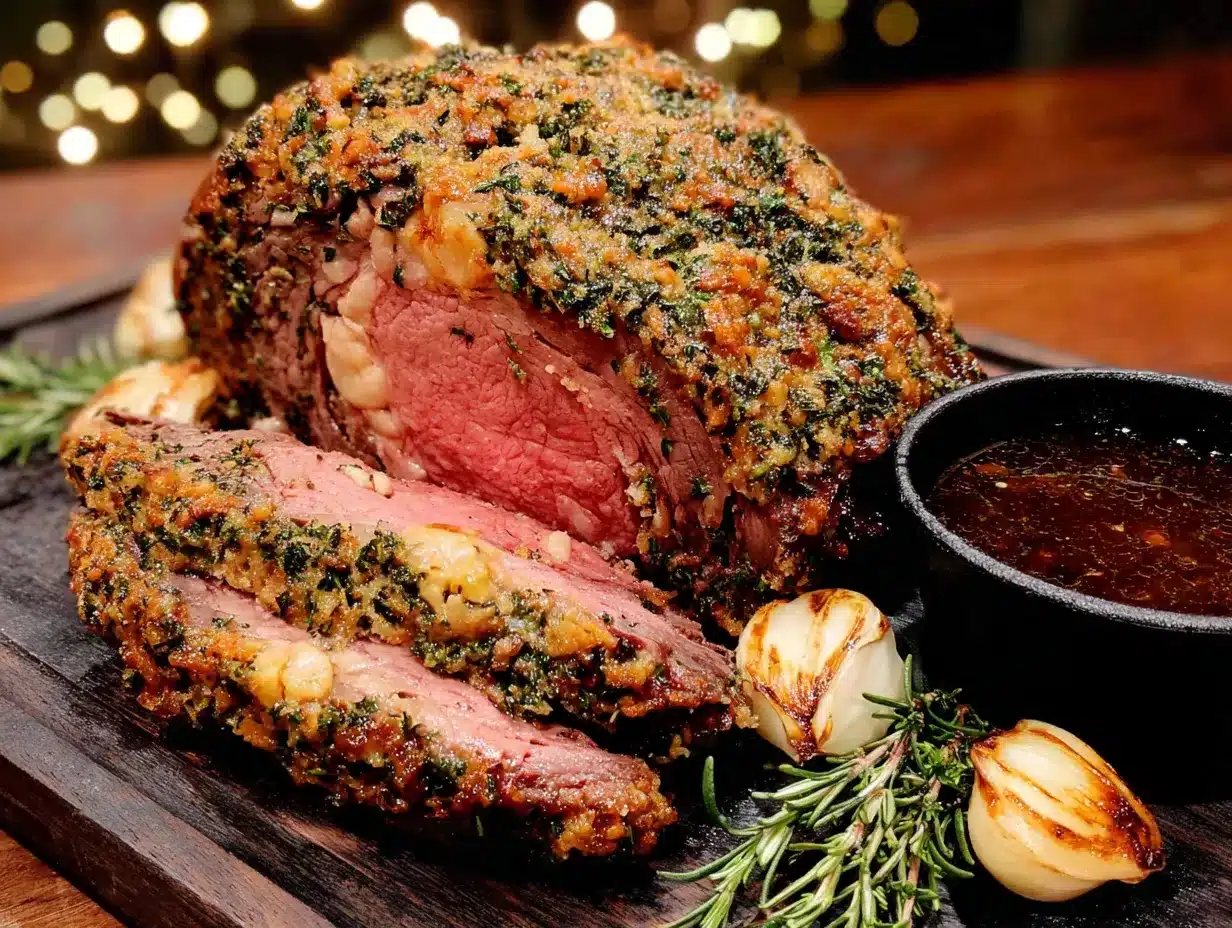
- 1 (4-5 pound) bone-in prime rib roast (look for one with good marbling; the fat renders during cooking and keeps the meat juicy. I usually buy from Costco or a local butcher—both have been reliable for me.)
- 1 tablespoon olive oil (for searing the roast before adding the crust)
- 1 cup beef broth (for the pan; this creates a natural jus for serving. Use low-sodium if you’re watching your salt intake.)
That’s it. Seriously. No long list of obscure spices or weird ingredients you’ll use once and forget about. The key is using fresh herbs if you can—they make the crust vibrant and fragrant. If you’re in a pinch, dried herbs will work, just use half the amount because they’re more concentrated. And about the butter: let it come to room temperature before mixing. Cold butter won’t blend into a smooth paste, and you’ll end up with lumpy bits that don’t stick to the meat. Learned that one the hard way.
Equipment Needed
You don’t need a professional kitchen to pull this off. Here’s what you’ll actually use:
- Roasting Pan: A sturdy metal pan with low sides works best. I use a 13×9-inch pan, but anything similar will do. If you don’t have one, a rimmed baking sheet lined with foil works in a pinch.
- Wire Rack: This sits inside the roasting pan and lifts the roast so air circulates evenly. It helps the crust get crispy on all sides. No rack? Roll up a few foil strips to create a makeshift one.
- Instant-Read Meat Thermometer: This is non-negotiable. Prime rib is expensive, and guessing the doneness is a gamble. A good thermometer costs around $15 and saves you from overcooking a beautiful roast.
- Chef’s Knife: A sharp knife makes chopping herbs and slicing the roast easy. Dull knives are dangerous—they slip. Trust me on this.
- Cutting Board: Use a large one for carving. I prefer wood because it’s gentle on knife edges.
- Aluminum Foil: Essential for tenting the roast while it rests. Don’t skip this.
- Kitchen Twine: Optional, but helpful if your roast isn’t tied. It helps the meat cook evenly. Ask your butcher to tie it for you if you’re not sure how.
If you’re on a budget, skip the fancy roasting pan and use a disposable aluminum one from the grocery store. They’re cheap and work just fine. I’ve done it more than once.
Preparation Method
Take your time with this. The actual hands-on work is only about 20 minutes—the rest is just waiting. Here’s how to get it right.
- Take the roast out of the fridge 1 hour before cooking. This is important. A cold roast cooks unevenly. Let it sit on the counter, still wrapped, for at least an hour. If the room is warm, 45 minutes is fine. You want the meat to come close to room temperature.
- Preheat your oven to 450°F (232°C). High heat at the start creates the crust. Make sure the rack is in the middle position so the roast cooks evenly.
- Make the herb butter paste. In a small bowl, combine the chopped rosemary, thyme, minced garlic, softened butter, olive oil, salt, and pepper. Mix it with a fork until it forms a thick, fragrant paste. It should look like green-flecked butter—if it’s too dry, add another teaspoon of olive oil. If it’s too wet, add a pinch more herbs.
- Pat the roast dry with paper towels. This is a step you don’t want to skip. Moisture on the surface prevents browning. Really get in there and dry every side. You’ll be shocked how much moisture comes off.
- Sear the roast. Heat 1 tablespoon of olive oil in a large skillet over high heat until it shimmers. Sear the roast on all sides—about 2 minutes per side—until it’s deeply browned. Don’t rush this. The browning adds flavor that you can’t get any other way. Use tongs to hold the roast steady. If it sizzles loudly, you’re doing it right.
- Apply the herb crust. Transfer the seared roast to the wire rack in your roasting pan. Using your hands (yes, it’s messy—that’s part of the fun), spread the herb butter paste all over the roast. Cover every inch, including the ends and the sides between the bones. Be generous. The crust is the star here.
- Roast at 450°F for 15 minutes. This initial blast of heat sets the crust. After 15 minutes, reduce the oven temperature to 325°F (163°C). Do not open the oven door during this time—you’ll lose heat and steam the crust.
- Continue roasting at 325°F. Roast for about 15-20 minutes per pound for medium-rare. For a 4.5-pound roast, that’s roughly 1 hour and 10 minutes total after the initial sear. Start checking the internal temperature after 45 minutes. Insert the thermometer into the thickest part of the meat, avoiding the bone.
- Know your target temperature. For medium-rare, remove the roast at 125°F (52°C). The temperature will rise another 5-10°F during resting. For medium, pull it at 130°F (54°C). For medium-well, 135°F (57°C). I’ve found that medium-rare is the sweet spot—it’s tender, juicy, and the herb crust shines.
- Rest the roast. Once it reaches your target temperature, remove the roast from the oven and transfer it to a cutting board. Tent it loosely with aluminum foil. Let it rest for 30 minutes. This is the hardest part, I know. But don’t skip it. The resting allows the juices to redistribute throughout the meat. If you cut into it too soon, all those precious juices will run out onto the board, leaving you with dry meat.
- Make the pan jus. While the roast rests, place the roasting pan over two burners on medium heat. Add 1 cup of beef broth and scrape up all the browned bits from the bottom of the pan. Let it simmer for 2-3 minutes, then strain it into a small pitcher. This is your simple, delicious jus. You can thicken it with a cornstarch slurry if you like, but I prefer it thin and savory.
- Carve and serve. After resting, remove the twine (if used) and slice the roast between the bones. For boneless roasts, slice against the grain into 1/2-inch thick pieces. Arrange on a platter, drizzle with a little jus, and serve the rest on the side.
Cooking Tips & Techniques
I’ve messed up a lot of roasts to bring you these tips. Learn from my mistakes.
Don’t skip the sear. I know it’s an extra step, and you might be tempted to just throw the roast in the oven with the herb crust. Don’t. The sear creates a flavor base that the oven alone can’t match. It’s the difference between a good roast and a memorable one.
Use a thermometer, not a timer. Ovens vary wildly. I’ve cooked the same roast in two different ovens and gotten different results. A thermometer takes the guesswork out. I use a Thermapen because it reads in seconds, but any instant-read thermometer will work. Insert it into the center of the meat, away from any bones.
Let the roast come to room temperature. I once rushed this step and ended up with a roast that was raw in the center and well-done on the edges. The hour of resting on the counter is non-negotiable. If you’re short on time, even 30 minutes helps.
Don’t open the oven door. Every time you open it, you lose heat and extend the cooking time. Trust your thermometer and resist the urge to peek. I know it’s tempting, but patience pays off.
Rest the roast properly. I’ve said it before, but it’s worth repeating. A 30-minute rest under foil is essential. If you’re worried about it getting cold, don’t be. The foil traps heat, and the roast will stay warm for at least 45 minutes. I’ve accidentally rested a roast for an hour before, and it was still perfectly warm.
Make extra herb butter. I always double the herb butter recipe. I use half for the roast and spread the rest on French bread to toast alongside the roast. It’s a simple, delicious side that uses up the extra herbs.
Variations & Adaptations
This recipe is flexible. Here are a few ways to make it your own.
Garlic Herb Butter Variation: Add 2 tablespoons of grated Parmesan cheese to the herb butter mixture. It creates an even crispier, cheesier crust. I tried this for a birthday dinner and my dad said it was the best prime rib he’d ever had.
Spicy Herb Crust: Add 1 teaspoon of crushed red pepper flakes and 1/2 teaspoon of smoked paprika to the herb butter. It gives the crust a subtle warmth that’s unexpected and delicious. Works great if you’re serving with a spicy horseradish cream.
Low-Carb/Keto Adaptation: This recipe is already low-carb and keto-friendly. Skip the pan jus if you’re strict, or thicken it with a little xanthan gum instead of cornstarch. The herb crust adds flavor without any carbs.
Dairy-Free Version: Substitute the butter with a high-quality dairy-free butter or use all olive oil. I’ve used Miyoko’s vegan butter before and it worked beautifully. The crust might be slightly less rich, but still delicious.
Different Herb Combinations: Don’t have rosemary and thyme? Use 1/4 cup each of fresh parsley and chives, plus 2 teaspoons of dried oregano. It’s a different flavor profile but just as good. I’ve also used tarragon and sage for a more earthy, French-inspired crust.
Boneless Prime Rib: If you can’t find bone-in, use a boneless roast. The cooking time will be slightly shorter—about 12-15 minutes per pound. Start checking the temperature earlier. The crust works just as well on boneless cuts.
Serving & Storage Suggestions
This roast is a showstopper on its own, but here’s how to make it a complete meal.
Serving Temperature: Serve the roast warm, not hot. After resting, it should be around 130°F (54°C) for medium-rare. Slice it and arrange it on a warm platter. Drizzle a little jus over the top and serve the rest in a small pitcher on the side.
What to Serve With It: Creamy mashed potatoes are the classic choice—they soak up the jus beautifully. Roasted carrots or green beans add color and balance the richness. A simple arugula salad with lemon vinaigrette cuts through the fat and refreshes the palate. For a truly special meal, serve with Yorkshire pudding. It’s traditional and delicious.
Storage Instructions: Leftover prime rib keeps well in the refrigerator for up to 4 days. Wrap it tightly in plastic wrap or store it in an airtight container. The herb crust might soften slightly, but the flavor remains.
Freezing Instructions: You can freeze cooked prime rib for up to 3 months. Slice it first, then wrap each slice individually in plastic wrap and place in a freezer bag. This makes it easy to thaw only what you need. Thaw overnight in the refrigerator before reheating.
Reheating Methods: The best way to reheat prime rib is low and slow. Place slices in a baking dish with a splash of beef broth, cover with foil, and warm in a 300°F (149°C) oven for 10-15 minutes. Avoid the microwave—it will toughen the meat and ruin the crust. For a quick lunch, I’ve sliced it cold and used it in sandwiches with horseradish sauce. Honestly, cold prime rib sandwiches are one of the best parts of making this recipe.
How Flavors Develop: The herb crust actually gets more flavorful after a day in the fridge. The garlic and herbs meld with the meat, creating an even deeper savory note. I actually look forward to leftovers more than the first dinner.
Nutritional Information & Benefits
This recipe is a splurge, but it’s also packed with nutrients. Here’s the breakdown per serving (based on 8 servings).
- Calories: 450-500
- Protein: 35-40 grams
- Fat: 30-35 grams
- Carbohydrates: 2-3 grams
- Fiber: 0 grams
- Sugar: 0 grams
Prime rib is an excellent source of high-quality protein, which is essential for muscle repair and overall health. It’s also rich in iron, zinc, and B vitamins, particularly B12, which supports energy metabolism and brain function. The fat content includes both saturated and monounsaturated fats—the latter is the same type found in olive oil and is considered heart-healthy in moderation.
This recipe is naturally low in carbohydrates and sugar, making it suitable for low-carb, keto, and paleo diets. The herbs add antioxidants and anti-inflammatory compounds. Rosemary, in particular, contains rosmarinic acid, which has been studied for its potential to reduce inflammation and improve digestion.
One note: this is a rich dish. If you’re watching your sodium intake, use low-sodium beef broth and reduce the added salt in the herb crust by half. You can always add more at the table.
Conclusion
This herb-crusted prime rib roast isn’t just a recipe—it’s a memory in the making. It’s the kind of dish that brings people together around the table, makes them slow down, and reminds them why a home-cooked meal is worth the effort. I’ve made it for nervous first-time hosts, for holiday gatherings, and for quiet Sunday dinners when we needed something special. Every single time, it delivers.
Don’t be afraid to make it your own. Swap the herbs, adjust the seasoning, or serve it with your family’s favorite sides. The beauty of this recipe is that it’s forgiving. Even if you make a mistake—and I’ve made plenty—it will still be delicious. The first time I made it, I forgot to sear the roast and the crust slid right off. It still tasted amazing.
I’d love to hear how yours turns out. Did you try a variation? Did your family love it? Drop a comment below and let me know. And if you’re looking for another showstopper to add to your rotation, try my garlic herb roasted potatoes—they’re the perfect side for this roast. Now go preheat that oven. You’ve got this.
Frequently Asked Questions
Can I use dried herbs instead of fresh?
Yes, you can. Use half the amount of dried herbs since they’re more concentrated. For example, use 2 tablespoons of dried rosemary and 2 tablespoons of dried thyme instead of fresh. The flavor won’t be quite as vibrant, but it’ll still be good.
How do I know when the prime rib is done without a thermometer?
I really recommend using a thermometer for the most accurate result. But if you don’t have one, check the internal color. For medium-rare, the center should be bright red and the juices should run pink. The meat should feel slightly springy when pressed. It’s not foolproof, but it’s a decent backup.
Can I prepare the herb crust ahead of time?
Absolutely. You can make the herb butter paste up to 3 days in advance. Store it in an airtight container in the refrigerator. Let it come to room temperature for about 15 minutes before spreading it on the roast so it’s spreadable.
What if my roast is bigger or smaller than 4-5 pounds?
Adjust the cooking time based on the weight. For a 3-pound roast, reduce the total roasting time to about 45-50 minutes after the initial sear. For a 6-pound roast, increase it to about 1 hour and 30 minutes. Always rely on the internal temperature rather than the timer.
Can I cook this in a slow cooker or Instant Pot?
I don’t recommend it. Prime rib needs high heat to develop a crust and low heat to cook evenly. A slow cooker or Instant Pot will steam the meat, resulting in a gray, soggy exterior. Stick with the oven for the best results. If you’re short on oven space, you can sear the roast on the stovetop and finish it in a countertop toaster oven if it’s large enough.
Pin This Recipe!
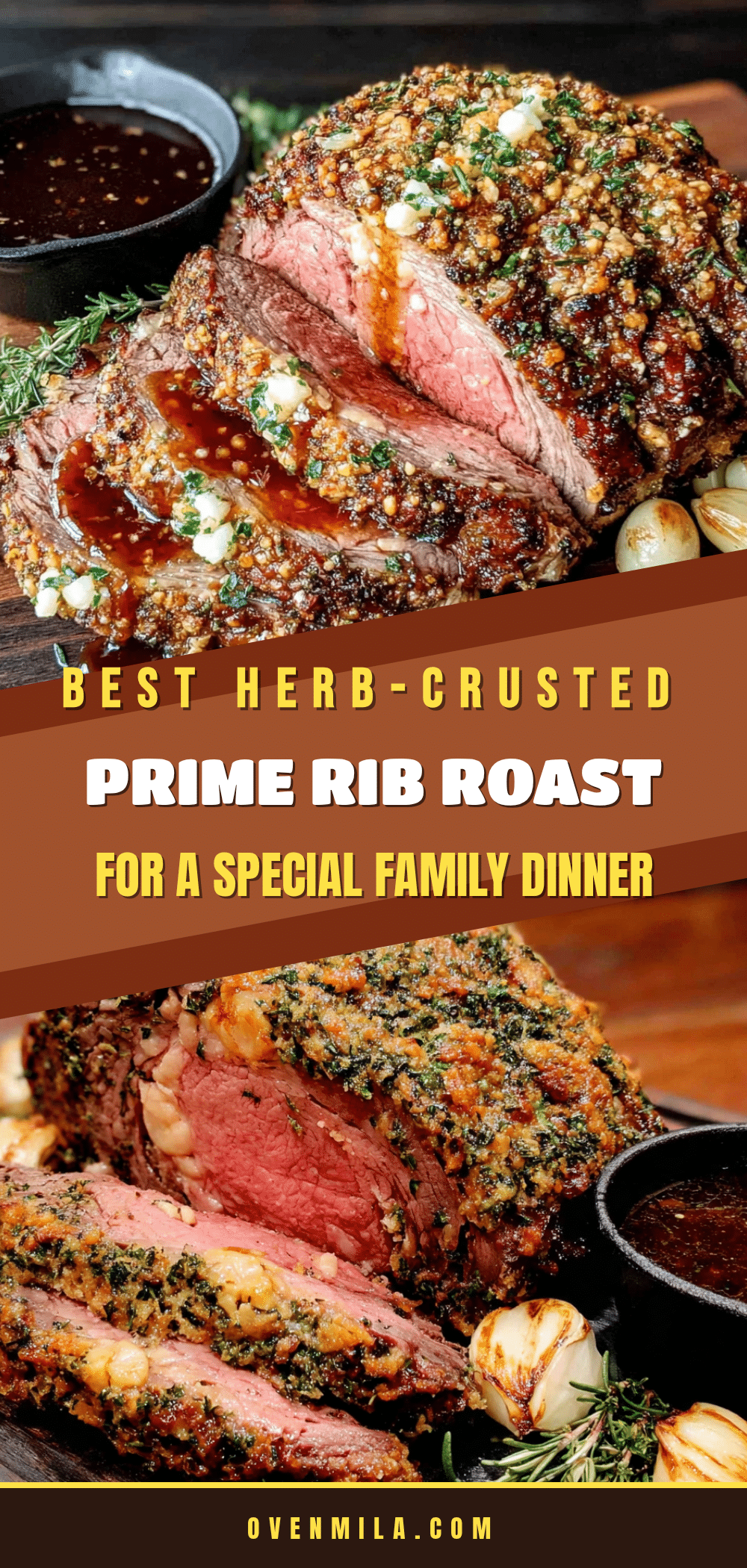
Best Herb-Crusted Prime Rib Roast Recipe for a Perfect Dinner
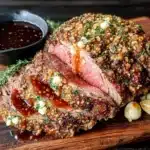
This foolproof herb-crusted prime rib roast delivers a perfectly cooked, juicy, medium-rare center with a gorgeous, flavorful crust. Made with simple ingredients like fresh herbs, garlic, and butter, it’s the ultimate showstopper for any special family dinner.
- Prep Time: 20 minutes
- Cook Time: 1 hour 25 minutes
- Total Time: 2 hours 15 minutes (including 1 hour resting and 30 minutes resting after cooking)
- Yield: 8 servings 1x
- Category: Main Course
- Cuisine: American
Ingredients
- 1/4 cup fresh rosemary, finely chopped
- 1/4 cup fresh thyme leaves, chopped
- 6 cloves garlic, minced
- 3 tablespoons unsalted butter, softened
- 2 tablespoons olive oil
- 1 tablespoon kosher salt
- 1 teaspoon freshly ground black pepper
- 1 (4-5 pound) bone-in prime rib roast
- 1 tablespoon olive oil (for searing)
- 1 cup beef broth
Instructions
- Take the roast out of the fridge 1 hour before cooking to bring it to room temperature.
- Preheat your oven to 450°F (232°C) with the rack in the middle position.
- Make the herb butter paste: In a small bowl, combine chopped rosemary, thyme, minced garlic, softened butter, 2 tablespoons olive oil, salt, and pepper. Mix with a fork until it forms a thick paste.
- Pat the roast dry with paper towels.
- Sear the roast: Heat 1 tablespoon olive oil in a large skillet over high heat. Sear the roast on all sides for about 2 minutes per side until deeply browned.
- Transfer the seared roast to a wire rack in a roasting pan. Using your hands, spread the herb butter paste all over the roast, covering every inch.
- Roast at 450°F for 15 minutes. Then reduce the oven temperature to 325°F (163°C) without opening the door.
- Continue roasting at 325°F for about 15-20 minutes per pound for medium-rare. For a 4.5-pound roast, this is roughly 1 hour and 10 minutes total after the initial sear. Start checking internal temperature after 45 minutes.
- For medium-rare, remove the roast at 125°F (52°C). The temperature will rise another 5-10°F during resting.
- Rest the roast: Transfer to a cutting board, tent loosely with aluminum foil, and let rest for 30 minutes.
- While the roast rests, make the pan jus: Place the roasting pan over two burners on medium heat. Add 1 cup beef broth and scrape up browned bits. Simmer for 2-3 minutes, then strain into a small pitcher.
- After resting, remove twine (if used) and slice the roast between the bones. For boneless, slice against the grain into 1/2-inch thick pieces. Arrange on a platter, drizzle with jus, and serve.
Notes
Don’t skip the sear—it creates a flavor base the oven alone can’t match. Use a thermometer, not a timer, for perfect doneness. Let the roast come to room temperature before cooking. Don’t open the oven door during roasting. Rest the roast for a full 30 minutes under foil—this is non-negotiable for juicy meat. Make extra herb butter to spread on French bread and toast alongside the roast.
Nutrition
- Serving Size: 1 serving (based on
- Calories: 475
- Sodium: 800
- Fat: 32.5
- Saturated Fat: 12
- Carbohydrates: 2.5
- Protein: 37.5
Keywords: prime rib, herb crust, roast beef, Christmas dinner, special occasion, beef roast, garlic herb crust