This was supposed to be a simple turkey gravy. I had it all planned out—a rich, silky roux-based gravy that would pour like velvet over the Thanksgiving bird. But somewhere between the chaos of a too-hot kitchen and my sister asking me for the third time where the good carving knife was, I grabbed the wrong container from the fridge. Instead of the turkey stock I had painstakingly simmered for four hours, I poured a full two cups of reserved cornbread soaking liquid into my roux. The whole thing seized up, turned into this weird, thick paste, and I just stood there, staring at the pan. Honestly, I wanted to cry. The turkey was resting, the rolls were browning, and I had just ruined the gravy. I scraped the mess into a bowl, muttered something unrepeatable under my breath, and shoved it to the back of the counter. Maybe you’ve been there—that moment when everything in the kitchen feels like it’s conspiring against you. I grabbed a box of store-bought gravy mix as a backup, feeling like a total failure.
But later that night, after everyone had eaten and the kitchen was finally quiet, I looked at that bowl of failed gravy paste. It smelled incredible—earthy, savory, with a hint of sweetness from the cornbread. I couldn’t just throw it away. So I crumbled up some leftover day-old cornbread, tossed in some sautéed onion and celery I had set aside for dressing, and stirred that paste right in. I baked it in a small dish, more out of stubbornness than hope. What came out of the oven was nothing like the plan—and better. It was dense, moist, and deeply flavorful, with crispy edges and a tender, almost custard-like center. My mom, who never compliments my cooking, took a bite and said, “Now that’s real dressing.” I didn’t tell her it started as a mistake. I just smiled and ate another spoonful. That accidental batch became the foundation for what I now call my Homemade Southern Soul Cornbread Dressing, and I haven’t made gravy from scratch since.
Why You’ll Love This Recipe
Let me tell you, this isn’t just another cornbread dressing recipe you find online. This is the one that will get you invited back to every family dinner. I’ve tested this version more times than I can count, tweaking the liquid ratios and the vegetable sauté time until it hit that perfect balance between moist and structured. It’s been approved by my picky aunt, my vegetarian cousin, and a neighbor from Louisiana who claimed his grandmother’s dressing was the only one worth eating—until he tried this.
- Quick & Easy: The active prep time is only about 25 minutes. The oven does the rest of the work while you focus on the rest of your meal.
- Simple Ingredients: No need to hunt down exotic spices or specialty items. Everything on the list is a standard grocery store staple.
- Perfect for Holidays: Thanksgiving, Christmas, Easter Sunday, or just a cozy Sunday dinner—this dressing fits right in.
- Crowd-Pleaser: I’ve served this to kids who swore they hated dressing and adults who asked for seconds. It’s that good.
- Unbelievably Delicious: The texture is what sets it apart—crispy golden top, soft and moist inside, with that deep savory flavor that only comes from proper seasoning and patience.
What makes this recipe different from the rest? It’s the technique of building flavor in layers. You don’t just dump everything in a bowl and stir. You slowly sweat the vegetables until they’re translucent and sweet. You toast the cornbread crumbs in the oven to remove excess moisture. And that secret trick of using reserved cooking liquid from the giblets? That’s the soul part. This dressing doesn’t just sit on the plate—it hugs the turkey, soaks up the gravy, and makes you close your eyes after the first bite. It’s comfort food reimagined—faster than traditional recipes, but with the same soul-soothing satisfaction that makes you feel like everything is going to be okay.
What Ingredients You Will Need
This recipe uses simple, honest ingredients to deliver bold flavor and satisfying texture. Most of these are pantry staples you probably already have on hand, especially if you’re planning a holiday meal. The key is using good-quality cornbread and fresh aromatics.
- For the Cornbread Base:
- 6 cups crumbled day-old cornbread (I prefer White Lily cornmeal mix for that authentic Southern texture)
- 1 cup crumbled day-old white bread or biscuits (optional, but adds a lighter texture)
- For the Savory Base:
- 1 cup unsalted butter (2 sticks)
- 2 cups finely diced yellow onion (about 1 large onion)
- 1 ½ cups finely diced celery (about 4 ribs, including the leaves)
- 1 medium green bell pepper, finely diced (optional, but traditional in soul food versions)
- For the Liquid & Seasoning:
- 4 cups low-sodium chicken or turkey stock (homemade is best, but store-bought works)
- 2 large eggs, lightly beaten
- 1 teaspoon dried sage (rubbed sage, not ground)
- 1 teaspoon dried thyme
- ½ teaspoon dried rosemary, crushed
- 1 teaspoon kosher salt (plus more to taste)
- 1 teaspoon freshly ground black pepper
- ½ teaspoon cayenne pepper (optional, for a little heat)
- 2 tablespoons bacon grease or reserved turkey drippings (this is the secret to deep flavor)
Ingredient Selection Tips: For the best texture, use cornbread that’s at least a day old. Fresh cornbread will turn your dressing into mush. I recommend White Lily cornmeal mix for its fine texture and slightly sweet flavor, but any good-quality cornbread works. If you’re using a box mix, look for one without added sugar for a more savory result. For the stock, low-sodium is crucial here—you want to control the salt level yourself. If you don’t have bacon grease or turkey drippings, you can substitute with additional butter, but you’ll miss that subtle smoky depth.
Substitution Guidance: For a gluten-free version, use gluten-free cornbread and substitute the white bread with additional cornbread or gluten-free bread cubes. For a dairy-free option, use vegan butter or a neutral oil like avocado oil in place of the butter and bacon grease. You can also swap the chicken stock for vegetable stock to make this dish fully vegetarian, though the flavor will be milder.
Equipment Needed
You don’t need a fancy kitchen to make this dressing. Most of the tools are basic items you probably already own.
- Large skillet or sauté pan: For cooking the vegetables. A 12-inch skillet works best.
- 9×13-inch baking dish: Glass or ceramic works well. Metal can work too, but watch the baking time.
- Large mixing bowl: For combining all the ingredients.
- Wooden spoon or spatula: For stirring the vegetables and mixing the dressing.
- Chef’s knife and cutting board: For dicing the vegetables.
- Measuring cups and spoons: Accuracy matters here.
- Whisk: For beating the eggs and mixing the liquids.
If you don’t have a 9×13 dish, you can use a 10-inch cast iron skillet or two smaller baking dishes. Just adjust the baking time slightly—smaller dishes will cook faster. I’ve also made this in a disposable aluminum pan for potlucks, and it works perfectly. As for maintenance tips, if you’re using a glass dish, don’t put it directly from the fridge into a hot oven—let it come to room temperature first to avoid cracking.
Preparation Method

Follow these steps carefully, and you’ll have the best dressing you’ve ever made. I’ve included sensory cues at each stage so you know exactly what to look for.
- Preheat your oven to 375°F (190°C). While it’s heating, spread the crumbled cornbread and white bread (if using) on a large baking sheet. Toast them in the oven for 10-12 minutes, stirring once halfway through. You want them dry and slightly golden, not browned. This step removes excess moisture so your dressing doesn’t turn into a soggy mess. The kitchen should smell warm and toasty.
- In a large skillet, melt the butter over medium heat. Add the diced onion, celery, and bell pepper. Cook for 8-10 minutes, stirring occasionally, until the vegetables are soft and translucent. The onions should look like they’re sweating—glistening but not browned. You want them sweet, not caramelized. Add the dried sage, thyme, rosemary, salt, pepper, and cayenne during the last minute of cooking. Stir until fragrant, about 30 seconds. The smell at this point is incredible—earthy and aromatic.
- In a large mixing bowl, combine the toasted bread crumbs and the cooked vegetable mixture. Toss gently with your hands or a wooden spoon until everything is evenly distributed. Make sure there are no big clumps of vegetables hiding in the bread.
- In a separate bowl or liquid measuring cup, whisk together the chicken stock and beaten eggs. Slowly pour this liquid mixture over the bread and vegetables. Stir gently but thoroughly. The mixture should look like a very wet, thick porridge. It should hold its shape when you lift a spoonful but still be quite moist. If it looks dry, add a little more stock. If it looks soupy, add a bit more crumbled cornbread.
- Add the bacon grease or turkey drippings. Stir it in until fully incorporated. This is where the deep, savory soul flavor comes from. Don’t skip it if you can help it—it’s the difference between good dressing and unforgettable dressing.
- Pour the mixture into a greased 9×13-inch baking dish. Spread it evenly with a spatula. The top should look rough and textured, not smooth like a cake batter. That’s what gives you those crispy edges everyone fights over.
- Bake for 40-45 minutes, or until the top is golden brown and the edges are crispy. The center should be set but still slightly jiggly—it will continue to cook as it rests. If you insert a knife into the center, it should come out mostly clean with a few moist crumbs attached. Let it rest for 10 minutes before serving. This resting period is crucial—it allows the dressing to firm up and makes it easier to scoop.
Troubleshooting Tip: If the top is browning too quickly while the center is still wet, cover the dish loosely with aluminum foil for the last 15 minutes of baking. If the dressing is still too wet after the full baking time, leave it in the oven for an additional 5-10 minutes with the foil off.
Cooking Tips & Techniques
I’ve made this dressing probably fifty times now, and I’ve learned a few things the hard way. Here are the tips that will save you from my mistakes.
Don’t overmix. Once you add the liquid, stir just until everything is combined. Overmixing breaks down the bread too much and gives you a dense, pasty texture instead of the light, fluffy crumb you want. I learned this the Thanksgiving I decided to use a hand mixer to “save time.” It was a disaster—the dressing came out like a brick.
Let the cornbread go stale. I know it’s tempting to use fresh cornbread, but day-old or even two-day-old cornbread is non-negotiable. Fresh cornbread is too soft and will absorb the liquid unevenly, leaving you with pockets of mush. If you’re in a hurry, you can dry it out in a low oven (300°F) for 15-20 minutes, but the texture won’t be quite as good.
Season in layers. Don’t just dump all the seasoning into the liquid. Season the vegetables as they cook, season the stock, and season the final mixture. Each layer builds on the last, creating a depth of flavor you can’t get from a single seasoning step. I add a pinch of salt at every stage, tasting as I go.
Use a thermometer for accuracy. The internal temperature of the dressing should reach 165°F (74°C) when fully cooked. This is especially important if you’re making it ahead of time and reheating it. I’ve saved many a holiday meal by checking with my instant-read thermometer instead of guessing.
Plan your timing. This dressing needs about 10 minutes of active prep, 10 minutes of toasting, 10 minutes of vegetable cooking, and 40-45 minutes of baking. I usually start it about an hour before I plan to eat, so it has time to rest while I carve the turkey and finish the sides. Multitasking is key—while the cornbread is toasting, I chop my vegetables. While the vegetables are cooking, I whisk my eggs and stock.
Variations & Adaptations
One of the best things about this recipe is how adaptable it is. Over the years, I’ve tried several variations, and some have become new family favorites.
Southern Sausage Dressing: Brown 1 pound of breakfast sausage (hot or mild) in the skillet before cooking the vegetables. Remove the sausage, crumble it, and add it back in with the vegetables. This adds a rich, savory depth that’s absolutely incredible. My brother-in-law insists on this version every Christmas now.
Vegetarian Soul Dressing: Replace the chicken stock with a good-quality vegetable stock, and use olive oil or vegan butter instead of the bacon grease. Add 8 ounces of sautéed mushrooms (cremini or shiitake) for that umami punch you’d normally get from the meat. I’ve served this to vegetarians who didn’t even miss the meat.
Spicy Creole Version: Add 1 diced andouille sausage, 1 diced jalapeño (seeds removed), and an extra ½ teaspoon of cayenne pepper. Use a Creole seasoning blend in place of the individual herbs. This version is a nod to the Louisiana influence on Southern cooking, and it pairs beautifully with a spicy gumbo or jambalaya.
Gluten-Free Adaptation: Use gluten-free cornbread and gluten-free bread cubes. Make sure your stock is gluten-free (many store-bought stocks are). The texture will be slightly different—a bit more crumbly—but the flavor is just as good. I’ve made this for my gluten-intolerant friend Sarah, and she said it was the best dressing she’d had in years.
Make It Ahead: You can assemble the dressing completely (without baking) up to 24 hours in advance. Cover it tightly with plastic wrap and refrigerate. When you’re ready to bake, let it sit at room temperature for 30 minutes, then bake as directed. You may need to add 10-15 minutes to the baking time since it’s starting from cold.
Serving & Storage Suggestions
This dressing is best served hot, straight from the oven, with a generous ladle of turkey gravy poured right over the top. The contrast between the crispy edges and the soft, moist center is pure magic. I like to serve it alongside roasted turkey, mashed potatoes, green bean casserole, and cranberry sauce—the classic Southern holiday spread.
For presentation, I always scoop it out with a large spoon so you get those crispy edges in every serving. Garnish with a sprinkle of fresh parsley or chopped green onions for a pop of color. If you’re feeling fancy, you can drizzle a little extra bacon grease or melted butter over the top just before serving.
Storage: Leftover dressing keeps beautifully in the refrigerator for up to 4 days. Store it in an airtight container, or cover the baking dish tightly with plastic wrap and foil. The flavors actually meld and deepen overnight, so leftovers are often even better than the first serving.
Reheating: The best way to reheat dressing is in the oven. Place it in a 350°F (175°C) oven for 15-20 minutes, covered with foil to prevent drying out. For individual servings, you can microwave it for 1-2 minutes, but the texture won’t be as good—the crispy edges will soften. If you’re reheating a large batch, add a splash of chicken stock or turkey gravy to keep it moist.
Freezing: This dressing freezes surprisingly well. Let it cool completely, then wrap the dish tightly in plastic wrap, followed by a layer of foil. Freeze for up to 3 months. To thaw, move it to the refrigerator overnight, then reheat in a 350°F oven for about 30 minutes. The texture will be slightly softer than fresh, but the flavor will still be incredible.
Nutritional Information & Benefits
While this is definitely a comfort food dish, it does offer some nutritional benefits. Here’s a rough estimate per serving (based on 12 servings):
| Nutrient | Amount per Serving |
|---|---|
| Calories | 320 |
| Total Fat | 18g |
| Saturated Fat | 10g |
| Cholesterol | 65mg |
| Sodium | 520mg |
| Total Carbohydrates | 32g |
| Dietary Fiber | 2g |
| Sugars | 6g |
| Protein | 7g |
The cornbread provides complex carbohydrates for sustained energy, while the celery and onion offer fiber and antioxidants. The eggs add high-quality protein, and the butter and bacon grease provide fat-soluble vitamins A, D, and E. If you’re watching your sodium, use unsalted butter and low-sodium stock, and reduce the added salt to ½ teaspoon.
Dietary Considerations: This recipe contains gluten (from the cornbread and bread), dairy (butter), and eggs. For a gluten-free version, use gluten-free cornbread and bread. For a dairy-free version, use vegan butter. For an egg-free version, you can substitute with a flax egg (1 tablespoon ground flaxseed mixed with 3 tablespoons water per egg), though the texture will be slightly less rich.
Conclusion
Honestly, I never expected a kitchen disaster to become my signature holiday dish. But that’s the thing about cooking—sometimes the best recipes come from the moments when everything goes wrong. This Homemade Southern Soul Cornbread Dressing is proof that you don’t need to be perfect to make something unforgettable. It’s forgiving, adaptable, and deeply satisfying in a way that only true comfort food can be.
I love this recipe because it reminds me that mistakes aren’t failures—they’re just the first draft of something better. Every time I make it, I think of that chaotic Thanksgiving kitchen, my sister asking for the carving knife, and the look on my mom’s face when she took that first bite. That’s the power of good food—it turns accidents into memories.
Now I want to hear from you. Have you ever had a kitchen disaster that turned into something amazing? Or maybe you have your own twist on cornbread dressing? Drop a comment below and share your story. And if you make this recipe, tag me in your photos—I’d love to see how it turns out. Until next time, happy cooking, and remember: the best dishes are the ones made with love, patience, and a little bit of chaos.
Frequently Asked Questions
Can I use store-bought cornbread for this recipe?
Absolutely! I’ve used store-bought cornbread many times, and it works just fine. Just make sure it’s day-old and crumbled. If you’re using a box mix, look for one without added sugar for a more savory result.
Can I make this dressing without eggs?
Yes, you can. Substitute each egg with a flax egg (1 tablespoon ground flaxseed mixed with 3 tablespoons water, let sit for 5 minutes). The texture will be slightly less rich and a bit more crumbly, but it will still be delicious.
Why is my dressing too dry?
If your dressing turned out dry, you probably didn’t add enough liquid or you overbaked it. Next time, make sure the mixture looks very wet before baking—it should be the consistency of thick oatmeal. Also, check your oven temperature with an oven thermometer to make sure it’s accurate.
Can I add meat to this dressing?
Definitely! Browned sausage, crumbled bacon, or diced ham are all excellent additions. Just cook the meat first, then use the rendered fat to cook the vegetables. This adds incredible depth of flavor.
How far in advance can I make this dressing?
You can assemble the dressing (without baking) up to 24 hours ahead and keep it covered in the refrigerator. You can also bake it fully and reheat it the next day. For longer storage, freeze it for up to 3 months.
Pin This Recipe!
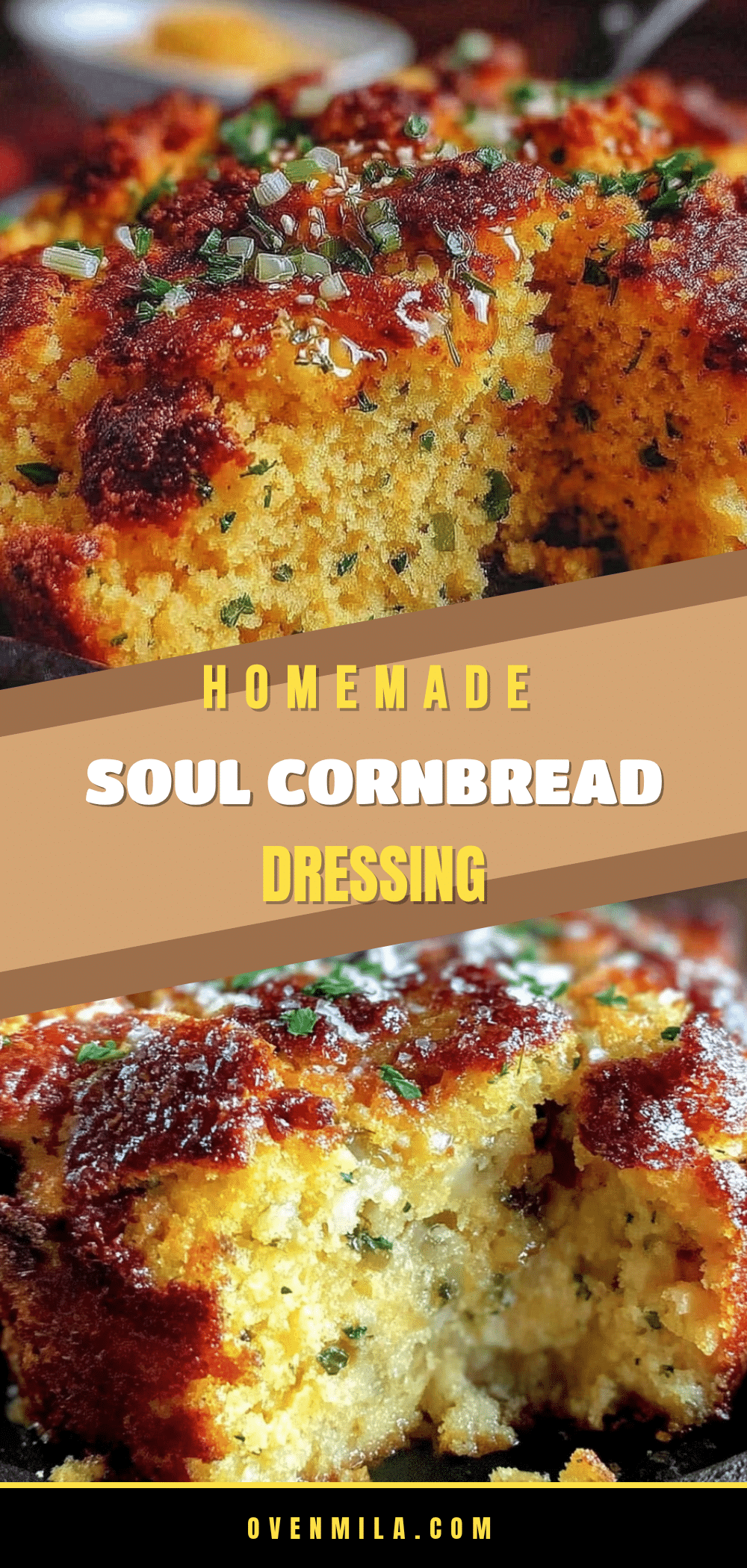
Best Homemade Southern Soul Cornbread Dressing Recipe

This Southern Soul Cornbread Dressing is a deeply flavorful, moist, and comforting side dish perfect for holidays. Born from a kitchen accident, it features crispy edges, a tender center, and layers of savory goodness from toasted cornbread, sautéed aromatics, and a secret touch of bacon grease.
- Prep Time: 25 minutes
- Cook Time: 45 minutes
- Total Time: 1 hour 10 minutes
- Yield: 12 servings 1x
- Category: Side Dish
- Cuisine: Southern
Ingredients
- 6 cups crumbled day-old cornbread (preferably White Lily cornmeal mix)
- 1 cup crumbled day-old white bread or biscuits (optional)
- 1 cup unsalted butter (2 sticks)
- 2 cups finely diced yellow onion (about 1 large onion)
- 1 ½ cups finely diced celery (about 4 ribs, including the leaves)
- 1 medium green bell pepper, finely diced (optional)
- 4 cups low-sodium chicken or turkey stock
- 2 large eggs, lightly beaten
- 1 teaspoon dried sage (rubbed sage, not ground)
- 1 teaspoon dried thyme
- ½ teaspoon dried rosemary, crushed
- 1 teaspoon kosher salt (plus more to taste)
- 1 teaspoon freshly ground black pepper
- ½ teaspoon cayenne pepper (optional)
- 2 tablespoons bacon grease or reserved turkey drippings
Instructions
- Preheat your oven to 375°F (190°C). Spread the crumbled cornbread and white bread (if using) on a large baking sheet. Toast them in the oven for 10-12 minutes, stirring once halfway through, until dry and slightly golden.
- In a large skillet, melt the butter over medium heat. Add the diced onion, celery, and bell pepper. Cook for 8-10 minutes, stirring occasionally, until the vegetables are soft and translucent. Add the dried sage, thyme, rosemary, salt, pepper, and cayenne during the last minute of cooking. Stir until fragrant, about 30 seconds.
- In a large mixing bowl, combine the toasted bread crumbs and the cooked vegetable mixture. Toss gently until evenly distributed.
- In a separate bowl or liquid measuring cup, whisk together the chicken stock and beaten eggs. Slowly pour this liquid mixture over the bread and vegetables. Stir gently but thoroughly. The mixture should look like a very wet, thick porridge.
- Add the bacon grease or turkey drippings. Stir it in until fully incorporated.
- Pour the mixture into a greased 9×13-inch baking dish. Spread it evenly with a spatula. The top should look rough and textured.
- Bake for 40-45 minutes, or until the top is golden brown and the edges are crispy. The center should be set but still slightly jiggly. Let it rest for 10 minutes before serving.
Notes
For best texture, use day-old cornbread. Fresh cornbread will turn the dressing mushy. If the top browns too quickly while the center is still wet, cover loosely with foil for the last 15 minutes. The internal temperature should reach 165°F (74°C) when fully cooked. Let the dressing rest for 10 minutes after baking to firm up.
Nutrition
- Serving Size: 1 serving (1/12 of r
- Calories: 320
- Sugar: 6
- Sodium: 520
- Fat: 18
- Saturated Fat: 10
- Carbohydrates: 32
- Fiber: 2
- Protein: 7
Keywords: cornbread dressing, southern dressing, soul food, thanksgiving dressing, holiday side dish, cornbread stuffing, southern soul food