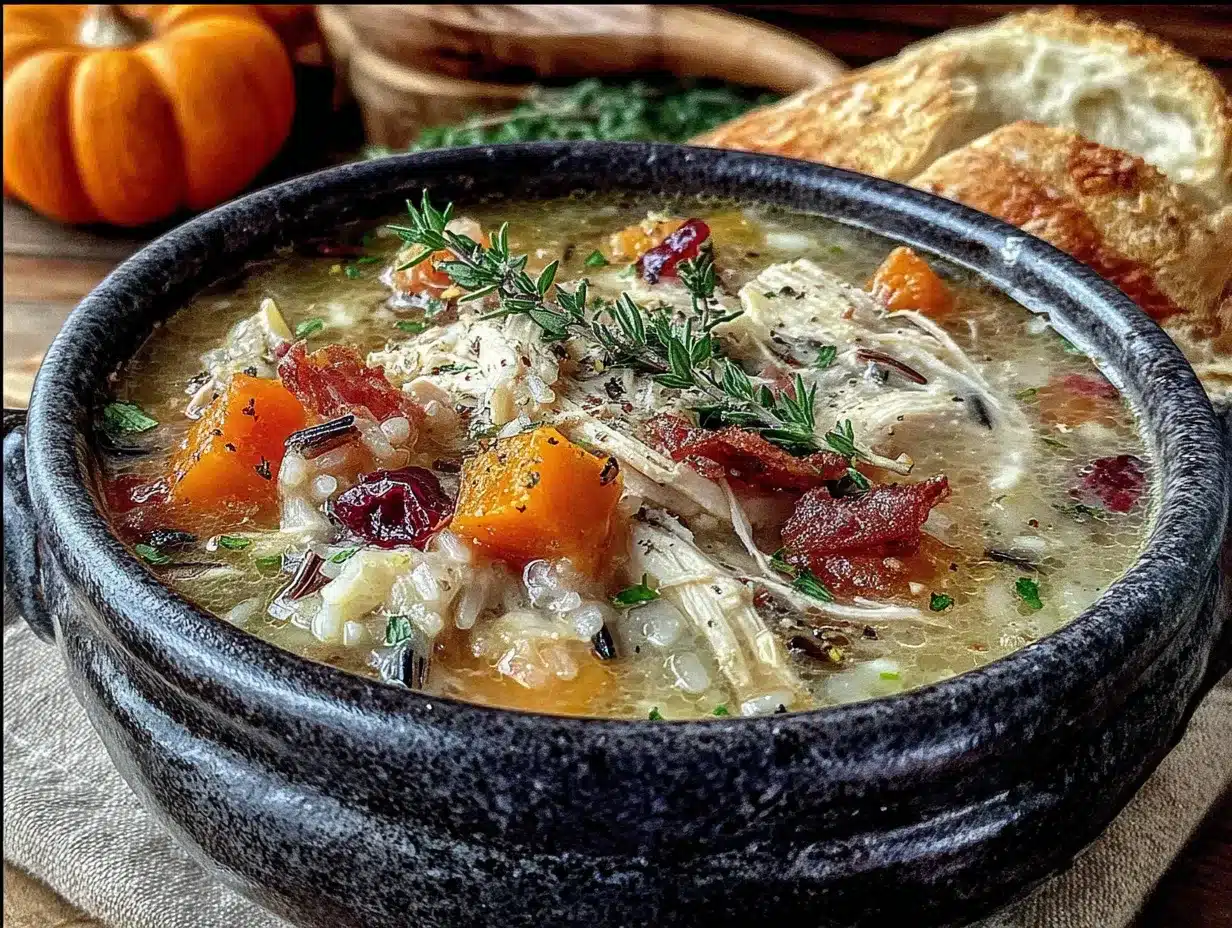
My husband took one bite of this soup, looked at me with that surprised expression he gets, and said, “Okay, this is going into the regular rotation.” He didn’t even wait for me to ask—he just ladled himself a second bowl before I’d sat down with my own. That’s how I knew I’d finally nailed it. This cozy fall harvest chicken and wild rice soup wasn’t born from a family heirloom or a fancy cooking class. Honestly, it came from a string of soggy, bland, one-note soup attempts that left me frustrated and hungry. You know those recipes that sound amazing on paper but just… fall flat? That was every wild rice soup I tried. The rice was either mush or crunchy, the broth was watery, or the chicken was dry and stringy. I wanted something with depth—a soup that tasted like autumn in a bowl, with tender chicken, nutty rice, and a broth so creamy and savory you’d want to drink it straight from the mug.
So I went back to the drawing board. I tested different ratios of broth to cream, played with roasting the vegetables instead of just sautéing them, and finally landed on a method that builds flavor at every single step. The wild rice stays perfectly chewy, the chicken shreds like a dream, and the broth—oh, the broth. It’s velvety and rich without being heavy, with that subtle sweetness from carrots and a woodsy depth from fresh thyme and sage. It’s the kind of soup that makes you slow down. The kind you want to eat by the fire with a crusty piece of bread and absolutely zero distractions. And honestly? It’s become my favorite way to welcome fall. No fuss, no complicated techniques—just real, honest comfort food that works.
Why You’ll Love This Recipe
This isn’t just another chicken soup. I’ve tested this recipe more times than I care to admit, tweaking and tasting until every spoonful felt right. Here’s what makes it stand out—and why I think you’ll come back to it all season long.
- Rich, Layered Flavor Without the All-Day Cook Time : Most wild rice soups taste flat because the broth doesn’t get enough attention. I roast the vegetables first to caramelize their natural sugars, then deglaze the pot with a splash of white wine (or broth) to lift all that browned goodness off the bottom. It takes an extra ten minutes, but the payoff is huge—a broth that tastes like it simmered for hours.
- Perfectly Cooked Wild Rice Every Time : Wild rice is notoriously finicky. Too little time and it’s crunchy; too much and it turns into mush. I cook it separately and add it at the end, which means you get that perfect, nutty, slightly chewy texture every single time. No more guessing games.
- Simple, Wholesome Ingredients : You won’t find any cream-of-anything cans or weird additives here. This soup is built on real food—chicken, vegetables, broth, and a touch of heavy cream for silkiness. Everything is recognizable and easy to find at any grocery store.
- Perfect for Meal Prep and Freezing : This soup actually gets better after a day in the fridge. The flavors meld together beautifully, and it reheats like a dream. I always make a double batch so I can freeze half for those busy nights when I need dinner to be effortless.
- Crowd-Pleasing Comfort : I’ve served this to picky eaters, health-conscious friends, and serious food lovers, and every single person has asked for the recipe. It’s hearty enough to be a main course but light enough that you don’t feel weighed down. That’s the magic of a well-balanced soup.
This recipe is different because I didn’t cut corners. I took the time to build flavor at every stage, from roasting the vegetables to searing the chicken in the same pot. The result is a soup that tastes intentional and deeply satisfying—the kind you’ll crave when the leaves start turning and the air gets crisp.
What Ingredients You Will Need
This recipe uses simple, wholesome ingredients that work together to create a deeply savory and comforting soup. Most of these are pantry staples or easy to find at any grocery store. Let’s walk through each one so you know exactly what to look for.
For the Soup Base
- 2 tablespoons unsalted butter – Butter adds richness and helps brown the vegetables. I prefer unsalted so I can control the salt level, but salted butter works too—just adjust the added salt later.
- 1 large yellow onion, diced – Onion is the backbone of any good soup. Yellow onions are mild and sweet, perfect for a long, slow cook. (If you only have a white or red onion, it’ll still work—just expect a slightly sharper flavor.)
- 3 medium carrots, peeled and diced – Carrots add natural sweetness and a pop of color. I like to dice them into small, even pieces so they soften at the same rate as everything else.
- 2 celery stalks, diced – Celery brings a subtle earthiness and a bit of crunch before it cooks down. Don’t skip it—it’s part of the classic mirepoix trio for a reason.
- 3 cloves garlic, minced – Garlic adds that warm, aromatic depth that makes soup feel cozy. Fresh garlic is best here—pre-minced jarred garlic can taste a bit flat.
- 1 teaspoon fresh thyme leaves (or ½ teaspoon dried) – Thyme has a woodsy, slightly floral flavor that pairs beautifully with chicken and rice. Fresh is lovely, but dried works perfectly in a pinch.
- 1 teaspoon fresh sage, chopped (or ½ teaspoon dried) – Sage is the quintessential fall herb. It adds a savory, almost peppery note that makes this soup taste distinctly autumnal.
- ½ teaspoon dried rosemary – Rosemary is bold and piney, so a little goes a long way. It complements the other herbs without overpowering them.
- ½ cup dry white wine (optional, but recommended) – A splash of wine deglazes the pot and lifts all those caramelized bits off the bottom. It adds acidity and complexity. If you don’t cook with wine, substitute with an equal amount of chicken broth.
For the Chicken and Broth
- 1 ½ pounds boneless, skinless chicken breasts or thighs – I use a mix of both—breasts for lean texture and thighs for extra juiciness and flavor. If you only have one, go with thighs—they’re more forgiving and stay moist even if you cook them a minute too long.
- 6 cups low-sodium chicken broth – Low-sodium broth lets you control the salt level. I recommend Kitchen Basics or Swanson for a clean, neutral flavor. Homemade broth is even better if you have it.
- 2 cups water – Water helps stretch the broth without making it too salty. You could use all broth if you prefer a richer base, but I find the balance works best this way.
- 1 bay leaf – Bay leaf adds a subtle, almost tea-like background note. It’s not overpowering, but you’ll miss it if you leave it out.
For the Wild Rice
- 1 cup uncooked wild rice – Not a blend—look for 100% wild rice. It has a much nuttier flavor and better texture than the cultivated versions. I recommend Lundberg or Nature’s Earthly Choice. (If you can only find a wild rice blend, it’ll work, but the cooking time and texture will be different.)
- 2 cups water or broth – For cooking the rice separately. Using broth adds extra flavor, but water is fine too.
For the Creamy Finish
- 1 cup heavy cream – Heavy cream gives the soup that velvety, luxurious texture. For a lighter option, substitute with half-and-half or whole milk—just know the soup won’t be as thick or rich.
- 2 tablespoons all-purpose flour – Flour helps thicken the soup slightly without making it gluey. If you’re gluten-free, use a 1:1 gluten-free flour blend or cornstarch slurry (1 tablespoon cornstarch mixed with 2 tablespoons cold water, added at the end).
- Salt and freshly ground black pepper, to taste – Season as you go, not just at the end. I start with 1 teaspoon of salt and adjust after the rice is added.
- Fresh parsley, chopped (for garnish) – A sprinkle of parsley adds a fresh, bright finish. It’s optional but makes the soup look beautiful.
Equipment Needed
You don’t need a fancy kitchen to make this soup, but having the right tools makes the process smoother and more enjoyable.
- Large Dutch oven or heavy-bottomed pot (6 to 8 quarts) – This is your workhorse. A Dutch oven distributes heat evenly and retains it well, which helps everything cook consistently. I use a Le Creuset, but any heavy pot works—just avoid thin stainless steel that can scorch the bottom.
- Sharp chef’s knife and cutting board – You’ll be dicing a lot of vegetables, so a sharp knife makes the task faster and safer. A dull knife is more dangerous than a sharp one—trust me on this.
- Wooden spoon or silicone spatula – For stirring and scraping up all those flavorful browned bits from the bottom of the pot. Wooden spoons are gentle on enameled cookware.
- Medium saucepan – For cooking the wild rice separately. Any saucepan with a tight-fitting lid works.
- Measuring cups and spoons – Accurate measurements matter in soup. Eyeballing the broth or cream can throw off the balance.
- Tongs – For flipping and removing the chicken breasts or thighs from the pot. Tongs give you more control than a fork or spatula.
- Two forks or a hand mixer – For shredding the cooked chicken. Two forks work perfectly, but if you’re short on time, a hand mixer on low speed shreds chicken in seconds. (Just be careful not to overmix or it turns into paste.)
- Ladle – For serving. A deep, wide ladle makes portioning soup much less messy.
If you don’t have a Dutch oven, a large stockpot works just fine—just keep an eye on the heat and stir a little more often to prevent sticking. And if you don’t have a separate saucepan for the rice, you can cook it in the same pot before you start the soup (just wipe it out first).
Preparation Method
Let’s get cooking. This recipe comes together in about an hour, but most of that time is hands-off. I’ll walk you through every step so you feel confident from start to finish.
Step 1: Cook the Wild Rice
Rinse 1 cup of wild rice under cold water in a fine-mesh strainer. This removes excess starch and any debris. In a medium saucepan, combine the rinsed rice with 2 cups of water or broth and a pinch of salt. Bring to a boil over high heat, then reduce the heat to low, cover, and simmer for 40 to 50 minutes, or until the rice is tender and the grains have split open slightly. Drain any remaining liquid and set the rice aside. (Pro tip: Cook the rice a day ahead and refrigerate it—it saves time and the texture holds up beautifully.)
Step 2: Prep the Vegetables
While the rice cooks, dice your onion, carrots, and celery into small, uniform pieces—about ¼-inch cubes. Mince the garlic and set it aside. Having everything prepped before you start cooking makes the process much less stressful. (I learned this the hard way after burning garlic while scrambling to chop an onion.)
Step 3: Sear the Chicken
Pat the chicken breasts or thighs dry with paper towels. Season them generously on both sides with salt and pepper. Heat 1 tablespoon of the butter in your Dutch oven over medium-high heat. Once the butter is melted and sizzling, add the chicken pieces in a single layer (work in batches if needed). Sear for 4 to 5 minutes per side, until golden brown. The chicken doesn’t need to be cooked through at this point—it will finish cooking in the broth. Transfer the seared chicken to a plate and set it aside.
Step 4: Sauté the Vegetables
Reduce the heat to medium and add the remaining 1 tablespoon of butter to the pot. Add the diced onion, carrots, and celery. Cook, stirring occasionally, for 6 to 8 minutes, until the vegetables are softened and starting to brown on the edges. The fond (those browned bits) on the bottom of the pot is flavor gold—don’t worry, we’ll deglaze it in a moment.
Step 5: Add the Garlic and Herbs
Add the minced garlic, fresh thyme, sage, and dried rosemary to the pot. Stir constantly for 30 to 45 seconds, until the garlic is fragrant. Be careful not to let it burn—burnt garlic turns bitter and can ruin the whole batch.
Step 6: Deglaze the Pot
Pour in the ½ cup of dry white wine (or broth), and use your wooden spoon to scrape up all the browned bits from the bottom of the pot. This step is non-negotiable—that’s where the deep, savory flavor lives. Let the wine simmer for 2 to 3 minutes, until it has reduced by about half.
Step 7: Build the Broth
Sprinkle the 2 tablespoons of flour over the vegetables and stir to coat. Cook for 1 minute to remove the raw flour taste. Slowly pour in the 6 cups of chicken broth and 2 cups of water, stirring constantly to prevent lumps. Add the bay leaf and return the seared chicken to the pot. Bring the soup to a gentle boil, then reduce the heat to low, cover, and simmer for 20 to 25 minutes, or until the chicken is cooked through and tender.
Step 8: Shred the Chicken
Use tongs to transfer the cooked chicken to a cutting board. Let it rest for 2 to 3 minutes, then shred it using two forks. (The chicken should be so tender that it practically falls apart.) Discard the bay leaf from the pot.
Step 9: Add the Cream and Rice
Return the shredded chicken to the pot. Stir in the heavy cream and the cooked wild rice. Simmer for 5 to 10 minutes over low heat, until everything is heated through and the soup has thickened slightly. Taste and adjust the seasoning with salt and pepper. I usually add another ½ teaspoon of salt and a generous crack of black pepper at this stage.
Step 10: Serve and Garnish
Ladle the soup into bowls and garnish with fresh chopped parsley. Serve immediately with crusty bread or a side salad. (If you want to go all-in on fall flavors, try it with my sourdough discard pumpkin bread with honey butter—the sweet and savory combo is incredible.)
Cooking Tips & Techniques
I’ve made this soup more times than I can count, and I’ve learned a few things along the way. Here are my best tips for getting it right every single time.
Don’t skip the sear. Searing the chicken before simmering it in the broth adds a layer of browning that deepens the overall flavor. It takes just a few extra minutes, but it makes a noticeable difference. If you’re short on time, you can skip it, but the soup won’t be quite as rich.
Cook the rice separately. This is the most important tip I can give you. If you cook the wild rice directly in the soup, it will absorb too much liquid and turn into a starchy, mushy mess. Cooking it separately ensures perfect texture and lets you control the final consistency of the soup. Plus, you can add as much or as little rice as you like.
Season in layers. Don’t wait until the end to add all the salt. Season the chicken before searing, add a pinch to the vegetables as they cook, and taste the broth before adding the cream. Layering the seasoning builds complexity and prevents the soup from tasting flat.
Watch the heat when adding cream. Heavy cream can curdle if you add it to a boiling liquid. Keep the soup at a gentle simmer (not a rolling boil) when you stir in the cream. If you’re nervous about it, temper the cream first by whisking a ladleful of hot broth into the cream before adding it to the pot.
Let it rest before serving. Like chili or stew, this soup actually tastes better after sitting for 15 to 20 minutes. The flavors meld together, and the texture becomes more cohesive. If you have time, let it rest off the heat with the lid on before ladling it into bowls.
One mistake I made early on: I used a wild rice blend instead of 100% wild rice, and the other grains (like brown rice) turned to mush while the wild rice was still undercooked. Stick with pure wild rice for the best texture. And if you’re in a rush, you can use a quick-cooking wild rice, but reduce the cooking time accordingly.
Variations & Adaptations
This soup is incredibly flexible. Here are some of my favorite ways to change it up depending on what I have on hand or who I’m cooking for.
Make it dairy-free. Swap the butter for olive oil or a plant-based butter, and replace the heavy cream with full-fat coconut milk or a dairy-free cream alternative. The coconut milk adds a subtle sweetness that works surprisingly well with the savory broth. (I’ve tested this with canned coconut cream, and it’s delicious—just don’t use light coconut milk, which is too thin.)
Add more vegetables. This soup is a great way to use up whatever fall vegetables you have. Try adding diced sweet potatoes, parsnips, or butternut squash along with the carrots. If you add squash, dice it small so it cooks through in the same time. Mushrooms are another excellent addition—sauté them with the vegetables for an earthy, umami boost.
Swap the protein. If you don’t have chicken, try using cooked turkey (perfect for post-Thanksgiving leftovers) or even a can of drained and rinsed white beans for a vegetarian version. If you go the vegetarian route, use vegetable broth and skip the chicken—the beans add plenty of protein and heft.
Make it spicy. Add a pinch of red pepper flakes or a diced jalapeño (seeds removed) along with the garlic. The heat cuts through the creaminess and adds a nice kick. I’ve also added a teaspoon of smoked paprika for a subtle smokiness that pairs beautifully with the wild rice.
Try a different grain. If you can’t find wild rice or just want to mix things up, substitute with farro, barley, or brown rice. Each grain has a different cooking time, so adjust accordingly. Farro takes about 30 minutes, barley about 40, and brown rice about 45. Just cook them separately like you would the wild rice.
My personal favorite variation: I sometimes add a cup of shredded rotisserie chicken (from the store) instead of cooking raw chicken. It cuts the prep time in half, and the soup is still incredibly flavorful. I just skip the searing step and add the shredded chicken at the end along with the cream and rice. It’s my go-to for busy weeknights.
Serving & Storage Suggestions
This soup is a meal in itself, but the right accompaniments can make it even better. Here’s how I like to serve it and how to store leftovers so they taste just as good the next day.
Serving temperature and presentation. Serve the soup piping hot in deep bowls. I like to garnish with a sprinkle of fresh parsley and a crack of black pepper right before serving. If you’re feeling fancy, a drizzle of extra-virgin olive oil or a dollop of sour cream adds a nice finishing touch. Pair it with crusty bread, a warm baguette, or even a side of my no-knead rosemary sea salt focaccia for dipping. The bread soaks up every last drop of that creamy broth.
Complementary dishes. A simple green salad with a tangy vinaigrette balances the richness of the soup. Or, if you’re serving it as part of a fall spread, try it alongside my pumpkin cream cheese roll for dessert—the creamy filling and spiced cake are a perfect ending to a cozy meal.
Storage instructions. Let the soup cool completely before transferring it to an airtight container. Store it in the refrigerator for up to 4 days. The flavors actually deepen and meld together overnight, so leftovers often taste even better than the first batch. (Just note that the rice will continue to absorb liquid as it sits, so the soup will thicken. That’s normal—just add a splash of broth or water when reheating to thin it back out.)
Freezing instructions. This soup freezes beautifully for up to 3 months. I recommend freezing it without the wild rice, if possible, because the rice can become mushy after thawing. Instead, cook fresh rice when you’re ready to serve. If you do freeze it with the rice, just know the texture will be softer—still delicious, just different. To thaw, transfer the container to the refrigerator overnight, then reheat gently on the stovetop over medium-low heat.
Reheating tips. Reheat the soup on the stovetop over medium-low heat, stirring occasionally, until warmed through. If it’s too thick, add a splash of chicken broth or water to loosen it. Avoid microwaving on high, which can make the cream separate and the rice turn gummy. If you’re in a rush, microwave in 30-second bursts at 50% power, stirring between each burst.
Nutritional Information & Benefits
This soup is hearty and satisfying, but it’s also packed with ingredients that are good for you. Here’s a rough breakdown of what’s in each serving (based on 8 servings, using chicken breasts and heavy cream).
- Calories: Approximately 380 per serving
- Protein: 28g
- Fat: 18g
- Carbohydrates: 28g
- Fiber: 3g
- Sugar: 5g
- Sodium: 680mg (varies based on broth and added salt)
Health benefits of key ingredients. Wild rice is a whole grain packed with fiber, protein, and B vitamins. It’s also naturally gluten-free and has a lower glycemic index than white rice, which means it won’t spike your blood sugar. Carrots and celery provide vitamins A and K, plus antioxidants that support immune health. Chicken is a lean source of protein that helps keep you full and satisfied. And the herbs—thyme, sage, rosemary—aren’t just for flavor; they have anti-inflammatory and antimicrobial properties.
Dietary considerations. This soup is naturally gluten-free if you use a gluten-free flour blend or cornstarch instead of all-purpose flour. It can be made dairy-free with the substitutions mentioned above. It’s also low in added sugar (only what’s naturally in the vegetables) and can be part of a balanced, whole-foods diet.
Potential allergens. This recipe contains dairy (butter and heavy cream) and gluten (all-purpose flour). If you have specific allergies, be sure to check the labels on your broth and seasonings, as some brands may contain hidden allergens.
I love that this soup feels indulgent but is actually packed with nourishing ingredients. It’s the kind of meal that fills you up without weighing you down—perfect for those crisp fall evenings when you want something warm and satisfying.
Conclusion
This cozy fall harvest chicken and wild rice soup has become a staple in my kitchen, and I have a feeling it will become one in yours, too. It’s the kind of recipe that doesn’t try too hard—it just delivers. The broth is rich and velvety, the chicken is tender, the wild rice adds that perfect nutty chew, and every spoonful tastes like autumn. It’s forgiving enough for a weeknight but impressive enough to serve to guests. Honestly, what more could you ask for from a bowl of soup?
I hope you make this soup and make it your own. Add extra vegetables if you have them, swap in leftover turkey, or spice it up with a pinch of cayenne—whatever feels right. That’s the beauty of a recipe like this: it’s a starting point, not a rulebook. And if you try it, I’d love to hear how it went. Leave a comment below and let me know what you thought, or tag me in your photos if you share them online. Your feedback and adaptations are what make this community so special.
So grab your biggest pot, light a candle, and get ready to fill your home with the best smell of the season. You’ve got this. Happy cooking, and here’s to cozy bowls of soup and the people we share them with.
Frequently Asked Questions
Can I make this soup in a slow cooker or Instant Pot?
Absolutely. For a slow cooker, sauté the vegetables and sear the chicken on the stovetop first, then transfer everything (except the cream and cooked rice) to the slow cooker. Cook on low for 6 to 8 hours or on high for 3 to 4 hours. Shred the chicken, stir in the cream and cooked rice, and heat through before serving. For an Instant Pot, use the sauté function for the vegetables and chicken, then pressure cook on high for 15 minutes with a natural release. Add the cream and rice after cooking.
Can I use leftover rotisserie chicken to save time?
Yes, and I do this all the time. Skip the step where you sear raw chicken—just add the shredded rotisserie chicken at the end, along with the cream and cooked rice. Simmer for 5 minutes to heat everything through. It cuts the active prep time significantly, and the soup is still packed with flavor.
Why did my soup turn out too thick or too thin?
Wild rice continues to absorb liquid as it sits, so the soup will naturally thicken over time. If it’s too thick, stir in a splash of chicken broth or water when reheating. If it’s too thin, let it simmer uncovered for an additional 10 to 15 minutes to reduce and concentrate the flavors. Also, make sure you’re not adding too much extra liquid—stick to the measurements in the recipe for best results.
Can I freeze this soup?
Yes, but with one caveat: for the best texture, freeze the soup without the wild rice and cook fresh rice when you’re ready to serve. If you freeze it with the rice, the grains will become softer and slightly mushy after thawing. The flavor will still be great, but the texture won’t be as perfect. Store in an airtight container for up to 3 months.
What can I use instead of heavy cream to make it lighter?
You can substitute half-and-half or whole milk for the heavy cream, but the soup won’t be as thick or velvety. For a dairy-free option, full-fat coconut milk works beautifully and adds a subtle sweetness. If you want to keep it creamy without the dairy, try blending a cup of the soup (without the rice) and stirring it back in—the blended vegetables will naturally thicken the broth.
Pin This Recipe!

Cozy Fall Harvest Chicken and Wild Rice Soup

A rich and velvety chicken and wild rice soup with perfectly chewy rice, tender shredded chicken, and a deeply savory broth made with roasted vegetables, fresh herbs, and a touch of cream. This comforting fall soup is hearty enough for a main course and perfect for meal prep.
- Prep Time: 15 minutes
- Cook Time: 45 minutes
- Total Time: 1 hour
- Yield: 8 servings 1x
- Category: Main Course
- Cuisine: American
Ingredients
- 2 tablespoons unsalted butter
- 1 large yellow onion, diced
- 3 medium carrots, peeled and diced
- 2 celery stalks, diced
- 3 cloves garlic, minced
- 1 teaspoon fresh thyme leaves (or ½ teaspoon dried)
- 1 teaspoon fresh sage, chopped (or ½ teaspoon dried)
- ½ teaspoon dried rosemary
- ½ cup dry white wine (optional, substitute with chicken broth)
- 1 ½ pounds boneless, skinless chicken breasts or thighs
- 6 cups low-sodium chicken broth
- 2 cups water
- 1 bay leaf
- 1 cup uncooked wild rice (100% wild rice, not a blend)
- 2 cups water or broth (for cooking rice)
- 1 cup heavy cream
- 2 tablespoons all-purpose flour
- Salt and freshly ground black pepper, to taste
- Fresh parsley, chopped (for garnish)
Instructions
- Rinse 1 cup wild rice under cold water. In a medium saucepan, combine rice with 2 cups water or broth and a pinch of salt. Bring to a boil, reduce heat to low, cover, and simmer 40-50 minutes until tender and grains split open. Drain any excess liquid and set aside.
- While rice cooks, dice onion, carrots, and celery into ¼-inch cubes. Mince garlic.
- Pat chicken dry and season generously with salt and pepper. Heat 1 tablespoon butter in a Dutch oven over medium-high heat. Sear chicken 4-5 minutes per side until golden brown (not fully cooked). Transfer to a plate.
- Reduce heat to medium, add remaining 1 tablespoon butter. Sauté onion, carrots, and celery 6-8 minutes until softened and lightly browned.
- Add garlic, thyme, sage, and rosemary. Stir 30-45 seconds until fragrant.
- Pour in white wine (or broth) and scrape up browned bits from pot bottom. Simmer 2-3 minutes until reduced by half.
- Sprinkle flour over vegetables, stir to coat, and cook 1 minute. Slowly pour in chicken broth and water, stirring constantly. Add bay leaf and return seared chicken to pot. Bring to a gentle boil, reduce heat to low, cover, and simmer 20-25 minutes until chicken is cooked through.
- Transfer chicken to a cutting board, let rest 2-3 minutes, then shred with two forks. Discard bay leaf.
- Return shredded chicken to pot. Stir in heavy cream and cooked wild rice. Simmer 5-10 minutes over low heat until heated through and slightly thickened. Season with salt and pepper to taste.
- Ladle into bowls, garnish with fresh parsley, and serve hot with crusty bread.
Notes
Cook wild rice separately to prevent mushiness. For best flavor, sear chicken and deglaze the pot. Soup thickens as it sits; add broth when reheating. Freeze without rice for best texture. Can be made dairy-free with olive oil and coconut milk.
Nutrition
- Serving Size: 1 bowl (about 1.5 cu
- Calories: 380
- Sugar: 5
- Sodium: 680
- Fat: 18
- Saturated Fat: 10
- Carbohydrates: 28
- Fiber: 3
- Protein: 28
Keywords: chicken wild rice soup, fall soup, creamy chicken soup, harvest soup, comfort food, autumn recipe