It was 11:47 PM on a drizzly Tuesday in November, and I had a very specific, almost aggressive craving for a soft sugar cookie. Not just any sugar cookie — the kind that crumbles just a little when you bite into it, the kind that tastes like vanilla and butter and something warm. I didn’t have any all-purpose flour in the house (classic Tuesday night problem), but I had a half-full bag of almond flour staring at me from the pantry, and the idea that maybe, just maybe, I could make it work. Honestly, I was too tired to go to the store, and the rain was coming down hard enough to make the idea of leaving the house feel genuinely offensive. So I stood there in my pajamas, measuring almond flour into a bowl, thinking, “Well, this is either going to be brilliant or a total disaster.” The first batch came out a little flat, and I may have licked the spatula clean standing over the sink. But the second batch? That was the one. The edges were perfectly golden, the centers were soft, and they had this nutty, buttery flavor that regular flour just can’t give you. I ate three of them before they even cooled down, standing in my kitchen with the rain still tapping on the window. That night, these cookies became my new comfort food, and I haven’t stopped making them since. Maybe you’ve been there — late at night, craving something sweet, and the usual ingredients just aren’t around. Trust me, this version is better anyway.
Why You’ll Love This Recipe
Let me tell you why these gluten-free almond flour sugar cookies have become my go-to for every cozy occasion. They aren’t just another gluten-free recipe — they’re the kind of cookie that makes you forget you’re even eating gluten-free in the first place.
- Quick & Easy: Comes together in under 30 minutes, from bowl to plate. Perfect for those sudden cravings or when you need a last-minute dessert for unexpected guests.
- Simple Ingredients: You likely have everything in your pantry right now. No weird gums, no obscure starches — just almond flour, butter, sugar, and vanilla.
- Perfect for Cozy Evenings: Great for cold nights, rainy afternoons, or any time you need a little comfort in cookie form.
- Crowd-Pleaser: I’ve served these to gluten-eaters who had no idea they were gluten-free. They always disappear first from the cookie plate.
- Unbelievably Delicious: The texture is where these cookies shine — soft, tender, with a slight crumble that melts in your mouth. The almond flour adds a natural richness that all-purpose flour just can’t match.
What makes this recipe different from the rest is the technique. I tested this about six times before I got it right, and the secret is in the chilling step and the ratio of butter to almond flour. Most almond flour cookies turn out either too oily or too dry, but this version hits that perfect sweet spot. It’s comfort food reimagined — faster, gluten-free, but with the same soul-soothing satisfaction that makes you close your eyes after the first bite.
What Ingredients You Will Need
This recipe uses simple, wholesome ingredients to deliver that cozy sugar cookie experience without the gluten. Most of these are pantry staples for anyone who bakes regularly with almond flour.
For the Cookies
- 2 ½ cups almond flour (blanched, finely ground — I recommend Bob’s Red Mill or Blue Diamond for consistent texture)
- ½ cup unsalted butter, softened to room temperature (adds richness and tenderness)
- ¾ cup granulated sugar (regular white sugar works best, but coconut sugar can substitute)
- 1 large egg, room temperature (helps bind the dough since there’s no gluten)
- 1 teaspoon vanilla extract (pure vanilla, not imitation, for that warm, cozy flavor)
- ½ teaspoon almond extract (optional but highly recommended — it amplifies the nuttiness)
- ½ teaspoon baking soda (for a little lift)
- ¼ teaspoon salt (balances the sweetness and enhances flavor)
For the Coating (Optional but Delicious)

- ¼ cup granulated sugar (for rolling the dough balls before baking)
- Powdered sugar for dusting (if you want that snowy, cozy look)
Ingredient Selection Tips: Look for almond flour that’s blanched and finely ground — not almond meal, which has the skins and a coarser texture. The finer the flour, the more tender your cookies will be. If your almond flour has been sitting in the pantry for a while, give it a quick stir before measuring because it tends to settle and pack down.
Substitution Guidance: For a dairy-free version, use vegan butter sticks (I like Earth Balance or Miyoko’s) — just make sure they’re softened, not melted. For an egg-free option, try a flax egg (1 tablespoon ground flaxseed mixed with 3 tablespoons water, let sit for 5 minutes). The texture will be slightly less tender but still delicious. If you want a lower sugar option, you can reduce the sugar to ½ cup, but the cookies will spread less and be a bit more dense.
Equipment Needed
Nothing too fancy here — these cookies are designed for home bakers without a professional kitchen. Here’s what you’ll need:
- Large mixing bowl (for creaming the butter and sugar)
- Medium mixing bowl (for whisking dry ingredients)
- Hand mixer or stand mixer (a hand mixer works perfectly; a wooden spoon works too, but your arm will get a workout)
- Baking sheet (I prefer light-colored metal sheets for even browning)
- Parchment paper or silicone baking mat (essential for preventing sticking — these cookies are delicate)
- Cookie scoop or tablespoon (for uniform cookie sizes)
- Cooling rack (for letting them cool without getting soggy on the bottom)
- Plastic wrap (for chilling the dough)
Personal Experience: I’ve made these with both a cheap hand mixer and a fancy stand mixer, and honestly, the hand mixer works just as well. The key is making sure your butter is properly softened — if it’s too cold, your mixer will struggle, and if it’s too melted, the cookies will spread too much. Also, don’t skip the parchment paper! Almond flour cookies are more fragile than regular cookies, and they’ll stick to an unlined pan like nobody’s business.
Preparation Method
Follow these steps carefully, and you’ll have the most tender, cozy gluten-free sugar cookies you’ve ever tasted. The chilling step is non-negotiable — I learned that the hard way.
- Cream the butter and sugar. In a large mixing bowl, beat the softened butter and ¾ cup granulated sugar together until light and fluffy, about 2-3 minutes with a hand mixer on medium speed. Scrape down the sides of the bowl halfway through. You want the mixture to look pale and airy — this is where the tenderness starts.
- Add the wet ingredients. Beat in the egg, vanilla extract, and almond extract (if using) until fully combined. The mixture might look a little separated at this point — don’t worry, that’s normal. It should be smooth and glossy when you’re done.
- Whisk the dry ingredients. In a separate medium bowl, whisk together the almond flour, baking soda, and salt. Make sure there are no clumps — almond flour can be a bit stubborn about this. I use a fork or a small whisk to break up any lumps.
- Combine wet and dry. Gradually add the dry ingredients to the wet mixture, mixing on low speed or folding with a spatula until just combined. Don’t overmix! Overmixing almond flour dough can make it tough. The dough will be soft and slightly sticky, but it should hold together when pressed.
- Chill the dough. This is the most important step. Cover the bowl with plastic wrap and refrigerate for at least 30 minutes, or up to 2 hours. The dough needs to firm up so the cookies don’t spread into flat puddles in the oven. I’ve skipped this step before, and let me tell you — it was not pretty. Flat, greasy cookies that merged into one giant cookie sheet. Still tasty, but not what we’re going for.
- Preheat the oven. About 10 minutes before you’re ready to bake, preheat your oven to 350°F (175°C). Line your baking sheet with parchment paper or a silicone mat.
- Shape the cookies. Scoop about 1.5 tablespoons of dough (I use a #40 cookie scoop) and roll it into a ball between your palms. If you want that classic sugar cookie look, roll each ball in the extra ¼ cup granulated sugar until coated. Place the balls on the prepared baking sheet, about 2 inches apart — they will spread a little, but not as much as regular cookies.
- Flatten slightly. Gently press down on each dough ball with the bottom of a glass or your palm to flatten it to about ½ inch thickness. If the dough starts to stick, dip the glass in a little sugar first. This ensures even baking and gives you that classic cookie shape.
- Bake. Bake for 10-12 minutes, or until the edges are just barely golden brown. The centers will look soft and slightly underdone — that’s exactly what you want. They’ll continue to set as they cool. Overbaking is the enemy of tender almond flour cookies.
- Cool properly. Let the cookies cool on the baking sheet for 5 minutes — they’re very fragile when hot. Then transfer them to a wire cooling rack to cool completely. If you try to move them too soon, they’ll crumble in your hands. Patience, my friend.
Sensory Cues: When you’re creaming the butter and sugar, listen for the change in sound — it goes from a heavy, scraping sound to a lighter, airy sound as it becomes fluffy. When the cookies are done baking, the kitchen will smell like vanilla and toasted almonds, and the edges will have a delicate golden ring. The centers should still look soft and slightly puffed when you pull them out.
Cooking Tips & Techniques
After making these cookies more times than I’d like to admit (okay, maybe I’d like to admit it — I’m proud of my cookie research), here are the tips that make all the difference.
Don’t skip the chill. I cannot stress this enough. Almond flour dough is much softer than regular cookie dough because almond flour absorbs less moisture than wheat flour. Without chilling, your cookies will spread into thin, greasy disks. Trust me, I’ve made that mistake on a particularly impatient Tuesday, and it was a sad, flat mess. Chilling for at least 30 minutes firms up the butter and gives the almond flour time to absorb some of the moisture.
Measure your almond flour correctly. Spoon it into your measuring cup and level it off with a knife. Don’t scoop directly with the measuring cup — that packs the flour down and you’ll end up with too much, making the cookies dry and crumbly. I learned this one from a particularly dry batch that I had to eat with a glass of milk just to get them down.
Watch the oven like a hawk. Almond flour cookies go from perfectly baked to overbaked in about 60 seconds. The edges should be just barely golden, and the centers should still look a little soft. They’ll continue cooking from residual heat after you pull them out. Pull them when they look slightly underdone, and they’ll be perfect after cooling.
Room temperature ingredients matter. Cold butter won’t cream properly, and a cold egg can make the butter seize up. Leave your butter and egg on the counter for about 30 minutes before you start. If you’re in a hurry (and let’s face it, who isn’t?), you can warm the egg in a bowl of warm water for 5 minutes.
Use a cookie scoop for uniform sizes. This isn’t just about aesthetics — uniform cookies bake evenly, so you don’t end up with some overbaked and some underbaked. Plus, it makes the dough balls easier to roll in sugar.
Variations & Adaptations
One of the best things about this recipe is how versatile it is. Here are some variations I’ve tried and loved:
Chocolate Chip Almond Flour Sugar Cookies
Fold in ½ cup of dark chocolate chips or chunks after mixing the dough. The chocolate pairs beautifully with the nutty almond flavor. I use 70% dark chocolate for a slightly less sweet cookie, but milk chocolate works too if you want something more indulgent.
Lemon Almond Sugar Cookies
Add 1 tablespoon of fresh lemon zest and 1 teaspoon of lemon extract along with the vanilla. Roll the dough balls in sugar mixed with a little extra lemon zest for a bright, citrusy twist. These are perfect for spring or when you need a little sunshine in cookie form.
Spiced Chai Sugar Cookies
Add 1 teaspoon of cinnamon, ½ teaspoon of ginger, ¼ teaspoon of cardamom, and a pinch of cloves to the dry ingredients. The warm spices complement the almond flour beautifully and make these cookies taste like a cozy chai latte. Perfect for fall and winter baking.
Vegan Version
Use vegan butter sticks (not tub margarine) and a flax egg (1 tablespoon ground flaxseed + 3 tablespoons water, let sit for 5 minutes). The texture will be slightly less tender, but the flavor is still amazing. I’ve made these for vegan friends and they disappeared in minutes.
Low-Carb/Keto Version
Swap the granulated sugar for a monk fruit or erythritol-based sweetener that measures like sugar. The cookies will be slightly less tender and won’t brown as much, but they’re still delicious. Add an extra tablespoon of butter to compensate for the dryness that some sugar substitutes can cause.
Serving & Storage Suggestions
These cookies are best served slightly warm, when the edges are still a little soft and the center is tender. Let them cool for about 5 minutes after baking, then serve with a tall glass of cold milk, a cup of hot tea, or a cozy mug of coffee. They’re also wonderful crumbled over vanilla ice cream for an impromptu dessert.
For presentation, dust the cooled cookies with powdered sugar for a snowy, cozy look that’s perfect for holiday cookie platters or winter gatherings. You can also drizzle them with a simple glaze made from powdered sugar and milk (or lemon juice for a tangy version).
Storage Instructions: Store these cookies in an airtight container at room temperature for up to 5 days. Place a piece of bread in the container to keep them soft — the cookies will absorb moisture from the bread, keeping them tender. Change the bread every day or two if you’re storing them longer.
Freezing: These cookies freeze beautifully. You can freeze the baked cookies in a single layer on a baking sheet, then transfer to a freezer bag for up to 3 months. Or freeze the dough balls (before rolling in sugar) on a baking sheet, then store in a freezer bag. When ready to bake, roll the frozen dough balls in sugar and add 1-2 minutes to the baking time. No need to thaw first!
Flavor Development: Honestly, these cookies taste even better the next day. The almond flour has time to fully absorb the flavors, and the texture becomes even more tender. If you can resist eating them all on day one, you’re in for a treat on day two.
Nutritional Information & Benefits
These cookies are a great option for anyone following a gluten-free diet, and they offer some nutritional perks compared to traditional sugar cookies made with wheat flour.
| Nutrient | Per Cookie (approx.) |
|---|---|
| Calories | 145 |
| Total Fat | 10g |
| Saturated Fat | 4g |
| Carbohydrates | 12g |
| Fiber | 2g |
| Sugar | 9g |
| Protein | 4g |
Health Benefits: Almond flour is rich in vitamin E, magnesium, and healthy monounsaturated fats. It’s also lower in carbohydrates than wheat flour and has a lower glycemic index, which means these cookies won’t spike your blood sugar as dramatically as traditional sugar cookies. The protein and healthy fats also help keep you feeling satisfied longer — though I can’t promise you’ll stop at just one cookie.
Dietary Considerations: This recipe is naturally gluten-free and can be adapted to be dairy-free, egg-free, or low-carb. It contains tree nuts (almonds), so it’s not suitable for those with nut allergies. Each cookie has about 4g of protein and 2g of fiber, making it a more balanced treat than your average cookie.
Conclusion
These cozy gluten-free almond flour sugar cookies have become a staple in my kitchen for good reason. They’re quick, simple, and deliver that warm, nostalgic feeling that only a really good cookie can provide. Whether you’re gluten-free by necessity or just looking for a delicious twist on a classic, this recipe is worth trying. The texture is tender, the flavor is rich and buttery, and the whole process takes less than 30 minutes from start to finish.
I love how adaptable these cookies are — you can dress them up with chocolate chips or keep them simple with just a dusting of powdered sugar. They’re perfect for those cozy evenings when you need a little something sweet, and they’re impressive enough to serve to guests who have no idea they’re gluten-free.
I’d love to hear how these turn out for you! Leave a comment below and let me know if you tried any variations — I’m always looking for new ideas. And if you share them on social media, tag me so I can see your beautiful cookies. Happy baking, friends!
Frequently Asked Questions
Can I use almond meal instead of almond flour?
You can, but the texture will be different. Almond meal has the skins still on and is coarser, so your cookies will be more rustic and slightly grainier. For the best results, stick with blanched, finely ground almond flour. If you only have almond meal, consider pulsing it in a food processor for a few seconds to make it finer.
Why did my cookies spread too much?
This usually happens for one of three reasons: the dough wasn’t chilled long enough, the butter was too soft or melted, or the baking sheet was too warm when you put the dough on it. Make sure to chill the dough for at least 30 minutes, use softened (not melted) butter, and let your baking sheet cool completely between batches.
Can I make these cookies ahead of time?
Absolutely! You can make the dough up to 3 days ahead and keep it refrigerated. Or freeze the dough balls for up to 3 months. Baked cookies can be stored in an airtight container for up to 5 days, and they actually taste even better on day two.
Are these cookies really gluten-free?
Yes, as long as you use certified gluten-free almond flour and check that your other ingredients (especially vanilla extract and baking soda) are gluten-free. Most brands are naturally gluten-free, but it’s always worth double-checking the labels if you’re baking for someone with celiac disease or a severe gluten sensitivity.
Can I use coconut sugar instead of granulated sugar?
Yes, you can substitute coconut sugar 1:1. The cookies will be slightly darker in color and have a mild caramel flavor that pairs nicely with the almond flour. Keep in mind that coconut sugar is less sweet than white sugar, so the cookies won’t be quite as sweet. You can add an extra tablespoon of coconut sugar if you prefer a sweeter cookie.
Pin This Recipe!
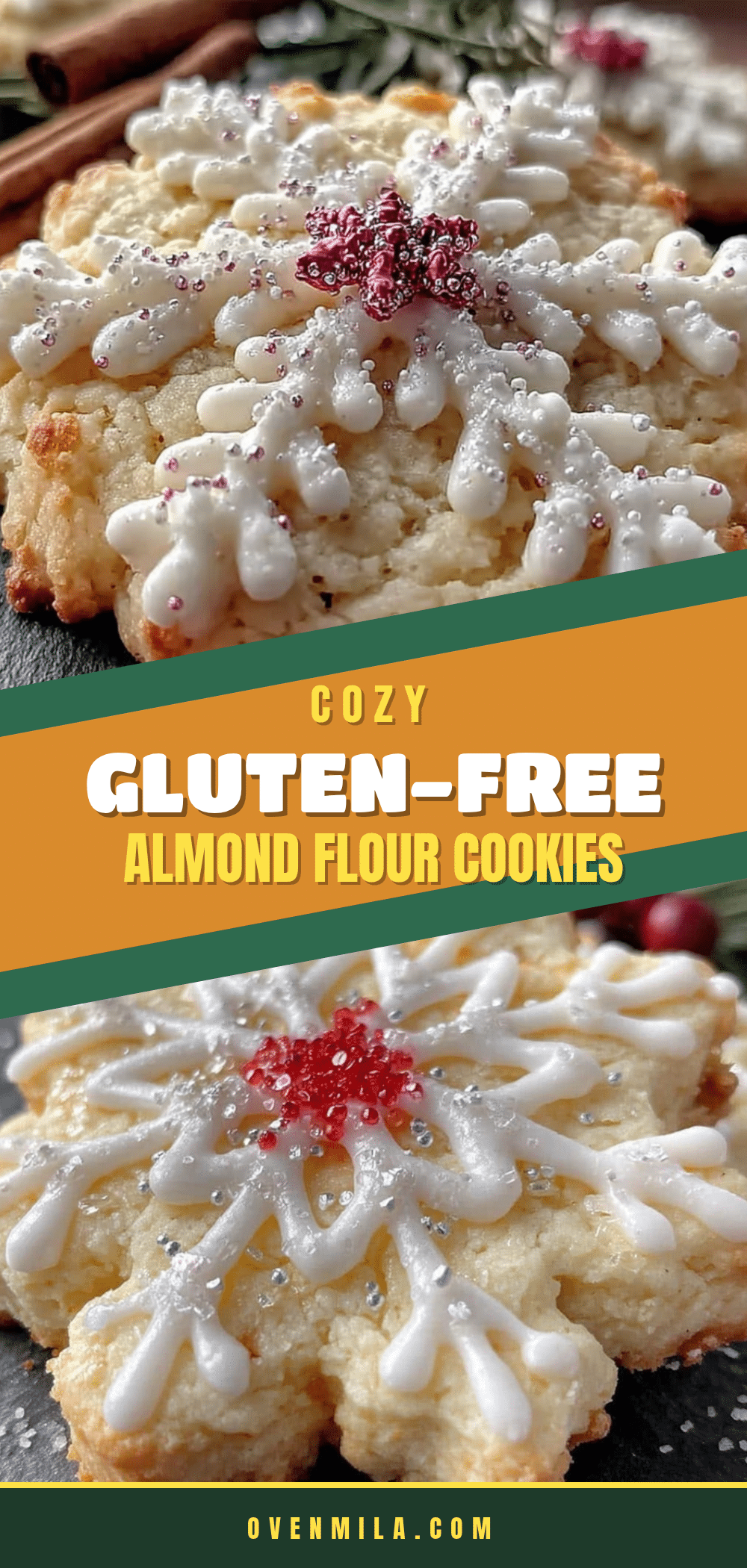
Cozy Gluten-Free Almond Flour Sugar Cookies

These soft, tender gluten-free sugar cookies are made with almond flour for a nutty, buttery flavor that melts in your mouth. Perfect for cozy evenings, they come together in under 30 minutes and are a crowd-pleaser even for gluten-eaters.
- Prep Time: 15 minutes
- Cook Time: 12 minutes
- Total Time: 27 minutes
- Yield: 18 cookies 1x
- Category: Dessert
- Cuisine: American
Ingredients
- 2 ½ cups almond flour (blanched, finely ground)
- ½ cup unsalted butter, softened to room temperature
- ¾ cup granulated sugar
- 1 large egg, room temperature
- 1 teaspoon vanilla extract (pure)
- ½ teaspoon almond extract (optional)
- ½ teaspoon baking soda
- ¼ teaspoon salt
- ¼ cup granulated sugar (for rolling, optional)
- Powdered sugar for dusting (optional)
Instructions
- Cream the butter and sugar: In a large mixing bowl, beat the softened butter and ¾ cup granulated sugar together until light and fluffy, about 2-3 minutes with a hand mixer on medium speed. Scrape down the sides of the bowl halfway through.
- Add the wet ingredients: Beat in the egg, vanilla extract, and almond extract (if using) until fully combined. The mixture should be smooth and glossy.
- Whisk the dry ingredients: In a separate medium bowl, whisk together the almond flour, baking soda, and salt until no clumps remain.
- Combine wet and dry: Gradually add the dry ingredients to the wet mixture, mixing on low speed or folding with a spatula until just combined. Do not overmix. The dough will be soft and slightly sticky.
- Chill the dough: Cover the bowl with plastic wrap and refrigerate for at least 30 minutes, or up to 2 hours.
- Preheat the oven: About 10 minutes before baking, preheat your oven to 350°F (175°C). Line a baking sheet with parchment paper or a silicone mat.
- Shape the cookies: Scoop about 1.5 tablespoons of dough and roll into a ball. If desired, roll each ball in the extra ¼ cup granulated sugar until coated. Place on the prepared baking sheet, about 2 inches apart.
- Flatten slightly: Gently press down on each dough ball with the bottom of a glass or your palm to flatten to about ½ inch thickness. If the dough sticks, dip the glass in a little sugar.
- Bake: Bake for 10-12 minutes, or until the edges are just barely golden brown. The centers will look soft and slightly underdone.
- Cool properly: Let the cookies cool on the baking sheet for 5 minutes, then transfer to a wire cooling rack to cool completely.
Notes
Chilling the dough is essential to prevent spreading. Measure almond flour by spooning into the cup and leveling off. Watch the oven closely as cookies can overbake quickly. For best texture, use room temperature ingredients. Cookies taste even better the next day.
Nutrition
- Serving Size: 1 cookie
- Calories: 145
- Sugar: 9
- Sodium: 95
- Fat: 10
- Saturated Fat: 4
- Carbohydrates: 12
- Fiber: 2
- Protein: 4
Keywords: gluten-free sugar cookies, almond flour cookies, gluten-free cookies, easy sugar cookies, cozy cookies