It was 10:47 PM on a particularly damp Tuesday last November, and I had an unholy craving for something dark, rich, and deeply beefy. The problem? I didn’t have the typical bottle of red wine that most fancy stew recipes demand, but I did have two cans of Guinness leftover from a party that never happened and a bag of sad-looking carrots that needed using up. The idea that arrived was half desperation, half stubbornness — why couldn’t a stout work just as well as a Bordeaux? I mean, honestly, the Irish have been doing it for centuries, right?
So there I stood, in my quiet kitchen with the rain tapping against the window, chopping onions while my family slept upstairs. I’ll admit, I was skeptical. The first time I made this, I used the whole two cans and ended up with something that tasted a bit too much like a pub crawl. But that’s the thing about late-night cooking — you learn fast because you’re too tired to mess around. By my third attempt (and yes, this was over the course of a week — I was obsessed), I had figured out the ratio: one can for the braising liquid, the other for the cook to sip while stirring. It’s a system that works.
Maybe you’ve been there — standing in front of your open fridge, willing something magical to appear from the odds and ends. This Guinness beef stew became that magic for me. It’s the kind of meal that fills your whole house with a smell so comforting, your family will wander into the kitchen half-asleep asking what’s for dinner. And the best part? It costs about the same as takeout for two, but feeds a family of four for two nights. That’s the kind of math I can get behind.
Why You’ll Love This Recipe
Let me tell you why this Guinness beef stew has earned a permanent spot in my weekly rotation. After testing this recipe about seven times (someone had to do it), I can confidently say it delivers on every front that matters to a busy home cook.
- Budget-Friendly Hero: This recipe turns affordable chuck roast into fork-tender perfection. We’re talking about a meal that costs under $15 total and stretches to feed a family of four with leftovers. Your wallet will thank you.
- One-Pot Wonder: Everything cooks in a single Dutch oven. Less dishes, more time actually sitting down with your people. I’ve tested this in both a $40 cast iron pot from Target and my fancy Le Creuset — works beautifully in both.
- Picky Eater Approved: My youngest swears she doesn’t like “mushy vegetables,” but she inhales the carrots and parsnips from this stew. Something about the Guinness cooking them down makes them sweet and irresistible. I’m not questioning it.
- Better the Next Day: This is one of those magical recipes that tastes even better after a night in the fridge. The flavors meld together like they’re becoming best friends. Make it on Sunday, eat it Monday after a long day — you’ll feel like a genius.
- Foolproof Technique: No fancy skills required. If you can chop vegetables and stir a pot, you can make this. The slow simmer does all the hard work for you.
What makes this version different from the dozens of other beef stews out there? It’s the Guinness. That dark stout adds this incredible depth — think rich, slightly bitter, almost chocolatey notes that regular beef broth just can’t touch. It’s not beer soup, I promise. The alcohol cooks off completely, leaving behind a gravy so velvety and complex, you’ll want to drink it with a straw. And the root vegetables? They soak up all that goodness like little sponges. This isn’t just dinner — it’s the kind of meal that makes you close your eyes after the first bite and forget about the chaos of your day for a few minutes.
What Ingredients You Will Need
This recipe uses simple, honest ingredients to build layers of flavor without breaking the bank. Most of these are pantry staples or easy to find at any grocery store. Here’s what you’ll need and why each one matters.
- 2 pounds beef chuck roast, cut into 1.5-inch cubes: Chuck is your best friend here. It’s affordable, has just enough marbling to keep things tender, and breaks down beautifully during the long simmer. I’ve tried sirloin and round — they get tough. Stick with chuck. Trim off any really big chunks of fat, but leave some for flavor.
- 1 can (14.9 oz) Guinness Draught Stout: This is non-negotiable for the signature flavor. The stout adds a roasted, almost coffee-like depth that makes the gravy sing. Don’t use Guinness Extra Stout — it’s too bitter. The regular Draught is perfectly balanced. And please, let the beer sit open for about 10 minutes before using it to let some of the carbonation settle.
- 4 cups beef broth, low sodium: I prefer Swanson’s or Kitchen Basics for consistent flavor. Low sodium is important because the Guinness and Worcestershire sauce bring their own salt. You can always add more salt later, but you can’t take it out.
- 3 tablespoons tomato paste: This little can of concentrated magic adds umami and helps thicken the stew. I always buy the double-concentrated tubes now because I never use a whole can. Cento and Amore are my go-to brands.
- 2 tablespoons Worcestershire sauce: Adds that savory, tangy depth that makes beef taste beefier. Lea & Perrins is the only brand worth buying, honestly.
- 4 large carrots, peeled and cut into 1-inch chunks: Carrots bring natural sweetness that balances the stout’s bitterness. I don’t bother with fancy heirloom varieties — regular grocery store carrots work perfectly. Cut them chunky so they don’t dissolve during cooking.
- 3 parsnips, peeled and cut into 1-inch chunks: Parsnips are the unsung hero of this stew. They have this wonderful peppery sweetness that carrots don’t quite match. If you’ve never cooked with them, trust me — they’re worth seeking out. They soften beautifully and add a subtle complexity.
- 2 medium yellow onions, diced: Yellow onions are the workhorses of the kitchen. They’re sweeter than white onions but not as strong as red. Dice them fine — they’ll mostly melt into the gravy, leaving behind just sweetness.
- 4 cloves garlic, minced: Fresh garlic is non-negotiable. The jarred stuff has a different flavor that just doesn’t work here. Take the extra 30 seconds to mince it yourself.
- 3 tablespoons all-purpose flour: This helps thicken the stew and gives it that velvety texture. If you’re gluten-free, you can substitute 2 tablespoons of cornstarch mixed with 3 tablespoons of cold water, added at the end.
- 2 tablespoons olive oil, divided: You need a high-heat oil for searing the beef. Olive oil works great, but avocado oil is also fine. Don’t use butter for searing — it burns too quickly.
- 2 sprigs fresh thyme: Fresh thyme holds up better than dried during the long simmer. If you only have dried, use 1 teaspoon, but add it later in the cooking process so the flavor doesn’t fade.
- 2 bay leaves: These add a subtle herbal note that builds over time. Remember to fish them out before serving — nobody wants to bite into a bay leaf.
- 1 teaspoon salt, plus more to taste: I use kosher salt for cooking. Diamond Crystal is my preference because it’s less salty by volume, giving you more control.
- 1/2 teaspoon black pepper, freshly ground: Pre-ground pepper is fine in a pinch, but freshly cracked pepper really makes a difference here. It adds a warmth that complements the stout beautifully.
- 2 tablespoons fresh parsley, chopped (for garnish): Optional, but it adds a pop of color and freshness that cuts through the richness. A little green on top makes everything look more intentional.
Equipment Needed
You don’t need a professional kitchen to make this stew. Here’s what I use and what you can substitute if you’re working with limited equipment.
- Large Dutch oven or heavy-bottomed pot (6-7 quart): This is the star of the show. A Dutch oven distributes heat evenly and holds temperature beautifully. I use a Lodge cast iron enamel pot that cost me $50 — it’s been going strong for five years. If you don’t have one, a heavy stainless steel pot works fine, just watch the heat more carefully. Avoid thin aluminum pots — they’ll scorch the bottom.
- Sharp chef’s knife: A dull knife is dangerous. I use a Victorinox 8-inch chef’s knife that cost about $40. It’s sharp, comfortable, and makes chopping vegetables a breeze. Keep it honed with a steel rod.
- Cutting board: Wood or plastic, doesn’t matter. Just make sure it’s stable. I put a damp paper towel underneath mine to stop it from sliding around.
- Wooden spoon or silicone spatula: For stirring and scraping up the brown bits from the bottom of the pot. Metal utensils can scratch enameled cast iron, so stick with wood or silicone.
- Measuring cups and spoons: You’ll need these for the broth, Worcestershire, and seasonings. I prefer metal measuring spoons — they don’t warp over time like plastic ones do.
- Tongs: For flipping the beef while searing. Tongs give you better control than a spatula. I have a basic pair from Oxo that cost $12.
- Small bowl: For mixing the flour and seasonings before coating the beef. A cereal bowl works perfectly.
Preparation Method
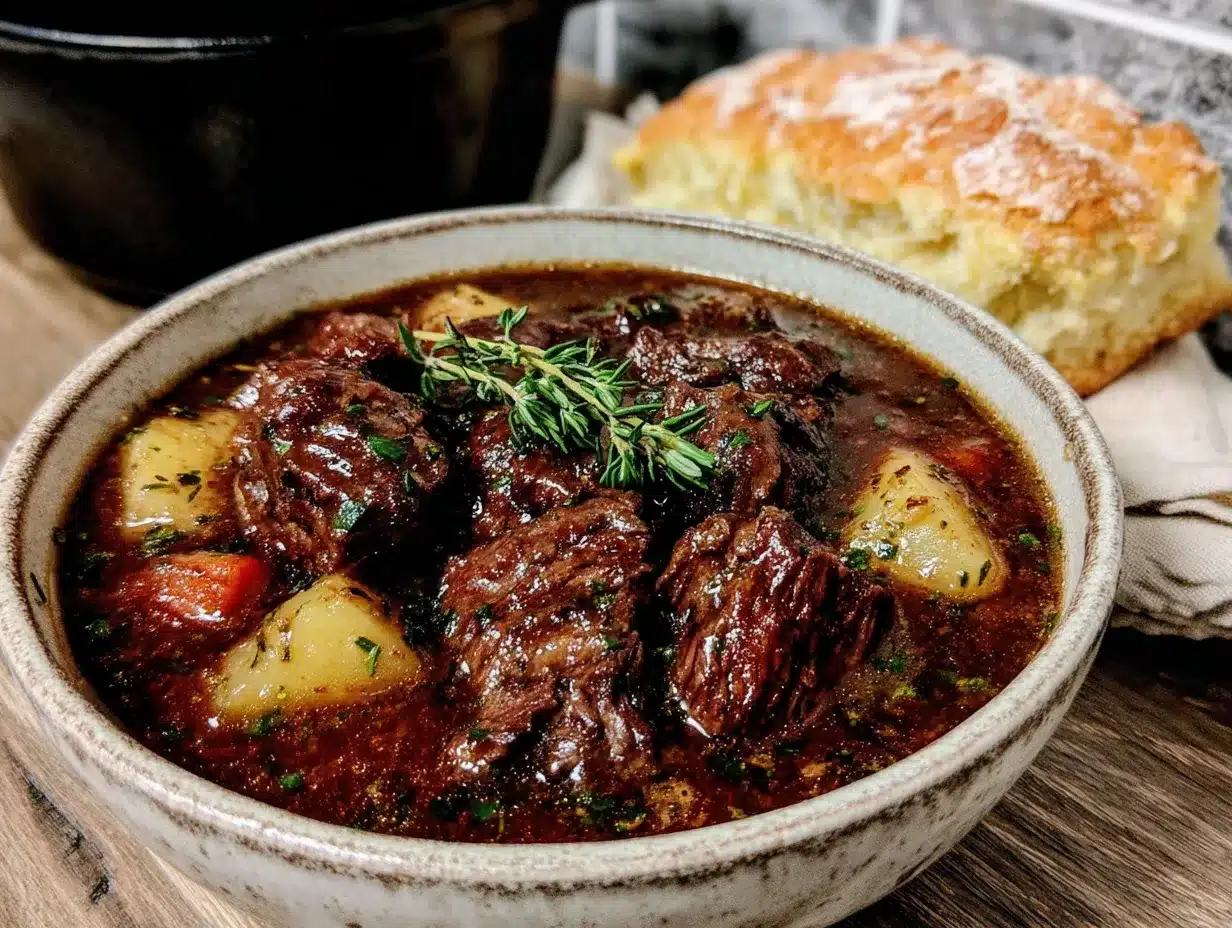
Alright, let’s get cooking. This process takes about 2.5 hours total, but most of that is hands-off simmering time. Here’s how to make this Guinness beef stew like a pro.
- Prep your beef (10 minutes): Pat the chuck roast cubes dry with paper towels. This is crucial — wet meat won’t sear properly. In a small bowl, mix the flour, 1 teaspoon salt, and 1/2 teaspoon pepper. Toss the beef cubes in the flour mixture until evenly coated. Shake off any excess flour. Let the coated beef sit on a plate while you heat your pot.
- Sear the beef in batches (15 minutes): Heat 1 tablespoon of olive oil in your Dutch oven over medium-high heat until it shimmers — you should see tiny ripples on the surface. Working in batches (don’t crowd the pot!), add the beef cubes in a single layer. Let them brown undisturbed for 3-4 minutes per side. You’re looking for a deep, dark brown crust — that’s pure flavor. Use your tongs to flip each piece. Transfer browned beef to a clean plate. Repeat with remaining beef, adding more oil if needed. Pro tip: if the pot starts smoking, your heat is too high. Back it off a notch.
- Sauté the aromatics (8 minutes): Reduce heat to medium. Add the remaining 1 tablespoon of olive oil. Toss in the diced onions and cook, stirring occasionally, until they’re soft and translucent — about 5 minutes. They should be golden, not brown. Add the minced garlic and cook for 1 minute more, stirring constantly. Your kitchen should smell incredible at this point. If the garlic starts to burn, the heat is too high.
- Build the flavor base (5 minutes): Stir in the tomato paste and cook for 2 minutes, stirring constantly. This step removes the raw tomato taste and deepens the umami. The paste will darken and stick to the bottom of the pot a bit — that’s good. Pour in the Guinness, scraping up all those browned bits from the bottom with your wooden spoon. That’s liquid gold right there. Let the beer bubble and reduce for 2 minutes. It’ll smell a bit boozy at first, but don’t worry — that cooks off.
- Add the liquids and beef (5 minutes): Pour in the beef broth and Worcestershire sauce. Stir to combine. Return the browned beef and any accumulated juices to the pot. Add the thyme sprigs and bay leaves. Bring everything to a gentle simmer — you should see small bubbles breaking the surface, not a rolling boil. Boiling will make the beef tough.
- Simmer low and slow (1.5 hours): Reduce heat to low, cover the pot with the lid slightly ajar (about an inch gap), and let it simmer gently. Check on it every 30 minutes, giving it a stir. After 1 hour, taste the broth and adjust salt if needed. The beef should be starting to get tender but not quite there yet. This is where patience pays off.
- Add the root vegetables (45 minutes): After the initial 1.5 hours, add the carrots and parsnips. Stir them in gently, making sure they’re mostly submerged. Re-cover and continue simmering for another 40-45 minutes, or until the vegetables are tender when pierced with a fork and the beef is fall-apart tender. The stew should have thickened nicely by now — if it’s too thin, remove the lid and let it simmer uncovered for 10 more minutes.
- Finish and serve (5 minutes): Remove the thyme sprigs (the leaves will have fallen off) and bay leaves. Taste one more time and adjust seasoning with salt and pepper. Ladle into bowls, garnish with fresh parsley, and serve immediately with crusty bread for dipping. The bread is mandatory, honestly — you’ll want to soak up every drop of that gravy.
Cooking Tips & Techniques
I’ve made this Guinness beef stew enough times to know exactly where things can go wrong. Here are my hard-earned tips to make sure yours turns out perfect every time.
Don’t skip the searing step. I know it’s tempting to just dump everything in the pot and walk away, but that browning creates the Maillard reaction — that’s the chemical process that gives meat its deep, savory flavor. I once tried to save time by skipping this step, and the stew tasted flat and one-dimensional. Trust me, those extra 15 minutes are worth it. Make sure your pot is hot enough that the beef sizzles when it hits the surface, but not so hot that the flour burns.
Watch your heat levels carefully. This is the most common mistake I see. A simmer should have tiny bubbles lazily breaking the surface — think of a gentle hot tub, not a raging Jacuzzi. If you see big, rolling bubbles, your heat is too high. You’ll end up with tough beef and a stew that reduces too quickly. I keep my burner at the lowest setting once I add the broth and just check it every 30 minutes to make sure it’s still gently bubbling.
Let the stew rest before serving. I know you’re hungry, but if you can wait 10-15 minutes after it’s done cooking before serving, the flavors will settle and the gravy will thicken slightly more. I usually use this time to slice some bread and set the table. The stew also holds beautifully on low heat for up to an hour if someone’s running late.
Skim the fat if you want. Chuck roast has some fat that will render during cooking. If you see a layer of orange-tinted fat floating on top, you can skim it off with a spoon before serving. I personally leave about half of it because fat equals flavor, but if you’re watching your intake, go ahead and remove it. Pro tip: if you refrigerate the stew overnight, the fat solidifies on top and is super easy to lift off.
Taste as you go. This is the golden rule of cooking. The salt level changes as the liquid reduces. I taste at the 1-hour mark, again when I add the vegetables, and right before serving. You can always add more salt, but you can’t take it out. And don’t forget that the Guinness adds its own bitterness — you might need a tiny pinch of sugar if it’s too bitter for your taste.
Variations & Adaptations
One of the best things about this Guinness beef stew is how flexible it is. Here are some ways to make it your own.
Vegetarian Version: Swap the beef for 2 pounds of cremini mushrooms, halved or quartered depending on size. Use vegetable broth instead of beef broth. The mushrooms will release their own liquid and create a rich, umami-packed gravy. Sear them the same way you would the beef — get them nice and brown. I’ve made this for my vegetarian sister-in-law and she said it was the best mushroom stew she’d ever had.
Slow Cooker Adaptation: Brown the beef and sauté the aromatics on the stovetop first (don’t skip this step!), then transfer everything to your slow cooker. Cook on low for 8 hours or high for 4 hours. Add the root vegetables during the last 2 hours of cooking so they don’t turn to mush. If the stew is too thin at the end, mix 2 tablespoons of cornstarch with 3 tablespoons of cold water and stir it in, then cook on high for 15 minutes to thicken.
Root Vegetable Swap: Don’t have parsnips? No problem. Use 2 medium potatoes (Yukon Gold or red potatoes work best), 2 large turnips, or even 1 medium sweet potato. Each brings a different texture and sweetness level. I’ve made this with potatoes when parsnips were out of season, and it was still fantastic. Just cut whatever you use into similar-sized chunks so they cook evenly.
Guinness-Free Version: If you don’t want to cook with beer, substitute 1.5 cups of strong black coffee mixed with 1 tablespoon of balsamic vinegar. The coffee provides the same dark, roasty depth, and the vinegar adds acidity. It sounds weird, I know, but I tried it during a pregnancy when I couldn’t have alcohol, and it was surprisingly good. Add the coffee mixture when you would add the Guinness.
Spicy Kick: Add 1 chipotle pepper in adobo sauce (minced) along with the garlic for a smoky heat that pairs surprisingly well with the stout. I discovered this by accident when I grabbed the wrong can from my pantry, and now it’s my secret weapon for grown-up nights. Start with half a pepper if you’re sensitive to heat — those little guys are potent.
Serving & Storage Suggestions
This stew is a meal in itself, but the right accompaniments can take it from great to unforgettable. Here’s how I like to serve and store it.
Serving: Ladle the stew into wide, shallow bowls so the gravy has room to spread. The perfect side is a thick slice of crusty sourdough or a warm, buttered Irish soda bread — something sturdy enough to soak up every drop of that rich gravy. I also love serving it over a bed of creamy mashed potatoes or egg noodles for extra heft. A simple side salad with a bright vinaigrette cuts through the richness beautifully. For drinks, another Guinness is the obvious choice, but a full-bodied red wine like a Malbec or Zinfandel works too. My kids drink apple juice and don’t complain.
Storage: This stew is one of those rare dishes that gets better with time. Let it cool completely to room temperature (but don’t leave it out for more than 2 hours), then transfer to an airtight container. It will keep in the refrigerator for up to 5 days. The flavors meld and deepen overnight — honestly, day 2 is even better than day 1. The gravy thickens as it sits, so don’t be alarmed if it looks more like a pâté than a stew when you pull it out of the fridge.
Freezing: This freezes like a dream. Portion the cooled stew into freezer-safe bags or containers, leaving about an inch of headspace for expansion. It will keep for up to 3 months. I like to freeze it in individual portions so I can pull out just what I need for a quick lunch or dinner. Thaw overnight in the refrigerator before reheating.
Reheating: The best way to reheat is gently on the stovetop over medium-low heat, stirring occasionally. If the stew has thickened too much, add a splash of beef broth or water to loosen it up. You can also reheat individual portions in the microwave — just cover the bowl and heat in 1-minute intervals, stirring between each. Don’t rush it with high heat or you’ll end up with tough beef and unevenly heated vegetables.
Nutritional Information & Benefits
Here’s the nutritional breakdown for one serving (about 1.5 cups, based on 6 servings). Keep in mind these are estimates and can vary based on specific ingredients and portion sizes.
| Nutrient | Amount Per Serving |
|---|---|
| Calories | 425 |
| Protein | 38g |
| Fat | 18g |
| Saturated Fat | 6g |
| Carbohydrates | 28g |
| Fiber | 6g |
| Sugar | 10g |
| Sodium | 720mg |
This stew is packed with nutritional benefits. The beef provides high-quality protein and essential iron — great for energy and muscle health. The carrots and parsnips are loaded with vitamin A, fiber, and antioxidants. The garlic and onions offer anti-inflammatory properties and support immune health. Plus, the slow cooking method helps preserve nutrients that might be lost with faster cooking techniques. It’s a balanced meal that fills you up without weighing you down.
If you’re watching your sodium, use low-sodium broth and go easy on the added salt. For a lower-carb option, skip the flour coating and thicken the stew with a cornstarch slurry at the end. This recipe is naturally dairy-free and can be made gluten-free with a simple swap. It’s also nut-free and egg-free, making it a safe choice for many common allergies.
Conclusion
This Guinness beef stew has become a staple in my kitchen for good reason. It’s the kind of meal that makes a regular Tuesday feel special — the kind that fills your home with a warmth that has nothing to do with the oven. I love that it’s forgiving enough for a beginner but impressive enough to serve to company. I love that it uses affordable ingredients to create something that tastes like you spent all day in the kitchen. And I really love that my family gathers around the table without being called twice when they smell it simmering.
Here’s my challenge to you: make this stew this weekend. Don’t overthink it. Let the Guinness do its magic, let the vegetables get tender, and let yourself enjoy the process. Then come back and tell me how it turned out in the comments — I genuinely want to know. Did you add something unexpected? Did your kids actually eat the parsnips? Did you burn the garlic like I did the first time? (It happens to the best of us.) Share your photos, your tweaks, your triumphs. This recipe is meant to be adapted and shared, just like all the best family meals.
Until next time, keep your pots hot and your heart full. You’ve got this.
Frequently Asked Questions
Can I use a different type of beer instead of Guinness?
Absolutely. Any dark stout or porter will work — think Murphy’s, Beamish, or even a dark ale. Avoid light beers or IPAs, as they won’t provide the same depth of flavor. The darker and roastier the beer, the better the stew will taste.
Can I make this in an Instant Pot or pressure cooker?
Yes! Use the sauté function to brown the beef and cook the aromatics, then pressure cook on high for 35 minutes with a natural release. Add the root vegetables after the pressure cooking, then cook on sauté mode for 10-15 minutes until they’re tender. The flavor won’t be quite as deep as the stovetop version, but it’s still delicious and way faster.
Why is my beef tough instead of tender?
This usually happens for one of two reasons: the heat was too high during simmering (you want a gentle simmer, not a boil) or you didn’t cook it long enough. Chuck roast needs time to break down its connective tissue. If your beef is still tough after 2 hours, keep simmering and check every 15 minutes. Patience is key here.
Can I add other vegetables to this stew?
Definitely. Celery, potatoes, sweet potatoes, turnips, and even green beans work well. Just be mindful of cooking times — add harder vegetables like potatoes at the same time as the carrots, and softer vegetables like green beans in the last 15 minutes. Mushrooms are also fantastic added with the onions.
How do I thicken the stew if it’s too thin?
The easiest method is to remove the lid and let it simmer uncovered for 10-15 minutes. This allows excess liquid to evaporate and concentrates the flavors. If that’s not enough, mix 1 tablespoon of cornstarch with 2 tablespoons of cold water to make a slurry, then stir it into the simmering stew and cook for 2-3 minutes until thickened.
Pin This Recipe!

Cozy Guinness Beef Stew with Root Veggies – Easy Family Meal

A rich and hearty beef stew made with Guinness stout and root vegetables, perfect for a comforting family dinner. This one-pot meal is budget-friendly, easy to make, and tastes even better the next day.
- Prep Time: 15 minutes
- Cook Time: 2 hours 30 minutes
- Total Time: 2 hours 45 minutes
- Yield: 6 servings 1x
- Category: Main Course
- Cuisine: Irish
Ingredients
- 2 pounds beef chuck roast, cut into 1.5-inch cubes
- 1 can (14.9 oz) Guinness Draught Stout
- 4 cups low sodium beef broth
- 3 tablespoons tomato paste
- 2 tablespoons Worcestershire sauce
- 4 large carrots, peeled and cut into 1-inch chunks
- 3 parsnips, peeled and cut into 1-inch chunks
- 2 medium yellow onions, diced
- 4 cloves garlic, minced
- 3 tablespoons all-purpose flour
- 2 tablespoons olive oil, divided
- 2 sprigs fresh thyme
- 2 bay leaves
- 1 teaspoon salt, plus more to taste
- 1/2 teaspoon black pepper, freshly ground
- 2 tablespoons fresh parsley, chopped (for garnish)
Instructions
- Prep your beef (10 minutes): Pat the chuck roast cubes dry with paper towels. In a small bowl, mix the flour, 1 teaspoon salt, and 1/2 teaspoon pepper. Toss the beef cubes in the flour mixture until evenly coated. Shake off any excess flour. Let the coated beef sit on a plate while you heat your pot.
- Sear the beef in batches (15 minutes): Heat 1 tablespoon of olive oil in your Dutch oven over medium-high heat until it shimmers. Working in batches, add the beef cubes in a single layer. Let them brown undisturbed for 3-4 minutes per side. Use tongs to flip each piece. Transfer browned beef to a clean plate. Repeat with remaining beef, adding more oil if needed.
- Sauté the aromatics (8 minutes): Reduce heat to medium. Add the remaining 1 tablespoon of olive oil. Toss in the diced onions and cook, stirring occasionally, until soft and translucent — about 5 minutes. Add the minced garlic and cook for 1 minute more, stirring constantly.
- Build the flavor base (5 minutes): Stir in the tomato paste and cook for 2 minutes, stirring constantly. Pour in the Guinness, scraping up all the browned bits from the bottom with a wooden spoon. Let the beer bubble and reduce for 2 minutes.
- Add the liquids and beef (5 minutes): Pour in the beef broth and Worcestershire sauce. Stir to combine. Return the browned beef and any accumulated juices to the pot. Add the thyme sprigs and bay leaves. Bring everything to a gentle simmer.
- Simmer low and slow (1.5 hours): Reduce heat to low, cover the pot with the lid slightly ajar, and let it simmer gently. Check every 30 minutes, giving it a stir. After 1 hour, taste the broth and adjust salt if needed.
- Add the root vegetables (45 minutes): After the initial 1.5 hours, add the carrots and parsnips. Stir them in gently. Re-cover and continue simmering for another 40-45 minutes, or until the vegetables are tender and the beef is fall-apart tender. If the stew is too thin, remove the lid and let it simmer uncovered for 10 more minutes.
- Finish and serve (5 minutes): Remove the thyme sprigs and bay leaves. Taste and adjust seasoning with salt and pepper. Ladle into bowls, garnish with fresh parsley, and serve immediately with crusty bread.
Notes
Let the beer sit open for about 10 minutes before using to let some carbonation settle. For a gluten-free version, substitute 2 tablespoons of cornstarch mixed with 3 tablespoons of cold water, added at the end. The stew tastes even better the next day.
Nutrition
- Serving Size: 1.5 cups
- Calories: 425
- Sugar: 10
- Sodium: 720
- Fat: 18
- Saturated Fat: 6
- Carbohydrates: 28
- Fiber: 6
- Protein: 38
Keywords: Guinness beef stew, Irish stew, beef stew with stout, root vegetable stew, one-pot meal, comfort food, family dinner