I was standing in line at the post office—of all places—when the man ahead of me, holding a package that looked suspiciously like it was wrapped in old newspaper, turned around and said, “You know what makes a stuffing truly unforgettable?” I blinked. I wasn’t expecting cooking advice from a stranger in a postal queue, but there I was, clutching my own box of holiday cards, listening to him describe exactly how to make the perfect herb butter sausage stuffing with sourdough.
He was a retired baker named Frank. I only know this because he spent the next ten minutes—while the line crawled forward—telling me about the years he spent testing bread recipes for a small bakery that closed in the nineties. His secret? Never use fresh bread. Day-old sourdough, he insisted, with its tangy chew and sturdy crumb, soaks up broth without turning into mush. I nodded along, honestly a little skeptical. I mean, I’d made stuffing before. Boxed stuff, mostly. But Frank had this way of talking that made you believe he’d cracked some ancient culinary code.
I scribbled his method on the back of an envelope I found in my purse. The envelope had a grocery list on it—milk, eggs, butter—and I remember thinking, this is the most random recipe transmission I’ve ever experienced. But that Thanksgiving, I made his stuffing. And let me tell you, it was the first time I understood what all the fuss was about. The edges got crispy and golden, the inside stayed soft and almost custardy, and the herb butter? It melted into every single crevice of that sourdough like it belonged there.
Maybe you’ve been there—standing in an unexpected place, overhearing a stranger share something that changes the way you cook forever. Frank’s stuffing became my go-to. Not just for Thanksgiving, but for cozy Sunday dinners and cold winter nights when I need something that feels like a hug on a plate. This cozy sourdough herb butter sausage stuffing recipe is the one I keep coming back to. And trust me, once you try it, you will too.
Why You’ll Love This Recipe
This isn’t just another stuffing recipe you’ll find floating around the internet. This is the one that makes people close their eyes after the first bite. I’ve tested it more times than I can count—tweaking the herb ratios, testing different sausages, even accidentally burning a batch or two (we don’t talk about the great stuffing fire of 2022). Through it all, this version emerged as the clear winner. Here’s why it stands out:
- Quick & Easy: Comes together in under an hour, with only about 20 minutes of hands-on prep. Perfect for busy holiday mornings or a last-minute cozy dinner.
- Simple Ingredients: No fancy grocery trips needed. You likely already have most of these pantry staples—sourdough, butter, herbs, and broth.
- Perfect for the Season: This stuffing screams autumn and winter. It’s made for chilly evenings, Thanksgiving tables, and Christmas dinners when you want something that tastes like warmth.
- Crowd-Pleaser: Kids love the sausage bits, adults love the herb butter depth, and everyone fights over the crispy edges. I’ve never seen leftovers last more than a day.
- Unbelievably Delicious: The texture is next-level comfort food. Crispy on top, soft and almost creamy inside, with that tangy sourdough flavor cutting through the richness of the herb butter and sausage.
What makes this recipe different from the rest? It’s the technique. Most stuffings use fresh bread that turns into a soggy mess. But day-old sourdough holds its shape while still absorbing all that flavorful broth and butter. Plus, I use a combination of fresh and dried herbs—a trick I learned from Frank’s post-office wisdom—to get that deep, layered flavor without needing a garden full of fresh herbs every time.
This recipe isn’t just good—it is the kind that makes you close your eyes after the first bite. It’s comfort food reimagined: richer, more flavorful, but with the same soul-soothing satisfaction you remember from childhood Thanksgivings. Perfect for impressing guests without stress, or turning a simple Tuesday dinner into something memorable.
What Ingredients You Will Need
This recipe uses simple, wholesome ingredients to deliver bold flavor and satisfying texture without the fuss. Most of these are pantry staples, and the ones that aren’t are easy to find at any grocery store. Let me walk you through each one.
For the Stuffing Base
- Sourdough bread, day-old: 1 large loaf (about 12 cups cubed). Day-old is key here—fresh bread will turn mushy. The tanginess of sourdough adds a depth that plain white bread just can’t match. I prefer getting a loaf from a local bakery, but store-bought works fine too. Just leave it out on the counter overnight.
- Italian sausage, casings removed: 1 pound (450g). I like using mild Italian sausage for a gentle warmth, but hot Italian works if you want some heat. The fat from the sausage adds richness to the whole dish.
- Unsalted butter: ½ cup (1 stick / 113g). We’re making herb butter with this, so quality matters. I recommend Kerrygold or another European-style butter for extra creaminess.
- Yellow onion: 1 large, diced (about 2 cups). Onions provide the aromatic foundation. Don’t skip them—they add sweetness and depth.
- Celery stalks: 3-4 stalks, diced (about 1 cup). Celery adds that classic stuffing crunch and a subtle bitterness that balances the richness.
- Garlic cloves: 4-5, minced. Fresh garlic is non-negotiable here. Pre-minced stuff from a jar won’t give you the same punch.
For the Herb Butter

- Fresh sage leaves: 2 tablespoons, chopped. Sage and sausage are a match made in heaven. It’s earthy and slightly peppery.
- Fresh rosemary: 1 tablespoon, finely chopped. Rosemary brings a piney, aromatic quality that cuts through the fat.
- Fresh thyme leaves: 1 tablespoon. Thyme is subtle but essential—it adds a gentle floral note.
- Dried sage: 1 teaspoon. This is Frank’s trick. Dried herbs have a more concentrated flavor that stands up to baking better than fresh alone.
- Dried thyme: 1 teaspoon. Same logic—dried thyme adds a backbone that fresh can’t quite replicate.
- Salt: 1 teaspoon, plus more to taste. I use kosher salt for its clean flavor.
- Black pepper: ½ teaspoon, freshly ground. Freshly ground pepper makes a difference—it’s more aromatic.
For the Liquid & Binding
- Chicken broth, low-sodium: 2 cups (480ml). Low-sodium is important so you can control the salt level. Homemade broth is amazing here, but a good store-bought brand like Swanson or Kitchen Basics works well.
- Eggs: 2 large, lightly beaten. Eggs act as a binder, giving the stuffing that custardy texture. They help everything hold together without being gluey.
- Fresh parsley: ¼ cup, chopped. For garnish and a fresh finish. Stir some in at the end for a pop of color and brightness.
Substitution guidance: Use gluten-free sourdough if needed—it works surprisingly well. For a dairy-free version, swap the butter with a high-quality vegan butter and use a dairy-free broth. Turkey sausage can replace pork sausage for a leaner option. And if you don’t have fresh herbs, you can use all dried—just reduce the amounts by half since dried herbs are more concentrated.
Equipment Needed
You don’t need a fancy kitchen to make this stuffing. Here’s what you’ll need:
- Large skillet or Dutch oven: For browning the sausage and cooking the aromatics. A cast-iron skillet works beautifully here—it holds heat evenly and gives you great browning.
- Large mixing bowl: For combining the bread cubes with the herb butter and other ingredients. Go big—you’ll be mixing with your hands.
- 9×13-inch baking dish: The standard size for this amount of stuffing. A ceramic or glass dish works best for even baking.
- Chef’s knife and cutting board: For dicing onions, celery, and herbs. A sharp knife makes prep faster and safer.
- Measuring cups and spoons: For accurate ingredient measurements. I’ve learned the hard way that eyeballing herbs can lead to disaster.
- Wooden spoon or spatula: For stirring the sausage mixture. A wooden spoon won’t scratch your pans.
- Aluminum foil: For covering the stuffing during the first part of baking to prevent over-browning.
Budget-friendly tip: Don’t have a 9×13 dish? Use a cast-iron skillet or even a disposable aluminum pan. I’ve made this in a round cake pan before—it just means thicker pieces and slightly longer baking time. A Dutch oven works great too if you want to bake it in the same pot you cooked the sausage in. Less cleanup, which is always a win.
Preparation Method
Let me walk you through this step by step. I’ve made this stuffing so many times I could do it in my sleep, but I’ll share all the little tricks I’ve picked up along the way.
- Preheat your oven to 350°F (175°C). Get this going first so it’s hot and ready when you need it.
- Prepare the sourdough. Cut your day-old sourdough into 1-inch cubes—you should end up with about 12 cups. Spread them out on a baking sheet in a single layer. If your bread isn’t stale enough, pop it in the oven for 5-7 minutes to dry it out slightly. You want it dry but not toasted. The cubes should feel firm and slightly crunchy on the outside.
- Brown the sausage. Heat your large skillet over medium-high heat. Add the Italian sausage (casings removed) and break it up with a wooden spoon. Cook for 6-8 minutes, stirring occasionally, until it’s nicely browned and cooked through. Use a slotted spoon to transfer the sausage to a plate, leaving about 2 tablespoons of the rendered fat in the pan. This fat is liquid gold—it’s going to flavor everything else.
- Make the herb butter. In a small bowl, mash together the softened butter with the fresh sage, rosemary, thyme, dried sage, dried thyme, salt, and pepper. Set this aside for a moment.
- Cook the aromatics. Add the diced onion and celery to the same skillet with the sausage fat. Cook over medium heat for 5-7 minutes, until the onions are translucent and the celery is softened. Add the minced garlic and cook for another minute, until fragrant. The smell at this point is incredible—I always pause to enjoy it.
- Combine the herb butter and aromatics. Add the herb butter to the skillet with the onions and celery. Stir until the butter is melted and everything is well coated. Let it cook for another 2 minutes so the herbs can bloom in the butter.
- Mix everything together. In your large mixing bowl, combine the dried sourdough cubes, cooked sausage, and the onion-celery-herb butter mixture. Toss gently with your hands—yes, your hands work best here—until everything is evenly distributed. Make sure every bread cube gets some of that herb butter love.
- Add the liquid. In a separate bowl or measuring cup, whisk together the chicken broth and beaten eggs. Pour this over the bread mixture. Toss gently again, making sure all the bread gets moistened. The mixture should look wet but not swimming in liquid. If it seems dry, add a splash more broth.
- Transfer to baking dish. Pour the stuffing mixture into your greased 9×13-inch baking dish. Spread it into an even layer. Don’t press it down too firmly—you want some air pockets for texture.
- Bake covered. Cover the dish with aluminum foil and bake for 30 minutes. This steams the stuffing and ensures the inside gets perfectly cooked without drying out.
- Bake uncovered. Remove the foil and bake for another 15-20 minutes, until the top is golden brown and crispy. The edges should be dark and crunchy—those are the best parts, honestly.
- Rest and serve. Let the stuffing rest for 5-10 minutes before serving. This allows it to set slightly so it holds together better when you scoop it out. Garnish with fresh parsley and serve warm.
Pro tip: If the top is browning too quickly but the inside isn’t done yet, just tent the foil back on loosely. I’ve had to do this a few times when my oven runs hot.
Cooking Tips & Techniques
After making this stuffing more times than I can count—including one memorable Thanksgiving where I forgot to add the eggs entirely—I’ve learned a few things that make a real difference. Here are my best tips:
Don’t skip drying the bread. I know it’s tempting to skip this step when you’re in a rush, but fresh bread will turn your stuffing into a soggy mess. The drier the bread, the better it absorbs the liquid without falling apart. If you forget to leave your bread out overnight, just cube it and toast it in a 300°F oven for 10-15 minutes.
Season as you go. Don’t wait until the end to add all the salt and pepper. Season the sausage as it cooks, season the aromatics as they sauté, and season the herb butter. Layering the seasoning creates depth. Just remember that sausage and broth already contain salt, so go easy at first.
Use your hands to mix. I know it’s messy, but using your hands is the best way to ensure every bread cube gets coated. A spoon tends to crush the bread. Plus, you can feel if the mixture is evenly moistened. Just wash your hands thoroughly first—warm water and soap, folks.
Let it rest before baking. If you have time, let the assembled stuffing sit at room temperature for 15-20 minutes before baking. This gives the bread time to absorb the liquid fully, resulting in a more consistent texture.
Watch for over-baking. The difference between perfect stuffing and dry stuffing is about 5 minutes. Start checking at the 15-minute mark after removing the foil. The top should be golden and crispy, but the inside should still be moist. Stick a spoon in the center—if it comes out clean but not dry, you’re good.
My biggest failure: One year, I tried to double the recipe and cram it into a pan that was way too small. It overflowed in the oven, creating a smoky mess that set off the fire alarm. Learn from my mistake—use a large enough dish, and don’t overfill it. Leave at least an inch of space at the top.
Variations & Adaptations
This recipe is wonderfully flexible. Here are some ways to make it your own:
Dietary Variations
- Gluten-free: Use gluten-free sourdough or a good-quality gluten-free bread. I’ve tested this with Against the Grain brand sourdough, and it works beautifully. Just make sure to dry it out well.
- Vegetarian: Skip the sausage and add 8 ounces of cremini mushrooms, diced and sautéed until golden. The mushrooms add that same umami depth. Use vegetable broth instead of chicken broth.
- Dairy-free: Substitute the butter with a plant-based butter like Miyoko’s or Earth Balance. The texture will be slightly less rich, but still delicious.
Flavor Twists
- Apple & Sage: Add 1 diced apple (like Honeycrisp or Granny Smith) to the aromatics. The sweetness pairs beautifully with the sage and sausage.
- Cranberry & Pecan: Fold in ½ cup dried cranberries and ½ cup toasted pecans before baking. This adds a festive touch perfect for Thanksgiving.
- Spicy Andouille: Swap the Italian sausage for andouille sausage and add ½ teaspoon of cayenne pepper to the herb butter. This gives it a Louisiana-style kick.
Different Cooking Methods
- Slow cooker: Prepare the stuffing as directed, then transfer to a greased slow cooker. Cook on low for 3-4 hours or on high for 1.5-2 hours. The top won’t get crispy, but you can broil it for 3-4 minutes after cooking.
- Make-ahead: Assemble the stuffing completely, cover, and refrigerate for up to 24 hours. Add 10-15 minutes to the baking time since you’re starting from cold.
- Stuffed in a turkey: This stuffing works beautifully as a turkey stuffing. Just make sure it reaches 165°F internally before serving.
I once tried a version with chorizo instead of Italian sausage—it was a happy accident when I grabbed the wrong package at the store. The smoky, spicy flavor was incredible, and now I make that version for game day gatherings. Don’t be afraid to experiment!
Serving & Storage Suggestions
This stuffing is incredibly versatile when it comes to serving. Here’s how to make the most of it:
Serving temperature: Serve warm, straight from the oven. The contrast between the crispy top and the soft, moist interior is at its peak within 10 minutes of coming out of the oven. If you’re serving it as part of a larger meal, time it so it finishes baking just before you sit down.
Presentation: Spoon the stuffing into a warm serving bowl or leave it in the baking dish for a rustic, family-style presentation. Garnish with fresh parsley and a few sprigs of fresh thyme for color. A sprinkle of flaky sea salt right before serving adds a nice finishing touch.
Complementary dishes: This stuffing pairs beautifully with roasted turkey or chicken, of course. But don’t limit yourself—it’s amazing alongside a simple roast chicken, pan-seared pork chops, or even a holiday roast beef. For a vegetarian meal, serve it with a hearty mushroom gravy and roasted root vegetables. A crisp green salad with a tangy vinaigrette cuts through the richness perfectly.
Storage: Leftover stuffing keeps well in the refrigerator for up to 4 days. Store it in an airtight container. The flavors actually deepen overnight as the herbs continue to meld together. I honestly love leftover stuffing even more than fresh—it’s that good.
Reheating: The best way to reheat stuffing is in the oven. Spread it in a baking dish, add a splash of chicken broth (about 2 tablespoons per cup of stuffing), cover with foil, and bake at 350°F for 15-20 minutes. Uncover for the last 5 minutes to re-crisp the top. The microwave works in a pinch, but it will be softer and less crispy.
Freezing: This stuffing freezes beautifully. Let it cool completely, then transfer to a freezer-safe container or zip-top bag. It will keep for up to 3 months. Thaw overnight in the refrigerator and reheat as directed above. I often make a double batch and freeze one for later—it’s a lifesaver during the busy holiday season.
Nutritional Information & Benefits
While this stuffing is definitely a comfort food indulgence, it does offer some nutritional benefits worth noting. Here’s an approximate breakdown per serving (about 1 cup):
| Nutrient | Amount per Serving |
|---|---|
| Calories | 385 |
| Total Fat | 22g |
| Saturated Fat | 10g |
| Cholesterol | 85mg |
| Sodium | 720mg |
| Total Carbohydrates | 32g |
| Dietary Fiber | 2g |
| Sugars | 4g |
| Protein | 15g |
Health highlights: The sourdough bread offers some gut-friendly probiotics from the fermentation process. The herbs—sage, rosemary, and thyme—are packed with antioxidants and anti-inflammatory compounds. And the celery and onions provide fiber and vitamins. The Italian sausage adds protein, which helps keep you full and satisfied.
Dietary considerations: This recipe contains gluten (from the bread), dairy (from the butter), and eggs. For gluten-free and dairy-free options, see the variations section above. It’s not suitable for a vegan diet as written, but the vegetarian version with mushrooms can easily be made vegan by using plant-based butter and skipping the eggs (add an extra ¼ cup of broth instead).
From a wellness perspective, I believe in balance. This stuffing is a celebration food—it’s meant to be enjoyed fully without guilt. Pair it with a big green salad or roasted vegetables, and you’ve got a meal that nourishes both body and soul.
Conclusion
This cozy sourdough herb butter sausage stuffing is more than just a recipe—it’s the kind of dish that creates memories. Whether you’re making it for a holiday feast, a cozy Sunday dinner, or just because you need something warm and comforting on a cold night, it delivers every single time.
I still think about Frank sometimes, that retired baker in the post office line. I wonder if he knows his casual advice changed the way I approach stuffing forever. Maybe he’s out there somewhere, telling another stranger about the magic of day-old sourdough. I hope so.
Now it’s your turn to make this stuffing your own. Add more herbs if you like them. Swap the sausage for mushrooms. Throw in some apples or cranberries. The beauty of this recipe is that it’s a perfect base for your creativity. I’d love to hear how it turns out for you—drop a comment below and tell me about your version. Did you add something unexpected? Did your family fight over the crispy edges? Share your stories, because honestly, that’s what cooking is all about.
Happy cooking, friends. And remember: the best recipes often come from the most unexpected places.
Frequently Asked Questions
Can I make this stuffing ahead of time?
Absolutely! You can assemble the stuffing completely, cover it, and refrigerate for up to 24 hours before baking. Just add 10-15 minutes to the baking time since you’re starting from cold. This is a huge time-saver during busy holidays.
Can I use fresh bread instead of day-old sourdough?
You can, but you’ll need to dry it out first. Cube the fresh bread and spread it on a baking sheet. Bake at 300°F for 10-15 minutes, stirring once, until the cubes are dry and slightly firm. Fresh bread straight from the bag will result in mushy stuffing.
What if I don’t have all the fresh herbs?
No problem! You can use all dried herbs—just reduce the amounts by half since dried herbs are more concentrated. For the herb butter, use 1 tablespoon dried sage, ½ tablespoon dried rosemary (crushed), and ½ tablespoon dried thyme. It won’t be quite as vibrant, but it will still be delicious.
Can I cook this stuffing inside a turkey?
Yes, this stuffing works beautifully as a turkey stuffing. Just make sure the stuffing reaches an internal temperature of 165°F before serving. Keep in mind that stuffed turkeys take longer to cook, so plan accordingly. I personally prefer baking it separately for more control over the texture and to ensure food safety.
How do I prevent my stuffing from being too dry or too soggy?
The key is the bread-to-liquid ratio and the drying of the bread. Start with 12 cups of dried bread cubes and 2 cups of broth plus 2 eggs. The mixture should look moist but not swimming. If it seems dry, add broth a tablespoon at a time. If it seems too wet, add a handful more bread cubes. Also, covering the stuffing for the first half of baking helps retain moisture without making it soggy.
Pin This Recipe!
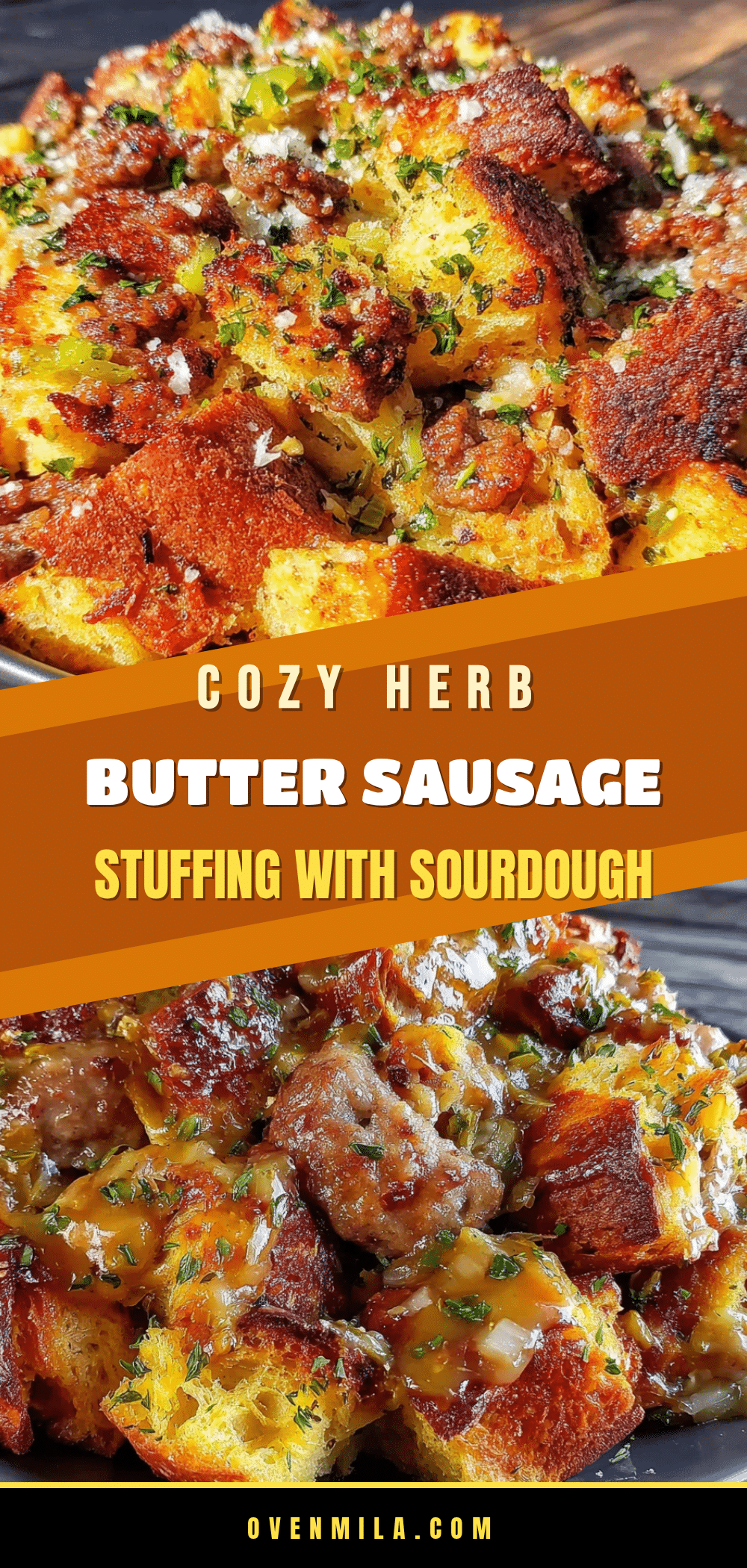
Cozy Sourdough Herb Butter Sausage Stuffing Recipe

This stuffing features day-old sourdough, savory Italian sausage, and a rich herb butter that melts into every crevice. The edges get crispy and golden while the inside stays soft and almost custardy, making it the ultimate comfort food for Thanksgiving or any cozy dinner.
- Prep Time: 20 minutes
- Cook Time: 50 minutes
- Total Time: 1 hour 10 minutes
- Yield: 8 servings 1x
- Category: Side Dish
- Cuisine: American
Ingredients
- 1 large loaf day-old sourdough bread (about 12 cups cubed)
- 1 pound (450g) Italian sausage, casings removed
- ½ cup (1 stick / 113g) unsalted butter, softened
- 1 large yellow onion, diced (about 2 cups)
- 3–4 celery stalks, diced (about 1 cup)
- 4–5 garlic cloves, minced
- 2 tablespoons fresh sage leaves, chopped
- 1 tablespoon fresh rosemary, finely chopped
- 1 tablespoon fresh thyme leaves
- 1 teaspoon dried sage
- 1 teaspoon dried thyme
- 1 teaspoon kosher salt, plus more to taste
- ½ teaspoon freshly ground black pepper
- 2 cups (480ml) low-sodium chicken broth
- 2 large eggs, lightly beaten
- ¼ cup fresh parsley, chopped (for garnish)
Instructions
- Preheat your oven to 350°F (175°C).
- Cut the day-old sourdough into 1-inch cubes (about 12 cups). Spread on a baking sheet in a single layer. If not stale enough, bake for 5-7 minutes to dry slightly; cubes should be firm and slightly crunchy on the outside.
- Heat a large skillet over medium-high heat. Add the Italian sausage (casings removed) and break it up with a wooden spoon. Cook for 6-8 minutes until browned and cooked through. Transfer sausage to a plate with a slotted spoon, leaving about 2 tablespoons of rendered fat in the pan.
- In a small bowl, mash together the softened butter with fresh sage, rosemary, thyme, dried sage, dried thyme, salt, and pepper. Set aside.
- Add the diced onion and celery to the same skillet with the sausage fat. Cook over medium heat for 5-7 minutes until onions are translucent and celery softened. Add minced garlic and cook for 1 minute until fragrant.
- Add the herb butter to the skillet with the onions and celery. Stir until melted and everything is well coated. Cook for 2 more minutes to let the herbs bloom.
- In a large mixing bowl, combine the dried sourdough cubes, cooked sausage, and the onion-celery-herb butter mixture. Toss gently with your hands until evenly distributed.
- In a separate bowl, whisk together the chicken broth and beaten eggs. Pour over the bread mixture and toss gently again until all bread is moistened. The mixture should look wet but not swimming; add a splash more broth if dry.
- Pour the stuffing mixture into a greased 9×13-inch baking dish and spread into an even layer. Do not press down firmly.
- Cover the dish with aluminum foil and bake for 30 minutes.
- Remove the foil and bake for another 15-20 minutes until the top is golden brown and crispy.
- Let the stuffing rest for 5-10 minutes before serving. Garnish with fresh parsley and serve warm.
Notes
For best texture, use day-old sourdough. If bread is fresh, cube and dry in a 300°F oven for 10-15 minutes. Season as you go for layered flavor. Use your hands to mix for even coating. Let assembled stuffing rest 15-20 minutes before baking for better absorption. Start checking for doneness at 15 minutes after removing foil to avoid over-baking. For make-ahead, assemble completely, cover, and refrigerate up to 24 hours; add 10-15 minutes to baking time.
Nutrition
- Serving Size: 1 cup
- Calories: 385
- Sugar: 4
- Sodium: 720
- Fat: 22
- Saturated Fat: 10
- Carbohydrates: 32
- Fiber: 2
- Protein: 15
Keywords: sourdough stuffing, herb butter stuffing, sausage stuffing, Thanksgiving stuffing, holiday side dish, cozy stuffing