My neighbor asked why I couldn’t just roast the squash whole instead of peeling and cubing it first. I started to explain that wouldn’t work—the skin wouldn’t soften enough, the flesh wouldn’t cook evenly, and honestly, it just wasn’t how you made soup. Then I stopped. I had absolutely no good reason other than “that’s how I’ve always done it.” So I handed her the honeynut squash, shrugged, and said, “You know what? Try it.”
Thirty minutes later, we were standing in her kitchen, and she scooped the soft, caramelized flesh right out of the skin with a spoon. No peeling, no chopping, no wrestling with a raw squash that nearly takes a finger off. I felt a little ridiculous, honestly. Here I was, someone who writes recipes for a living, and a neighbor who just wanted a quick dinner had taught me something genuinely useful.
That bowl of soup was the creamiest I’d ever made. The coconut milk swirled in at the end made it feel almost indulgent, like something you’d get at a fancy café, not something thrown together on a Tuesday night. I scribbled the method down on a napkin before I forgot it. And now, this is the only way I make honeynut squash soup. Maybe you’ve been there—stuck in your own kitchen habits, assuming the harder way is the right way. Let me tell you, this shortcut changes everything.
Why You’ll Love This Recipe
I’ve tested this soup about seven times since that night, tweaking the coconut milk ratio and playing with the seasoning until it felt just right. Here’s why it earned a permanent spot in my rotation:
- Ready in 30 Minutes: From whole squash to steaming bowl in half an hour. No peeling, no cubing, no fuss.
- Simple Ingredients: You likely have onion, garlic, and coconut milk in your pantry right now. The squash is the only special item.
- Perfect for Meal Prep: It keeps beautifully in the fridge and freezes like a dream. Make a double batch and thank yourself later.
- Naturally Creamy Without Dairy: The coconut milk gives it that velvety texture without a drop of heavy cream. Your stomach will thank you.
- Crowd-Pleaser: I served this at a small dinner party, and three people asked for the recipe before dessert. It’s that good.
What makes this version different from every other squash soup out there? Two things. First, the whole-roast method locks in sweetness and saves your sanity. Second, the coconut milk isn’t just an afterthought—it’s simmered with the squash so the flavors meld completely. The result is a soup that tastes rich and complex, but honestly, it’s almost embarrassingly simple to make.
This is the kind of recipe that makes you close your eyes after the first bite. It’s comfort food reimagined—healthier, faster, but with the same soul-soothing satisfaction. Perfect for impressing guests without stress, or turning a simple weeknight into something memorable.
What Ingredients You Will Need
This recipe uses simple, wholesome ingredients to deliver bold flavor and satisfying texture without the fuss. Most of these are pantry staples, and the ones that aren’t are easy to find at any grocery store.
For the Soup Base
- 2 medium honeynut squash (about 1 pound each) — Look for squash that feels heavy for its size. The skin should be deep orange with no soft spots. Honeynuts are smaller and sweeter than butternut, so they roast faster and need less seasoning.
- 1 tablespoon olive oil — A good quality extra virgin adds a subtle fruity note. I use California Olive Ranch for everyday cooking.
- 1 medium yellow onion, roughly chopped — Sweet onions work too, but yellow onions give the soup a savory backbone.
- 3 cloves garlic, smashed — Smashing them instead of mincing keeps the flavor mellow and prevents any bitter burnt bits.
- 1 teaspoon kosher salt — More to taste at the end. Diamond Crystal is my go-to because it’s less salty per teaspoon, giving you more control.
- ½ teaspoon black pepper, freshly ground — Pre-ground pepper works, but fresh makes a noticeable difference here.
- ½ teaspoon ground ginger — Adds warmth without heat. Fresh ginger works too—use a 1-inch piece, peeled and grated.
- ¼ teaspoon cayenne pepper (optional) — Just a pinch for a subtle kick that plays beautifully with the coconut milk.
- 2 cups vegetable broth — Low-sodium is best so you control the salt. Chicken broth works if you’re not keeping it vegetarian.
For the Creamy Finish

- 1 can (13.5 oz) full-fat coconut milk — Light coconut milk makes the soup thinner and less luxurious. Trust me, use the full-fat stuff. I prefer Thai Kitchen or Chaokoh for the creamiest texture.
- 1 tablespoon maple syrup or honey (optional) — Honeynut squash is already sweet, but if your squash isn’t at peak ripeness, a little maple syrup brightens everything up.
For Garnish (Optional but Recommended)
- Toasted pumpkin seeds — Adds crunch and makes the bowl look restaurant-worthy.
- A swirl of coconut milk or plain yogurt — For that pretty finishing touch.
- Fresh thyme or chives, chopped — A sprinkle of green makes the orange pop.
Substitution Guidance: Swap honeynut squash with butternut squash or sugar pumpkin—just add 10-15 minutes to the roasting time. Use canned coconut cream for an even richer soup. For a nut-free garnish, skip the pumpkin seeds and use crispy chickpeas instead.
Equipment Needed
You don’t need anything fancy here, which is part of the beauty of this recipe. Here’s what I use:
- Baking sheet — A half-sheet pan works perfectly. Line it with parchment paper for easier cleanup.
- Sharp knife — You’ll only need to cut the squash in half, but a dull knife makes that job dangerous. I use a 8-inch chef’s knife from Victorinox—affordable and stays sharp.
- Large pot or Dutch oven — A 4-quart pot is plenty. A Dutch oven holds heat better, but any heavy-bottomed pot works.
- Immersion blender — This is my preferred method because it’s less cleanup. The Cuisinart CSB-175 has never let me down. If you don’t have one, a regular blender works—just let the soup cool slightly and blend in batches.
- Wooden spoon or spatula — For stirring and scraping up any browned bits from the bottom of the pot.
- Measuring spoons — For the spices. I’ve learned the hard way that eyeballing cayenne pepper is a gamble.
If you’re using a regular blender, here’s a tip: remove the center cap from the lid and cover it with a kitchen towel. This lets steam escape without making a mess or blowing the lid off. I learned that one after a soup explosion that took an hour to clean up.
Preparation Method
Let me walk you through this step by step. I’ve included all the little cues that tell you you’re on the right track.
- Preheat your oven to 400°F (200°C). While it’s heating, wash the honeynut squash well—you’re roasting the skin, so it needs to be clean. Cut each squash in half lengthwise. Don’t bother scooping out the seeds yet; we’ll do that after roasting when they’re soft and easy to remove.
- Place the squash halves cut-side up on a parchment-lined baking sheet. Drizzle with the olive oil and rub it all over the cut surfaces and the skin. Sprinkle with a pinch of salt and pepper. Roast for 25-30 minutes, until the flesh is fork-tender and the edges are starting to caramelize. You’ll know it’s done when a knife slides in with almost no resistance. The skin will look slightly wrinkled and darker.
- Let the squash cool for about 5 minutes—just enough so you can handle it without burning your fingers. Scoop out the seeds and discard them (or save them for roasting later, if you’re ambitious). Then scoop the flesh into a bowl. The skin should peel away easily if you want to be thorough, but I’ve left small pieces in before and the blender takes care of them completely.
- While the squash roasts, start the aromatics. In your large pot, heat a drizzle of olive oil over medium heat. Add the chopped onion and cook for 4-5 minutes, stirring occasionally, until it turns translucent and starts to brown at the edges. Add the smashed garlic cloves and cook for another minute until fragrant. You should be able to smell the garlic, but if it starts to brown too quickly, turn the heat down.
- Add the roasted squash flesh to the pot along with the salt, pepper, ground ginger, and cayenne (if using). Stir everything together and let it cook for 1-2 minutes. This toasts the spices slightly and wakes up their flavors.
- Pour in the vegetable broth and full can of coconut milk. Stir well, scraping the bottom of the pot to incorporate any browned bits. Bring the soup to a gentle simmer, then reduce the heat to low. Let it bubble quietly for 10 minutes. This is where the flavors really come together—the squash absorbs the coconut milk, and the ginger and cayenne mellow out.
- Remove the pot from the heat. If you’re using an immersion blender, blend directly in the pot until completely smooth. If using a regular blender, let the soup cool for 10 minutes first, then blend in batches. Be careful with the hot liquid—fill the blender no more than halfway and hold the lid down firmly with a towel.
- Taste and adjust. This is the most important step. Add more salt if needed—squash soup can be surprisingly bland without enough salt. If it tastes flat, a tiny squeeze of lemon juice or a drizzle of maple syrup can brighten it up. Stir well and taste again.
- Ladle into bowls and add your garnishes. A swirl of extra coconut milk, a sprinkle of pumpkin seeds, and some fresh thyme make it look like you spent way more effort than you actually did.
Cooking Tips & Techniques
I’ve made this soup enough times to know where things can go wrong. Here’s what I’ve learned, sometimes the hard way.
Don’t skip the roasting step. I know it’s tempting to just boil the squash to save time, but roasting concentrates the natural sugars and adds a depth of flavor that boiling simply can’t achieve. That caramelization on the cut edges? That’s pure flavor. You’ll taste the difference immediately.
Watch your salt levels. Different broths have wildly different salt contents. If you’re using a regular (not low-sodium) broth, start with half the salt called for in the recipe and adjust at the end. I once made this soup with a store-brand broth and it came out so salty I had to double the recipe to fix it. Now I always taste before adding more salt.
Blend hot soup carefully. This is not the time to rush. Hot liquid expands when blended, and if you fill the blender too full, you’ll end up with soup on your ceiling. I speak from experience. Let it cool slightly, blend in small batches, and always hold the lid down.
Toast your garnishes. Raw pumpkin seeds are fine, but toasted ones are incredible. Spread them on a baking sheet and toast at 350°F for 5-7 minutes until they start popping. Sprinkle with a little salt while they’re still warm. They add a crunchy contrast that makes every spoonful more interesting.
Make it ahead. This soup actually tastes better the next day. The flavors meld overnight and the texture becomes even creamier. Make it a day ahead, store it in the fridge, and reheat gently on the stove. Your future self will thank you.
Variations & Adaptations
This recipe is forgiving, so feel free to play around. Here are some variations I’ve tried and loved:
- Spicy Thai Version: Add 1 tablespoon of red curry paste along with the garlic, and swap the vegetable broth for chicken broth. Finish with a squeeze of lime juice and fresh cilantro. The curry paste adds a whole new layer of complexity.
- Smoky Roasted Version: Roast the squash with a drizzle of smoked paprika oil (mix 1 teaspoon smoked paprika into the olive oil before drizzling). The smokiness pairs beautifully with the sweet squash and creamy coconut milk.
- Dairy-Free Creamy Version: For an even richer texture, blend in ¼ cup of raw cashews (soaked in hot water for 15 minutes) along with the soup. It adds body without any dairy, and the cashew flavor is subtle enough not to compete with the squash.
- Fall Harvest Bowl: Instead of blending the soup completely smooth, leave it a little chunky and stir in roasted apples, dried cranberries, and crumbled goat cheese (if you eat dairy). Serve it as a hearty bowl rather than a smooth soup.
- Low-FODMAP Adaptation: Skip the onion and garlic, and use garlic-infused olive oil instead. Add extra ginger and a pinch of asafoetida for savory depth. The soup will still be delicious, I promise.
Serving & Storage Suggestions
This soup is versatile enough for any occasion. Here’s how I like to serve it:
Serving Temperature: Serve it hot, but not boiling. Let it sit for a minute or two after ladling so the garnishes don’t wilt immediately. A warm bowl makes a difference—run your bowls under hot water and dry them before serving.
Complementary Dishes: A simple green salad with a tangy vinaigrette cuts through the richness of the soup perfectly. Crusty bread or garlic toast is non-negotiable in my house—you need something to soak up every last drop. For a heartier meal, serve it alongside a grilled cheese sandwich or a simple roasted chicken.
Storage: Leftover soup keeps in an airtight container in the refrigerator for up to 5 days. The flavors actually deepen over time, so don’t be afraid to make it ahead. To freeze, let the soup cool completely, then transfer to freezer-safe containers or zip-top bags. It freezes beautifully for up to 3 months. Thaw overnight in the refrigerator before reheating.
Reheating: Reheat gently on the stovetop over medium-low heat, stirring occasionally. If the soup has thickened in the fridge, add a splash of broth or water to thin it out. You can also microwave individual portions in 30-second bursts, stirring between each. Avoid boiling the soup after it’s been blended—it can cause the coconut milk to separate slightly.
Nutritional Information & Benefits
Here’s the nutritional breakdown for one serving (about 1.5 cups), based on the recipe as written:
| Nutrient | Amount |
|---|---|
| Calories | 285 |
| Total Fat | 18g |
| Saturated Fat | 12g |
| Carbohydrates | 28g |
| Fiber | 6g |
| Sugar | 10g (naturally occurring) |
| Protein | 5g |
| Vitamin A | 450% DV |
| Vitamin C | 35% DV |
| Potassium | 15% DV |
Honeynut squash is a powerhouse of vitamin A—one serving covers nearly five times your daily needs. It’s also packed with fiber, which helps keep you full and supports digestive health. The coconut milk provides healthy medium-chain triglycerides (MCTs) that can boost energy and support brain function.
This soup is naturally gluten-free, dairy-free, and vegan. It’s also relatively low in calories for how satisfying it feels. The combination of healthy fats from the coconut milk and fiber from the squash makes it a meal that genuinely keeps you full for hours—no mid-afternoon snack cravings.
Conclusion
This creamy honeynut squash soup with coconut milk has become my go-to for so many reasons. It’s quick enough for a weeknight, fancy enough for company, and forgiving enough for beginners. The whole-roast method that my neighbor taught me changed the way I think about squash forever—sometimes the simplest approach really is the best.
I love that this recipe proves you don’t need complicated techniques or hard-to-find ingredients to make something genuinely delicious. It’s proof that eating well doesn’t have to mean sacrificing flavor or spending hours in the kitchen. Whether you’re meal-prepping for the week or looking for a cozy dinner on a cold night, this soup delivers every single time.
I’d love to hear how yours turns out! Did you try any of the variations? Did you add your own twist? Drop a comment below and let me know—I read every single one, and your ideas often inspire my next recipe. And if you loved this, share it with a friend who needs a little comfort in a bowl. Happy cooking!
Frequently Asked Questions
Can I use butternut squash instead of honeynut squash?
Absolutely. Butternut squash works perfectly, though it’s less sweet than honeynut. You might want to add an extra tablespoon of maple syrup to compensate. The roasting time will also be slightly longer—about 35-40 minutes instead of 25-30.
Is this soup spicy?
Not unless you want it to be. The recipe calls for just a pinch of cayenne, which adds warmth without heat. If you’re sensitive to spice, leave it out entirely. If you love heat, double the cayenne or add a chopped jalapeño with the onions.
Can I make this soup in an Instant Pot?
Yes! Pressure cook the halved squash on a trivet with 1 cup of water for 8 minutes, then quick release. Sauté the aromatics using the sauté function, then add the cooked squash flesh, broth, and coconut milk. Blend with an immersion blender directly in the pot. It cuts the total time to about 20 minutes.
How do I make this soup thicker or thinner?
For a thicker soup, reduce the broth to 1.5 cups or add an extra half squash. For a thinner soup, add more broth or a splash of water until it reaches your desired consistency. Remember that the soup will thicken slightly as it cools.
Can I freeze this soup with the coconut milk?
Yes, coconut milk freezes well. The texture might separate slightly upon thawing, but a quick whisk or re-blend brings it back together. I freeze individual portions in mason jars (leaving an inch of headspace) for easy lunches throughout the month.
Pin This Recipe!
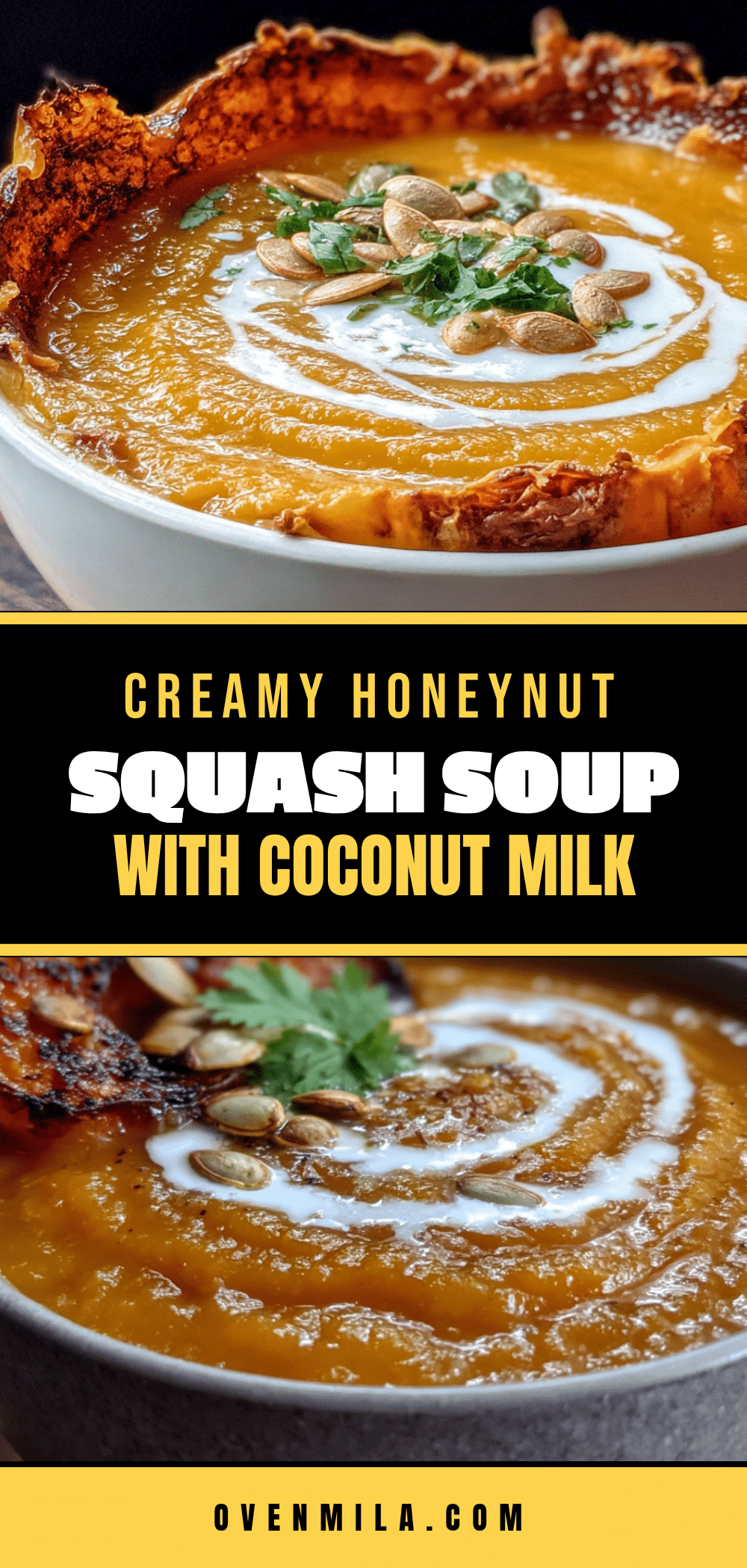
Creamy Honeynut Squash Soup with Coconut Milk (Easy 30-Min Recipe)

A quick and creamy honeynut squash soup made with coconut milk, roasted whole for maximum sweetness and minimal prep. Ready in 30 minutes, this dairy-free, vegan soup is perfect for weeknights or impressing guests.
- Prep Time: 5 minutes
- Cook Time: 25 minutes
- Total Time: 30 minutes
- Yield: 4 servings 1x
- Category: Soup
- Cuisine: American
Ingredients
- 2 medium honeynut squash (about 1 pound each)
- 1 tablespoon olive oil
- 1 medium yellow onion, roughly chopped
- 3 cloves garlic, smashed
- 1 teaspoon kosher salt
- ½ teaspoon black pepper, freshly ground
- ½ teaspoon ground ginger
- ¼ teaspoon cayenne pepper (optional)
- 2 cups vegetable broth, low-sodium
- 1 can (13.5 oz) full-fat coconut milk
- 1 tablespoon maple syrup or honey (optional)
- Toasted pumpkin seeds (for garnish, optional)
- A swirl of coconut milk or plain yogurt (for garnish, optional)
- Fresh thyme or chives, chopped (for garnish, optional)
Instructions
- Preheat your oven to 400°F (200°C). Wash the honeynut squash well, then cut each squash in half lengthwise. Do not scoop out the seeds yet.
- Place the squash halves cut-side up on a parchment-lined baking sheet. Drizzle with olive oil and rub all over the cut surfaces and skin. Sprinkle with a pinch of salt and pepper. Roast for 25-30 minutes, until fork-tender and edges are caramelized.
- Let the squash cool for about 5 minutes. Scoop out and discard the seeds, then scoop the flesh into a bowl. The skin should peel away easily.
- While the squash roasts, heat a drizzle of olive oil in a large pot over medium heat. Add the chopped onion and cook for 4-5 minutes until translucent. Add the smashed garlic and cook for 1 minute until fragrant.
- Add the roasted squash flesh to the pot along with salt, pepper, ground ginger, and cayenne (if using). Stir and cook for 1-2 minutes to toast the spices.
- Pour in the vegetable broth and full can of coconut milk. Stir well, scraping the bottom of the pot. Bring to a gentle simmer, then reduce heat to low and let it simmer for 10 minutes.
- Remove the pot from heat. Use an immersion blender to blend directly in the pot until smooth. If using a regular blender, let the soup cool for 10 minutes, then blend in batches, filling no more than halfway and holding the lid down with a towel.
- Taste and adjust seasoning. Add more salt if needed, or a squeeze of lemon juice or maple syrup to brighten the flavor.
- Ladle into bowls and garnish with a swirl of coconut milk, toasted pumpkin seeds, and fresh thyme or chives.
Notes
For a thicker soup, reduce broth to 1.5 cups or add an extra half squash. For a thinner soup, add more broth. The soup tastes even better the next day as flavors meld. To freeze, cool completely and store in freezer-safe containers for up to 3 months. Reheat gently on stovetop; add a splash of broth if thickened.
Nutrition
- Serving Size: 1.5 cups
- Calories: 285
- Sugar: 10
- Fat: 18
- Saturated Fat: 12
- Carbohydrates: 28
- Fiber: 6
- Protein: 5
Keywords: honeynut squash soup, creamy squash soup, coconut milk soup, vegan soup, gluten-free soup, easy soup recipe, 30-minute meal