The woman at the farmers’ market stall watched me eyeing her apples for a good five minutes before she said anything. I was juggling a bag of kale, a squash I had no idea how to cook, and my phone that kept slipping out of my hand—classic Tuesday night energy, you know? She finally smiled and said, “You look like someone who needs a cake that doesn’t know it’s fall.” I laughed, honestly, because she wasn’t wrong. She handed me a small brown paper bag with three Honeycrisps and said, “Brown sugar, apple cider, one bowl. You’ll thank me on a Wednesday.”
I didn’t catch her name, but I caught the idea. That conversation stuck with me more than the actual apples did. I went home, tossed the kale in the fridge (it’s still there, let’s be real), and started playing around with what she’d described. The result was this Quick Brown Sugar Apple Cider Cake—a dessert that tastes like you spent all afternoon in the kitchen but actually comes together in about ten minutes of active work. Maybe you’ve been there, standing in your own kitchen on a random weeknight, craving something warm and sweet but absolutely not willing to pull out the stand mixer or dirty more than one bowl.
This cake became my answer to that exact feeling. It’s not fussy, it doesn’t demand precision, and it fills your house with the kind of smell that makes everyone wander into the kitchen asking what’s baking. I’ve made it on a Tuesday when the kids had homework and I had nothing left in the tank. I’ve made it for book club when I forgot until an hour before people showed up. And every single time, someone asks for the recipe. That farmers’ market woman? She was right. I do thank her, usually on a Wednesday, with a slice of this in my hand.
Why You’ll Love This Recipe
Let me tell you why this cake has earned a permanent spot in my weekly rotation. I’ve tested it more times than I care to count, tweaked the sugar ratio, tried different apple ciders, and even burned one batch so badly the fire alarm went off (that was a learning experience). What I landed on is the version I genuinely believe is the best quick dessert you can make on a busy weeknight.
- Quick & Easy: From bowl to oven in under 10 minutes. No mixer, no sifting, no nonsense. Just stir, pour, and bake.
- Simple Ingredients: You probably have everything except the apple cider. Brown sugar, butter, flour, eggs, cinnamon—all pantry staples.
- Perfect for Weeknights: This is the kind of dessert you make when you need something warm and comforting but don’t have the energy for a project. It’s weeknight-friendly through and through.
- Crowd-Pleaser: I’ve served this to kids who usually push dessert around their plate and adults who ask for seconds. It’s universally loved.
- Unbelievably Delicious: The brown sugar gives it this deep, almost caramel-like sweetness, and the apple cider keeps it incredibly moist. The texture is tender, the top gets slightly crackly, and the flavor is pure comfort.
What makes this different from every other apple cider cake out there? It’s the brown sugar. Most recipes use white sugar or a mix, but going all-in on brown sugar changes everything. It adds moisture, depth, and that slightly molasses-y warmth that pairs perfectly with apple cider. I also use oil instead of butter in the batter—trust me on this one. Oil keeps the cake soft for days, while butter can make it dense when it cools. This cake stays tender even on day three, if it lasts that long.
This isn’t just good cake. It’s the kind that makes you close your eyes after the first bite, even if you’re standing at the kitchen counter in sweatpants. It’s comfort food reimagined—faster, simpler, but with the same soul-soothing satisfaction. Perfect for impressing guests without stress, or turning a regular Tuesday into something a little bit special.
What Ingredients You Will Need
This recipe uses simple, wholesome ingredients to deliver bold flavor and satisfying texture without the fuss. Most of these are pantry staples, and the few that aren’t are easy to find at any grocery store. Here’s what you’ll need:
- 1 ½ cups all-purpose flour (spooned and leveled—don’t scoop straight from the bag or you’ll pack it too tight)
- 1 cup packed light brown sugar (I prefer Domino or C&H for consistent moisture; dark brown sugar works too but gives a stronger molasses flavor)
- 1 teaspoon baking soda (make sure it’s fresh—test by dropping a pinch in vinegar; if it fizzes, you’re good)
- 1 teaspoon ground cinnamon (I use McCormick or simply organic; fresh cinnamon makes a noticeable difference)
- ½ teaspoon salt (fine sea salt or table salt—don’t skip this, it balances the sweetness)
- ½ cup neutral oil (vegetable, canola, or grapeseed—avoid olive oil here, it’s too strong)
- 1 large egg (room temperature if you remember, but straight from the fridge works too)
- 1 teaspoon vanilla extract (pure vanilla, not imitation, if you can swing it)
- ¾ cup apple cider (unfiltered is best—look for refrigerated cider in the produce section, not the shelf-stable juice)
- 1 medium apple, peeled and finely chopped (Honeycrisp, Fuji, or Gala work well; Granny Smith adds a nice tart contrast)
For the topping (optional but highly recommended):
- 1 tablespoon turbinado or demerara sugar (for that crunchy top—regular granulated sugar works in a pinch)
- ½ teaspoon cinnamon (mixed with the sugar for sprinkling)
A few notes on ingredients: If you’re using a sweeter apple like Fuji, the cake will be on the sweeter side. That’s fine by me, but if you prefer a more balanced sweetness, go with Granny Smith. Also, apple cider is not the same as apple juice. Cider is unfiltered and has more flavor depth. I’ve tested this with apple juice in a pinch, and it works, but the cake won’t have that same rich, tangy apple flavor. Look for cider in the refrigerated section—it usually has a shorter shelf life, which means it’s fresher.
For the oil, I’ve used melted coconut oil before and it works well, just make sure all your other ingredients are at room temperature so the coconut oil doesn’t seize up. And if you’re out of brown sugar, you can make your own by mixing 1 cup of white sugar with 2 tablespoons of molasses. It’s not quite the same, but it’ll do in a bind.
Equipment Needed
One of the reasons I love this recipe is how little equipment it requires. You don’t need a stand mixer, a food processor, or any fancy gadgets. Here’s what you’ll actually use:
- 8×8-inch square baking pan (or a 9-inch round cake pan—both work, just adjust baking time slightly)
- Large mixing bowl (any bowl you have, honestly—I’ve used a salad bowl before and it was fine)
- Whisk or fork (for mixing the dry ingredients and the batter)
- Rubber spatula or wooden spoon (for folding in the apples and scraping the bowl clean)
- Parchment paper (optional but makes cleanup a breeze—I use it every time)
- Measuring cups and spoons (dry measuring cups for flour and sugar, liquid measuring cup for the cider)
- Cooling rack (or just a cutting board if you’re impatient like me)
If you don’t have an 8×8 pan, a 9-inch round cake pan works beautifully. Just start checking for doneness at 25 minutes instead of 30. You can also use a loaf pan, but the baking time will be longer—around 40 to 45 minutes. I’ve even made this in a cast iron skillet and it turned out great, with extra crispy edges. As for parchment paper, I highly recommend it. Cut a piece to fit the bottom of your pan with a little overhang on two sides—that gives you handles to lift the cake out cleanly. If you don’t have parchment, grease the pan well with butter or cooking spray.
Preparation Method
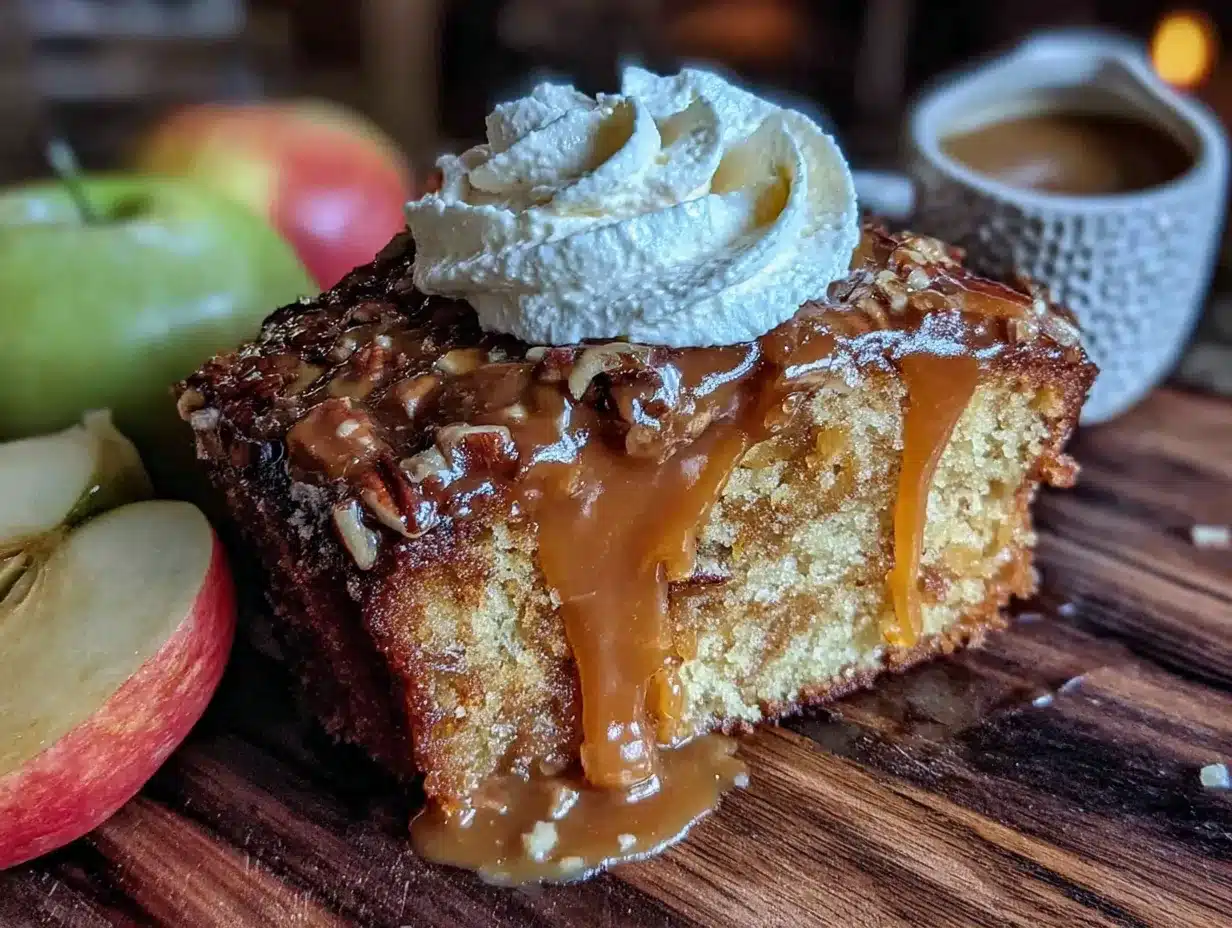
Alright, let’s make this cake. I’ve broken it down into clear steps so you can follow along without any confusion. The whole process takes about 10 minutes of active time, then 30 minutes of baking while you do something else—like set the table, answer emails, or just sit down for the first time all day.
- Preheat your oven to 350°F (175°C). While it’s heating, grease your 8×8 pan or line it with parchment paper. I usually spray the pan with cooking spray and then press in a piece of parchment—the spray helps it stick to the pan.
- In a large mixing bowl, whisk together the dry ingredients: 1 ½ cups all-purpose flour, 1 cup packed light brown sugar, 1 teaspoon baking soda, 1 teaspoon ground cinnamon, and ½ teaspoon salt. Make sure there are no lumps in the brown sugar—I like to press them out with the back of a spoon or my fingers. The mixture should look uniform and smell like cinnamon already.
- Add the wet ingredients directly to the same bowl. Pour in ½ cup neutral oil, crack in 1 large egg, add 1 teaspoon vanilla extract, and pour in ¾ cup apple cider. Stir everything together with a whisk or fork until just combined. Don’t overmix—stop as soon as you don’t see any more streaks of flour. A few small lumps are perfectly fine. Overmixing will make the cake tough, and we want it tender.
- Fold in the chopped apple. Use a rubber spatula or wooden spoon to gently fold in the peeled and finely chopped apple. Fold just until the apple pieces are evenly distributed. The batter will be thick but pourable—if it seems too thick, don’t panic. That’s normal.
- Pour the batter into the prepared pan. Spread it evenly with your spatula. It won’t fill the pan all the way to the top—that’s fine, it will rise in the oven. If you’re using the topping, mix 1 tablespoon turbinado sugar with ½ teaspoon cinnamon and sprinkle it evenly over the batter. This gives the cake a lovely crunchy top.
- Bake for 28 to 32 minutes. Start checking at 28 minutes. The cake is done when a toothpick inserted into the center comes out clean or with just a few moist crumbs. The edges should be golden brown and pulling away slightly from the pan. Your kitchen will smell incredible at this point—like fall in a box.
- Let the cake cool in the pan for 10 minutes. This is important—if you try to take it out too soon, it might break apart. After 10 minutes, lift it out using the parchment handles (if you used parchment) or just leave it in the pan. Transfer to a cooling rack or cutting board to cool completely, or serve warm if you can’t wait. I never can.
One thing I learned the hard way: don’t open the oven door during the first 20 minutes of baking. The cake needs that initial heat to rise properly. I opened mine at 15 minutes once to “check on it” and the center sank. It still tasted fine, but it wasn’t as pretty. Also, if your cake is browning too quickly on top but isn’t done in the middle, tent it loosely with aluminum foil for the last 5 to 10 minutes of baking.
Cooking Tips & Techniques
After making this cake more times than I can count (and messing up plenty along the way), I’ve picked up a few tricks that make the process smoother and the results more consistent. Here’s what I wish someone had told me:
Don’t overmix the batter. This is the number one mistake I see people make. Once you add the wet ingredients to the dry, stir just until everything comes together. Overmixing develops the gluten in the flour, which makes the cake dense and tough instead of tender and soft. A few lumps are your friend here. Seriously—stop stirring as soon as the flour disappears.
Use room temperature ingredients when possible. I know, I know, you’re busy and you didn’t plan ahead. But if you can let your egg sit out for 15 minutes and your cider come to room temperature, the batter will come together more smoothly. Cold ingredients can cause the batter to seize up slightly, especially if you’re using coconut oil. If you’re in a hurry, place the egg in a bowl of warm water for 5 minutes—that usually does the trick.
Chop the apple finely. I made the mistake of cutting the apple into chunks the first time, and they sank to the bottom of the pan and created soggy spots. Finely dicing the apple (about ¼-inch pieces) ensures they distribute evenly throughout the batter and soften beautifully during baking. You want little bursts of apple in every bite, not a layer of fruit at the bottom.
Check for doneness with a toothpick, not your eyes. The cake might look golden and set on top but still be raw in the middle. Insert a toothpick or a thin knife into the center—if it comes out clean or with just a few moist crumbs, it’s done. If there’s wet batter on it, give it another 3 to 5 minutes. Every oven runs differently, so trust the toothpick over the timer.
Let it cool before slicing. I know the smell is irresistible, but cutting into a warm cake too soon will make it crumble. Let it cool in the pan for at least 10 minutes, then transfer to a rack. If you want warm cake (and honestly, who doesn’t), pop individual slices in the microwave for 10 seconds. That way you get the warm, gooey experience without the structural failure.
Variations & Adaptations
This cake is incredibly forgiving and adaptable. I’ve tried several variations over the months, and here are my favorites:
Gluten-Free Version: Substitute the all-purpose flour with a 1:1 gluten-free baking flour blend (I like King Arthur Measure for Measure). Add ¼ teaspoon of xanthan gum if your blend doesn’t already include it. The texture will be slightly more delicate, but it’s still delicious. Bake for the same amount of time, but start checking at 25 minutes.
Dairy-Free Option: This recipe is already dairy-free since we use oil instead of butter. Just make sure your apple cider doesn’t have any dairy additives (it shouldn’t, but check the label). If you want to add a glaze on top, use coconut cream or a dairy-free milk powder mixed with powdered sugar.
Spiced-Up Version: Add ¼ teaspoon each of ground nutmeg, ground ginger, and ground cloves to the dry ingredients. This gives the cake a chai-like warmth that’s perfect for cold evenings. I did this for a holiday gathering and everyone asked what the “secret spice” was.
Apple Cider Glaze: Whisk together 1 cup powdered sugar, 2 tablespoons apple cider, and ½ teaspoon vanilla extract until smooth. Drizzle over the cooled cake. It adds an extra layer of apple flavor and makes the cake look fancy with almost zero effort. I’ve also used maple syrup instead of apple cider for a different twist.
Nutty Addition: Fold in ½ cup chopped pecans or walnuts along with the apples. Toast the nuts first in a dry pan for 3 to 4 minutes to bring out their flavor. The crunch contrasts beautifully with the tender cake. My neighbor tried this version and now refuses to make it any other way.
Lower Sugar Option: Reduce the brown sugar to ¾ cup and add an extra tablespoon of apple cider to compensate for the moisture. The cake will be less sweet but still flavorful. You can also use a sugar substitute like Swerve Brown Sugar, though the texture will be slightly different.
Serving & Storage Suggestions
This cake is versatile when it comes to serving. Here’s how I like to enjoy it and how to store it for later:
Serving: Serve warm or at room temperature. I love it plain, but a dollop of whipped cream or a scoop of vanilla ice cream takes it to another level. For a more decadent option, warm a slice and top it with caramel sauce and a sprinkle of flaky sea salt. It’s also fantastic with a cup of hot apple cider or coffee—the flavors complement each other perfectly.
Presentation: If you’re serving this to guests, dust the top with powdered sugar just before serving. The contrast of white sugar against the golden-brown cake is beautiful. You can also add a few thin apple slices on top before baking for a rustic look. I’ve even pressed a few fresh rosemary sprigs into the top after baking for a fancy touch—it sounds weird but the herbiness works.
Storage: Store leftover cake in an airtight container at room temperature for up to 3 days. The cake actually gets more moist on day two as the apple flavors meld together. If your kitchen is warm or humid, store it in the refrigerator to prevent mold. Bring slices to room temperature before serving or warm them briefly in the microwave.
Freezing: This cake freezes beautifully. Wrap the cooled cake (whole or in individual slices) tightly in plastic wrap, then in aluminum foil. Freeze for up to 3 months. To thaw, leave it at room temperature for about 2 hours, or unwrap a slice and microwave for 20 to 30 seconds. I often freeze individual slices for quick desserts—just grab one, warm it up, and you’re set.
Flavor Development: Honestly, this cake tastes even better the next day. The apple flavor deepens, and the brown sugar becomes more pronounced. If you can resist eating it all on day one, you’re in for a treat on day two. I’ve made it a day ahead for gatherings and it’s always a hit.
Nutritional Information & Benefits
Here’s the approximate nutritional breakdown for one serving (based on 9 servings per cake):
- Calories: 290
- Fat: 13g
- Carbohydrates: 42g
- Fiber: 1g
- Sugar: 27g
- Protein: 3g
While this is definitely a treat, there are a few redeeming qualities. The apples provide a small amount of fiber and vitamin C. Cinnamon has anti-inflammatory properties and can help regulate blood sugar. And using oil instead of butter means the cake is dairy-free and has less saturated fat than a traditional butter cake.
If you’re watching your sugar intake, you can reduce the brown sugar to ¾ cup and add an extra apple for natural sweetness. For a lower-carb option, substitute the all-purpose flour with almond flour (you’ll need about 1 ¾ cups and an extra egg). The texture will be denser and more cake-like, but it’s still satisfying.
Potential allergens: This recipe contains wheat (gluten) and eggs. It’s dairy-free and nut-free as written, but the nutty variation includes tree nuts. Always check your ingredient labels if you’re cooking for someone with allergies.
My personal take? This cake is about balance. It’s not health food, but it’s made with real ingredients and no weird additives. I’d rather have a slice of this than something from a box, and I feel good about serving it to my family. Everything in moderation, right?
Conclusion
This Quick Brown Sugar Apple Cider Cake has become my go-to for so many reasons. It’s fast, it’s forgiving, and it tastes like you put in way more effort than you actually did. Whether you’re making it for a weeknight treat, a last-minute dessert for guests, or just because you want your house to smell amazing, this cake delivers every single time.
I love that I can customize it based on what I have in my kitchen—swap the apple for pear, add nuts, drizzle a glaze, or keep it simple. It’s a recipe that works with you, not against you. And honestly, after a long day, that’s exactly what I need from a dessert.
I’d love to hear how yours turns out. Did you try a variation? Add something unexpected? Burn it like I did that one time? Drop a comment below and let me know. And if you share a photo on Pinterest, tag me—I want to see your beautiful cake. Happy baking, friend. You’ve got this.
Frequently Asked Questions
Can I use apple juice instead of apple cider?
Yes, you can, but the flavor won’t be as rich or complex. Apple cider is unfiltered and has a tangier, more concentrated apple taste. Apple juice is sweeter and more diluted. If you’re using apple juice, consider adding a squeeze of lemon juice to mimic that tartness.
Can I make this cake in a different pan size?
Absolutely. A 9-inch round cake pan works well—just start checking for doneness at 25 minutes. A loaf pan will take about 40 to 45 minutes. If you use a 9×13 pan, the cake will be thinner and bake in about 20 to 22 minutes. Adjust your baking time based on the pan and check with a toothpick.
Why did my cake sink in the middle?
This usually happens for one of two reasons: you opened the oven door too early, or the cake was underbaked. Avoid opening the oven during the first 20 minutes. Also, make sure your baking soda is fresh—old baking soda won’t give the cake enough lift. If the center sinks but the edges are done, you can still eat it; it just won’t look as pretty.
Can I add more apples to the batter?
You can add up to 1 ½ cups of chopped apples without affecting the texture too much. Just make sure you chop them finely and don’t add so many that the batter becomes heavy. Too many apples can make the cake soggy and cause it to sink in the middle. Stick to 1 medium apple for the best results.
How do I make this cake vegan?
To make this cake vegan, substitute the egg with a flax egg (1 tablespoon ground flaxseed mixed with 3 tablespoons water, let sit for 5 minutes). Use a plant-based milk mixed with a teaspoon of apple cider vinegar instead of the egg if you prefer. The texture will be slightly denser, but it’s still delicious. Make sure your brown sugar is vegan—some brands process it with bone char, so look for organic or certified vegan options.
Pin This Recipe!
Easy Brown Sugar Apple Cider Cake Recipe (Best Quick Dessert)

A quick and easy one-bowl apple cider cake made with brown sugar, fresh apples, and warm cinnamon. Perfect for busy weeknights, this tender, moist cake comes together in under 10 minutes and fills your kitchen with the cozy aroma of fall.
- Prep Time: 10 minutes
- Cook Time: 30 minutes
- Total Time: 40 minutes
- Yield: 9 servings 1x
- Category: Dessert
- Cuisine: American
Ingredients
- 1 ½ cups all-purpose flour (spooned and leveled)
- 1 cup packed light brown sugar
- 1 teaspoon baking soda
- 1 teaspoon ground cinnamon
- ½ teaspoon salt
- ½ cup neutral oil (vegetable, canola, or grapeseed)
- 1 large egg (room temperature preferred)
- 1 teaspoon vanilla extract
- ¾ cup apple cider (unfiltered, refrigerated)
- 1 medium apple, peeled and finely chopped (Honeycrisp, Fuji, Gala, or Granny Smith)
- 1 tablespoon turbinado or demerara sugar (for topping, optional)
- ½ teaspoon cinnamon (for topping, optional)
Instructions
- Preheat your oven to 350°F (175°C). Grease an 8×8-inch square baking pan or line it with parchment paper.
- In a large mixing bowl, whisk together the dry ingredients: 1 ½ cups all-purpose flour, 1 cup packed light brown sugar, 1 teaspoon baking soda, 1 teaspoon ground cinnamon, and ½ teaspoon salt. Press out any lumps of brown sugar.
- Add the wet ingredients directly to the same bowl: ½ cup neutral oil, 1 large egg, 1 teaspoon vanilla extract, and ¾ cup apple cider. Stir with a whisk or fork until just combined. Do not overmix; a few small lumps are fine.
- Fold in the finely chopped apple using a rubber spatula or wooden spoon until evenly distributed.
- Pour the batter into the prepared pan and spread evenly. If using the topping, mix 1 tablespoon turbinado sugar with ½ teaspoon cinnamon and sprinkle over the batter.
- Bake for 28 to 32 minutes, until a toothpick inserted into the center comes out clean or with a few moist crumbs. Do not open the oven door during the first 20 minutes.
- Let the cake cool in the pan for 10 minutes, then lift out using parchment handles (if used) or leave in the pan. Transfer to a cooling rack to cool completely, or serve warm.
Notes
Don’t overmix the batter to keep the cake tender. Use room temperature ingredients if possible. Chop the apple finely (about ¼-inch pieces) to prevent sinking. Check doneness with a toothpick. Let the cake cool before slicing to avoid crumbling. The cake tastes even better the next day as flavors meld.
Nutrition
- Serving Size: 1 slice (1/9 of cake
- Calories: 290
- Sugar: 27
- Sodium: 280
- Fat: 13
- Saturated Fat: 1.5
- Carbohydrates: 42
- Fiber: 1
- Protein: 3
Keywords: apple cider cake, brown sugar cake, quick dessert, easy cake, fall dessert, one bowl cake, weeknight dessert