It was 11:17 PM on a random Thursday, and a very specific craving hit. I wanted a soft, warm, salty pretzel—the kind you get from a cart in a German Christmas market, not the sad, dry ones from the mall food court. But I didn’t have the lye bath that traditional recipes demand, and honestly, I wasn’t about to go hunting for food-grade lye at that hour. What I did have was a box of baking soda, a bag of bread flour, and a stubborn idea that just wouldn’t let me sleep. I figured, what’s the worst that could happen? A flat, sad breadstick? So, I tied on my apron, cranked the oven, and started mixing dough in the quiet of my kitchen.
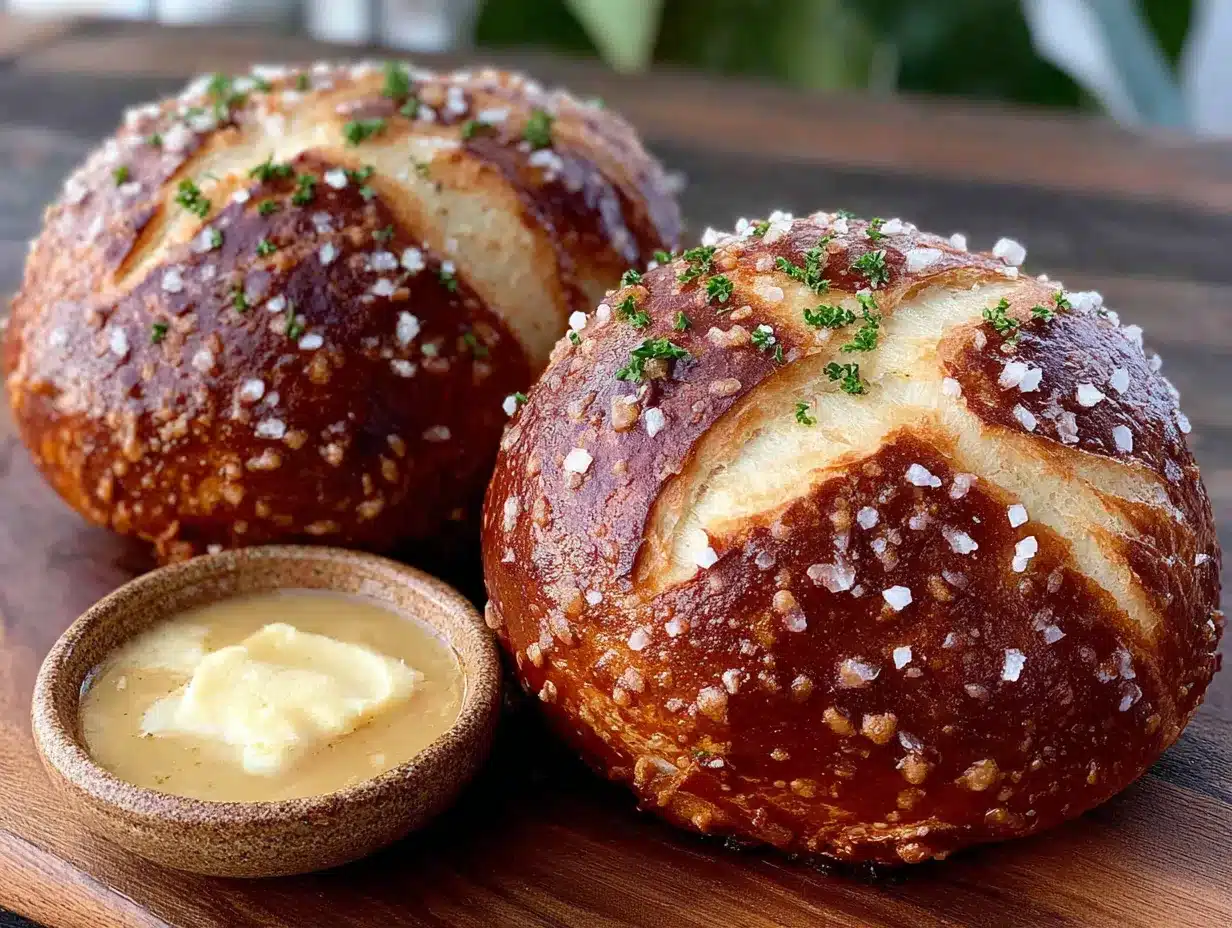
Let me tell you, the first batch was a learning experience. I forgot to boil the water for the baking soda bath—just dumped the baking soda into cold water and dunked the rolls. They came out pale, with a weird, metallic aftertaste. It was a mess, honestly. But that failure taught me the one trick that makes all the difference: a proper, rolling boil with a generous amount of baking soda. The second batch? Those rolls came out of the oven looking like they belonged on a pretzel cart in Munich. Deep mahogany brown, crackly on the outside, impossibly soft and chewy on the inside. I stood there in my pajamas, eating one straight from the baking sheet, butter dripping down my chin. I mean, that is a moment of pure, unadulterated victory.
These Easy Homemade Soft Bavarian Pretzel Rolls with Mustard Butter have since become my go-to for any gathering. They look incredibly impressive—like you spent all day perfecting a complex German recipe—but the secret is, they come together with simple ingredients you probably already have. The mustard butter is the real star, though; a simple mix of softened butter, whole-grain mustard, and a pinch of salt that cuts through the rich, salty pretzel perfectly. Maybe you’ve been there—needing a showstopper appetizer for a dinner party or a potluck that makes people stop and ask, “Did you really make these?” This recipe is that answer. It’s the one I keep coming back to because it’s less about perfection and more about that feeling of sharing something warm, homemade, and truly unforgettable.
Why You’ll Love This Recipe
After testing this recipe more times than I care to admit (my family has been very patient), I can confidently say these are the best pretzel rolls you can make at home. They have that signature chewy crust and soft, airy interior that rivals any bakery or beer hall. Here is why they deserve a spot in your hosting rotation:
- Impressive Without the Stress: These rolls look like a professional baker made them, but the dough is incredibly forgiving. Perfect for when you want to wow your dinner party guests without spending the whole day in the kitchen.
- Simple Pantry Ingredients: No weird chemicals or hard-to-find ingredients. You need flour, yeast, butter, salt, baking soda, and a bit of brown sugar. The magic is in the technique, not the grocery list.
- Perfect for Gatherings: These are ideal for game day, Oktoberfest parties, holiday dinners, or as a stunning side for soups and stews. They are a guaranteed crowd-pleaser that disappears fast.
- Make-Ahead Friendly: You can prep the dough a day ahead and bake them fresh right before your guests arrive. The smell of fresh pretzels will make everyone feel instantly welcome.
- Unbelievably Delicious: That first bite—the crackle of the salt crust, the soft, warm interior, slathered with tangy mustard butter—is pure comfort food perfection. It is the kind of recipe that makes you close your eyes and savor the moment.
What makes this version different from the rest is the boiling method. A lot of recipes skip this step or use a weak baking soda solution, resulting in pale, tough rolls. I use a very specific ratio of baking soda to water and a full rolling boil to create that deep brown, glossy crust and unmistakable pretzel flavor. It’s not just another recipe; it’s the one that my friends now request by name for every get-together.
What Ingredients You Will Need
This recipe uses simple, mostly pantry-staple ingredients to create something truly special. Each component plays a crucial role in achieving that perfect pretzel texture and flavor. Let’s break down what you will need and why it matters.
For the Dough
- Bread Flour (4 cups / 500g): This is the secret to that chewy, bakery-style texture. Bread flour has a higher protein content than all-purpose flour, which creates more gluten and gives the rolls their signature bite. You can use all-purpose in a pinch, but the texture will be softer and less authentic. I prefer King Arthur Flour for its consistent protein content.
- Warm Water (1 ½ cups / 360ml, 105-115°F): The temperature is critical here. Too hot, and it will kill the yeast; too cool, and the yeast won’t activate. Think baby bottle warm. If you don’t have a thermometer, it should feel comfortably warm on the inside of your wrist.
- Active Dry Yeast (2 ¼ teaspoons / 1 packet): This is your leavening agent. Make sure it is fresh! You can also use instant yeast (just mix it directly with the dry ingredients, no proofing needed). I always test my yeast by proofing it in the warm water with a pinch of sugar for 5-10 minutes. If it gets foamy, you are good to go.
- Brown Sugar (2 tablespoons): This adds a subtle depth of flavor and a touch of sweetness that balances the salt. It also helps feed the yeast and promotes browning in the oven. Light or dark brown sugar both work; dark will give a slightly richer flavor.
- Unsalted Butter (2 tablespoons, melted): Adds richness, tenderness, and flavor to the dough. Using unsalted butter lets you control the salt level, which is important in a pretzel recipe that gets a lot of its character from salt.
- Salt (1 teaspoon): Don’t skip this! It controls yeast activity and strengthens the gluten structure. Use fine sea salt or table salt for the dough.
For the Baking Soda Bath & Topping
- Baking Soda (½ cup / 100g): This is the magic ingredient that gives pretzels their unique crust and flavor. When boiled, it creates an alkaline environment that gelatinizes the starch on the outside of the dough, allowing it to brown beautifully and develop that chewy skin. Do not skip this step, and do not skimp on the amount!
- Water (8 cups / 2 liters): For the boiling bath. Use a large pot so the rolls have room to float.
- Coarse Sea Salt or Pretzel Salt (for sprinkling): This is non-negotiable for the authentic look and taste. Flaky sea salt or special pretzel salt works best because it adheres to the crust and provides a satisfying crunch. Do not use fine table salt, or it will dissolve and make the rolls overly salty.
- Unsalted Butter (2-3 tablespoons, melted for brushing): Brushing the hot rolls with melted butter right out of the oven gives them a beautiful sheen and adds incredible flavor. It also helps the salt stick better.
For the Mustard Butter
- Unsalted Butter (½ cup / 1 stick, softened): Make sure it is at room temperature so it blends easily into a smooth, spreadable compound butter.
- Whole-Grain Mustard (3 tablespoons): This provides texture and a robust, tangy flavor that cuts through the richness of the butter and the saltiness of the pretzel. Maille or Grey Poupon are my go-to brands. You can use Dijon for a smoother texture, but the whole grain is more visually appealing.
- Honey (1 teaspoon): Just a tiny bit to balance the tanginess of the mustard. You can substitute with maple syrup or leave it out if you prefer a sharper flavor.
- Pinch of Salt: To bring all the flavors together.
Equipment Needed
You don’t need any fancy German bakery equipment for this one. Here is what you will need to pull these off like a pro:
- Stand Mixer with Dough Hook: While you can knead by hand, a stand mixer makes the job infinitely easier. The dough is fairly stiff, and kneading for 8-10 minutes by hand can be a workout. A KitchenAid or similar mixer does the heavy lifting perfectly.
- Large Pot (6-8 quarts): For the baking soda bath. You need enough water for the rolls to float freely without crowding. A wide, shallow pot works better than a tall, narrow one.
- Slotted Spoon or Spider Strainer: Essential for safely lowering the rolls into the boiling water and fishing them out without burning yourself.
- Baking Sheets (2): Line them with parchment paper or a silicone baking mat. The parchment is crucial because the baking soda residue can be sticky and hard to clean off a bare pan.
- Sharp Knife or Lame: For scoring the tops of the rolls before baking. A sharp serrated knife or a baker’s lame gives a clean cut that allows the rolls to expand properly.
- Instant-Read Thermometer: Not strictly necessary, but it takes the guesswork out of water temperature for the yeast and the internal temperature of the baked rolls (they are done at 190°F).
Preparation Method
Alright, let’s get to the good part. This process has a few steps, but I promise, each one is simple and designed to get you that perfect, bakery-quality result. Follow these steps, and you will be the hero of your next gathering.
Step 1: Make the Dough
In the bowl of your stand mixer, combine the warm water (105-115°F) and brown sugar. Sprinkle the active dry yeast on top and let it sit for 5-10 minutes until it becomes foamy. This is called “proofing” the yeast, and it ensures your yeast is alive and active. If it doesn’t foam, your yeast is dead, and you need to start over with fresh yeast.
Once the yeast is foamy, add the melted butter, salt, and 2 cups of the bread flour. Mix on low speed with the dough hook until combined. Gradually add the remaining 2 cups of flour, one cup at a time, mixing until a shaggy dough forms. Increase the speed to medium-low and knead for 6-8 minutes. The dough should be smooth, elastic, and slightly tacky to the touch, but not sticky. If it is too sticky, add a tablespoon of flour at a time. If it is too dry, add a teaspoon of water.
Step 2: First Rise
Form the dough into a ball and place it in a lightly oiled bowl, turning to coat. Cover the bowl with plastic wrap or a clean kitchen towel. Let it rise in a warm, draft-free place for about 1 to 1.5 hours, or until it has doubled in size. A great tip for a cold kitchen: turn your oven on to the lowest setting for 2 minutes, then turn it off. Place the bowl inside with the door slightly ajar. This creates a perfect proofing environment.
Step 3: Shape the Rolls
Punch the risen dough down to release the air. Turn it out onto a lightly floured surface. Divide the dough into 8 equal pieces (about 120g each for large rolls, or 12 pieces for smaller slider-sized rolls).
To shape each piece, roll it into a tight ball. Place the ball on the unfloured counter and cup your hand over it, gently rolling it in a circular motion against the counter to create surface tension. This creates a smooth, taut skin on the outside, which is key for a nice, round roll. Place the shaped rolls on a parchment-lined baking sheet, cover loosely with plastic wrap, and let them rest for 15 minutes while you prepare the baking soda bath.
Step 4: The Baking Soda Bath (This is the Magic!)
Preheat your oven to 425°F (220°C). In your large pot, bring 8 cups of water to a rolling boil. Once boiling, carefully add the ½ cup of baking soda. Be careful! It will bubble up vigorously for a few seconds. Stir until it dissolves completely.
Reduce the heat to a gentle simmer. Carefully lower 2-3 rolls into the water at a time (do not overcrowd). Boil them for 30 seconds on each side. Use your slotted spoon to gently flip them. The longer you boil, the thicker and chewier the crust will be. 30 seconds per side is my sweet spot for a soft, chewy interior with a substantial crust. Remove the rolls with the slotted spoon, letting the excess water drip off, and place them back on the parchment-lined baking sheet, spaced about 2 inches apart.
Step 5: Score, Salt, and Bake
Using a sharp knife or lame, score a deep “X” or a single line across the top of each boiled roll. This allows the steam to escape and prevents them from bursting open in the oven. Immediately sprinkle each roll generously with the coarse sea salt or pretzel salt.
Bake for 15-18 minutes, or until the rolls are a deep, gorgeous mahogany brown. I usually rotate the baking sheet halfway through for even browning. The baking soda bath is what creates that dark, glossy crust, so don’t be alarmed if they look darker than a regular bread roll—that is exactly what you want!
Step 6: The Final Touch
As soon as the rolls come out of the oven, brush them generously with the melted butter. This step is not optional—it adds incredible flavor, softens the crust slightly, and gives them that beautiful shine. Let them cool on the baking sheet for at least 10 minutes before serving. They are best enjoyed warm!
Step 7: Make the Mustard Butter
While the rolls are baking, make the mustard butter. In a small bowl, combine the softened butter, whole-grain mustard, honey, and a pinch of salt. Mash with a fork until everything is well combined and smooth. You can serve it immediately or roll it into a log using plastic wrap and chill it for later. Let it come to room temperature before serving so it is soft and spreadable.
Cooking Tips & Techniques
I have made these rolls probably fifty times now, and I have learned a few things the hard way so you don’t have to. Here are my top tips for absolute success.
- Don’t Skip the Boil: This is the single most important step. The boiling baking soda bath is what creates the chewy, crackly crust and the distinct pretzel flavor. Without it, you just have a soft bread roll. Trust the process.
- Use a Proper Baking Soda Ratio: I see recipes that use 1-2 tablespoons of baking soda in a huge pot of water. That is not enough! You need that ½ cup to create a sufficiently alkaline environment. It is the difference between a pale, sad roll and a dark, gorgeous one.
- Handle with Care After Boiling: The boiled rolls are very delicate and sticky. Use a slotted spoon to move them gently. If you drop them, they will deflate a bit. It is okay, just reshape them gently on the baking sheet.
- Score Deeply: Don’t be shy with the knife. You want a cut that is about ½ inch deep. This allows the steam to escape and creates that beautiful, classic pretzel roll shape. A shallow cut will cause the roll to burst on the side.
- Salt Immediately: The salt needs to stick to the wet, boiled surface. If you wait, the surface will dry out, and the salt will just fall off. Sprinkle it on right after you score them.
- Multitask for Efficiency: While the dough is rising for the first time, you can make the mustard butter and get your baking sheet ready. While the rolls are baking, clean up the pot and get your serving board ready. This makes the whole process feel smooth and manageable, especially when you are hosting.
Variations & Adaptations
This recipe is a fantastic base, and I love playing around with it. Here are a few ways you can adapt it to suit your taste or the occasion.
- Everything Bagel Pretzel Rolls: After you brush the baked rolls with melted butter, sprinkle them generously with everything bagel seasoning (poppy seeds, sesame seeds, dried garlic, dried onion, and salt). It is a game-changer for brunch.
- Cheese-Stuffed Pretzel Rolls: Before shaping the dough into balls, flatten each piece into a disc. Place a small cube of sharp cheddar cheese or a piece of string cheese in the center. Wrap the dough around the cheese, pinch to seal, and shape into a ball. The cheese will melt into a gooey, delicious center.
- Spicy Jalapeño Cheddar: Knead ½ cup of shredded cheddar cheese and 2 tablespoons of finely chopped pickled jalapeños into the dough during the last minute of kneading. This adds a fantastic savory and spicy kick.
- Gluten-Free Option: I have tested this with a good quality 1-to-1 gluten-free flour blend (like Bob’s Red Mill). The texture is a bit more delicate, and they don’t get quite as chewy, but they are still delicious. You may need to add an extra tablespoon of water to the dough.
- Sweet Cinnamon Sugar: Skip the salt on top. After baking and brushing with butter, dip the warm rolls in a mixture of cinnamon and sugar. Serve with a cream cheese frosting for dipping. It is an incredible dessert!
Serving & Storage Suggestions
These rolls are best served warm, ideally within an hour of baking. The crust is at its crispiest, and the interior is pillowy soft. For a dinner party, place them in a cloth-lined basket or on a wooden board with a generous ramekin of the mustard butter and another of softened salted butter for the purists.
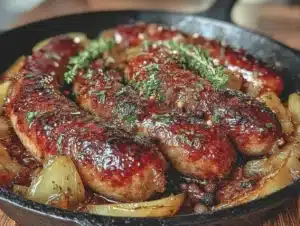
They are the perfect companion for a hearty bowl of slow cooker beer cheese soup or a rich beef stew. They also make incredible sliders—just split them in half, fill with pulled pork or roast beef, and toast them on a griddle. For an Oktoberfest spread, serve them alongside easy bratwurst and sauerkraut skillet and a crisp German beer.
Storage: Store leftover rolls in an airtight container at room temperature for up to 2 days. They will soften over time. To reheat, wrap them in a damp paper towel and microwave for 15-20 seconds, or better yet, pop them in a 350°F oven for 5-7 minutes to re-crisp the crust.
Freezing: These freeze beautifully! You can freeze the baked, cooled rolls in a freezer-safe bag for up to 3 months. To serve, thaw at room temperature and reheat in a 350°F oven for 5-7 minutes. You can also freeze the unbaked, shaped rolls after the first rise. Place them on a baking sheet and freeze until solid, then transfer to a freezer bag. When ready to bake, thaw them in the fridge overnight, then proceed with the boiling and baking steps.
Nutritional Information & Benefits
While these are an indulgent treat, they do have some redeeming qualities! Here is an approximate nutritional breakdown per roll (based on 8 rolls, including the butter wash but not the mustard butter):
- Calories: 320-350
- Fat: 10g
- Carbohydrates: 50g
- Protein: 9g
- Fiber: 2g
- Sodium: 700-900mg (varies greatly based on salt used)
Health Benefits: The bread flour provides complex carbohydrates for sustained energy. The butter and whole-grain mustard in the compound butter offer a small amount of healthy fats and antioxidants from the mustard seeds. If you are watching your sodium, you can use a lighter hand with the coarse salt on top. For a lower-calorie option, you can skip the butter wash, but you will lose some of that authentic flavor and shine. As with all good things, moderation is key—enjoy one or two with your meal!
Conclusion
These Easy Homemade Soft Bavarian Pretzel Rolls with Mustard Butter are more than just a recipe; they are a little piece of bakery magic you can create in your own kitchen. They are the kind of thing that makes people stop mid-conversation and say, “Wait, you made these?” That moment of surprise and delight is exactly why I love sharing this recipe. It is forgiving enough for a beginner but impressive enough for a seasoned host.
I encourage you to make them your own. Add cheese, spice them up, or keep them classic. The beauty is in the soft, chewy, salty foundation. I promise, once you master this technique, you will never buy a pretzel from the store again. I would love to hear how they turn out for you! Did you try a fun variation? Drop a comment below and let me know. And if you snap a picture, tag me on Pinterest—I absolutely love seeing your creations. Happy baking!
Frequently Asked Questions
Can I use all-purpose flour instead of bread flour?
Yes, you can, but the texture will be softer and less chewy. Bread flour has a higher protein content, which creates more gluten and gives the rolls their signature bakery-style bite. If you only have all-purpose, the rolls will still be delicious, just a bit more like a soft dinner roll than a traditional pretzel.
Why did my pretzel rolls turn out pale and not brown?
This is almost always because the baking soda bath was not alkaline enough. Either you used too little baking soda, or the water was not boiling vigorously enough. Make sure you use a full ½ cup of baking soda and bring the water to a full, rolling boil before adding the rolls. The boil is essential for the chemical reaction that creates the brown crust.
Can I make the dough ahead of time?
Absolutely! After the first rise, punch the dough down, shape it into a ball, wrap it tightly in plastic wrap, and refrigerate it for up to 24 hours. When you are ready to bake, let it sit at room temperature for about 30 minutes to take the chill off, then proceed with shaping, boiling, and baking. This is a fantastic make-ahead strategy for hosting.
Do I have to use the mustard butter?
Not at all! These rolls are fantastic with plain salted butter, or you can skip the butter entirely and just enjoy them as is. The mustard butter is a delicious, tangy complement, but the rolls are the star of the show. I often serve a bowl of the mustard butter alongside a bowl of regular butter so guests can choose.
My dough was very sticky. What did I do wrong?
A slightly tacky dough is normal, but if it is truly sticky and unmanageable, you may have added too much water or not enough flour. The humidity in your kitchen can also affect the dough. The best fix is to add flour one tablespoon at a time while kneading until the dough pulls away from the sides of the bowl and feels smooth and elastic. Conversely, if the dough is too dry and crumbly, add a teaspoon of water at a time.
Pin This Recipe!
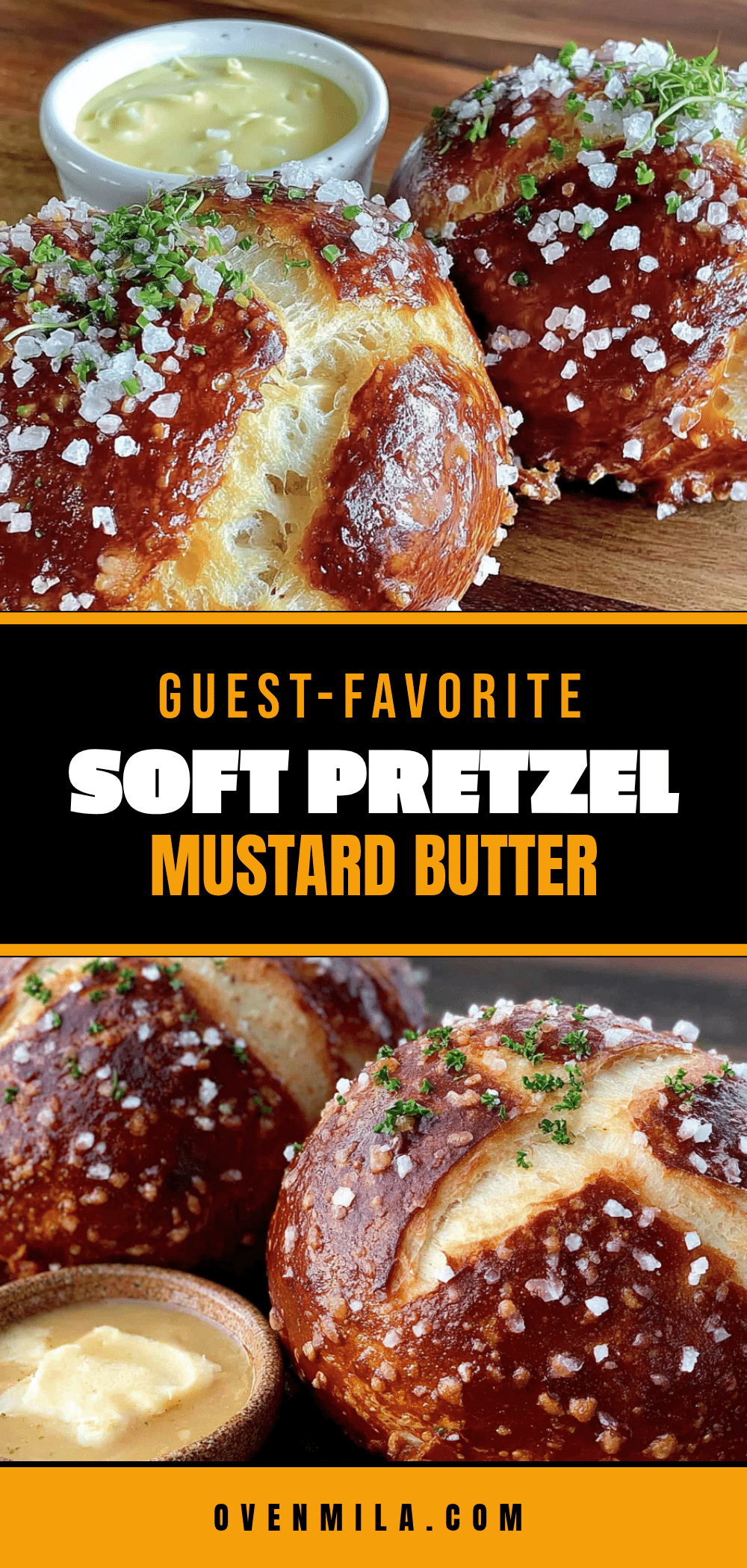
Easy Homemade Soft Bavarian Pretzel Rolls with Mustard Butter

These soft, chewy pretzel rolls have a deep mahogany crust and are perfect for any gathering. Served with a tangy whole-grain mustard butter, they are an impressive yet simple appetizer that rivals any bakery.
- Prep Time: 30 minutes
- Cook Time: 18 minutes
- Total Time: 2 hours 30 minutes (includes rising time)
- Yield: 8 servings 1x
- Category: Appetizer
- Cuisine: German
Ingredients
- 4 cups bread flour (500g)
- 1 ½ cups warm water (360ml, 105-115°F)
- 2 ¼ teaspoons active dry yeast (1 packet)
- 2 tablespoons brown sugar
- 2 tablespoons unsalted butter, melted
- 1 teaspoon salt
- ½ cup baking soda (100g)
- 8 cups water (2 liters)
- Coarse sea salt or pretzel salt, for sprinkling
- 2–3 tablespoons unsalted butter, melted (for brushing)
- ½ cup unsalted butter (1 stick), softened
- 3 tablespoons whole-grain mustard
- 1 teaspoon honey
- Pinch of salt
Instructions
- In the bowl of a stand mixer, combine warm water and brown sugar. Sprinkle yeast on top and let sit for 5-10 minutes until foamy.
- Add melted butter, salt, and 2 cups of bread flour. Mix on low speed with dough hook until combined. Gradually add remaining 2 cups flour, mixing until a shaggy dough forms. Knead on medium-low for 6-8 minutes until smooth and elastic.
- Form dough into a ball and place in a lightly oiled bowl, turning to coat. Cover and let rise in a warm place for 1 to 1.5 hours until doubled in size.
- Punch down dough and turn onto a lightly floured surface. Divide into 8 equal pieces (about 120g each). Shape each piece into a tight ball by rolling against the counter with cupped hand. Place on parchment-lined baking sheet, cover loosely, and let rest 15 minutes.
- Preheat oven to 425°F (220°C). In a large pot, bring 8 cups water to a rolling boil. Carefully add ½ cup baking soda (it will bubble vigorously). Stir until dissolved, then reduce heat to a gentle simmer.
- Carefully lower 2-3 rolls into the water at a time. Boil for 30 seconds on each side. Remove with slotted spoon, letting excess water drip off, and place back on parchment-lined baking sheet, spaced 2 inches apart.
- Using a sharp knife, score a deep ‘X’ or line across the top of each boiled roll. Immediately sprinkle generously with coarse sea salt.
- Bake for 15-18 minutes until deep mahogany brown, rotating sheet halfway through.
- As soon as rolls come out of the oven, brush generously with melted butter. Let cool on baking sheet for at least 10 minutes before serving.
- While rolls bake, make mustard butter: In a small bowl, combine softened butter, whole-grain mustard, honey, and a pinch of salt. Mash with a fork until smooth. Serve at room temperature.
Notes
The baking soda bath is essential for the chewy crust and deep brown color. Use a full ½ cup of baking soda and a rolling boil. Score the rolls deeply to prevent bursting. Brush with butter immediately after baking for shine and flavor. Mustard butter can be made ahead and chilled; bring to room temperature before serving.
Nutrition
- Serving Size: 1 roll
- Calories: 335
- Sugar: 4
- Sodium: 800
- Fat: 10
- Saturated Fat: 6
- Carbohydrates: 50
- Fiber: 2
- Protein: 9
Keywords: pretzel rolls, Bavarian pretzels, soft pretzels, homemade pretzels, mustard butter, Oktoberfest, game day appetizer, bread rolls