There used to be a tiny farm-to-table restaurant tucked away on a side street in our old neighborhood—the kind with mismatched chairs and a chalkboard menu that changed daily. They served this roasted butternut squash with pomegranate that my kids would actually fight over. When the restaurant closed after the owner retired, I felt genuinely panicked. After eleven tries—including one where I accidentally used pumpkin pie spice instead of cinnamon—I finally got it. This recipe is the happy ending to that little obsession.
I still remember the first time I served this to my family. My youngest, who usually pushes vegetables around her plate like she’s rearranging furniture, actually asked for seconds. I mean, I nearly dropped the serving spoon. The combination of sweet roasted squash, tart pomegranate seeds, and that warm cinnamon glaze just works in a way that feels almost magical. Let me tell you, when a recipe wins over picky eaters and makes a budget-friendly vegetable feel like a special occasion, you hold onto it.
Maybe you’ve been there—staring at a butternut squash at the grocery store, wondering if it’s worth the effort. Honestly, this recipe changed my mind completely. It’s the kind of dish that makes you feel like a kitchen rockstar without the stress. The squash gets tender and caramelized, the pomegranate adds little bursts of joy, and the whole thing comes together with ingredients you can grab without breaking the bank. I’ve been making this for years now, and it never fails to bring that same warmth to the table.
Why You’ll Love This Recipe
This isn’t just another roasted vegetable recipe. After testing this dish more times than I care to count, I can confidently say it delivers on every level. Here’s what makes it stand out:
- Quick & Easy: Comes together in about 35 minutes, perfect for busy weeknights when you need something healthy fast.
- Simple Ingredients: No fancy grocery trips needed. You probably already have most of these in your kitchen.
- Perfect for Family Meals: Works for regular dinners, holiday gatherings, or even lunch leftovers that reheat beautifully.
- Crowd-Pleaser: Even the pickiest eaters at my table ask for this one. It’s seriously kid-approved.
- Unbelievably Delicious: The caramelized edges, the pop of pomegranate, the warm spices—it’s comfort food that feels special without the fuss.
What makes this recipe different from the rest? It’s the balance. I spent a lot of time figuring out the right amount of sweetness and spice so the squash shines without being overpowering. The pomegranate seeds aren’t just for looks—they add a tangy crunch that makes every bite interesting. And honestly, it’s the kind of dish that makes you close your eyes after the first bite. Perfect for impressing guests without stress, or turning a simple Tuesday dinner into something memorable.
What Ingredients You Will Need
This recipe uses simple, wholesome ingredients to deliver bold flavor and satisfying texture without the fuss. Most of these are pantry staples or easy to find at any grocery store.
- Butternut Squash, peeled and cubed: About 4 cups (roughly one medium squash). Look for one that feels heavy for its size with smooth, unblemished skin. I prefer squash from the farmer’s market when it’s in season—it’s sweeter and firmer.
- Olive Oil: 2 tablespoons. Use a good quality extra virgin for the best flavor. It helps the squash caramelize perfectly.
- Pomegranate Seeds: 1 cup (about one large pomegranate). You can also buy pre-seeded pomegranate at the store to save time. Trust me, I’ve done both.
- Maple Syrup: 2 tablespoons. Pure maple syrup works best here—skip the pancake syrup. It adds natural sweetness without being cloying.
- Cinnamon: 1 teaspoon. Ground cinnamon gives warmth that kids love. I recommend [brand] for the most fragrant results.
- Salt: ½ teaspoon. Fine sea salt balances the sweetness.
- Black Pepper: ¼ teaspoon. Freshly ground adds a subtle kick.
- Butter (optional): 1 tablespoon, melted. Adds richness if you’re feeling indulgent. Use dairy-free butter if needed.
- Fresh Thyme (optional): 1 teaspoon, chopped. For a savory twist that adults especially enjoy.
For substitutions, you can swap maple syrup with honey or agave. If pomegranates aren’t in season, dried cranberries work in a pinch—just soak them in warm water for 10 minutes first. Use coconut oil instead of butter for a dairy-free version. Simple swaps, same great result.
Equipment Needed
You don’t need a fancy kitchen to make this recipe work. Here’s what I use:
- Baking Sheet: A rimmed baking sheet is essential—it catches any juices and makes cleanup easy. I use a half-sheet pan (18×13 inches) for even roasting.
- Sharp Knife: A good chef’s knife makes peeling and cubing butternut squash so much easier. Trust me, a dull knife is a recipe for frustration.
- Vegetable Peeler: A sturdy Y-peeler works best for removing squash skin quickly. I’ve tried cheap ones—they just don’t cut it.
- Mixing Bowl: Any large bowl works for tossing the squash with oil and spices.
- Spatula or Wooden Spoon: For stirring the squash halfway through roasting.
- Measuring Spoons and Cups: For accuracy, especially with the maple syrup and spices.
If you don’t have a Y-peeler, a regular peeler works fine—just take your time. And honestly, you can skip the fresh thyme if it’s not handy. The recipe still turns out amazing.
Preparation Method
- Preheat your oven to 400°F (200°C). Give it a full 15 minutes to heat up—this ensures even cooking from the start.
- Prepare the butternut squash. Using your sharp knife, cut off both ends of the squash. Peel it with your vegetable peeler, making sure to remove all the tough skin. Cut the squash in half lengthwise and scoop out the seeds with a spoon. Cube the flesh into 1-inch pieces—about 4 cups total. Don’t stress about perfect cubes; rustic chunks work great.
- Season the squash. In your mixing bowl, combine the cubed squash, olive oil, maple syrup, cinnamon, salt, and black pepper. Toss everything together until every piece is evenly coated. I use my hands for this—it’s quicker and ensures better coverage.
- Spread on baking sheet. Arrange the squash in a single layer on your rimmed baking sheet. Make sure the pieces aren’t crowded—they need space to caramelize. If they’re touching too much, they’ll steam instead of roast.
- Roast for 20 minutes. Place the sheet in the preheated oven. Set a timer so you don’t forget.
- Flip the squash. After 20 minutes, remove the sheet from the oven. Use your spatula to flip each piece over. This helps them brown evenly. The squash should be starting to soften and turn golden at the edges.
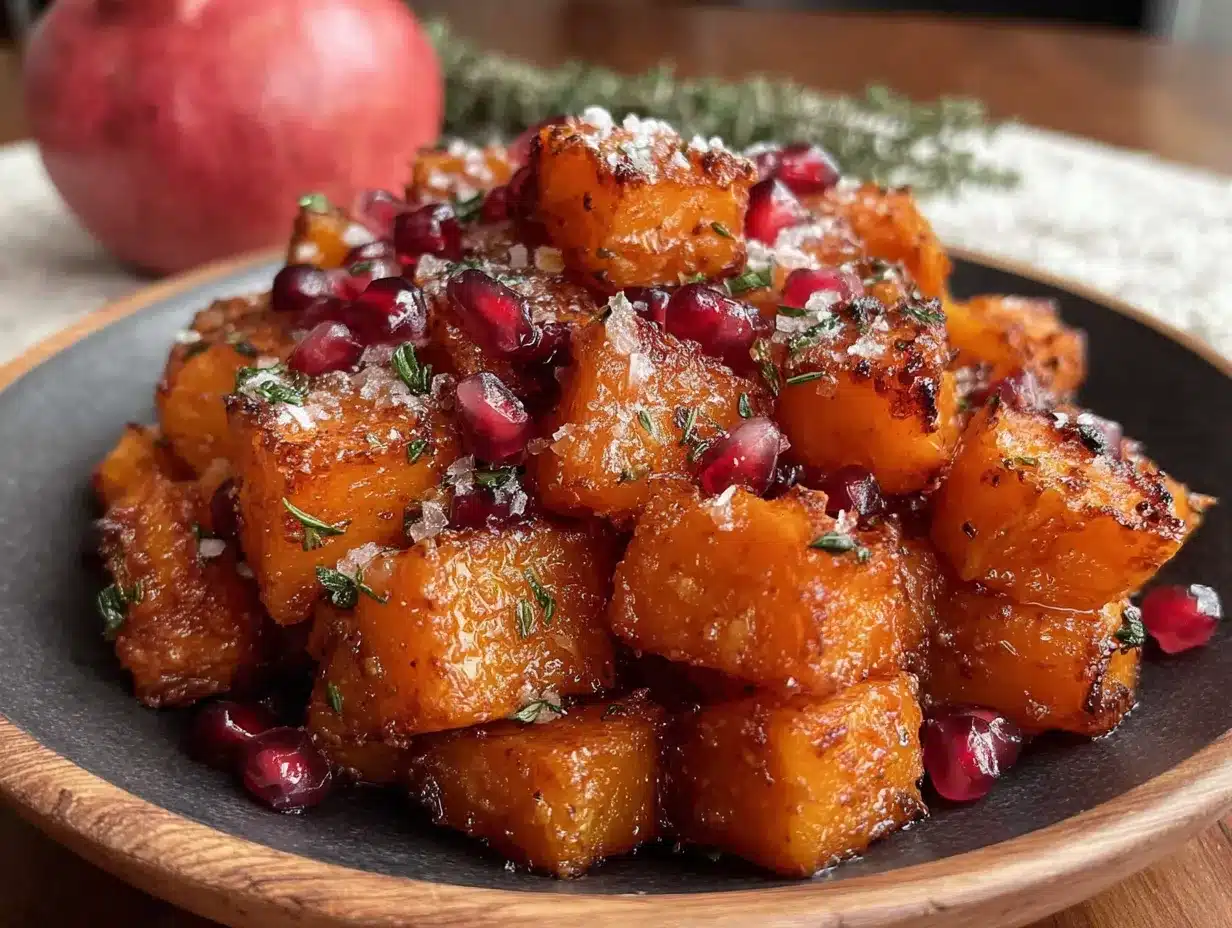
- Roast for another 10-15 minutes. Return the sheet to the oven. The squash is done when it’s fork-tender and has deep golden-brown caramelized spots. The smell at this point is incredible—warm and sweet with a hint of cinnamon.
- Add the finishing touches. Remove the squash from the oven. While it’s still hot, drizzle with melted butter if using, and sprinkle fresh thyme if desired. Toss gently to combine.
- Top with pomegranate seeds. Sprinkle the pomegranate seeds generously over the roasted squash. The contrast of warm squash and cool, juicy seeds is what makes this dish special.
- Serve immediately. Transfer to a serving dish and enjoy while it’s warm. The pomegranate seeds stay bright and fresh this way.
A quick note: if your squash cubes are larger than 1 inch, add 5 minutes to the roasting time. Smaller pieces cook faster, so keep an eye on them. You want tender squash, not mush.
Cooking Tips & Techniques
I’ve made this recipe enough times to learn a few things the hard way. Here’s what I wish someone had told me:
Don’t skip the single layer. The first time I made this, I piled the squash too high on the pan. It turned out soggy and sad. Give each piece room to breathe—crowding leads to steaming, not roasting.
Use room temperature maple syrup. Cold syrup doesn’t mix as well with the oil. Let it sit out for 10 minutes first, or warm it slightly in the microwave. Small detail, big difference.
Toast the pomegranate seeds lightly. This is optional, but if you have extra time, spread the seeds on a separate baking sheet and roast them for 5 minutes at the same temperature. They get slightly chewy and even sweeter. My kids love this version.
Watch the salt. I once over-salted the squash and it overwhelmed the sweetness. Start with ½ teaspoon and taste before adding more. You can always adjust, but you can’t take it out.
Multitask wisely. While the squash roasts, use that time to seed the pomegranate or clean up your kitchen. I usually seed the pomegranate over a bowl of water—the seeds sink and the white pith floats, making it easy to separate.
Test for doneness with a fork. The squash should pierce easily but still hold its shape. If it falls apart, it’s overdone. Aim for tender but intact.
Variations & Adaptations
This recipe is flexible enough to fit different tastes and dietary needs. Here are some variations I’ve tried:
- Savory Version: Skip the maple syrup and add 2 cloves of minced garlic and 1 teaspoon of smoked paprika. Roast as directed, then top with crumbled feta cheese. The salty tang pairs beautifully with the sweet squash.
- Spicy Twist: Add ½ teaspoon of cayenne pepper or red pepper flakes to the seasoning mix. The heat balances the sweetness and gives it a grown-up kick. My husband loves this version.
- Herb-Infused: Toss the squash with fresh rosemary and sage before roasting. These earthy herbs complement the pomegranate beautifully. I use this for holiday dinners.
- Gluten-Free and Dairy-Free: This recipe is naturally gluten-free. For dairy-free, skip the butter or use coconut oil. It still tastes amazing.
- Air Fryer Method: Cook the seasoned squash in an air fryer at 375°F (190°C) for 15-18 minutes, shaking the basket halfway through. It gets extra crispy on the outside. Just don’t overcrowd the basket.
I once tried a version with balsamic glaze drizzled on top—it was a happy accident when I ran out of maple syrup. The tangy-sweet combo was surprisingly good. Feel free to experiment!
Serving & Storage Suggestions
This dish shines when served warm, right after roasting. The contrast between the hot, caramelized squash and the cool, juicy pomegranate seeds is pure magic. I like to transfer it to a shallow serving bowl and sprinkle a few extra pomegranate seeds on top for presentation.
It pairs beautifully with:
- Roasted chicken or turkey for a complete meal
- Grilled pork chops or salmon
- A simple green salad with vinaigrette
- Quinoa or rice for a vegetarian main dish
Storage: Leftovers keep well in an airtight container in the refrigerator for up to 4 days. The pomegranate seeds will soften slightly, but the flavor stays delicious.
Reheating: Reheat in a 350°F (175°C) oven for 10 minutes to restore some crispness. The microwave works in a pinch, but the squash won’t be as caramelized. I actually love the leftovers cold straight from the fridge—the flavors meld together even more.
Freezing: You can freeze the roasted squash (without pomegranate seeds) for up to 3 months. Thaw overnight in the refrigerator, then reheat and add fresh seeds before serving. The seeds don’t freeze well, so always add them fresh.
One thing I’ve noticed: the flavors actually deepen after a day in the fridge. So if you’re planning ahead, this dish is even better the next day.
Nutritional Information & Benefits
This recipe is as nutritious as it is delicious. Here’s a rough breakdown per serving (about 1 cup):
- Calories: 180-200
- Protein: 3g
- Carbohydrates: 35g
- Fiber: 6g
- Fat: 7g
- Vitamin A: 457% of the Daily Value (from butternut squash)
- Vitamin C: 35% of the Daily Value (from pomegranate)
Butternut squash is packed with beta-carotene, which supports eye health and immunity. Pomegranate seeds are rich in antioxidants and vitamin C. Together, they make a powerhouse side dish that’s good for the whole family.
This recipe is naturally gluten-free and can be made dairy-free. It’s also low in added sugar—the maple syrup adds sweetness without being excessive. Perfect for health-conscious families who still want something tasty.
Conclusion
This roasted butternut squash with pomegranate has become a staple in my kitchen for good reason. It’s easy enough for a busy weeknight, special enough for holidays, and budget-friendly enough to make any day feel a little more special. The fact that my kids actually ask for it? That’s the real win.
I hope you give this recipe a try and make it your own. Add extra cinnamon if that’s your thing, skip the butter if you’re dairy-free, or toss in some fresh herbs—whatever feels right. Cooking should be fun, not stressful.
If you make this, I’d love to hear how it turned out. Drop a comment below or tag me in your photos—I mean it. Your kitchen victories make my day. And honestly, if a recipe can turn a butternut squash skeptic into a fan, it’s worth sharing with everyone you know. Happy cooking!
Frequently Asked Questions
Can I use frozen butternut squash instead of fresh?
Yes, frozen squash works in a pinch. Thaw it first and pat it dry with paper towels to remove excess moisture. Roast for 5-10 minutes less since it’s already partially cooked. The texture won’t be quite as caramelized, but it’s still delicious.
How do I seed a pomegranate without making a mess?
Cut the pomegranate in half horizontally. Hold one half cut-side down over a bowl of water. Hit the back of the pomegranate with a wooden spoon—the seeds will fall into the water while the white pith floats. Skim off the pith and drain the seeds. It’s quick and mess-free.
Can I make this recipe ahead of time?
Absolutely. Roast the squash up to 2 days in advance and store it in the fridge. Reheat in the oven just before serving, then add fresh pomegranate seeds. The seeds lose their crunch if added too early, so always add them at the last minute.
What can I use instead of pomegranate seeds?
Dried cranberries or fresh blueberries make good substitutes. For cranberries, soak them in warm water for 10 minutes to plump them up. Blueberries add a similar pop of sweetness. Both work well with the roasted squash.
Is this recipe suitable for babies or toddlers?
Yes, with some adjustments. Skip the salt and pepper for babies under 12 months. Cut the squash into very small pieces and ensure the pomegranate seeds are halved to prevent choking. The soft, sweet flavor is usually a hit with little ones.
Pin This Recipe!
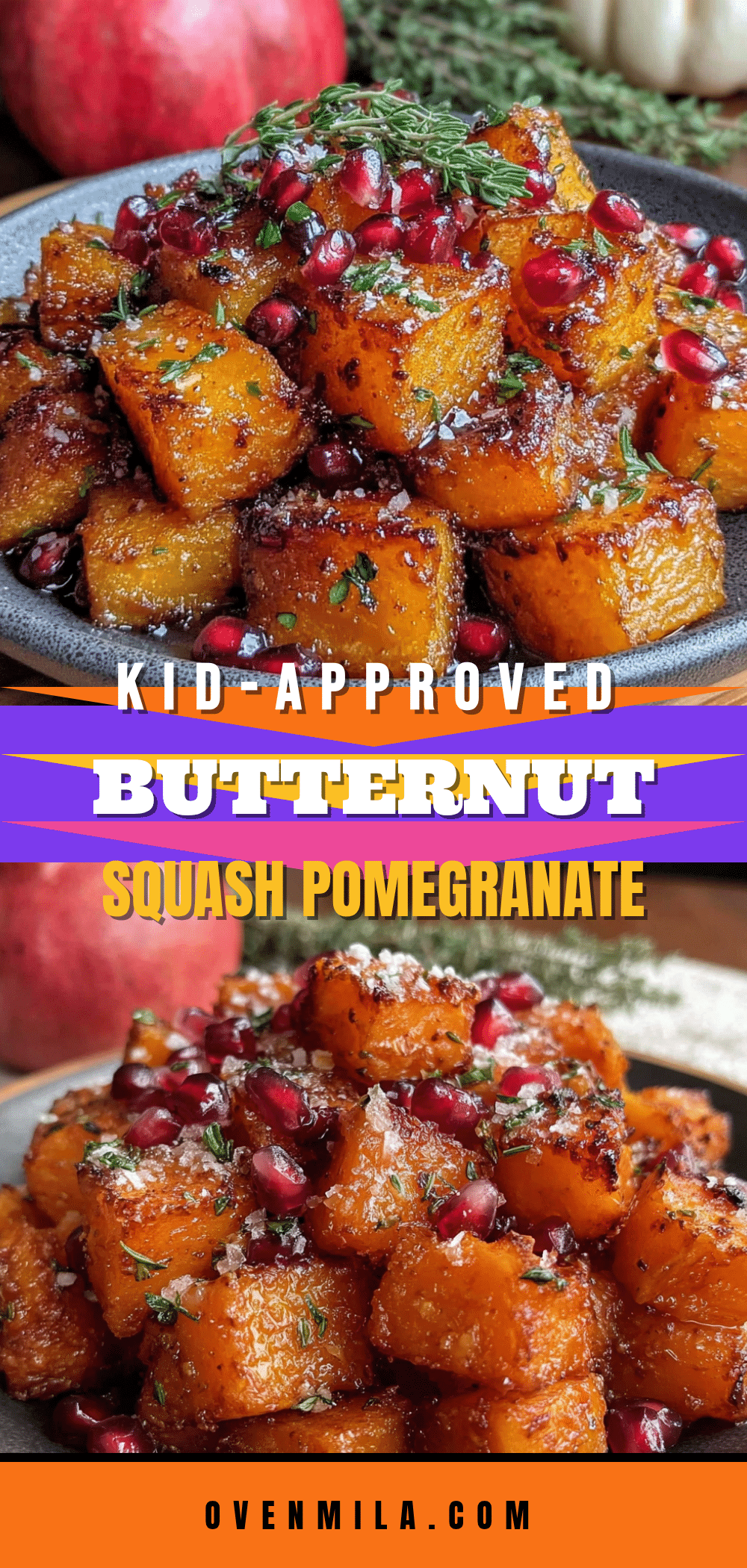
Easy Kid-Approved Roasted Butternut Squash with Pomegranate
This roasted butternut squash with pomegranate is a family-friendly side dish that combines sweet, caramelized squash with tart pomegranate seeds and warm cinnamon. It’s quick, easy, and perfect for weeknights or holiday gatherings.
- Prep Time: 10 minutes
- Cook Time: 30-35 minutes
- Total Time: 40-45 minutes
- Yield: 4 servings 1x
- Category: Side Dish
- Cuisine: American
Ingredients
- 4 cups butternut squash, peeled and cubed (about 1 medium squash)
- 2 tablespoons olive oil
- 1 cup pomegranate seeds (about 1 large pomegranate)
- 2 tablespoons maple syrup
- 1 teaspoon ground cinnamon
- ½ teaspoon fine sea salt
- ¼ teaspoon freshly ground black pepper
- 1 tablespoon butter, melted (optional)
- 1 teaspoon fresh thyme, chopped (optional)
Instructions
- Preheat your oven to 400°F (200°C).
- Prepare the butternut squash: cut off both ends, peel with a vegetable peeler, cut in half lengthwise, scoop out seeds, and cube into 1-inch pieces (about 4 cups).
- In a mixing bowl, combine cubed squash, olive oil, maple syrup, cinnamon, salt, and black pepper. Toss until evenly coated.
- Spread squash in a single layer on a rimmed baking sheet. Avoid overcrowding.
- Roast for 20 minutes.
- Remove from oven and flip each piece with a spatula.
- Roast for another 10-15 minutes until fork-tender and caramelized.
- Remove from oven. While hot, drizzle with melted butter and sprinkle fresh thyme if using. Toss gently.
- Sprinkle pomegranate seeds generously over the squash.
- Serve immediately.
Notes
For larger squash cubes, add 5 minutes to roasting time. Use room temperature maple syrup for better mixing. To toast pomegranate seeds, spread on a separate baking sheet and roast for 5 minutes at 400°F. Leftovers keep in the fridge for up to 4 days; reheat in a 350°F oven for 10 minutes. Freeze roasted squash (without seeds) for up to 3 months.
Nutrition
- Serving Size: 1 cup
- Calories: 180200
- Sugar: 15
- Sodium: 300
- Fat: 7
- Saturated Fat: 2
- Carbohydrates: 35
- Fiber: 6
- Protein: 3
Keywords: roasted butternut squash, pomegranate, kid-friendly, easy side dish, holiday side, gluten-free, vegetarian