I was elbow-deep in a stack of old vinyl records at a dusty flea market last October, not looking for recipes at all. I was actually trying to find a copy of Fleetwood Mac’s *Rumours* when a woman sorting through a box of vintage aprons next to me started talking about her grandmother’s quick bread. She was maybe seventy, with flour still dusting the cuff of her sweater, and she told me this story about her grandmother who ran a tiny bed-and-breakfast in Vermont. The woman—her name was Martha—said her grandmother would bake this orange cranberry bread every single Sunday, and the whole inn would smell like a winter morning. I honestly didn’t ask for the recipe. She just scribbled it on a torn piece of paper bag and handed it to me, saying, “You look like someone who needs a good loaf in your life.” She wasn’t wrong.
The paper sat on my counter for two weeks before I tried it. I mean, I was skeptical. The instructions were barely legible, and the measurements were in “a handful of this” and “a splash of that.” But you know that feeling when you just know something is going to work? The first time I pulled this bread out of the oven, the glaze was still warm and dripping down the sides, and I knew I had stumbled onto something special. It’s not just a quick bread—it’s the kind of thing that makes you slow down, pour a cup of tea, and actually breathe. Maybe you’ve been there, needing a recipe that feels like a hug rather than a chore. This is that recipe.
Why You’ll Love This Recipe
Let me tell you, I’ve tested this bread more times than I care to admit. I’ve made it with fresh cranberries, frozen cranberries, dried cranberries, and even a questionable batch with leftover cranberry sauce (don’t ask). This version is the one that finally made me stop tweaking. It’s the perfect balance of tart and sweet, with a tender crumb that stays moist for days.
- Quick & Easy: From mixing bowl to oven in under 15 minutes. No yeast, no rising time, no fuss. Perfect for a Tuesday night craving or a last-minute holiday brunch.
- Simple Ingredients: You probably already have flour, sugar, eggs, and butter in your kitchen. The cranberries and orange are the only special items, and they’re easy to find year-round.
- Perfect for Cozy Evenings: This bread was made for cold weather, rainy afternoons, or any day that needs a little warming up. It’s the edible equivalent of a fuzzy blanket.
- Crowd-Pleaser: I brought this to a neighbor’s potluck last month, and three people asked for the recipe before the coffee was even poured. Kids love the sweet glaze; adults love the tangy cranberries.
- Unbelievably Delicious: The combination of fresh orange zest, juicy cranberries, and that vanilla glaze is honestly next-level. It’s comfort food that feels a little fancy without being complicated.
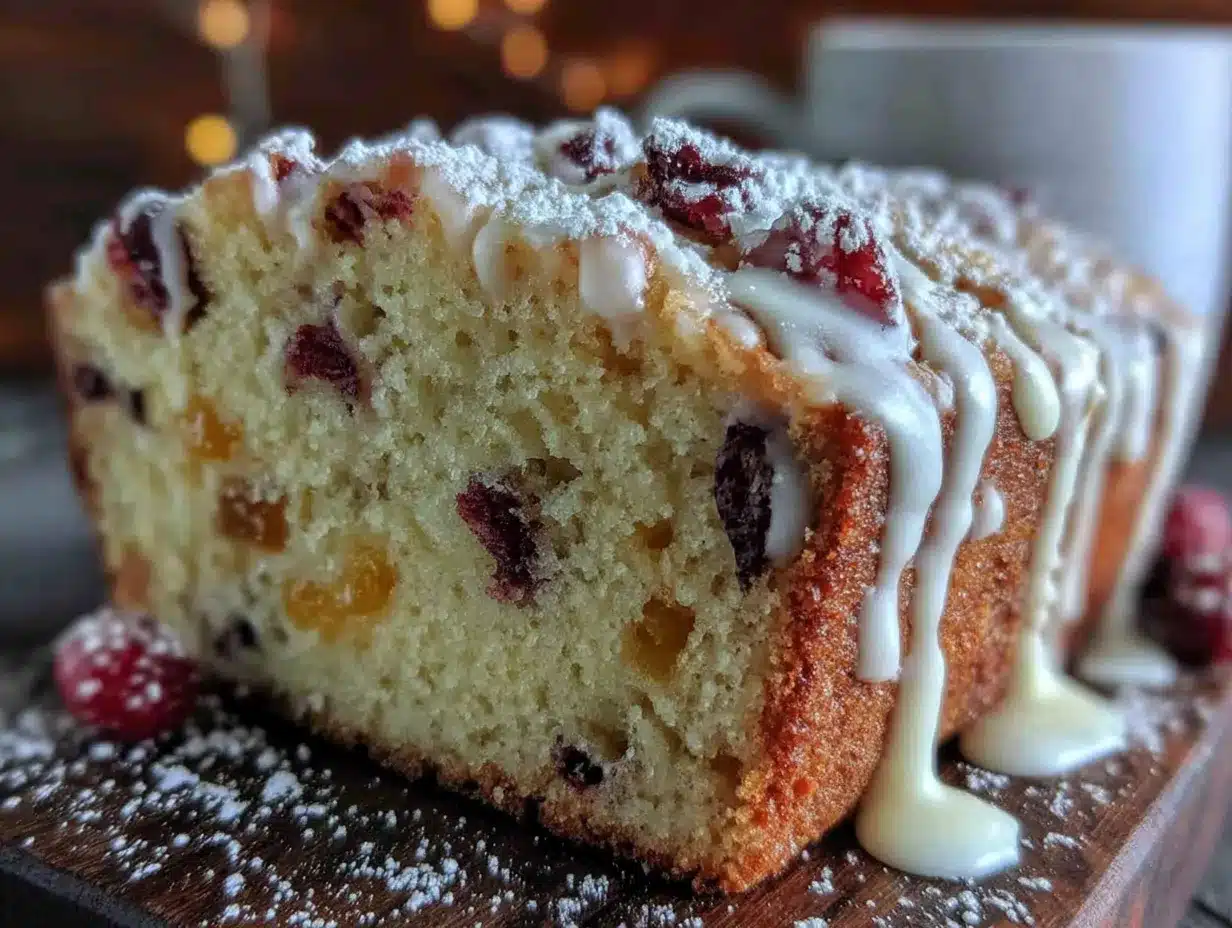
What makes this recipe different from all the other cranberry breads out there? It’s the technique. Most recipes tell you to just toss the cranberries in flour and fold them in. But I’ve found that macerating the cranberries with a little sugar and orange juice first makes them burst into these little pockets of jammy goodness. Plus, the vanilla glaze isn’t just a drizzle—it’s a thick, creamy blanket that soaks into the top crust just enough to make every bite feel like a treat. This isn’t just another version. It’s the one you’ll come back to every single time.
What Ingredients You Will Need
This recipe uses simple, wholesome ingredients that come together to create something truly special. Most of these are pantry staples, and the fresh ones are easy to find at any grocery store. I’ve added a few notes from my own trials so you get the best results.
For the Bread
- All-purpose flour, 2 cups (250g) – I use King Arthur Flour for consistent results, but any brand works. Spoon and level your flour for the best texture.
- Granulated sugar, ¾ cup (150g) – Adds just the right amount of sweetness without overwhelming the tart cranberries.
- Baking powder, 1½ teaspoons – Make sure it’s fresh. If your baking powder is more than 6 months old, it might not give you the rise you want.
- Baking soda, ½ teaspoon – Helps balance the acidity from the orange juice and cranberries.
- Salt, ½ teaspoon – Don’t skip this. It enhances all the other flavors.
- Unsalted butter, ½ cup (113g), melted and slightly cooled – I prefer unsalted so I can control the salt level. Let it cool for a few minutes after melting so it doesn’t cook the eggs.
- Large eggs, 2, room temperature – Room temperature eggs mix more evenly into the batter. If you forgot to take them out, place them in a bowl of warm water for 5 minutes.
- Buttermilk, ½ cup (120ml) – Adds tenderness and a subtle tang. If you don’t have buttermilk, add 1½ teaspoons of lemon juice or vinegar to regular milk and let it sit for 5 minutes.
- Fresh orange juice, ¼ cup (60ml) – Squeeze it fresh from the orange you’re zesting. Bottled juice works in a pinch, but fresh really makes a difference.
- Orange zest, 2 tablespoons – This is where the flavor lives. Zest the orange before you juice it. I recommend using a microplane for the finest zest.
- Vanilla extract, 1 teaspoon – Pure vanilla extract is worth the splurge here. Imitation vanilla can taste a bit flat.
- Fresh or frozen cranberries, 1½ cups (170g) – If using frozen, don’t thaw them. Toss them straight into the flour mixture to prevent the batter from turning purple.
For the Vanilla Glaze
- Powdered sugar, 1½ cups (180g) – Sift it if it’s lumpy. Nobody wants a lumpy glaze.
- Unsalted butter, 2 tablespoons (28g), melted – Gives the glaze a silky richness.
- Vanilla extract, 1 teaspoon – Pure vanilla again. You’ll taste the difference.
- Milk or heavy cream, 2-3 tablespoons (30-45ml) – Heavy cream makes a thicker, more luxurious glaze. Milk makes it a bit thinner. Start with 2 tablespoons and add more until you reach your desired consistency.
Equipment Needed
You don’t need a fancy kitchen to make this bread. Here’s what you’ll need:
- 9×5-inch loaf pan – A standard loaf pan works perfectly. If you use a dark non-stick pan, check the bread 5 minutes early as it tends to brown faster.
- Mixing bowls – One large bowl for the dry ingredients and one medium bowl for the wet ingredients.
- Whisk – For combining the dry ingredients and mixing the wet ingredients.
- Rubber spatula – For folding in the cranberries without overmixing. I prefer a silicone spatula that won’t scratch your bowls.
- Microplane or zester – For getting that fine orange zest. A box grater works too, but the zest will be a bit chunkier.
- Parchment paper – Lining the pan makes removal so much easier. I learned this the hard way after a bread stuck to the pan and fell apart.
- Cooling rack – Essential for even cooling. If you don’t have one, you can use the oven rack turned upside down, but a wire rack is better.
- Small saucepan or microwave-safe bowl – For melting the butter and making the glaze.
Preparation Method
Alright, let’s get to the good part. Here’s how to make this cozy orange cranberry quick bread step by step. I’ve included all the little details I wish someone had told me the first time.
- Preheat your oven to 350°F (175°C). Position the rack in the center of the oven. While it’s heating, line your 9×5-inch loaf pan with parchment paper, leaving some overhang on the long sides. This makes lifting the bread out so much easier. Lightly grease the parchment and the exposed sides of the pan with butter or cooking spray.
- Macerate the cranberries. In a small bowl, toss the cranberries with 1 tablespoon of the granulated sugar and 1 tablespoon of the fresh orange juice. Let them sit while you prepare the rest of the batter. This step is non-negotiable—it helps the cranberries soften slightly and release some of their tartness into the bread.
- Whisk the dry ingredients. In a large mixing bowl, whisk together the flour, remaining sugar, baking powder, baking soda, and salt. Make sure everything is evenly distributed. I like to make a well in the center for the wet ingredients.
- Mix the wet ingredients. In a separate medium bowl, whisk together the melted butter, eggs, buttermilk, orange juice, orange zest, and vanilla extract until smooth. The mixture should look pale and slightly creamy.
- Combine wet and dry. Pour the wet ingredients into the well of the dry ingredients. Use a rubber spatula to fold them together gently. Stop as soon as you no longer see streaks of flour. A few small lumps are totally fine. Overmixing will make the bread tough, and nobody wants that.
- Fold in the cranberries. Add the macerated cranberries along with any liquid in the bowl. Fold them in with just a few strokes. Don’t overdo it—you want the cranberries evenly distributed, not crushed into the batter.
- Pour the batter into the prepared pan. Use the spatula to spread it evenly. The batter will be thick and slightly lumpy, which is exactly right. Tap the pan gently on the counter a couple of times to release any air bubbles.
- Bake for 50-60 minutes. Place the pan in the center of the oven and bake until the top is golden brown and a toothpick inserted into the center comes out clean or with just a few moist crumbs. Start checking at 50 minutes. If the top is browning too quickly, tent it loosely with aluminum foil for the last 15 minutes.
- Cool in the pan. Place the pan on a cooling rack and let the bread cool for 15 minutes. This allows it to set so it doesn’t fall apart when you remove it. After 15 minutes, lift the bread out using the parchment overhang and transfer it to the cooling rack to cool completely.
- Make the glaze. While the bread is cooling, make the vanilla glaze. In a small bowl, whisk together the powdered sugar, melted butter, and vanilla extract. Add the milk or heavy cream one tablespoon at a time, whisking until you reach a smooth, pourable consistency. The glaze should be thick but still flow off the whisk.
- Glaze the bread. Once the bread is completely cool (this is important—warm bread will make the glaze run right off), place it on a serving plate or wire rack. Drizzle the glaze over the top using a spoon or a piping bag. Let it set for about 10 minutes before slicing.
Cooking Tips & Techniques
I’ve made this bread more times than I can count, and I’ve definitely learned a few things along the way. Here are my best tips for getting it right every time.
- Don’t overmix the batter. I know I said it before, but it’s worth repeating. Overmixing develops the gluten and makes the bread dense and rubbery. Fold just until the flour disappears. A few lumps are your friend.
- Use fresh oranges for the zest. The zest is where all the aromatic oils are, and bottled orange juice just doesn’t have the same intensity. Roll the orange on the counter before zesting to release more oils. You’ll thank me later.
- Check your baking powder freshness. I learned this the hard way when I made a loaf that came out flat as a pancake. To test, drop a teaspoon of baking powder into a cup of hot water. If it fizzes vigorously, it’s still good. If not, buy a new can.
- Tent the bread if needed. If the top is getting too dark but the center isn’t done yet, loosely cover the pan with aluminum foil. I usually do this around the 40-minute mark if the top looks like it’s browning too fast.
- Let the bread cool completely before glazing. I know it’s tempting to pour that glaze on while the bread is still warm, but it will melt right off and pool at the bottom. Patience pays off here.
- Use a serrated knife to slice. A serrated knife cuts through the tender crumb and the glaze without squishing the bread. A regular chef’s knife will just smash it.
Variations & Adaptations
One of the best things about this recipe is how adaptable it is. Here are a few ways you can make it your own.
- Gluten-Free Version: Substitute the all-purpose flour with a 1:1 gluten-free baking flour blend. I’ve used Bob’s Red Mill 1:1 Baking Flour with great results. The texture will be slightly more crumbly, but it’s still delicious.
- Dairy-Free Version: Use melted coconut oil or vegan butter instead of regular butter. Replace the buttermilk with ½ cup of unsweetened almond milk mixed with 1½ teaspoons of lemon juice. For the glaze, use vegan butter and a non-dairy milk like oat or almond milk.
- Add Nuts: Fold in ½ cup of chopped pecans or walnuts along with the cranberries. Toast them first in a dry pan for 3-4 minutes to bring out their flavor.
- Swap the Fruit: Not a cranberry fan? Use fresh or frozen blueberries, raspberries, or chopped fresh cherries instead. If using blueberries, add an extra tablespoon of flour to prevent them from sinking to the bottom.
- Orange Cream Cheese Glaze: For a richer glaze, beat 2 ounces of softened cream cheese with 1 cup of powdered sugar, 1 tablespoon of orange juice, and ½ teaspoon of vanilla extract. It’s absolutely decadent.
- Spiced Version: Add 1 teaspoon of cinnamon, ½ teaspoon of nutmeg, and ¼ teaspoon of ground ginger to the dry ingredients. It gives the bread a lovely warm spice flavor that pairs beautifully with the orange and cranberries.
Serving & Storage Suggestions
This bread is incredibly versatile when it comes to serving. Here’s how I like to enjoy it and how to keep it fresh.
- Serving Temperature: This bread is best at room temperature or slightly warm. If you want to reheat a slice, pop it in the microwave for 10-15 seconds or in a toaster oven at 300°F for 5 minutes. The glaze will get a little melty, which is honestly amazing.
- Presentation: For a pretty presentation, slice the bread and arrange it on a wooden board or a cake stand. Dust with a little extra powdered sugar and add a few fresh cranberries and orange slices on the side.
- What to Serve With: A slice of this bread is perfect with a hot cup of coffee, a chai latte, or a glass of cold milk. For a brunch spread, serve it alongside scrambled eggs, fresh fruit, and yogurt. It also pairs beautifully with a cup of Earl Grey tea.
- Storage: Store the bread in an airtight container at room temperature for up to 4 days. If you’ve already glazed it, place a piece of parchment paper between the slices to prevent sticking. The flavors actually get better on the second day as the orange and cranberry meld together.
- Freezing: This bread freezes beautifully. Wrap the unglazed loaf tightly in plastic wrap, then in a layer of aluminum foil. Freeze for up to 3 months. When you’re ready to enjoy it, thaw it overnight in the refrigerator, then bring it to room temperature before glazing and serving. You can also freeze individual slices for a quick treat.
- Reheating from Frozen: If you’re craving a slice straight from the freezer, microwave it for 20-30 seconds or toast it in a toaster oven. The texture will still be tender and delicious.
Nutritional Information & Benefits
While this bread is definitely a treat, it also has some redeeming qualities. Here’s a rough estimate of the nutritional values per slice (based on 10 slices).
- Calories: Approximately 320 per slice
- Fat: 12g
- Carbohydrates: 50g
- Protein: 4g
- Fiber: 2g
- Sugar: 32g
Cranberries are packed with antioxidants and vitamin C, which support your immune system—especially nice during cold and flu season. Oranges are also rich in vitamin C and fiber. And while the butter and sugar aren’t exactly health foods, this bread is about balance. It’s a comfort food, meant to be enjoyed in moderation. I personally love that I can make a loaf, enjoy a slice or two with my morning coffee, and share the rest with friends and neighbors. It’s a little bit of joy that doesn’t have to be guilt-ridden.
Dietary Considerations: This recipe contains gluten, dairy, and eggs. For gluten-free and dairy-free options, see the variations section above. It is nut-free as written, making it safe for most school and office environments.
Conclusion
So there you have it—my cozy orange cranberry quick bread with vanilla glaze, born from a chance encounter at a flea market and perfected through many, many batches. This bread has become my go-to for everything from quiet Sunday mornings to holiday brunches. It’s the recipe I bring to friends who need a pick-me-up, the one I bake when the weather turns cold, and the one that makes my whole house smell like a winter wonderland.
I really hope you give this recipe a try. Don’t be afraid to customize it based on what you have in your pantry or what you’re craving. Add nuts, swap the fruit, or double the glaze—there are no wrong answers here. This bread is forgiving, flexible, and always delicious.
If you make it, I’d love to hear how it turned out. Leave a comment below and let me know if you tried any variations. Share a photo on Pinterest or Instagram and tag me—I love seeing your bakes! And if you have any questions, just ask. Happy baking, friends. You’ve got this.
Frequently Asked Questions
Can I use dried cranberries instead of fresh or frozen?
Yes, you can use dried cranberries, but the texture will be different. Dried cranberries are much sweeter and chewier than fresh or frozen. To rehydrate them, soak them in warm water or orange juice for 15-20 minutes before adding them to the batter. Drain them well and toss them with a little flour before folding them in to prevent them from sinking.
Why did my bread sink in the middle?
A sunken middle is usually a sign of overmixing the batter or underbaking. Overmixing develops too much gluten, which can cause the bread to rise quickly and then collapse. Make sure you’re folding gently and just until combined. Also, check that your oven temperature is accurate—an oven that’s too cool can cause the bread to rise unevenly and sink.
Can I make this bread into muffins instead?
Absolutely! This batter works great for muffins. Line a 12-cup muffin tin with paper liners and fill each cup about ¾ full. Bake at 350°F (175°C) for 18-22 minutes, or until a toothpick inserted into the center comes out clean. You’ll get about 12-14 muffins. The glaze can be drizzled over the cooled muffins.
How do I know when the bread is fully baked?
The best way to test for doneness is to insert a wooden toothpick or a skewer into the center of the bread. If it comes out clean or with just a few moist crumbs (not wet batter), it’s done. You can also gently press the top of the bread—it should spring back slightly. The internal temperature should be around 200°F (93°C) if you want to use a thermometer.
Can I skip the glaze?
Of course! The bread is delicious on its own without the glaze. If you want a lighter option, you can dust the top with powdered sugar instead. Or, for a less sweet version, brush the warm bread with a simple syrup made from equal parts orange juice and sugar. The glaze does add a beautiful finish and extra sweetness, but the bread is perfectly enjoyable without it.
Pin This Recipe!

Easy Orange Cranberry Quick Bread with Vanilla Glaze
This tender, moist quick bread is packed with tart cranberries and bright orange zest, topped with a creamy vanilla glaze. It’s the perfect balance of sweet and tangy, ideal for cozy mornings or holiday brunches.
- Prep Time: 15 minutes
- Cook Time: 55 minutes
- Total Time: 1 hour 10 minutes
- Yield: 10 servings
- Category: Dessert
- Cuisine: American
Ingredients
- All-purpose flour, 2 cups (250g)
- Granulated sugar, ¾ cup (150g)
- Baking powder, 1½ teaspoons
- Baking soda, ½ teaspoon
- Salt, ½ teaspoon
- Unsalted butter, ½ cup (113g), melted and slightly cooled
- Large eggs, 2, room temperature
- Buttermilk, ½ cup (120ml)
- Fresh orange juice, ¼ cup (60ml)
- Orange zest, 2 tablespoons
- Vanilla extract, 1 teaspoon
- Fresh or frozen cranberries, 1½ cups (170g)
- Powdered sugar, 1½ cups (180g)
- Unsalted butter, 2 tablespoons (28g), melted
- Vanilla extract, 1 teaspoon
- Milk or heavy cream, 2-3 tablespoons (30-45ml)
Instructions
- Preheat your oven to 350°F (175°C). Position the rack in the center of the oven. Line a 9×5-inch loaf pan with parchment paper, leaving overhang on the long sides. Lightly grease the parchment and exposed sides with butter or cooking spray.
- In a small bowl, toss the cranberries with 1 tablespoon of the granulated sugar and 1 tablespoon of the fresh orange juice. Let them sit while you prepare the rest of the batter.
- In a large mixing bowl, whisk together the flour, remaining sugar, baking powder, baking soda, and salt. Make a well in the center.
- In a separate medium bowl, whisk together the melted butter, eggs, buttermilk, orange juice, orange zest, and vanilla extract until smooth.
- Pour the wet ingredients into the well of the dry ingredients. Use a rubber spatula to fold them together gently until just combined. A few small lumps are fine.
- Fold in the macerated cranberries along with any liquid in the bowl. Mix with just a few strokes.
- Pour the batter into the prepared pan and spread evenly. Tap the pan gently on the counter to release air bubbles.
- Bake for 50-60 minutes, until the top is golden brown and a toothpick inserted into the center comes out clean or with a few moist crumbs. If browning too quickly, tent with foil for the last 15 minutes.
- Cool in the pan on a wire rack for 15 minutes, then lift out using the parchment and cool completely on the rack.
- While the bread cools, make the glaze: In a small bowl, whisk together powdered sugar, melted butter, and vanilla extract. Add milk or heavy cream 1 tablespoon at a time until smooth and pourable.
- Once the bread is completely cool, drizzle the glaze over the top. Let set for about 10 minutes before slicing.
Notes
Macerating the cranberries with sugar and orange juice creates jammy pockets. Use fresh orange zest for best flavor. Do not overmix the batter. Let bread cool completely before glazing. Store in an airtight container at room temperature for up to 4 days. Freezes well for up to 3 months.
Nutrition
- Serving Size: 1 slice
- Calories: 320
- Sugar: 32
- Sodium: 280
- Fat: 12
- Saturated Fat: 7
- Carbohydrates: 50
- Fiber: 2
- Protein: 4
Keywords: orange cranberry bread, quick bread, cranberry bread, vanilla glaze, easy bread recipe, holiday bread, breakfast bread