I burned the roasted turmeric cauliflower three times before realizing I was cranking the oven temperature way too high. Honestly, I didn’t even want to mess with an anti-inflammatory meal plan at first — it sounded like a chore, a list of things I “should” eat but wouldn’t actually enjoy. My kitchen smelled smoky, and I was halfway through week one, doubting if this whole anti-inflammatory thing was worth the hassle. But something about the way the spices bloomed once I dialed back the heat, the crisp edges on the veggies, and the gentle warmth of ginger in my soup hooked me in.
I didn’t expect to feel lighter, clearer-headed, and yes, less achy after just a few days of following this Healthy 7-Day Anti-Inflammatory Meal Plan with Prep Guide. It wasn’t instant magic or a rigid diet; it was real food that comforted me and made me think, maybe eating for inflammation isn’t just about avoiding pain—it’s about celebrating flavor and ease in the kitchen.
This plan stuck because it’s practical, not preachy. It’s the kind of thing you can start on a Monday without running to specialty stores or spending hours chopping. It’s about simple swaps and seasonal ingredients, with a little kitchen patience that’s totally worth it. If you’re skeptical like I was, keep reading—there’s a quiet kind of relief in knowing you’re feeding your body well without sacrificing taste or sanity.
Why You’ll Love This Recipe
This Healthy 7-Day Anti-Inflammatory Meal Plan with Prep Guide is the kind of plan that feels approachable and sustainable, not an all-or-nothing sprint. I’ve spent months testing, tweaking, and living with these meals, and here’s why it stands out:
- Quick & Easy: Most recipes come together in under 30 minutes, perfect for busy weeknights or when you need a nourishing meal without the fuss.
- Simple Ingredients: No need to hunt down obscure spices or superfoods. You’ll find everything at your local grocery store or farmer’s market.
- Perfect for Any Occasion: Whether it’s a cozy dinner or meal prep for the week, this plan adapts to your lifestyle and tastes.
- Crowd-Pleaser: The meals balance bold flavors and gentle nourishment, making them friendly to kids, adults, and picky eaters alike.
- Unbelievably Delicious: Expect fresh herbs, vibrant veggies, and creative twists like miso-glazed cod or quinoa salads that keep the palate excited.
What sets this meal plan apart is the way it balances ease and flavor. For example, blending turmeric and ginger into a creamy soup or roasting root vegetables with a sprinkle of cinnamon and sea salt turns everyday ingredients into something special. The prep guide helps you stay organized and saves time, so you’re not overwhelmed by cooking every single day.
This isn’t just about eating anti-inflammatory; it’s about feeling good in your skin, waking up with more energy, and actually enjoying your meals. I’ve included links to some recipes you might want to try alongside this plan, like the fresh quinoa salad with roasted edamame and pomegranate drizzle—it’s a favorite for adding brightness and texture to any day.
What Ingredients You Will Need
This Healthy 7-Day Anti-Inflammatory Meal Plan uses simple, wholesome ingredients to deliver bold flavor and satisfying texture without complicated steps. Most are pantry staples or fresh produce you can find year-round, with a few seasonal swaps if you like.
- Spices & Herbs: Turmeric (ground or fresh), ginger root (fresh), cinnamon sticks or ground cinnamon, garlic cloves, fresh basil, fresh dill, fresh parsley, black pepper (freshly cracked), sea salt.
- Vegetables: Cauliflower florets, sweet potatoes (medium-sized), kale or spinach (washed and chopped), cucumbers, carrots, fennel bulbs, bell peppers, red onions.
- Proteins: Wild-caught cod fillets (for recipes like the miso-glazed cod with roasted fennel and orange), canned chickpeas (drained and rinsed), firm tofu (pressed and cubed), walnuts, pumpkin seeds.
- Grains & Legumes: Quinoa (preferably organic), brown rice, lentils (green or red), rolled oats.
- Dairy & Alternatives: Plain Greek yogurt or coconut yogurt (for dairy-free option), almond milk or oat milk (unsweetened).
- Oils & Condiments: Extra virgin olive oil, avocado oil, apple cider vinegar, raw honey or maple syrup (for natural sweetness), low-sodium tamari or coconut aminos.
- Others: Fresh lemon and lime (for zest and juice), ripe avocados, smoked paprika.
I recommend brands like Bragg for apple cider vinegar and organic turmeric powder from trusted spice brands to get the best flavor and potency. If you’re new to turmeric, fresh root adds a lively zing, but ground works just fine and stores longer.
For substitutions, almond flour can replace oats if you want gluten-free baked snacks, and swapping chickpeas for lentils offers a slightly different texture but equal protein punch. When it’s summer, consider swapping frozen edamame for fresh in your salads or tossing in seasonal berries for a sweet contrast.
Equipment Needed
- Baking Sheet: For roasting vegetables like cauliflower and sweet potatoes. I prefer rimmed sheets to avoid spills.
- Large Saucepan or Dutch Oven: Essential for soups, stews, and cooking grains like quinoa or lentils. Heavy-bottomed pans distribute heat better and prevent burning.
- Blender or Immersion Blender: For creamy soups or smoothies. An immersion blender is a budget-friendly option that’s easy to clean.
- Mixing Bowls: Various sizes for tossing salads, marinating proteins, or mixing batters.
- Cutting Board & Sharp Knife: A good, sharp chef’s knife makes chopping speedy and safer. I’ve gone through a few before finding one that feels just right.
- Measuring Cups and Spoons: For precise ingredient amounts, especially with spices and liquids.
If you don’t have a Dutch oven, a heavy pot with a lid works fine. For roasting, a simple baking sheet lined with parchment paper cuts down on cleanup. I’ve found that investing in a decent knife transforms prep time into something less tedious — the difference is real, trust me.
Preparation Method
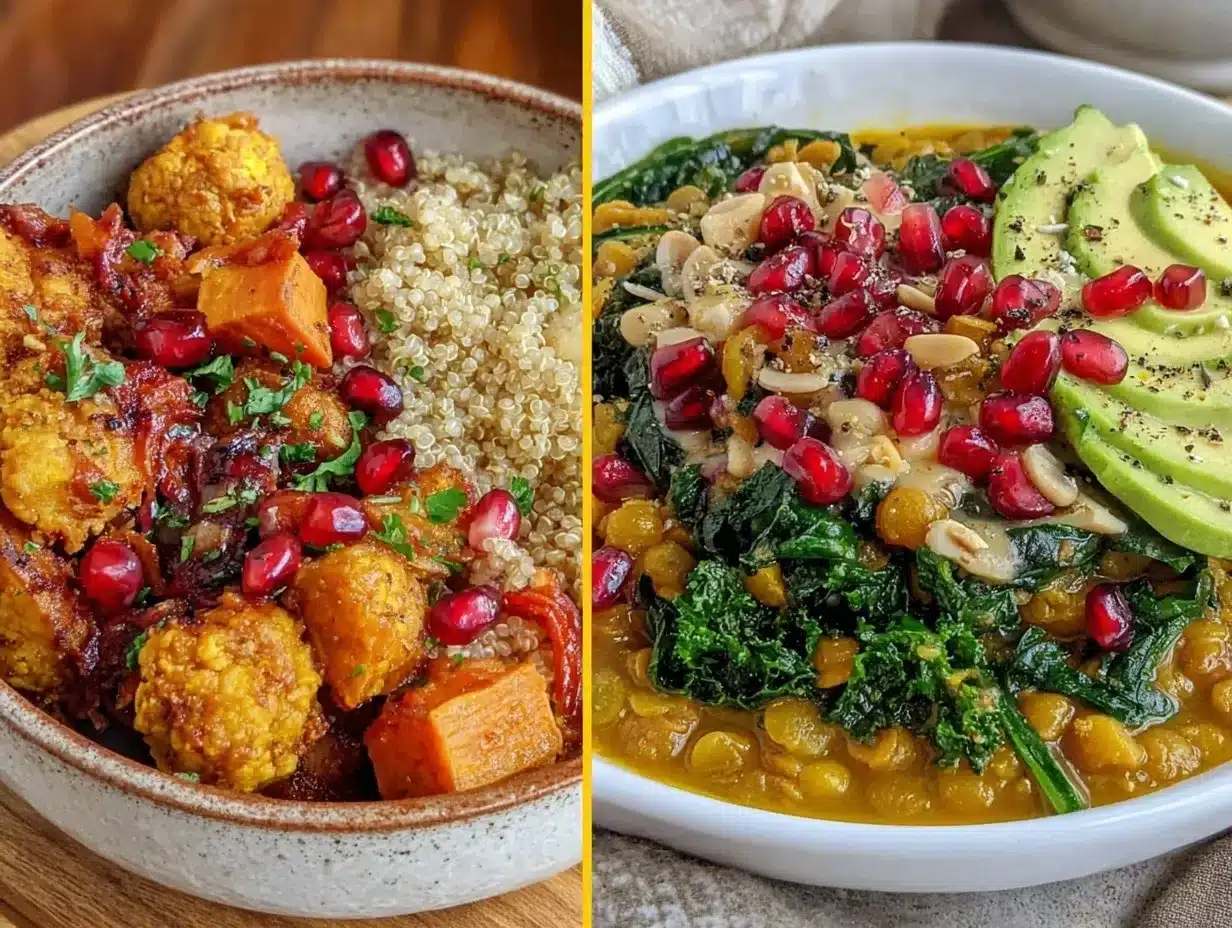
- Plan Your Week: Begin by reviewing the meal plan and shopping list. Allocate 1-2 hours on a weekend or day off for prep. This saves you stress on busy days.
- Wash and Chop Vegetables: Rinse all produce thoroughly. Chop cauliflower into bite-size florets, peel and cube sweet potatoes, slice bell peppers, and finely chop herbs. Store in airtight containers or zip-top bags in the fridge.
- Cook Grains and Legumes: Rinse 2 cups (370 g) of quinoa and 1 cup (200 g) of lentils separately. Cook quinoa in 4 cups (950 ml) of water for 15 minutes until fluffy; simmer lentils in 3 cups (710 ml) of water for 20-25 minutes until tender. Drain and cool, then refrigerate.
- Prepare Proteins: For cod, pat dry and marinate with tamari, ginger, and garlic for 15 minutes. For tofu, press out excess moisture, cube, and marinate similarly. For chickpeas, rinse and drain well.
- Roast Vegetables: Preheat oven to 375°F (190°C). Toss cauliflower and sweet potatoes with olive oil, turmeric, cinnamon, salt, and pepper. Spread evenly on a baking sheet. Roast for 25-30 minutes, turning halfway, until tender and golden on edges.
- Make Soup Base: In a large pot, sauté 1 tablespoon olive oil over medium heat. Add minced garlic, grated ginger (1 tablespoon), and chopped onions. Cook for 3-4 minutes until fragrant. Add roasted vegetables, 4 cups (950 ml) vegetable broth, and simmer for 15 minutes.
- Blend Soup: Use an immersion blender or transfer to a blender in batches. Blend until smooth but still a little textured for body. Adjust salt and pepper to taste.
- Assemble Salads and Snacks: Mix quinoa with chopped herbs, pumpkin seeds, and a squeeze of lemon juice. Store in the fridge to grab-and-go. Prepare fresh cucumber and carrot sticks for snacking.
- Package Meals: Portion out meals into containers for the week. Label with dates and ingredients if helpful. Keep dressings separate until ready to eat to avoid sogginess.
- Stay Flexible: Use leftovers creatively—add roasted veggies to salads or grain bowls. This reduces waste and keeps flavors interesting.
Timing tip: While grains cook, prep vegetables and proteins so nothing sits waiting too long. If soup feels too thick after blending, add a splash of almond milk or broth to loosen.
If you notice your roasted cauliflower isn’t crisping up, make sure your oven is fully preheated and don’t overcrowd the pan. Spread pieces out for even roasting.
Cooking Tips & Techniques
One thing I’ve learned is that roasting is a game-changer for anti-inflammatory meals—it brings out sweetness and texture in vegetables that steaming just can’t match. But, roasting demands patience. Don’t rush by turning up the heat; a steady 375°F (190°C) lets spices bloom and edges caramelize without burning.
When you’re blending soups, keep some texture. Pureed soup can feel too flat, so leaving tiny chunks or adding a handful of toasted nuts on top adds welcome crunch.
I used to make the mistake of over-salting early in cooking. Season lightly at the start, then adjust at the end—flavors intensify during simmering.
Batch-cooking grains helps immensely. Cook once, eat twice or thrice. Quinoa and lentils reheat well and can be tossed cold into salads like the fresh quinoa salad I often whip up, which pairs beautifully with roasted veggies.
Multitasking in the kitchen is key. Roasting happens while grains cook, and prepping snacks while soups simmer. It’s a rhythm that saves time and keeps you engaged without feeling overwhelmed.
Finally, trust your senses. Smell, taste, and look at your food as you go. If something smells off or tastes bland, tweak it. Cooking is as much about listening as following directions.
Variations & Adaptations
- Dietary Swaps: Use coconut yogurt instead of Greek yogurt for dairy-free. Swap brown rice for quinoa if you want a lighter grain. Almond flour works well for baked snacks in place of oats.
- Seasonal Twists: In warmer months, replace root vegetables with fresh zucchini or summer squash. Add fresh berries to salads or snacks for a sweet and tart contrast.
- Flavor Adjustments: For more spice, add a pinch of cayenne pepper to soups or roasted veggies. Try swapping tamari for a splash of balsamic vinegar in dressings for tangier notes.
- Cooking Methods: If you don’t have an oven, stovetop roasting in a cast iron skillet works nicely for veggies—just keep stirring often to avoid burning.
- Personal Favorite Variation: I love making the miso-glazed cod with a side of roasted fennel and orange from this plan. It’s a refreshing, umami-packed twist that never gets old.
Serving & Storage Suggestions
Most meals in this plan taste best warm but can be enjoyed at room temperature. Soups and stews are comforting served hot, while grain salads shine slightly chilled—or at least not straight from the fridge.
Try pairing the roasted turmeric cauliflower with a fresh cucumber and basil sparkling water for a refreshing contrast. The herbal fizz cuts through the warmth and richness.
Store leftovers in airtight containers in the fridge for up to 4 days. For longer storage, freeze soups and cooked grains in portioned containers to thaw as needed.
Reheat soups gently on the stove or microwave, stirring occasionally. Add a splash of water or almond milk if the consistency thickens too much.
Flavors often deepen after a day or two, especially in soups and stews. This plan encourages batch cooking because meals keep improving overnight.
Nutritional Information & Benefits
This Healthy 7-Day Anti-Inflammatory Meal Plan provides balanced nutrition with approximately 400-600 calories per meal, rich in fiber, antioxidants, and healthy fats. It’s naturally gluten-free and low in refined sugars.
Key ingredients like turmeric and ginger contain curcumin and gingerol, compounds known for their anti-inflammatory and antioxidant properties. Leafy greens and cruciferous vegetables contribute vitamins A, C, K, and folate.
The inclusion of omega-3 rich fish like cod supports heart health, while nuts and seeds provide plant-based proteins and healthy fats.
From a wellness perspective, this meal plan supports digestion, reduces inflammation-related discomfort, and promotes steady energy without blood sugar spikes.
If you have allergies, note that some recipes include nuts and fish—these can be substituted with seeds or plant proteins as needed.
Conclusion
This Healthy 7-Day Anti-Inflammatory Meal Plan with Prep Guide isn’t just a list of meals—it’s a roadmap to feeling better through food that tastes good and fits real life. I love how it combines everyday ingredients into dishes that soothe and satisfy without making me feel like I’m missing out.
Customize it based on what you like and what’s available. Swap veggies, play with spices, and take the prep guide at your own pace. Food is meant to bring joy as much as health.
If you try this plan, I’d be happy to hear about your tweaks or favorite meals. Sharing your experience helps everyone learn and grow in the kitchen.
Here’s to eating well without stress and finding comfort in every bite.
Frequently Asked Questions
What is an anti-inflammatory meal plan?
An anti-inflammatory meal plan focuses on foods that help reduce inflammation in the body, like fruits, vegetables, whole grains, nuts, and healthy fats, while limiting processed foods and sugars.
Can I follow this meal plan if I’m gluten-free?
Yes! Most recipes use naturally gluten-free ingredients like quinoa, rice, and vegetables. Just avoid any grains containing gluten and double-check packaged items.
How do I store meals from the prep guide?
Store meals in airtight containers in the refrigerator for up to 4 days. Soups and grains can also be frozen in portions for longer storage.
Can I substitute fish with plant-based proteins?
Absolutely. Firm tofu, tempeh, or legumes like chickpeas and lentils make great plant-based alternatives rich in protein and nutrients.
Is this meal plan suitable for weight loss?
While the plan emphasizes nutrient-dense, whole foods and portion control, weight loss depends on overall calorie intake and activity level. This plan supports healthy eating habits for many goals.
Pin This Recipe!
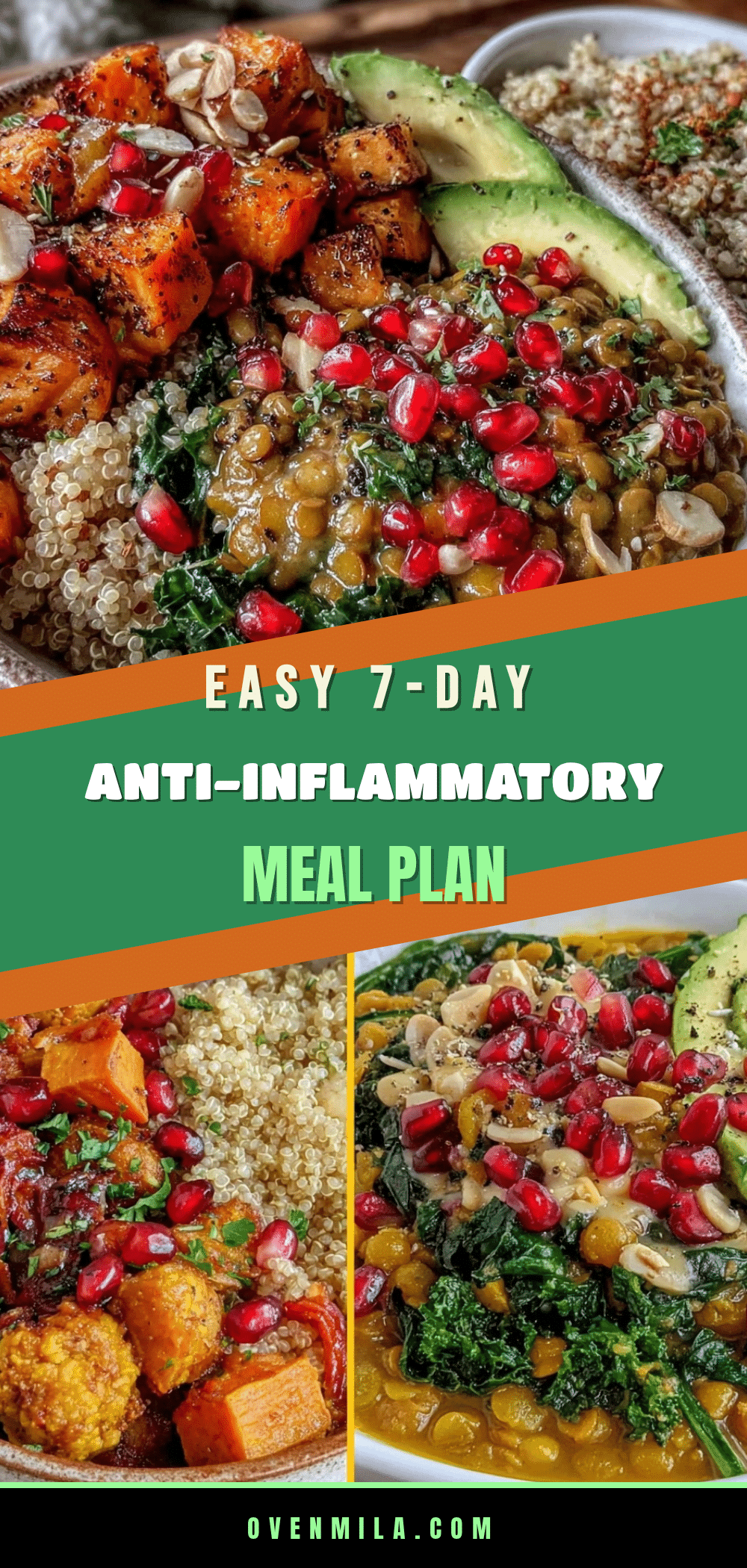
Healthy 7-Day Anti-Inflammatory Meal Plan with Easy Prep Guide for Best Results
A practical and flavorful 7-day meal plan designed to reduce inflammation with simple, wholesome ingredients and easy prep steps. This plan balances bold flavors and gentle nourishment for a sustainable, enjoyable eating experience.
- Prep Time: 1-2 hours (batch prep)
- Cook Time: 45-60 minutes (varies by recipe)
- Total Time: 2-3 hours (including prep and cooking for batch meals)
- Yield: Multiple servings for 7 days (varies by meal)
- Category: Main Course / Meal Plan
- Cuisine: Healthy / Anti-Inflammatory
Ingredients
- Turmeric (ground or fresh)
- Fresh ginger root
- Cinnamon sticks or ground cinnamon
- Garlic cloves
- Fresh basil
- Fresh dill
- Fresh parsley
- Freshly cracked black pepper
- Sea salt
- Cauliflower florets
- Medium-sized sweet potatoes
- Kale or spinach (washed and chopped)
- Cucumbers
- Carrots
- Fennel bulbs
- Bell peppers
- Red onions
- Wild-caught cod fillets
- Canned chickpeas (drained and rinsed)
- Firm tofu (pressed and cubed)
- Walnuts
- Pumpkin seeds
- Quinoa (preferably organic)
- Brown rice
- Lentils (green or red)
- Rolled oats
- Plain Greek yogurt or coconut yogurt (dairy-free option)
- Almond milk or oat milk (unsweetened)
- Extra virgin olive oil
- Avocado oil
- Apple cider vinegar
- Raw honey or maple syrup
- Low-sodium tamari or coconut aminos
- Fresh lemon and lime (for zest and juice)
- Ripe avocados
- Smoked paprika
Instructions
- Plan your week by reviewing the meal plan and shopping list. Allocate 1-2 hours on a weekend or day off for prep.
- Wash all produce thoroughly. Chop cauliflower into bite-size florets, peel and cube sweet potatoes, slice bell peppers, and finely chop herbs. Store in airtight containers or zip-top bags in the fridge.
- Rinse 2 cups of quinoa and 1 cup of lentils separately. Cook quinoa in 4 cups of water for 15 minutes until fluffy; simmer lentils in 3 cups of water for 20-25 minutes until tender. Drain and cool, then refrigerate.
- Prepare proteins: For cod, pat dry and marinate with tamari, ginger, and garlic for 15 minutes. For tofu, press out excess moisture, cube, and marinate similarly. For chickpeas, rinse and drain well.
- Preheat oven to 375°F (190°C). Toss cauliflower and sweet potatoes with olive oil, turmeric, cinnamon, salt, and pepper. Spread evenly on a baking sheet. Roast for 25-30 minutes, turning halfway, until tender and golden on edges.
- In a large pot, sauté 1 tablespoon olive oil over medium heat. Add minced garlic, grated ginger (1 tablespoon), and chopped onions. Cook for 3-4 minutes until fragrant.
- Add roasted vegetables and 4 cups vegetable broth to the pot. Simmer for 15 minutes.
- Use an immersion blender or transfer to a blender in batches. Blend until smooth but still a little textured. Adjust salt and pepper to taste.
- Mix quinoa with chopped herbs, pumpkin seeds, and a squeeze of lemon juice. Store in the fridge to grab-and-go.
- Prepare fresh cucumber and carrot sticks for snacking.
- Portion out meals into containers for the week. Label with dates and ingredients if helpful. Keep dressings separate until ready to eat to avoid sogginess.
- Use leftovers creatively by adding roasted veggies to salads or grain bowls to reduce waste and keep flavors interesting.
Notes
Roasting vegetables at 375°F allows spices to bloom and edges to caramelize without burning. Keep some texture in blended soups for better mouthfeel. Season lightly at the start and adjust at the end. Batch cooking grains saves time and reduces waste. Use leftovers creatively. If soup is too thick, add almond milk or broth to loosen. For stovetop roasting, use a cast iron skillet and stir often to avoid burning.
Nutrition
- Serving Size: One meal portion fro
- Calories: 400600
- Sugar: 510
- Sodium: 300500
- Fat: 1525
- Saturated Fat: 24
- Carbohydrates: 4060
- Fiber: 812
- Protein: 2030
Keywords: anti-inflammatory, healthy meal plan, easy prep, turmeric, ginger, roasted vegetables, quinoa, gluten-free, plant-based, batch cooking