The first Friendsgiving I ever hosted, I stood in my tiny kitchen at 7 p.m. on a Friday, staring at a fully cooked ham that felt way too fancy for a bunch of us eating off paper plates. My roommate had brought her famous mac and cheese, someone else showed up with a pie that was mostly crust, and I had this ham—pale, sad-looking, and screaming for help. I grabbed the brown sugar from the pantry, some butter that was already half-melted on the counter, and just started winging it. That was the moment I accidentally created the thing everyone still talks about, years later. It wasn’t pretty, but the glaze caramelized into this sticky, salty-sweet crust that made people stop mid-conversation.
Friendsgiving has this beautiful lack of pressure, you know? It’s not about impressing your aunt or following a four-page timeline. It’s about feeding the people who actually help you move apartments. And a brown sugar glazed ham fits that vibe perfectly—it feels special without demanding a whole day of babysitting. The glaze does the heavy lifting, and honestly, the ham does most of the work itself. You just need to show up with a little patience and a lot of brown sugar.
This recipe came from that chaotic Friday night, and I’ve tweaked it every year since. It’s forgiving, it’s impressive, and it makes your entire apartment smell like a holiday candle. The kind of meal that makes everyone linger at the table a little longer, even after the plates are empty.
Why You’ll Love This Recipe
I’ve tested this brown sugar glazed ham more times than I care to admit—through dry years, sticky disasters, and one memorable occasion where I forgot the mustard entirely. This version is the one that finally worked every single time.
- Stress-Free Showstopper: The oven does most of the work. You’re looking at about 15 minutes of active prep, then just basting every so often while you hang out with your guests.
- Pantry-Friendly Ingredients: Brown sugar, butter, mustard, spices—you probably have most of this already. No special trips to three different stores.
- Perfect for a Crowd: A bone-in ham feeds a small army. Leftovers are basically guaranteed, which means ham sandwiches for days.
- That Irresistible Glaze: The caramelized crust is the star. It’s sticky, slightly tangy, and absolutely addictive. People will pick at the edges when you’re not looking.
- Comfort Food, Elevated: It hits that sweet spot between casual and special. Your friends will feel celebrated, but you won’t feel exhausted.
What makes this different from other glazed ham recipes is the technique. Instead of just brushing the glaze on top and hoping for the best, I score the ham in a diamond pattern and let the glaze seep into every crevice. The mustard cuts through the sweetness, and the cloves add this warm, aromatic depth that screams “holiday” without being overpowering. It’s not just another recipe—it’s the one you’ll come back to every year.
What Ingredients You Will Need
This recipe relies on simple, pantry-friendly ingredients that come together to create something genuinely special. No obscure spices or hard-to-find specialty items—just honest, flavorful components that work in harmony.
- 1 fully cooked bone-in spiral-cut ham (8-10 pounds) – I prefer a spiral-cut ham because it’s already pre-sliced, which makes serving effortless. Look for one that’s labeled “fully cooked” or “ready to eat.” You’re essentially just warming it through and adding flavor. I’ve had great results with the Kirkland brand from Costco, but any reputable brand works. If you can, choose one that’s not injected with too much water or brine—it affects the texture.
- 1 cup packed light brown sugar – Light brown sugar has a milder molasses flavor than dark, which lets the other ingredients shine. Pack it firmly into the measuring cup for accuracy. Dark brown sugar works too, but it will give a deeper, almost caramel-like flavor.
- 1/3 cup honey – Honey adds floral sweetness and helps the glaze get that gorgeous sticky consistency. Local honey is great if you have it, but any pure honey works. Avoid the stuff that’s labeled “honey-flavored syrup”—it’s not the same.
- 1/4 cup Dijon mustard – This is the secret weapon. Dijon cuts through the sweetness with its sharp, tangy kick. Don’t skip it, and don’t substitute yellow mustard—it’s too mild and won’t give you the same balance. I use Maille or Grey Poupon.
- 2 tablespoons apple cider vinegar – A splash of acidity brightens everything up. It balances the richness of the ham and keeps the glaze from being cloying. If you don’t have apple cider vinegar, white wine vinegar or even fresh lemon juice works in a pinch.
- 1 teaspoon ground cloves – Cloves bring that warm, aromatic holiday flavor. A little goes a long way, so don’t overdo it. If you only have whole cloves, you can grind them yourself or just skip them—the recipe still works without.
- 1/2 teaspoon ground cinnamon – Cinnamon adds warmth and depth. It pairs beautifully with the brown sugar and cloves. Vietnamese cinnamon is especially fragrant if you have it.
- 1/4 teaspoon ground nutmeg – Nutmeg is subtle but noticeable. Freshly grated is always better, but pre-ground works fine. It adds a cozy, slightly nutty undertone.
- 2 tablespoons unsalted butter, melted – Butter enriches the glaze and helps it caramelize. Use unsalted so you can control the salt level. If you only have salted butter, reduce the added salt elsewhere.
- Optional: whole cloves for studding – If you want that classic look, you can press whole cloves into the ham before baking. They’re purely decorative, so feel free to skip them. Just warn your guests to remove them before eating!
Equipment Needed
You don’t need a professional kitchen to pull this off. Here’s what you’ll need:
- Large roasting pan with a rack – The rack keeps the ham elevated so it cooks evenly and the glaze doesn’t burn on the bottom. If you don’t have a rack, you can use crumpled aluminum foil as a makeshift one. I’ve done this more times than I’d like to admit.
- Sharp knife – For scoring the ham. A good chef’s knife or a carving knife works. A dull knife will just tear the surface, so make sure it’s sharp.
- Small saucepan – For making the glaze. A 1-quart saucepan is perfect.
- Basting brush – Silicone brushes are easier to clean, but a natural bristle brush works too. You can also use a spoon if you’re in a pinch.
- Aluminum foil – For tenting the ham while it rests. Heavy-duty foil is best.
- Meat thermometer – Even though the ham is fully cooked, a thermometer ensures it’s heated through to the perfect temperature. An instant-read thermometer is ideal.
- Carving board or large platter – For serving. Make sure it has a rim to catch any juices.
I’ve made this ham with just a baking dish and a spoon before, and it still turned out great. Don’t let fancy equipment stop you.
Preparation Method
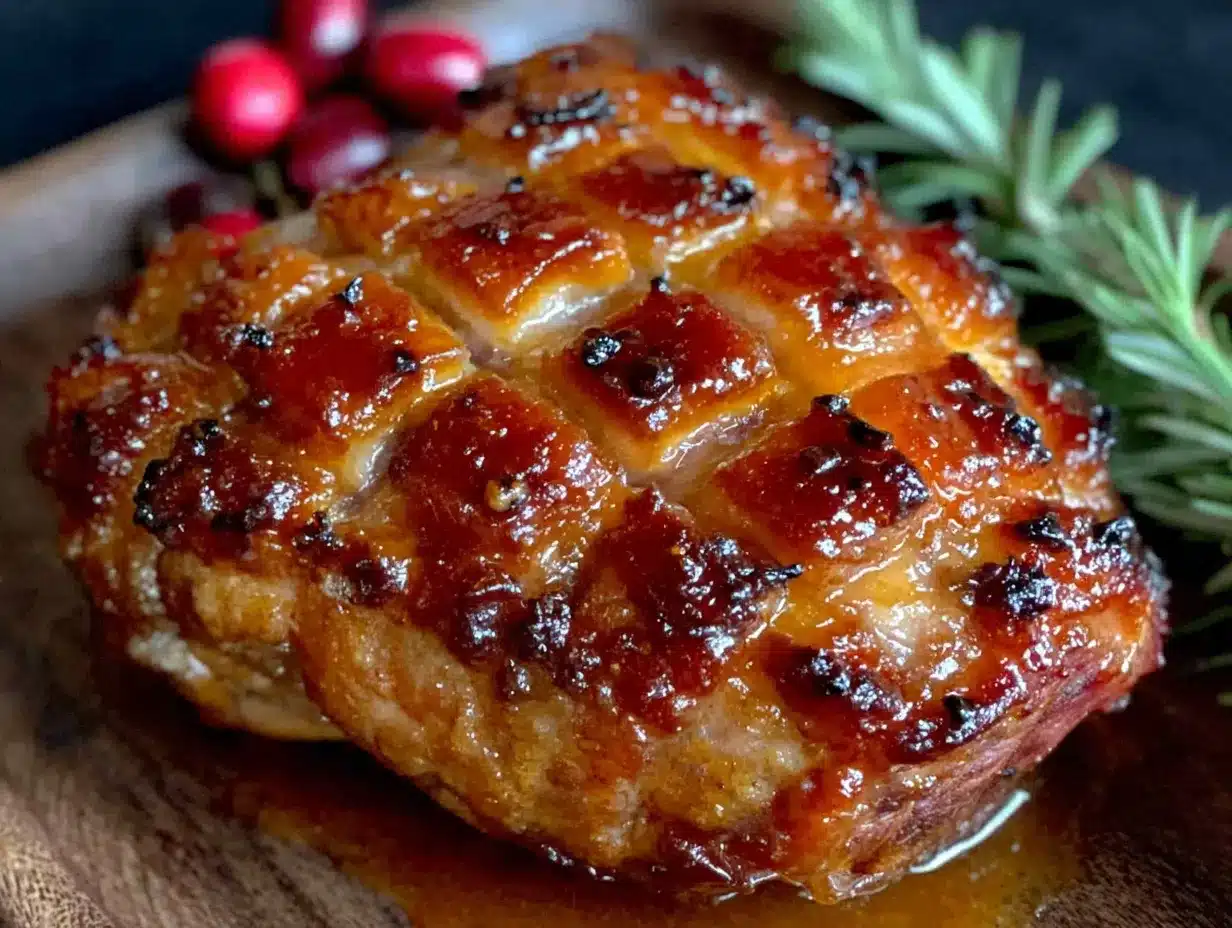
Let’s get to the good part. Follow these steps, and you’ll have a ham that looks like it belongs on a magazine cover.
- Preheat your oven to 325°F (163°C). Position the rack in the lower third of the oven. You want the ham to sit in the middle, not too close to the top heating element.
- Remove the ham from its packaging and pat it completely dry with paper towels. This is important—any excess moisture will steam the surface instead of letting it caramelize. Discard any plastic disk or cap that might be covering the bone.
- Score the ham in a diamond pattern. Using a sharp knife, make shallow cuts about 1/4 inch deep in a crosshatch pattern across the entire surface. Space the cuts about 1 inch apart. This creates pockets for the glaze to seep into and gives you those beautiful caramelized edges.
- Place the ham cut-side down on the rack in your roasting pan. Add about 1/2 cup of water to the bottom of the pan—this prevents the drippings from burning and creates a little steam to keep the ham moist.
- Cover the ham tightly with aluminum foil and bake for 1 hour and 15 minutes. This initial uncovered time lets the ham warm through gently without the glaze burning.
- While the ham bakes, make the glaze. In a small saucepan over medium heat, combine the brown sugar, honey, Dijon mustard, apple cider vinegar, ground cloves, cinnamon, and nutmeg. Whisk until the sugar dissolves and the mixture is smooth, about 2-3 minutes. Remove from heat and stir in the melted butter. Taste it—it should be sweet, tangy, and warm with spices. Adjust if needed.
- After 1 hour and 15 minutes, remove the ham from the oven and carefully take off the foil. Brush a generous layer of glaze all over the ham, making sure to get it into the scored lines. Don’t be shy—use about half the glaze.
- Return the ham to the oven, uncovered, and bake for another 30 minutes. Then brush on another layer of glaze. Repeat this process every 20-30 minutes until you’ve used all the glaze. Total baking time after the initial covered period should be about 1 to 1.5 hours, depending on your ham’s size.
- Check the internal temperature. Insert your meat thermometer into the thickest part of the ham, avoiding the bone. You’re looking for 140°F (60°C). If it’s not there yet, keep basting and checking every 10 minutes.
- Once it hits 140°F, remove the ham from the oven and tent it loosely with foil. Let it rest for at least 15-20 minutes. This is crucial—the juices redistribute, and the glaze sets into that perfect sticky crust.
- Transfer the ham to a carving board and slice along the pre-cut lines. Arrange on a platter and spoon any remaining pan juices over the top. Serve warm.
Pro tip: The glaze will look dark and slightly burnt in spots—that’s exactly what you want. Those bits are the most flavorful part.
Cooking Tips & Techniques
I’ve made every mistake in the book so you don’t have to. Here’s what I’ve learned:
- Don’t skip the scoring. I made this mistake my second year, thinking it was just for looks. The glaze barely stuck, and the ham was pretty but boring. Scoring creates texture and flavor pockets—it’s non-negotiable.
- Low and slow wins the race. I once cranked the oven to 400°F because I was running late. The glaze burned before the ham was even warm in the center. Stick to 325°F. Patience pays off.
- Let it rest. I know it’s tempting to slice into it immediately, especially when everyone is staring at you with hungry eyes. But if you cut too soon, all those juices run out onto the board, and you end up with dry ham. Fifteen minutes. Set a timer if you have to.
- Use a meat thermometer. Guessing is for amateurs. A thermometer takes the stress out of the equation. I use a Thermapen, and it’s worth every penny.
- Make extra glaze. Seriously. Double the glaze recipe if you’re feeding a crowd. You’ll want extra for drizzling, and it keeps in the fridge for weeks. I’ve been known to make a batch just for dipping leftover ham sandwiches.
- Watch the bottom of the pan. If the drippings start to burn, add a splash of water or apple juice to the pan. This also creates more steam, which keeps the ham moist.
Variations & Adaptations
This recipe is incredibly flexible. Here are some ways to make it your own:
- Spicy Brown Sugar Glaze: Add 1 teaspoon of cayenne pepper or chipotle powder to the glaze. The heat cuts through the sweetness beautifully. I tried this for a Friendsgiving with my spice-loving crew, and it was a hit. Pair it with a side of creamy dill potato salad with bacon for a sweet-and-spicy combo.
- Maple-Bourbon Glaze: Replace the honey with 1/3 cup of pure maple syrup and add 2 tablespoons of bourbon. The bourbon adds a smoky warmth that’s incredible with the brown sugar. Just cook the glaze a little longer to burn off the alcohol.
- Pineapple-Infused Ham: Place pineapple rings on the ham using toothpicks before baking. The pineapple caramelizes and adds a tropical sweetness. This is my mom’s favorite variation, and it always looks stunning on the table.
- Honey Garlic Twist: Add 4 minced garlic cloves to the glaze. The garlic mellows as it bakes and adds a savory depth that balances the sugar. This is perfect if you’re serving a crowd with varied tastes.
- Gluten-Free Option: This recipe is naturally gluten-free as written. Just double-check your Dijon mustard and ham to ensure no hidden gluten. Most are fine, but it’s always worth a quick label check.
- Slow Cooker Method: If your oven is occupied, you can absolutely make this in a slow cooker. Place the scored ham in a large slow cooker, pour the glaze over it, and cook on low for 4-5 hours. Baste occasionally if you can. The glaze won’t caramelize the same way, but it will be incredibly tender and flavorful.
Serving & Storage Suggestions
This ham is the centerpiece, so let it shine. Here’s how to serve and store it:
- Serving temperature: Serve the ham warm, right after the resting period. It’s also delicious at room temperature, which makes it perfect for buffets or self-serve gatherings.
- Presentation: Arrange the sliced ham on a large platter, overlapping the slices slightly. Drizzle any remaining pan juices over the top. Garnish with fresh rosemary sprigs or parsley for a pop of color. I sometimes add pomegranate seeds for a festive touch.
- What to serve with it: This ham pairs beautifully with classic sides. A creamy dill potato salad with bacon is a no-brainer, or try a fresh Greek orzo pasta salad for something lighter. For dessert, a no-bake strawberry cheesecake icebox cake is the perfect sweet finish.
- Storage: Store leftover ham in an airtight container in the refrigerator for up to 5 days. The glaze will continue to penetrate the meat, making the leftovers even better.
- Freezing: Ham freezes beautifully. Slice it first, then wrap tightly in plastic wrap and aluminum foil, or use a freezer-safe bag. It will keep for up to 3 months. Thaw overnight in the refrigerator before reheating.
- Reheating: To reheat, place slices in a baking dish with a splash of water or apple juice, cover with foil, and warm in a 300°F oven for 10-15 minutes. You can also reheat individual slices in the microwave for about 30 seconds, but the oven method preserves the texture better.
- Flavor development: The flavors actually deepen after a day or two in the fridge. Cold ham sandwiches with a little extra glaze are one of my favorite post-Friendsgiving meals.
Nutritional Information & Benefits
Here’s a rough estimate per serving (based on 16 servings):
- Calories: Approximately 450-500
- Protein: 35-40g
- Fat: 25-30g
- Carbohydrates: 20-25g
- Sugar: 18-22g (mostly from the glaze)
- Sodium: 1500-1800mg (ham is naturally high in sodium)
Ham is a good source of high-quality protein, which is essential for muscle repair and satiety. It also provides B vitamins, particularly B12 and B6, which support energy metabolism. The brown sugar glaze adds some quick energy, but it’s balanced by the protein and fat, so you won’t get a sugar crash.
If you’re watching your sodium intake, look for a low-sodium ham or rinse it before cooking. You can also reduce the salt in the glaze slightly, though the ham itself will still contribute the majority of the sodium.
This recipe contains potential allergens: pork (obviously), and the glaze contains mustard. It is gluten-free as written, but always verify your specific ingredients if you have celiac disease or a severe gluten sensitivity.
Conclusion
This brown sugar glazed ham is the recipe that turned me into the “ham person” among my friends. It’s the dish I’m asked to bring to every gathering, the one that disappears fastest, and the one that makes people ask for the recipe before they’ve even finished their first slice. But more than that, it’s the recipe that taught me that you don’t need to be a professional chef to create something memorable. You just need good ingredients, a little patience, and the willingness to trust the process.
I hope you make this for your Friendsgiving, or your regular Thanksgiving, or just a random Tuesday when you want to feel fancy. I hope you customize it, make it your own, and share it with people you love. And when you do, I’d love to hear about it. Drop a comment below, tag me in your photos, or tell me about your own glaze experiments. That’s what this is all about—connecting over food and making memories that stick.
Now go make that ham. Your friends are waiting.
Frequently Asked Questions
Can I use a boneless ham instead of bone-in?
Absolutely. Boneless hams work just as well, though they tend to cook a little faster since they’re more compact. Adjust your cooking time accordingly and always rely on your meat thermometer for accuracy. The glaze will still caramelize beautifully.
How do I prevent the glaze from burning?
The key is to baste frequently and watch your oven temperature. If you notice the glaze getting too dark too quickly, tent the ham loosely with foil for the remainder of the cooking time. Also, make sure there’s enough liquid in the bottom of the pan—a dry pan leads to burnt drippings.
Can I make the glaze ahead of time?
Yes! You can make the glaze up to 3 days in advance. Store it in an airtight container in the refrigerator. When you’re ready to use it, gently reheat it on the stovetop or in the microwave until it’s pourable. You may need to whisk in a splash of water if it’s too thick.
What’s the best way to reheat leftover ham without drying it out?
The oven method is your best bet. Place slices in a baking dish, add a splash of water, apple juice, or even leftover glaze, cover tightly with foil, and warm at 300°F for 10-15 minutes. The steam keeps the meat moist. Avoid the microwave if you can—it tends to toughen the meat.
Can I use this glaze on other meats?
Definitely. This glaze is fantastic on pork chops, pork tenderloin, and even chicken thighs. I’ve also used it on roasted carrots and sweet potatoes for a sweet-savory side dish. It’s versatile enough to experiment with. Just adjust cooking times based on the protein you’re using.
Pin This Recipe!
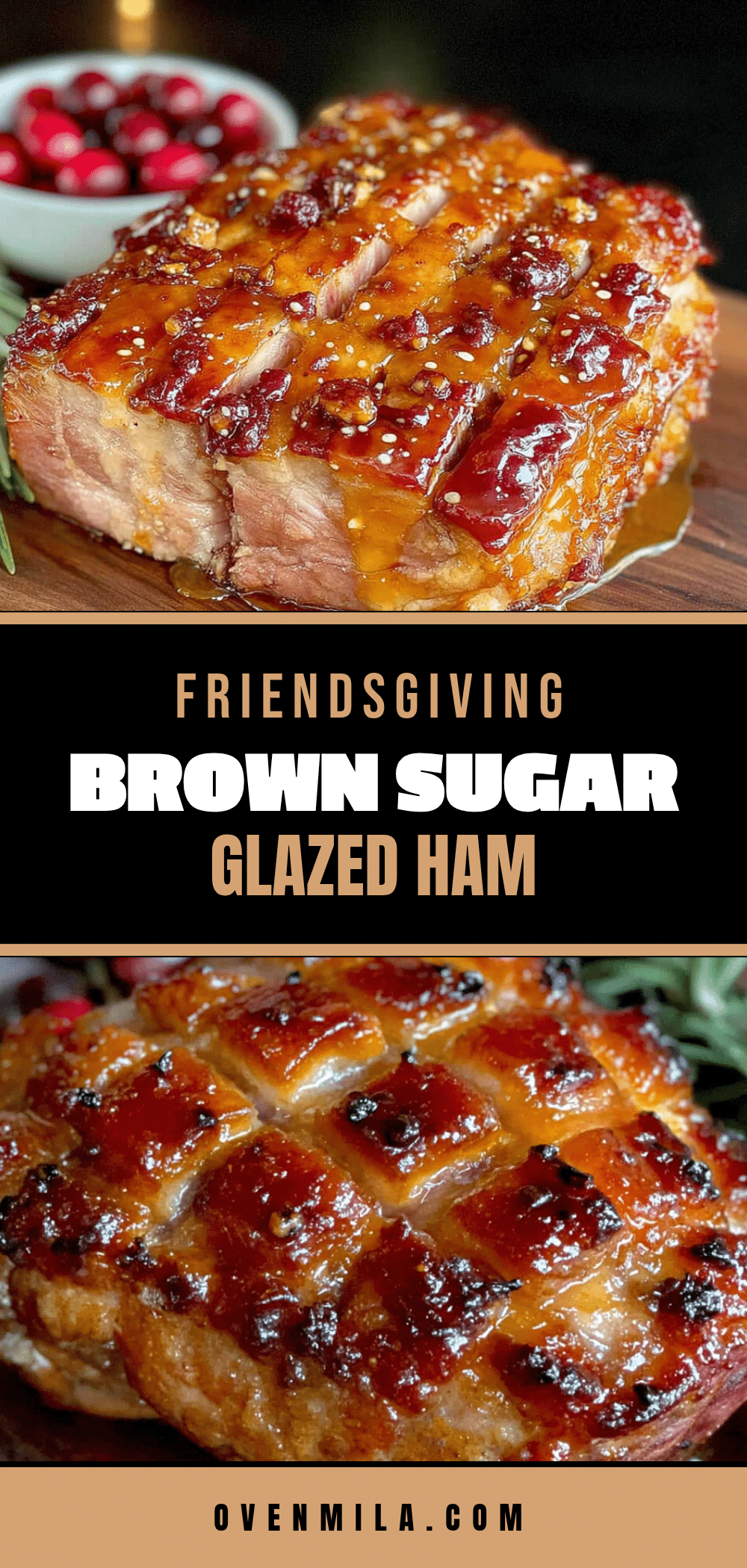
Perfect Brown Sugar Glazed Ham for Easy Friendsgiving Dinner
A stress-free, showstopping brown sugar glazed ham that’s perfect for Friendsgiving. With a sticky, salty-sweet caramelized crust and simple pantry ingredients, this recipe is forgiving, impressive, and makes your entire home smell like a holiday candle.
- Prep Time: 15 minutes
- Cook Time: 2 hours 30 minutes
- Total Time: 2 hours 45 minutes
- Yield: 16 servings 1x
- Category: Main Course
- Cuisine: American
Ingredients
- 1 fully cooked bone-in spiral-cut ham (8–10 pounds)
- 1 cup packed light brown sugar
- 1/3 cup honey
- 1/4 cup Dijon mustard
- 2 tablespoons apple cider vinegar
- 1 teaspoon ground cloves
- 1/2 teaspoon ground cinnamon
- 1/4 teaspoon ground nutmeg
- 2 tablespoons unsalted butter, melted
- Optional: whole cloves for studding
Instructions
- Preheat your oven to 325°F (163°C). Position the rack in the lower third of the oven.
- Remove the ham from its packaging and pat it completely dry with paper towels. Discard any plastic disk or cap covering the bone.
- Score the ham in a diamond pattern. Using a sharp knife, make shallow cuts about 1/4 inch deep in a crosshatch pattern across the entire surface, spacing cuts about 1 inch apart.
- Place the ham cut-side down on the rack in your roasting pan. Add about 1/2 cup of water to the bottom of the pan.
- Cover the ham tightly with aluminum foil and bake for 1 hour and 15 minutes.
- While the ham bakes, make the glaze. In a small saucepan over medium heat, combine the brown sugar, honey, Dijon mustard, apple cider vinegar, ground cloves, cinnamon, and nutmeg. Whisk until the sugar dissolves and the mixture is smooth, about 2-3 minutes. Remove from heat and stir in the melted butter.
- After 1 hour and 15 minutes, remove the ham from the oven and carefully take off the foil. Brush a generous layer of glaze all over the ham, making sure to get it into the scored lines. Use about half the glaze.
- Return the ham to the oven, uncovered, and bake for another 30 minutes. Then brush on another layer of glaze. Repeat this process every 20-30 minutes until you’ve used all the glaze. Total baking time after the initial covered period should be about 1 to 1.5 hours.
- Check the internal temperature. Insert your meat thermometer into the thickest part of the ham, avoiding the bone. You’re looking for 140°F (60°C). If it’s not there yet, keep basting and checking every 10 minutes.
- Once it hits 140°F, remove the ham from the oven and tent it loosely with foil. Let it rest for at least 15-20 minutes.
- Transfer the ham to a carving board and slice along the pre-cut lines. Arrange on a platter and spoon any remaining pan juices over the top. Serve warm.
Notes
Don’t skip scoring the ham—it creates texture and flavor pockets for the glaze. Low and slow (325°F) is key; higher heat burns the glaze before the ham warms through. Let the ham rest for 15-20 minutes before slicing to keep it juicy. The glaze will look dark and slightly burnt in spots—that’s exactly what you want. Make extra glaze for dipping leftovers. If drippings start to burn, add a splash of water or apple juice to the pan.
Nutrition
- Serving Size: 1 serving (based on
- Calories: 475
- Sugar: 20
- Sodium: 1650
- Fat: 27.5
- Saturated Fat: 10
- Carbohydrates: 22.5
- Protein: 37.5
Keywords: brown sugar glazed ham, Friendsgiving ham, holiday ham, glazed ham recipe, easy ham recipe, spiral ham, baked ham