The plate was wiped clean before I even had a chance to grab a second fork. That moment of silence — just the soft clink of cutlery and a few satisfied sighs — told me everything. Someone, again, was nudging me for the recipe. Third time in two weeks. Honestly, I didn’t expect the pan-seared duck breast with cherry port reduction to cause quite such a stir. It started as a quiet experiment on a chilly evening when I was craving something a bit fancy but without the fuss of a multi-hour roast or complicated prep.
I was halfway through searing the duck, the skin crisping to a perfect golden brown, when the sweet-and-tart aroma of the cherry port reduction began to fill the kitchen. That smell — rich, fruity, and a little boozy — somehow pulled everyone from their screens to the table. The duck’s tender, juicy interior paired with that glossy sauce was a quiet reminder that sometimes the simplest ingredients, treated with care, can surprise you with how memorable they become. It’s not just about the taste, but the reactions — a raised eyebrow, a whispered “wow,” the way seconds are grabbed without hesitation.
Looking back, I realize this recipe stuck around because it’s approachable enough for weeknight cooking but special enough to bring out when company drops by. The cherry port reduction adds that subtle lift that makes the dish feel like a celebration without demanding hours in the kitchen. It’s a little piece of comfort and elegance rolled into one.
So yeah, this pan-seared duck breast recipe isn’t just about cooking a meal — it’s about those moments after, the quiet pride in knowing you served something that truly hit the mark. And honestly, there’s something a bit satisfying about surprising people who think duck is too fancy or complicated to pull off. This dish has quietly become my go-to when I want to impress without stress, and I think it might just do the same for you.
Why You’ll Love This Recipe
Having tested this pan-seared duck breast recipe multiple times, I can tell you it ticks all the boxes for a fuss-free yet impressive meal. Whether you’re a casual cook or looking to sharpen your skills, this recipe delivers every time.
- Quick & Easy: Ready in under 30 minutes, making it perfect for busy nights when you want something special without the wait.
- Simple Ingredients: No need for a fancy market run — most ingredients are pantry staples or easy to find at any grocery store.
- Perfect for Dinner Parties: The combination of crisp skin and juicy meat with a luscious cherry port sauce feels elegant enough to serve guests.
- Crowd-Pleaser: This recipe consistently earns compliments from both duck lovers and skeptics alike.
- Unbelievably Delicious: The cherry port reduction balances savory and sweet with a hint of acidity, making each bite rich and refreshing.
What sets this recipe apart? It’s all in the technique — the way the duck skin crisps up while the meat stays tender, and the sauce is reduced just enough to cling to the duck without overpowering it. Plus, I blend fresh cherries with a splash of port wine for a reduction that’s neither too sweet nor too tart. It’s the kind of recipe that makes you close your eyes after the first bite because, honestly, that silky sauce with the rich duck is just the right kind of indulgence.
It’s a meal that invites you to slow down, savor, and maybe even surprise yourself with how simple it is to nail something that feels special. Whether you’re cooking for a date night, a weekend treat, or just because, this duck breast recipe quietly promises a little touch of something memorable every time.
What Ingredients You Will Need
This recipe uses straightforward, wholesome ingredients to create a dish that feels decadent without any complicated steps. Most of these you’ll likely have on hand or can easily pick up during your next grocery run.
For the Duck Breast
- Duck breasts, skin-on, about 6-8 ounces (170-225g) each — look for fresh and firm breasts, ideally from a trusted butcher.
- Salt and freshly ground black pepper — for seasoning the duck to bring out its natural flavors.
- Olive oil or a neutral oil like canola — for the initial sear (I usually use a light drizzle, about 1 tablespoon).
For the Cherry Port Reduction
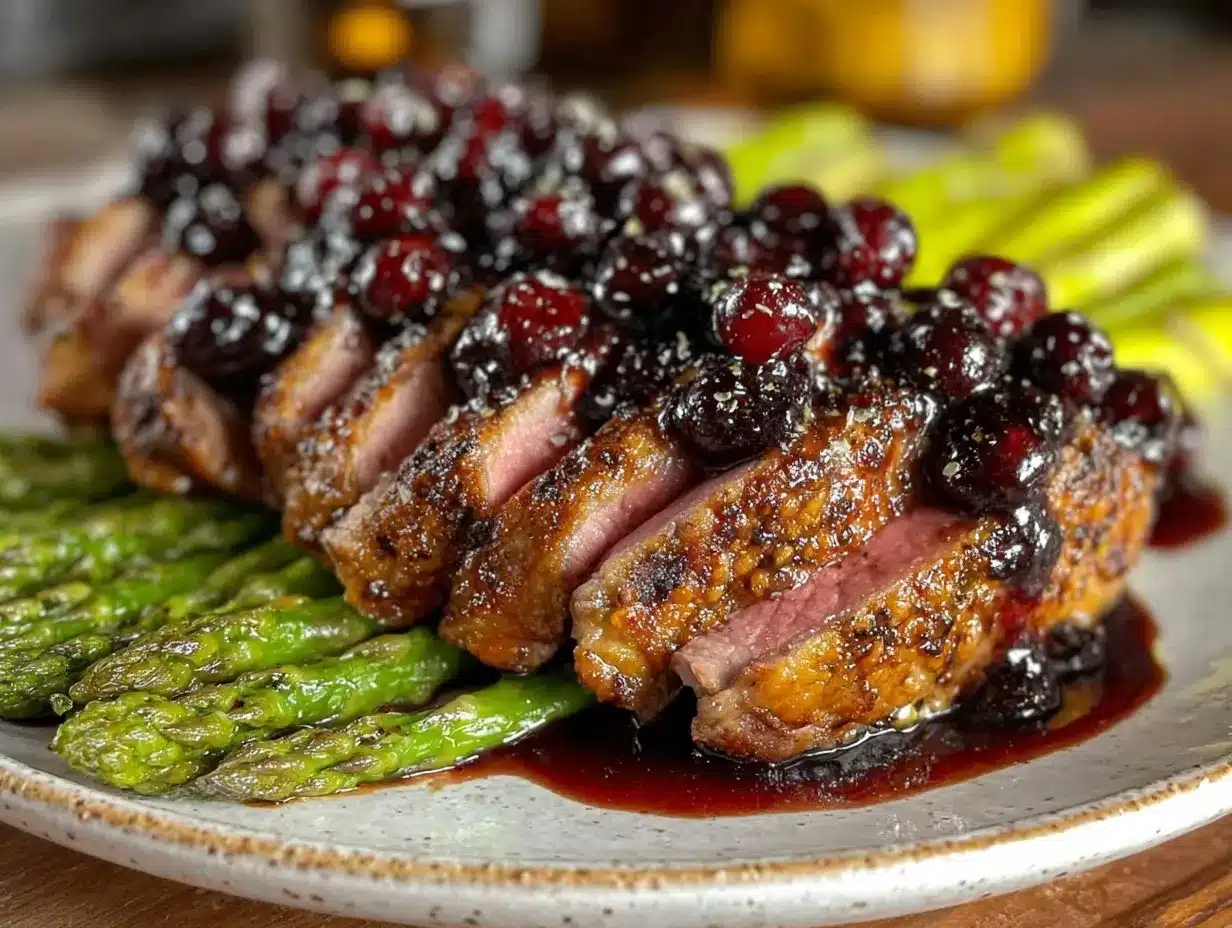
- Fresh or frozen cherries, pitted, about 1 cup (150g) — fresh is best in season, but frozen works well too.
- Port wine, 1/2 cup (120ml) — this adds depth and a subtle fruity sweetness; I prefer a ruby port for richness.
- Shallots, finely chopped, 1 small (about 2 tablespoons) — for a mild onion flavor that complements the cherries.
- Garlic, 1 clove, minced — adds a gentle savory note.
- Balsamic vinegar, 1 tablespoon — balances the sweetness with a touch of acidity.
- Honey or maple syrup, 1 teaspoon — optional, to round out the tartness if needed.
- Butter, 1 tablespoon, cold and cubed — stirred in at the end for a glossy finish.
- Fresh thyme or rosemary sprig (optional) — adds a subtle herbal edge to the sauce.
If you want to experiment, you can swap port wine with a dry red wine or even a fortified wine like Madeira for a slightly different flavor. For a dairy-free option, leave out the butter or replace it with a plant-based alternative. The key is balancing sweet, savory, and acidic elements so the sauce complements the rich duck without overpowering it.
Equipment Needed
- Heavy skillet or cast-iron pan: Essential for getting that crisp, golden skin on the duck. I’ve tried nonstick pans, but the cast iron gives the best sear and heat retention.
- Tongs: For safely flipping the duck breasts without piercing the meat.
- Saucepan or small skillet: To prepare the cherry port reduction while the duck cooks.
- Sharp knife and cutting board: For scoring the duck skin and prepping shallots and garlic.
- Meat thermometer: Optional but handy to check doneness if you want to be precise (target 135°F/57°C for medium-rare).
If you don’t have a cast iron, a heavy stainless steel pan works fine — just make sure it gets evenly hot. For budget-friendly options, you can pick up a decent skillet for under $30, which will last you for years if cared for properly. When cleaning cast iron, avoid soap and instead wipe it down or scrub with coarse salt to maintain the seasoning.
Preparation Method
- Score the duck skin: Using a sharp knife, gently score the skin in a crosshatch pattern, being careful not to cut into the meat. This helps the fat render out and the skin crisp up beautifully. Pat the breasts dry with paper towels to remove excess moisture — this step is key for a good sear. (5 minutes)
- Season the duck breasts: Generously season both sides with salt and pepper. Let them sit at room temperature for about 10 minutes while you prep the sauce ingredients. This helps the meat cook evenly.
- Start the cherry port reduction: In a small saucepan, heat a teaspoon of olive oil over medium heat. Add the finely chopped shallots and sauté until translucent, about 2-3 minutes. Toss in the garlic and cook for another 30 seconds until fragrant.
- Add cherries and liquids: Stir in the cherries, port wine, balsamic vinegar, and honey (if using). Bring the mixture to a simmer and cook gently until it reduces by half and thickens slightly — around 10-12 minutes. Stir occasionally to prevent sticking. If you want a smoother sauce, you can lightly mash the cherries with the back of a spoon or blend briefly.
- Cook the duck breasts: While the sauce simmers, heat your skillet over medium heat. Add the olive oil and place the duck breasts skin-side down. You’ll hear a satisfying sizzle right away. Cook without moving them for 6-8 minutes, allowing the fat to render and the skin to turn crisp and golden brown. (You’ll smell a nutty aroma when it’s just right.)
- Flip and finish cooking: Turn the breasts over and cook for an additional 3-4 minutes for medium-rare doneness. Adjust time if you prefer more well-done. Use a meat thermometer to check if you’re unsure.
- Rest the duck: Transfer the breasts to a cutting board and let them rest for 5 minutes. This keeps the juices locked in and the meat tender.
- Finish the sauce: Remove the herb sprig if used, then whisk in the cold butter cubes until the sauce is glossy and velvety. Taste and adjust seasoning with salt or a splash more balsamic if needed.
- Slice and serve: Slice the duck breasts thinly against the grain. Arrange on plates and drizzle generously with the cherry port reduction. The contrast of the crispy skin, juicy meat, and luscious sauce is a real treat.
Pro tip: When scoring the skin, don’t go too deep — it’s easy to accidentally slice into the meat, which lets the juices escape during cooking. Also, keep an eye on the sauce as it reduces; if it thickens too much, add a splash of water or stock to loosen it up.
Cooking Tips & Techniques
Pan-seared duck breast can feel intimidating, but a few tricks make it straightforward. First off, drying the skin really well before cooking is a game-changer. Moisture is the enemy of crispiness, so patting it completely dry sets you up for success.
Rendering the fat slowly over medium heat is key. Rushing with high heat will burn the skin but leave the fat unrendered, making it greasy rather than crispy. I usually keep the heat steady and resist the urge to flip constantly — patience here pays off with that perfect crunch.
Using a meat thermometer is a little luxury that takes the guesswork out of doneness. Duck breast is best medium-rare to medium; overcooking makes it dry and less enjoyable. If you don’t have one, you can press gently — it should feel firm but with a little spring.
When making the cherry port reduction, keep the heat moderate so the sauce reduces evenly and doesn’t scorch. Stirring often helps, and adding the butter at the end gives it that silky finish you notice in restaurant sauces.
I once botched a batch by rushing the sauce reduction, ending up with a burnt, bitter mess. Lesson learned: slow and steady wins the race. Also, don’t skip resting the duck; it’s tempting to slice immediately, but resting lets the juices redistribute for tender slices.
Variations & Adaptations
This recipe is flexible and can be adapted to suit many tastes and dietary needs.
- Fruit Variations: Swap cherries for fresh or frozen blackberries, blueberries, or even figs for a different flavor profile. Each fruit brings its own sweetness and tartness, giving the sauce a unique twist.
- Alcohol Alternatives: If you prefer not to use port, try a dry red wine or a non-alcoholic grape juice with a splash of vinegar to mimic the acidity.
- Herb Infusions: Experiment with rosemary, sage, or tarragon in the sauce for subtle herbal notes. I love thyme for its earthiness, but rosemary adds a lovely pine aroma.
- Cooking Method: You can finish the duck breasts in a preheated oven at 400°F (200°C) for 5-7 minutes after searing for more even cooking, especially with thicker breasts.
- Dietary Adjustments: For dairy-free, omit the butter or replace with coconut oil. For a lower-sugar sauce, reduce or skip the honey and rely on the natural fruit sweetness.
Personally, I once tried a version with a splash of aged balsamic vinegar and dried cherries, which gave the sauce a deeper complexity and was a hit at a holiday dinner. Don’t be afraid to tweak and make it your own!
Serving & Storage Suggestions
This duck breast recipe is best served warm, right after slicing, to appreciate the contrast between the crisp skin and tender meat. Plate it with a drizzle of cherry port reduction for that glossy, inviting finish.
It pairs beautifully with simple sides like garlic mashed potatoes, roasted carrots, or a fresh green salad tossed with a light vinaigrette. For a touch of elegance, try serving with creamy dill cucumber bites or even a savory lemon herb zucchini fritter to add texture and brightness.
Leftovers keep well in the refrigerator for up to 2 days, sealed tightly. To reheat, gently warm the sliced duck in a skillet over low heat to avoid drying it out, then pour warmed sauce over. Avoid microwaving if possible, as it can toughen the meat.
Flavors tend to meld nicely overnight, making this dish a surprisingly good candidate for next-day enjoyment if you can wait that long!
Nutritional Information & Benefits
A serving of pan-seared duck breast (about 6 ounces/170g) contains roughly 350-400 calories, with 28-32 grams of protein and 25-30 grams of fat, depending on trimming. Duck is rich in iron, zinc, and B vitamins, making it a hearty protein choice.
The cherry port reduction adds antioxidants from fresh cherries, plus a touch of natural sweetness without refined sugars. Using fresh ingredients and controlling the amount of added sweetener means this sauce stays balanced and health-conscious.
This recipe fits well into low-carb and gluten-free diets, provided you check labels on port wine or vinegar if strict about gluten. It’s a meal that offers both indulgence and nutrition when enjoyed mindfully.
Conclusion
In the end, this perfect pan-seared duck breast with cherry port reduction is a dish that quietly wins over hearts and palates. It’s approachable enough to make without fuss yet special enough to bring a little magic to your table. What I love most is how it bridges that gap between everyday cooking and something that feels like a treat.
Feel free to adjust the sauce, swap fruits, or tweak cooking times to suit your preferences — that’s what makes it truly yours. I’m always amazed at how a simple pan and a few good ingredients can deliver such memorable meals.
If you try this recipe, I’d love to hear how it turned out or your personal twists. Cooking is, after all, a shared adventure, and this duck breast is a delicious way to make it a little more special.
Frequently Asked Questions
How do I know when the duck breast is cooked perfectly?
The best way is to use a meat thermometer — aim for an internal temperature of 135°F (57°C) for medium-rare. The skin should be crispy and golden, and the meat tender and juicy.
Can I use frozen duck breasts for this recipe?
Yes, but thaw them completely in the refrigerator before cooking. Pat them dry thoroughly to ensure the skin crisps up properly.
What if I don’t have port wine for the sauce?
You can substitute with a dry red wine or a non-alcoholic grape juice combined with a splash of balsamic vinegar to add acidity and depth.
How can I make the cherry port reduction thicker?
Simmer the sauce gently until it reduces by about half, stirring frequently. If it’s still thin, you can mash some cherries or add a small cornstarch slurry (1 tsp cornstarch mixed with 1 tsp water).
Is it necessary to score the duck skin?
Scoring helps render the fat and crisps the skin evenly. If you skip this step, the skin may not get as crispy and the fat won’t render as well.
Pin This Recipe!
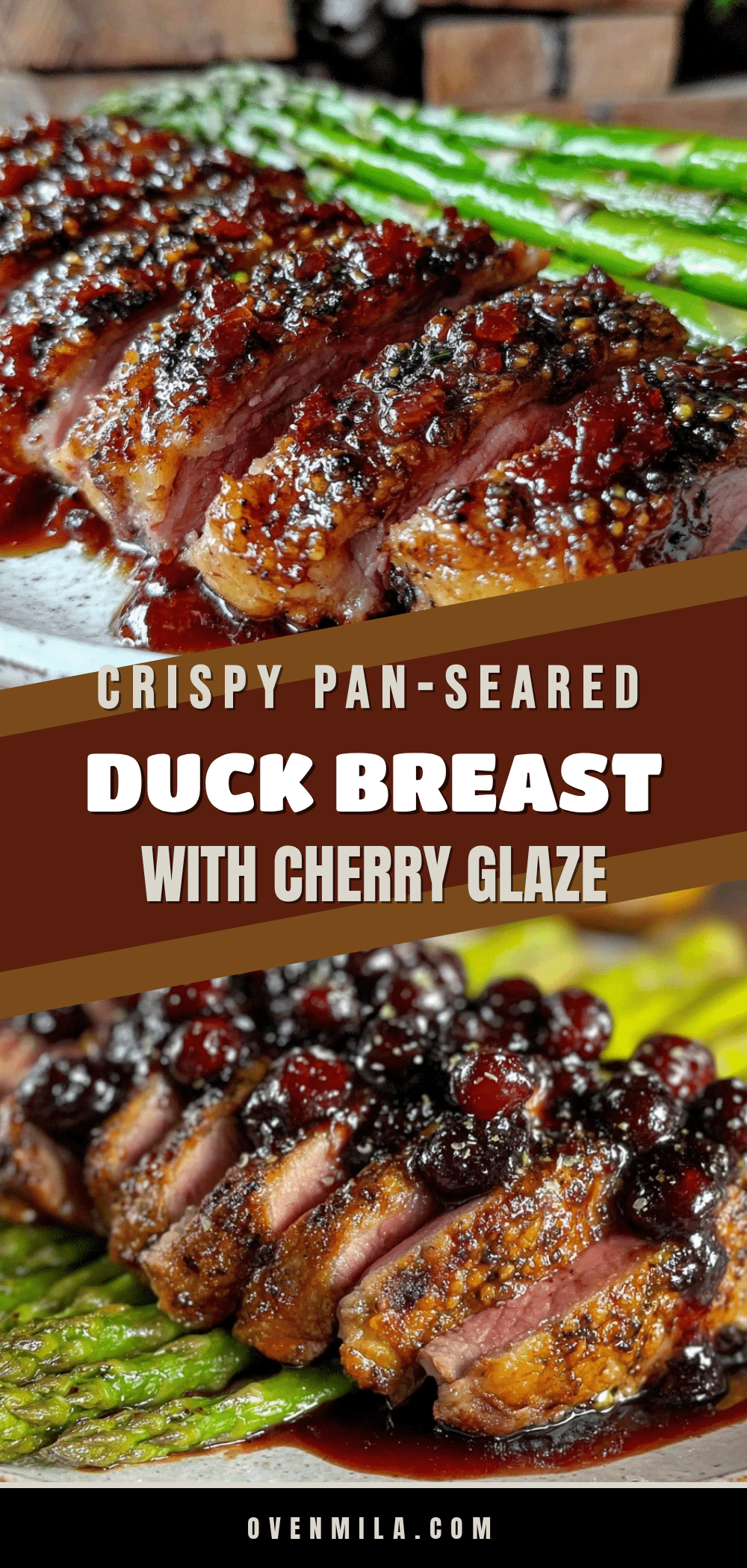
Perfect Pan-Seared Duck Breast Recipe with Easy Cherry Port Reduction

A quick and elegant pan-seared duck breast recipe featuring crispy skin and a luscious cherry port reduction sauce, perfect for weeknight dinners or special occasions.
- Prep Time: 15 minutes
- Cook Time: 15 minutes
- Total Time: 30 minutes
- Yield: 2 servings
- Category: Main Course
- Cuisine: French-inspired
Ingredients
- Duck breasts, skin-on, about 6-8 ounces (170-225g) each
- Salt and freshly ground black pepper, to taste
- Olive oil or neutral oil like canola, about 1 tablespoon
- Fresh or frozen cherries, pitted, about 1 cup (150g)
- Port wine, 1/2 cup (120ml)
- Shallots, finely chopped, 1 small (about 2 tablespoons)
- Garlic, 1 clove, minced
- Balsamic vinegar, 1 tablespoon
- Honey or maple syrup, 1 teaspoon (optional)
- Butter, 1 tablespoon, cold and cubed
- Fresh thyme or rosemary sprig (optional)
Instructions
- Score the duck skin in a crosshatch pattern without cutting into the meat. Pat the breasts dry with paper towels. (5 minutes)
- Season both sides of the duck breasts generously with salt and pepper. Let sit at room temperature for about 10 minutes.
- In a small saucepan, heat a teaspoon of olive oil over medium heat. Add chopped shallots and sauté until translucent, about 2-3 minutes. Add garlic and cook for 30 seconds until fragrant.
- Add cherries, port wine, balsamic vinegar, and honey (if using). Bring to a simmer and cook until reduced by half and slightly thickened, about 10-12 minutes, stirring occasionally.
- Heat a skillet over medium heat. Add olive oil and place duck breasts skin-side down. Cook without moving for 6-8 minutes until skin is crisp and golden.
- Flip the duck breasts and cook for an additional 3-4 minutes for medium-rare doneness. Adjust time for preferred doneness.
- Transfer duck breasts to a cutting board and rest for 5 minutes.
- Remove herb sprig from sauce if used, then whisk in cold butter cubes until sauce is glossy. Adjust seasoning with salt or balsamic vinegar as needed.
- Slice duck breasts thinly against the grain. Arrange on plates and drizzle with cherry port reduction.
Notes
Score the duck skin carefully to avoid cutting into the meat to ensure crispy skin and proper fat rendering. Use a meat thermometer to check for medium-rare doneness at 135°F (57°C). Stir sauce often while reducing to prevent burning. Rest duck before slicing to keep it juicy. For dairy-free, omit butter or substitute with plant-based alternative. Sauce thickness can be adjusted with a cornstarch slurry if needed.
Nutrition
- Serving Size: 1 duck breast (6-8 o
- Calories: 375
- Sugar: 6
- Sodium: 350
- Fat: 28
- Saturated Fat: 8
- Carbohydrates: 8
- Fiber: 1
- Protein: 30
Keywords: duck breast, pan-seared duck, cherry port reduction, easy duck recipe, dinner party, quick duck recipe, elegant dinner, fruit sauce, seared duck