There used to be a little diner off Highway 99 called The Rusty Spoon that made the most ridiculous loaded mashed potatoes. When they closed suddenly two years ago — I actually pulled over and sat in my car for a minute, honestly stunned. I mean, who gets emotional over a side dish? Me, apparently. After maybe twelve attempts — some were gluey, others were bland, one was honestly a salt lick — I finally cracked it. And here’s the thing: I made it faster, easier, and honestly better than I remember from that worn-out vinyl booth.
This quick loaded mashed potato bar with bacon and chives is exactly what a weeknight needs when you’re staring into the fridge at 6 PM with zero energy. It’s the kind of meal that feels like a warm hug but comes together in less time than it takes to decide on takeout. I’m talking creamy, buttery potatoes piled high with crispy bacon, sharp cheddar, cool sour cream, and fresh chives — all ready in about 30 minutes flat. Maybe you’ve been there, standing in your kitchen, wondering what to make that won’t require a second grocery trip or a sink full of dishes. This is that answer.
The trick was learning what to shortcut and what to never compromise on. Real butter? Non-negotiable. Boiling the potatoes whole instead of cubed? Saves peeling time and keeps them from getting waterlogged. And that diner magic? It came down to warming the milk and butter together before mixing — something I learned after my fourth sad, cold mash. Now I make this loaded mashed potato bar at least twice a month, and it never fails to turn a regular Tuesday into something that feels special. Let me show you how.
Why You’ll Love This Recipe
Look, I’ve tested this recipe more times than I care to admit. My family has been the willing (and sometimes unwilling) taste testers for every single variation. Here’s why this one stuck — and why it’ll become your weeknight go-to too.
- Ready in 30 Minutes: From fridge to table in half an hour. No complicated steps, no waiting around. Perfect for those evenings when you’re hangry and running on fumes.
- Pantry-Friendly Ingredients: Potatoes, butter, milk, bacon, cheese — these are things most of us already have hanging around. No fancy grocery store detours required.
- Build-Your-Own Fun: Everyone gets to customize their bowl. Kids load up on cheese, adults pile on the bacon, and picky eaters can skip what they don’t like. It’s dinner and an activity in one.
- Minimal Cleanup: One pot for the potatoes, one skillet for the bacon. That’s it. I’m not kidding — this is a two-dish meal if you play your cards right.
- Crowd-Pleasing Comfort: I’ve served this at casual weeknight dinners and even at a small gathering. It disappears every single time. There’s something about a loaded potato bar that makes people happy.
What makes this version different from the hundred other loaded mashed potato recipes out there? It’s the method. I figured out that boiling whole potatoes (skin on) saves peeling time and prevents that waterlogged texture that ruins mashed potatoes. Then I warm the milk and butter together before adding them — this keeps the mash creamy without needing tons of extra fat. It’s not revolutionary, but it works every single time. This isn’t just another recipe; it’s the one I actually make on a busy Tuesday when I’m tired and hungry and need something that delivers.
What Ingredients You Will Need
This recipe uses simple, honest ingredients to create something that tastes far more complicated than it is. Most of these are probably in your kitchen right now, which is exactly the point.
For the Mashed Potatoes
- 2 pounds Yukon Gold potatoes — These are my absolute favorite for mashing. They’re naturally buttery and creamy without needing tons of added fat. Russets work too, but Yukons give a silkier texture. No need to peel them if you wash them well — the skins add texture and nutrients.
- 4 tablespoons unsalted butter — Real butter, please. Margarine just won’t give you that rich, diner-quality flavor. I use Kerrygold when I’m feeling fancy, but any good unsalted butter works.
- ½ cup whole milk — Whole milk gives the creamiest result, but 2% works fine. Warm it up before adding to the potatoes — this single step changed my mashed potato game completely.
- ½ teaspoon salt — I prefer fine sea salt here. You can always add more at the table, so start light.
- ¼ teaspoon black pepper — Freshly ground is worth the extra five seconds. It makes a real difference.
For the Loaded Toppings

- 6 strips bacon — Thick-cut bacon gives you those satisfying, meaty bits. Cook it until crispy, then crumble or chop it. I usually cook the whole package and save half for another use — bacon keeps well in the fridge.
- 1 cup shredded sharp cheddar cheese — Sharp cheddar stands up to the potatoes without getting lost. Shred it yourself if you have the energy — pre-shredded has anti-caking agents that don’t melt as smoothly. But honestly, on a weeknight, I use the bagged stuff and it’s fine.
- ½ cup sour cream — Full-fat sour cream adds that tangy creaminess. Greek yogurt works as a lighter swap, but sour cream is the classic choice here.
- ¼ cup fresh chives, chopped — Fresh chives are non-negotiable for me. They add that mild oniony pop and gorgeous green color. Scallions (green parts only) work in a pinch.
- Optional extras: Extra butter pats, more shredded cheese, crumbled bacon for the top, a drizzle of ranch dressing, or even some pickled jalapeños if you like heat.
Ingredient Selection Tips
For the potatoes, look for firm potatoes without any green spots or sprouting eyes. Yukon Golds should feel heavy for their size and have a thin, smooth skin. For the bacon, I’ve found that Wright Brand or Applewood smoked bacon gives the best flavor — but honestly, whatever brand is on sale works perfectly. Just avoid the super thin-cut bacon that turns into tiny burnt crumbs.
If you’re dairy-free, swap the butter for a good plant-based version (I like Miyoko’s), use unsweetened oat milk, and try a dairy-free cheddar shred. The texture won’t be exactly the same, but it’ll still be delicious. For a gluten-free version, you’re already good — just double-check your bacon and cheese labels if you’re sensitive.
Equipment Needed
You don’t need a fancy kitchen to pull this off. Here’s what you’ll actually use:
- Large pot (5-6 quart) — Big enough to hold the potatoes with room for water. A Dutch oven works beautifully too.
- Colander — For draining the potatoes. Nothing fancy needed.
- Potato masher or ricer — I prefer a good old-fashioned masher. It gives you that slightly rustic texture with some small lumps. A ricer makes them perfectly smooth if that’s your preference. An electric mixer works but can make potatoes gluey if you overmix — so go easy.
- Skillet or frying pan — For cooking the bacon. Cast iron gives the crispiest results, but nonstick works perfectly.
- Small saucepan — For warming the milk and butter together. You can also do this in the microwave in a microwave-safe bowl.
- Cutting board and sharp knife — For chopping chives and any other toppings.
- Serving bowls — One large bowl for the potatoes, plus small bowls for each topping so people can build their own.
If you don’t have a potato masher, you can use a fork — it takes a little longer but works fine. A pastry cutter also does the job in a pinch. I’ve even used the bottom of a sturdy drinking glass before when I was camping. Where there’s a will, there’s a way.
Preparation Method
Alright, let’s get cooking. This whole process takes about 30 minutes from start to finish. Here’s how to make it happen without stress.
- Start the potatoes (minute 0): Scrub your potatoes well — remember, we’re keeping the skins on. Cut any large potatoes in half so they’re roughly the same size. Place them in your large pot and cover with cold water by about an inch. Add a generous pinch of salt to the water. Bring to a boil over high heat, then reduce to a simmer and cook for 15-20 minutes, until a knife slides through the thickest part with no resistance.
- Cook the bacon (minute 5): While the potatoes are boiling, place your bacon strips in a cold skillet. Turn the heat to medium and cook, flipping occasionally, until crispy — about 8-10 minutes. Transfer to a paper towel-lined plate to drain. Once cool enough to handle, crumble or chop into small pieces. Leave about a tablespoon of bacon grease in the pan for another use, or discard it.
- Warm the milk and butter (minute 15): In a small saucepan or microwave-safe bowl, combine the milk and butter. Heat gently until the butter is melted and the milk is warm — not boiling, just warm to the touch. This step is crucial. Cold milk will make your potatoes seize up and turn gluey. Warm milk keeps them light and fluffy.
- Drain and mash (minute 20): When the potatoes are tender, drain them in a colander. Let them sit for about 30 seconds to steam off excess moisture. Return them to the pot (off the heat) and mash them with your potato masher until they’re broken down but still have some texture. Don’t go crazy — a few lumps are fine and actually add character.
- Add the liquid (minute 22): Pour the warm milk and butter mixture over the mashed potatoes. Add the salt and pepper. Stir gently with a wooden spoon or spatula until everything comes together. Taste and adjust seasoning — you might want a little more salt or pepper depending on your preference.
- Assemble the bar (minute 25): Transfer the mashed potatoes to a serving bowl. Set out small bowls with the crumbled bacon, shredded cheddar, sour cream, and chopped chives. Let everyone build their own loaded potato bowl exactly how they like it.
A few things to watch for: If your potatoes seem dry after mashing, add a splash more warm milk. If they seem too loose, let them sit for a minute — they’ll thicken as they cool slightly. The texture should be creamy but hold its shape on a spoon. And here’s a tip I learned the hard way — don’t dump all the toppings on at once. Let people customize. One person might want extra cheese, another might skip the sour cream. A potato bar is about choice.
Cooking Tips & Techniques
I’ve made this recipe more times than I can count, and I’ve made every mistake in the book. Here’s what I’ve learned so you don’t have to repeat my errors.
Don’t overwork the potatoes. This is the number one mistake people make. When you mash or mix potatoes too much, the starch develops and turns them into a gluey, pasty mess. Use a masher, not a mixer, and stop as soon as the butter and milk are incorporated. A few lumps are a feature, not a bug.
Salt the water generously. Potatoes absorb the water they’re cooked in, so if you don’t salt the water, you’re seasoning from the outside only. I add about a tablespoon of salt to the pot. This seasons the potatoes from the inside out, and you’ll taste the difference.
Warm your dairy. I mentioned this already, but it’s worth repeating. Cold milk or cold butter hits hot potatoes and makes them seize up. The result is dense, gluey mash. Warm your milk and butter together until the butter melts and the mixture is warm to the touch. Your potatoes will thank you.
Cook bacon in the oven for less mess. If you want to avoid bacon splatter on your stovetop, lay the strips on a parchment-lined baking sheet and bake at 400°F for 15-18 minutes. It comes out perfectly crispy, and cleanup is just tossing the parchment. I do this when I’m making a big batch.
Keep toppings warm if serving later. If you’re making this for a crowd or meal prep, keep the mashed potatoes warm in a slow cooker on low. Reheat the bacon in the oven or microwave for 30 seconds before serving so it stays crispy. Cold bacon on warm potatoes is a sad situation.
One mistake I still make: I sometimes forget to warm the milk. I get distracted, dump it in cold, and immediately regret it. The potatoes turn out fine — just not as creamy. So if you forget, don’t panic. Just stir in an extra tablespoon of softened butter to help bring back the richness.
Variations & Adaptations
This recipe is incredibly flexible. Here are some of my favorite ways to change it up depending on what I have on hand or who I’m feeding.
Loaded Baked Potato Style: Swap the cheddar for Monterey Jack or a Mexican blend. Add some diced green onions and a dollop of barbecue sauce on top. It’s like a loaded baked potato but faster and easier to eat.
Veggie-Packed Version: Roast some broccoli or cauliflower florets while the potatoes boil, then fold them into the mash before serving. Top with extra cheese and a sprinkle of red pepper flakes. My kids actually eat this without complaint — the cheese helps.
Southwest Twist: Add a can of drained black beans, some corn kernels, and a pinch of cumin to the mashed potatoes. Top with pepper jack cheese, salsa, and fresh cilantro instead of chives. This is my go-to when I’m craving something with a little heat.
Herb Garden Mash: Skip the bacon and load up on fresh herbs instead. Mix in chopped parsley, dill, and a little extra chives. Top with crumbled feta or goat cheese. This version feels lighter and fresher — perfect for spring.
Dairy-Free Adaptation: Use a good plant-based butter (the kind that comes in sticks, not tubs), unsweetened oat milk or cashew milk, and dairy-free cheddar shreds. The texture won’t be quite as creamy, but it’s still satisfying. I’ve made this for dairy-free friends and it disappeared.
Spicy Buffalo Style: Stir a few tablespoons of hot sauce into the mashed potatoes. Top with blue cheese crumbles, extra bacon, and celery leaves instead of chives. This one’s for the buffalo chicken lovers out there — it’s messy and wonderful.
I once made a breakfast version of this for a brunch — topped it with a fried egg, extra bacon, and a drizzle of maple syrup. It was absurdly good and completely ridiculous. Sometimes the best variations come from experimenting with whatever’s in your fridge.
Serving & Storage Suggestions
This loaded mashed potato bar is best served hot, right after assembly. Here’s how to make the most of it.
Serving Temperature: Serve the mashed potatoes hot, with the toppings at room temperature or slightly warm. If you’re setting up a bar for a crowd, keep the potatoes in a slow cooker on warm and let people serve themselves. The toppings can sit out for about an hour safely.
Presentation: Put the mashed potatoes in a large, shallow bowl so everyone can reach them easily. Arrange the toppings in small bowls or ramekins around the potatoes. I like to put the bacon and cheese in separate bowls so people can choose their ratios. A sprinkle of extra chives over the top of the potato bowl adds a nice pop of green.
What to Serve With It: This dish is hearty enough to be a main course, but it also works beautifully as a side. Pair it with a simple green salad with a tangy vinaigrette to cut through the richness. Roasted vegetables — like asparagus or green beans — are also a great companion. If you’re feeding a crowd, add some crusty bread or dinner rolls to round out the meal.
Storage: Leftover mashed potatoes (without toppings) keep in an airtight container in the refrigerator for 3-4 days. Store toppings separately — the bacon will lose its crispiness if stored with the potatoes. To reheat, add a splash of milk and warm gently on the stovetop or in the microwave, stirring occasionally. The potatoes will thicken as they sit, so the extra liquid helps bring them back to life.
Freezing: Mashed potatoes freeze surprisingly well. Let them cool completely, then transfer to a freezer-safe container or bag. They’ll keep for up to 3 months. Thaw overnight in the refrigerator, then reheat with a little extra butter and milk. The texture won’t be quite as perfect as fresh, but it’s still delicious — especially loaded with toppings.
One thing I’ve noticed: the flavors actually meld together a bit after a day in the fridge. The second-day leftovers, reheated and topped with fresh bacon, are sometimes even better than the first serving. Just don’t tell anyone I said that.
Nutritional Information & Benefits
Let’s be real — this is comfort food, not health food. But that doesn’t mean it’s without its merits. Here’s a rough breakdown per serving (about one cup of loaded potatoes with a reasonable amount of toppings).
| Nutrient | Amount Per Serving |
|---|---|
| Calories | 420-480 |
| Protein | 14g |
| Carbohydrates | 38g |
| Fat | 24g |
| Saturated Fat | 12g |
| Fiber | 4g |
| Sodium | 680mg |
| Calcium | 180mg |
| Potassium | 920mg |
Potatoes get a bad rap, but they’re actually a solid source of potassium (more than a banana!), vitamin C, and fiber — especially if you keep the skins on. The bacon and cheese add protein and calcium, along with the saturated fat and sodium. This isn’t an everyday meal, but it’s a satisfying one that can fit into a balanced diet.
If you’re watching sodium, use low-sodium bacon and skip the extra salt in the potatoes. For a lighter version, swap half the potatoes for mashed cauliflower — it cuts the carbs and adds extra veggies. I’ve done this and honestly, with all the toppings, you barely notice the difference.
This recipe is naturally gluten-free, which makes it a great option for guests with celiac or gluten sensitivity. Just double-check your bacon and cheese labels to be safe. It’s also easy to make vegetarian by skipping the bacon and adding extra cheese or roasted vegetables instead.
Conclusion
This quick loaded mashed potato bar with bacon and chives is exactly the kind of recipe I wish I’d had years ago, back when I was standing in my kitchen staring at a bag of potatoes with no plan. It’s fast, it’s forgiving, and it lets everyone at the table have exactly what they want. That’s a win in my book.
I love that this recipe doesn’t pretend to be something it’s not. It’s not fancy, it’s not complicated, and it doesn’t require a trip to three different stores. It’s just really good mashed potatoes, done right, with all the fixings. That’s enough. Sometimes that’s exactly what you need.
I’d love to hear how this turns out for you. What toppings did you add? Did anyone in your family request something unexpected? Drop a comment below and let me know — I read every single one, and your ideas might end up in my next variation. And if you loved this recipe, share it with a friend who needs a good weeknight dinner idea. Happy cooking, friends!
Frequently Asked Questions
Can I make this ahead of time for a party?
Absolutely. Make the mashed potatoes up to two days ahead and keep them in the fridge. Reheat gently on the stovetop or in a slow cooker with a splash of milk. Cook the bacon and prep the toppings the same day you’re serving. Set everything out in bowls and let guests build their own.
What if I don’t have Yukon Gold potatoes?
Russet potatoes work great — they’ll give you a fluffier, lighter texture. Just be careful not to overmix them, since they’re starchier and more prone to turning gluey. Red potatoes work too, but they’ll have a slightly waxier texture and more noticeable skins.
Can I use pre-made mashed potatoes?
You can, but honestly, homemade is so much better and takes almost the same amount of time. If you’re in a real pinch, the refrigerated mashed potatoes from the grocery store deli section work better than the boxed instant kind. Just warm them up and add extra butter and salt — they usually need it.
How do I keep the bacon crispy after cooking?
Let the bacon drain on paper towels and don’t cover it while it’s still warm — trapped steam makes it soggy. If you’re making it ahead, store it in a separate container at room temperature (not the fridge) for up to a few hours. Reheat in a 350°F oven for 3-4 minutes before serving to bring back the crunch.
Can I make this in a slow cooker?
Yes! Boil and mash the potatoes as directed, then transfer them to a slow cooker set to warm. Stir in an extra tablespoon of butter to keep them creamy. They’ll hold beautifully for up to 2 hours. Just give them a stir every 30 minutes or so. Set out the toppings separately and let people serve themselves.
Pin This Recipe!
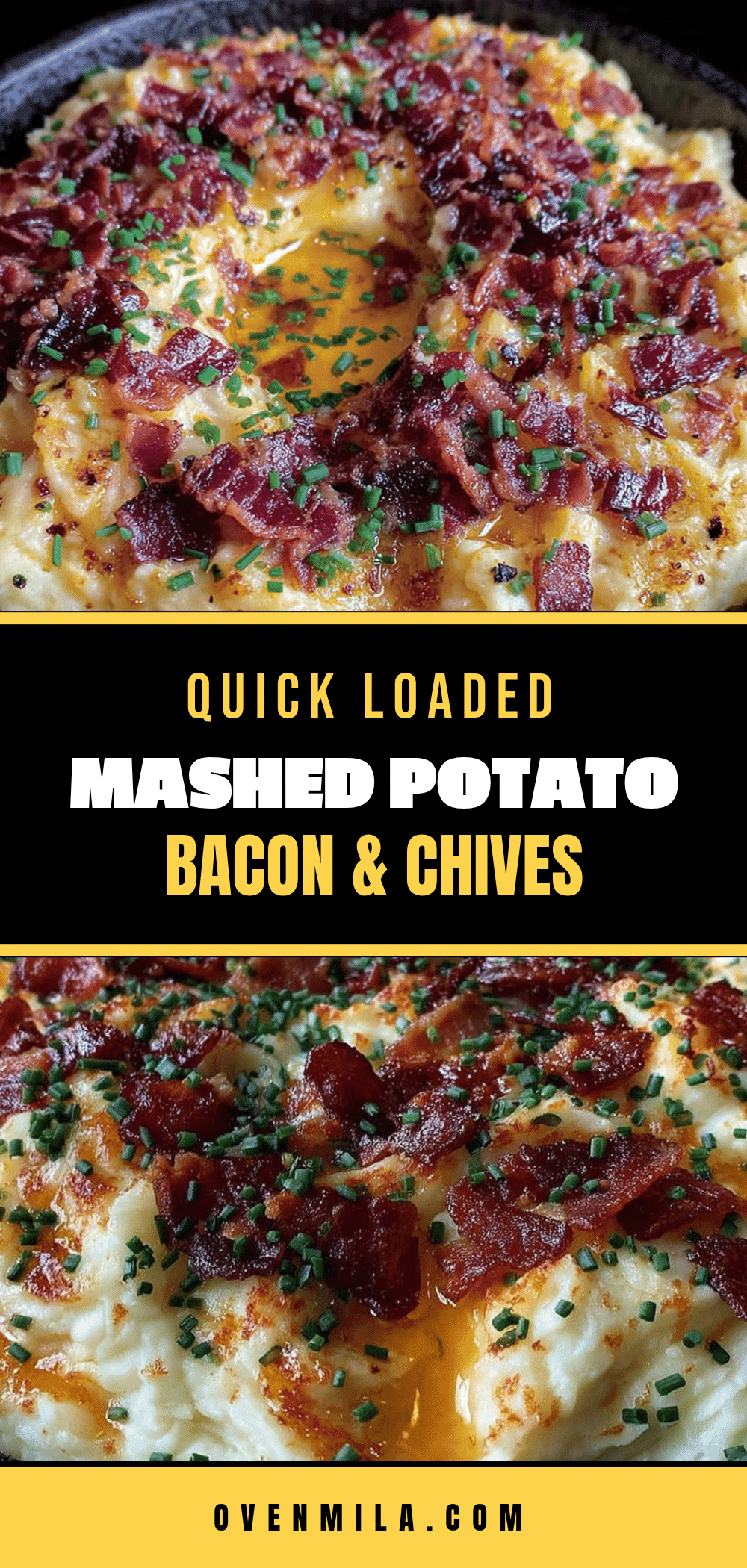
Quick Loaded Mashed Potato Bar with Bacon

Creamy, buttery mashed potatoes piled high with crispy bacon, sharp cheddar, cool sour cream, and fresh chives — all ready in about 30 minutes flat. Perfect for a weeknight dinner that feels like a warm hug.
- Prep Time: 10 minutes
- Cook Time: 20 minutes
- Total Time: 30 minutes
- Yield: 4 servings 1x
- Category: Main Course
- Cuisine: American
Ingredients
- 2 pounds Yukon Gold potatoes
- 4 tablespoons unsalted butter
- ½ cup whole milk
- ½ teaspoon salt
- ¼ teaspoon black pepper
- 6 strips bacon
- 1 cup shredded sharp cheddar cheese
- ½ cup sour cream
- ¼ cup fresh chives, chopped
Instructions
- Scrub potatoes well, cut large ones in half. Place in a large pot, cover with cold water by 1 inch, add a generous pinch of salt. Bring to a boil, then simmer for 15-20 minutes until tender.
- While potatoes boil, cook bacon in a cold skillet over medium heat, flipping occasionally, until crispy (8-10 minutes). Drain on paper towels, then crumble.
- In a small saucepan or microwave-safe bowl, combine milk and butter. Heat until butter melts and milk is warm (not boiling).
- Drain potatoes, let steam off for 30 seconds. Return to pot off heat and mash with a potato masher until broken down but still slightly lumpy.
- Pour warm milk and butter mixture over potatoes. Add salt and pepper. Stir gently until combined. Adjust seasoning to taste.
- Transfer mashed potatoes to a serving bowl. Set out small bowls with crumbled bacon, shredded cheddar, sour cream, and chopped chives. Let everyone build their own loaded bowl.
Notes
Don’t overwork the potatoes to avoid gluey texture. Warm the milk and butter before adding to keep potatoes light and fluffy. For less mess, cook bacon in the oven at 400°F for 15-18 minutes. Leftover mashed potatoes (without toppings) keep in the fridge for 3-4 days; reheat with a splash of milk.
Nutrition
- Serving Size: 1 cup loaded potatoe
- Calories: 450
- Sugar: 2
- Sodium: 680
- Fat: 24
- Saturated Fat: 12
- Carbohydrates: 38
- Fiber: 4
- Protein: 14
Keywords: loaded mashed potatoes, bacon, chives, quick dinner, comfort food, potato bar