I did not trust ground beef as the star of a Korean rice bowl at first. Honestly, the idea of mixing spicy gochujang sauce with simple browned beef and rice sounded like someone just tossed flavors together without much thought. It all felt a bit too quick, too easy to be truly satisfying. But after a particularly hectic weeknight where I just wanted something fast and flavorful, I gave this Quick Spicy Ground Beef Korean Rice Bowl with Gochujang Sauce a try.
The moment that changed my mind was when the kitchen filled with the deep, smoky aroma of the beef sizzling with garlic and ginger, mingling with the sweet heat of the sauce. There was something about that perfect balance of spicy, savory, and a touch of sweetness that pulled me in. The tender, crumbled beef soaked up the sauce, while the rice acted like a soft, comforting base. It wasn’t just a random mix—it was a bowl that made sense.
What really stuck with me was how fast it came together but still had layers of flavor you’d expect from a more involved meal. Plus, the gochujang sauce added that unmistakable Korean kick without overpowering the beef. I ended up making it on repeat because it felt like a quick fix that didn’t compromise on taste. Turns out, sometimes the recipes you doubt the most turn out to be the ones you keep coming back to.
So here we are—a simple, spicy, and satisfying bowl that’s perfect for those nights when time is tight but hunger is real. It’s not fancy, but it’s honest food that hits the spot every time.
Why You’ll Love This Recipe
This Quick Spicy Ground Beef Korean Rice Bowl with Gochujang Sauce has become one of my go-to weeknight dinners for a few solid reasons. It’s that rare recipe that marries speed and flavor without making you feel like you’re sacrificing one for the other. Here’s why it’s worth having in your arsenal:
- Quick & Easy: Ready in under 30 minutes, it’s perfect for busy evenings or those last-minute cravings when you don’t want to fuss.
- Simple Ingredients: No exotic or hard-to-find items here. Most of what you need is probably already in your pantry or fridge.
- Perfect for Any Occasion: Whether you’re making a solo lunch, feeding family, or need something crowd-friendly for a casual get-together, this bowl fits the bill.
- Crowd-Pleaser: The spicy, slightly sweet gochujang sauce balances beautifully with the savory beef, pleasing both spice lovers and those who prefer milder heat.
- Unbelievably Delicious: The texture of the ground beef combined with the punch of the sauce makes every bite satisfying and comforting.
What sets this recipe apart is the homemade gochujang sauce—it’s easy to whip up yet tastes like it took hours. Instead of relying on store-bought, which can sometimes be overpowering or too salty, this version hits just the right note. Plus, the technique of cooking the beef with garlic, ginger, and a splash of soy sauce adds depth that makes the dish feel intentional, not thrown together.
Honestly, it’s the kind of recipe that makes you pause and savor the flavors—comfort food with a bit of excitement. It’s a perfect way to impress yourself with minimal effort, and that’s a win in my book.
What Ingredients You Will Need
This recipe keeps things straightforward, using simple ingredients that come together to build a bold, spicy, and comforting bowl. Each element plays a role—from the savory beef to the tangy, spicy gochujang sauce and fresh toppings that brighten every bite.
- Ground Beef: I use 85% lean ground beef for the best balance of flavor and fat, which keeps the meat juicy without being greasy.
- Gochujang: The heart of this dish, this Korean fermented chili paste brings heat, sweetness, and umami. I recommend Chung Jung One brand for consistent flavor.
- Soy Sauce: Adds salty depth and balances the sweetness. Use low-sodium if you want to control saltiness.
- Garlic: Fresh cloves, minced finely for that punch of aromatic flavor.
- Fresh Ginger: Grated ginger offers a warm, slightly spicy note that complements the gochujang.
- Brown Sugar: A touch of sweetness to mellow the heat and round out the sauce.
- Rice Vinegar: Just a splash to add brightness and a subtle tang.
- Sesame Oil: For a nutty aroma and richness that ties everything together.
- Cooked White Rice: Jasmine or short-grain rice works beautifully as the base. I always keep some pre-cooked rice ready, which cuts down total cook time.
- Scallions: Thinly sliced for freshness and slight crunch on top.
- Sesame Seeds: Toasted, for garnish and texture contrast.
- Optional Veggies: Quick-pickled cucumbers, shredded carrots, or steamed spinach add freshness and color.
If you want to customize, swapping ground turkey or chicken works well for a leaner option. For a gluten-free version, use tamari instead of soy sauce. And if you’re short on fresh garlic or ginger, powdered forms can stand in but fresh really makes a difference here.
Equipment Needed
This recipe is pretty straightforward in terms of equipment, which makes it accessible even if your kitchen is on the minimalist side. Here’s what you’ll want:
- Skillet or Nonstick Pan: A large skillet to brown the beef evenly. I prefer cast iron for even heat, but nonstick works just fine.
- Rice Cooker or Pot: For cooking the rice. I use a rice cooker because it’s foolproof, but a pot with a tight lid works too.
- Mixing Bowls: For combining the sauce ingredients and tossing any quick pickles or veggies.
- Measuring Spoons and Cups: To keep the flavor balanced.
- Knife and Cutting Board: For prepping garlic, ginger, and scallions.
If you don’t have toasted sesame seeds on hand, you can toast regular sesame seeds in a dry pan yourself. Also, a silicone spatula helps scrape up all the browned bits from the skillet for more flavor.
Preparation Method
- Cook the Rice: Start by cooking 2 cups (about 370 g) of jasmine or short-grain rice according to package instructions. This usually takes about 15-20 minutes. Fluff it with a fork once done and keep warm.
- Prep the Sauce: In a small bowl, whisk together 3 tablespoons (45 ml) gochujang, 2 tablespoons (30 ml) soy sauce, 1 tablespoon (12 g) brown sugar, 1 teaspoon (5 ml) rice vinegar, and 1 teaspoon (5 ml) toasted sesame oil. Set aside.
- Cook Aromatics: Heat 1 tablespoon (15 ml) vegetable oil in a large skillet over medium-high heat. Add 3 cloves garlic, minced, and 1 tablespoon (6 g) fresh grated ginger. Sauté for about 30 seconds until fragrant but not browned.
- Brown the Beef: Add 1 pound (450 g) ground beef to the skillet. Use a spatula to break it up into small crumbles. Cook until browned and no longer pink, about 6-8 minutes. Drain any excess fat if necessary.
- Combine Sauce and Beef: Pour the prepared gochujang sauce over the browned beef. Stir to coat evenly. Let it simmer for 2-3 minutes so the flavors meld and the sauce thickens slightly.
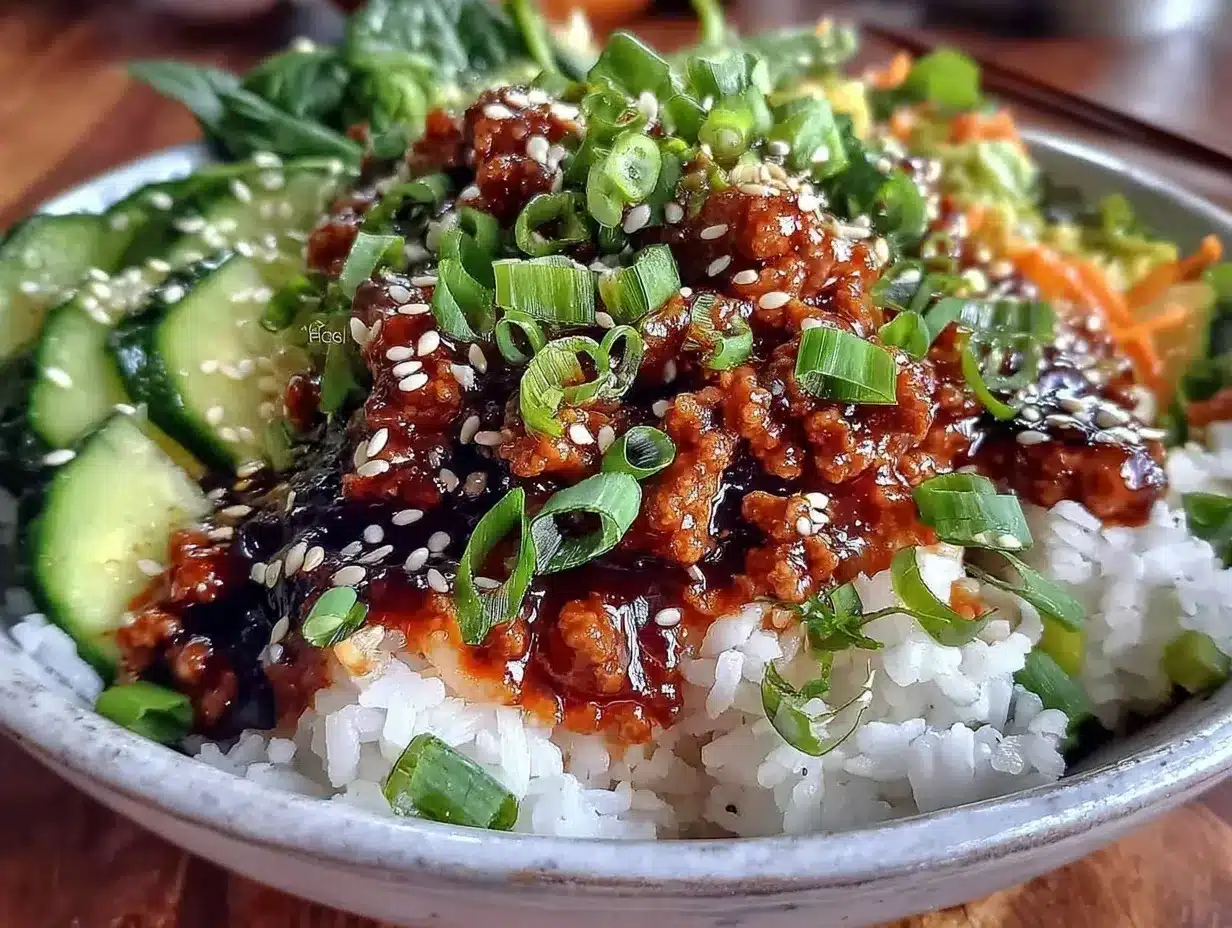
- Assemble the Bowl: Spoon warm rice into bowls, top generously with the spicy ground beef mixture, and garnish with sliced scallions and toasted sesame seeds. Add optional quick-pickled cucumbers or shredded carrots for freshness.
- Final Touches: Drizzle a little extra sesame oil on top if desired, and serve immediately.
Pro tip: If your sauce feels too thick, add a splash of water to loosen it while simmering. And don’t rush browning the beef—letting it get a little crust adds great texture. This recipe pairs wonderfully with a simple cucumber salad or steamed greens for balance.
Cooking Tips & Techniques
There are a few things I’ve learned from making this Quick Spicy Ground Beef Korean Rice Bowl over and over. First off, don’t skip the fresh garlic and ginger. They’re the backbone of the flavor, and using powdered versions totally changes the character of the dish.
When browning the beef, keep the heat medium-high so you get some nice caramelization. Stirring too often can prevent that, so give it a little time to brown before breaking it up. Also, don’t drain all the fat if you can avoid it; a bit adds richness and helps carry the flavors.
The gochujang sauce is pretty forgiving, but balance is key. Taste as you go—if it’s too spicy, a pinch more brown sugar or a splash of rice vinegar can mellow things out. And if you want to amp up the heat, consider adding a pinch of red pepper flakes or a drizzle of chili oil.
Timing-wise, start the rice first since it takes the longest. While that cooks, prep your sauce and aromatics. This multitasking means the whole meal comes together quickly without any waiting around. Lastly, if you want to save time, make extra sauce and store it in the fridge for your next bowl—just stir before using.
Variations & Adaptations
This recipe is a great base for mixing things up depending on your mood or dietary needs. Here are a few ideas I’ve tried or recommend:
- Protein Swap: Swap ground beef for ground turkey, chicken, or even tofu crumbles for a vegetarian-friendly option. The sauce works well across the board.
- Rice Alternatives: For low-carb lovers, serve over cauliflower rice or quinoa instead of white rice. The flavors stay just as bold.
- Veggie Boost: Add sautéed mushrooms, bell peppers, or snap peas to the beef while cooking for extra texture and nutrition.
- Spice Level: Adjust the heat by increasing or decreasing the gochujang, or adding fresh sliced chilies if you want more kick.
- Garnishes: Try swapping scallions for fresh cilantro or adding a fried egg on top for richness and extra protein.
One variation I love is mixing in kimchi either as a topping or stirred into the beef near the end of cooking. It adds a tangy punch that brightens the whole bowl. It’s a small change but makes the dish feel more authentic and layered.
Serving & Storage Suggestions
This Korean rice bowl is best enjoyed fresh and warm, right after assembling. The contrast between hot beef and rice with cool, crisp garnishes is part of what makes it so satisfying. Serving it with a side of quick-pickled cucumbers or a light Asian-style salad adds a refreshing bite to balance the heat.
If you have leftovers, store the beef and rice separately in airtight containers in the fridge for up to 3 days. Reheat gently in a skillet or microwave, adding a splash of water to keep things moist. The flavors tend to deepen after sitting overnight, so sometimes the next-day bowl tastes even better!
For longer storage, the cooked beef mixture freezes well for up to 2 months. Just thaw in the fridge overnight before reheating. Avoid freezing the rice, as it can get mushy, but freshly cooked rice reheats quickly when you need it.
Nutritional Information & Benefits
This Quick Spicy Ground Beef Korean Rice Bowl offers a balanced meal with protein, carbs, and a bit of healthy fat from sesame oil. Per serving (about 1 bowl), you can expect roughly:
| Nutrient | Amount |
|---|---|
| Calories | 450-500 kcal |
| Protein | 28-30 g |
| Carbohydrates | 45-50 g |
| Fat | 15-18 g |
| Fiber | 2-3 g |
The gochujang paste brings fermented probiotics and antioxidants, while garlic and ginger are well-known for their immune-boosting properties. Using lean ground beef keeps the fat content reasonable. For gluten-sensitive folks, swapping tamari for soy sauce makes this bowl friendly without losing any flavor.
From a wellness perspective, this dish provides satisfying nourishment without feeling heavy or greasy. It’s a great way to get a dose of bold flavors while keeping things wholesome and straightforward.
Conclusion
This Quick Spicy Ground Beef Korean Rice Bowl with Gochujang Sauce is proof you don’t need complicated recipes to make something truly delicious and satisfying. It’s simple, speedy, and packed with bold flavors that stick with you long after the last bite. Whether you’re a weeknight warrior or just craving something with a little kick, this bowl will deliver.
Feel free to play around with the ingredients to suit your taste and pantry. I’ve found it’s one of those recipes that invites customization without losing its core deliciousness. Honestly, it’s become a trusted staple in my kitchen for good reason.
Give it a try, and if you want to extend your quick dinner repertoire, you might enjoy the easy creamy garlic butter pasta with cherry tomatoes and spinach or the lazy dump chicken thighs with lemon caper sauce.
Happy cooking, and may your kitchen always smell like something wonderful!
FAQs
- Can I make this recipe vegetarian?
Yes! Swap the ground beef for crumbled tofu or tempeh, and use tamari for a gluten-free soy sauce alternative. - How spicy is the gochujang sauce?
Gochujang has moderate heat with a sweet undertone. You can adjust the spice level by adding more or less gochujang or balancing with extra sugar or vinegar. - Can I prepare this dish ahead of time?
You can cook the beef and make the sauce ahead, storing them separately from the rice. Reheat gently before serving. - What can I serve alongside this Korean rice bowl?
Fresh cucumber salad, steamed greens, or quick-pickled vegetables complement the spicy beef nicely. - Is gochujang paste gluten-free?
Traditional gochujang contains wheat, so check labels carefully or use gluten-free Korean chili paste if needed.
Pin This Recipe!
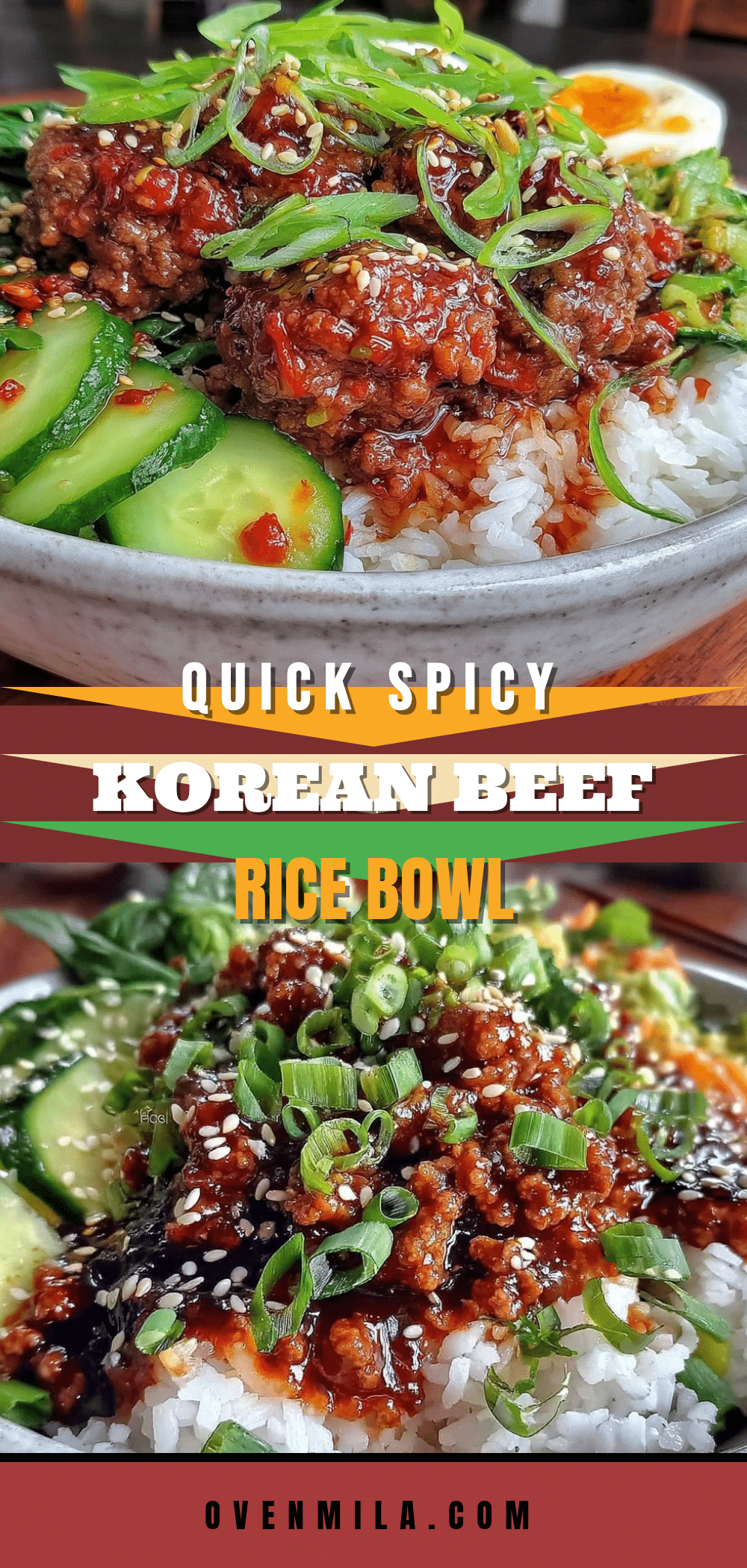
Quick Spicy Ground Beef Korean Rice Bowl Recipe with Easy Gochujang Sauce
A simple, spicy, and satisfying Korean rice bowl featuring ground beef cooked with a flavorful homemade gochujang sauce. Perfect for quick weeknight dinners that don’t compromise on taste.
- Prep Time: 10 minutes
- Cook Time: 20 minutes
- Total Time: 30 minutes
- Yield: 4 servings 1x
- Category: Main Course
- Cuisine: Korean
Ingredients
- 1 pound (450 g) 85% lean ground beef
- 3 tablespoons (45 ml) gochujang (Korean fermented chili paste)
- 2 tablespoons (30 ml) soy sauce (low-sodium recommended)
- 3 cloves garlic, minced
- 1 tablespoon (6 g) fresh grated ginger
- 1 tablespoon (12 g) brown sugar
- 1 teaspoon (5 ml) rice vinegar
- 1 teaspoon (5 ml) toasted sesame oil
- 1 tablespoon (15 ml) vegetable oil
- 2 cups (about 370 g) cooked jasmine or short-grain white rice
- Scallions, thinly sliced, for garnish
- Toasted sesame seeds, for garnish
- Optional: quick-pickled cucumbers, shredded carrots, or steamed spinach for freshness and color
Instructions
- Cook 2 cups (about 370 g) of jasmine or short-grain rice according to package instructions (about 15-20 minutes). Fluff with a fork and keep warm.
- In a small bowl, whisk together 3 tablespoons gochujang, 2 tablespoons soy sauce, 1 tablespoon brown sugar, 1 teaspoon rice vinegar, and 1 teaspoon toasted sesame oil. Set aside.
- Heat 1 tablespoon vegetable oil in a large skillet over medium-high heat. Add minced garlic and grated ginger; sauté for about 30 seconds until fragrant but not browned.
- Add ground beef to the skillet. Break it up into small crumbles and cook until browned and no longer pink, about 6-8 minutes. Drain excess fat if necessary.
- Pour the prepared gochujang sauce over the browned beef. Stir to coat evenly and let simmer for 2-3 minutes until flavors meld and sauce thickens slightly.
- Spoon warm rice into bowls. Top generously with the spicy ground beef mixture. Garnish with sliced scallions and toasted sesame seeds. Add optional quick-pickled cucumbers or shredded carrots if desired.
- Drizzle a little extra sesame oil on top if desired and serve immediately.
Notes
If sauce is too thick, add a splash of water while simmering to loosen. Do not rush browning the beef to develop good caramelization. For gluten-free, substitute tamari for soy sauce. Fresh garlic and ginger are recommended for best flavor. Sauce can be made ahead and stored in the fridge.
Nutrition
- Serving Size: 1 bowl
- Calories: 475
- Sugar: 8
- Sodium: 700
- Fat: 16.5
- Saturated Fat: 6
- Carbohydrates: 47.5
- Fiber: 2.5
- Protein: 29
Keywords: Korean rice bowl, ground beef recipe, gochujang sauce, spicy beef bowl, quick dinner, weeknight meal, easy Korean recipe