It was 11:47 PM on a random Thursday in November, and I was staring into the open fridge like it held the secrets to the universe. The craving hit me out of nowhere—something smoky, something chewy, something that would make my taste buds sit up and pay attention. I didn’t have the usual cut of beef I’d normally use for jerky, but I had a bag of venison steaks my neighbor Dave had dropped off after his hunting trip last weekend. And then it hit me—brown sugar. Not just any brown sugar, but that dark, sticky kind that clings to everything it touches. I pulled out the venison, grabbed the brown sugar, and started mixing up a marinade that felt more like a midnight experiment than a recipe. Honestly, I wasn’t sure it would work. But something about the quiet kitchen and the dim light made me bold. Maybe you’ve been there—when the usual rules don’t apply, and you just go with your gut. That night, my gut said sweet and smoky together, and let me tell you, it was right.
This Smoky Sweet Brown Sugar Deer Jerky became my go-to snack from that moment on. It’s got that perfect balance—deep, woodsy flavor from the venison, a kiss of smoke from the paprika and liquid smoke, and that rich sweetness from the brown sugar that makes every bite feel like a treat. I’ve made it for road trips, hiking adventures, and lazy Sunday afternoons when I need something to chew on while I binge-watch my favorite shows. It’s the kind of snack that makes you feel good about what you’re eating—protein-packed, low in fat, and totally addictive. You won’t miss the store-bought stuff after you try this, I promise.
Why You’ll Love This Recipe
I’ve tested this recipe more times than I can count, tweaking the marinade ratios and drying times until it was just right. My buddy Jake, who’s a bit of a jerky snob, gave it a thumbs up, and my sister’s kids devoured a batch in one afternoon. Here’s why this one stands out:
- Quick & Easy: From start to finish, you’re looking at about 30 minutes of active prep time. The oven does most of the work, so you can get back to your day.
- Simple Ingredients: No weird additives or hard-to-find items. Brown sugar, soy sauce, liquid smoke—all pantry staples.
- Perfect for On-the-Go: Throw a bag in your backpack for hikes, road trips, or work lunches. It keeps for weeks.
- Crowd-Pleaser: Even folks who say they don’t like venison ask for seconds. The sweet-smoky combo wins everyone over.
- Unbelievably Delicious: The texture is chewy but tender, not tough. The flavor is layered—sweet hits first, then smoky, then a little savory finish.
What makes this different from every other jerky recipe out there? It’s the balance. Most deer jerky leans too savory or too spicy. This one lets the brown sugar shine without being cloying, and the smoked paprika adds a warmth that feels like a campfire in your mouth. I’ve tried versions with maple syrup and honey, but nothing beats the deep caramel notes of brown sugar paired with venison. It’s comfort food reimagined—healthier, faster, but with the same soul-soothing satisfaction. Perfect for impressing your hunting buddies or just treating yourself to something special.
What Ingredients You Will Need
This recipe uses simple, wholesome ingredients to deliver bold flavor and satisfying texture without the fuss. Most of these are probably in your kitchen right now, which is part of the beauty.
For the Marinade
- 1/4 cup brown sugar, packed (dark brown sugar gives the deepest flavor, but light works too)
- 1/4 cup soy sauce (I prefer low-sodium to control saltiness; tamari works if you’re gluten-free)
- 2 tablespoons Worcestershire sauce (adds that umami punch)
- 1 tablespoon liquid smoke (hickory or mesquite—both are great)
- 1 teaspoon smoked paprika (the key to that campfire taste)
- 1 teaspoon garlic powder (not garlic salt—we’re controlling sodium)
- 1 teaspoon onion powder
- 1/2 teaspoon black pepper, freshly ground
- 1/2 teaspoon red pepper flakes (optional, for a little heat)
For the Venison
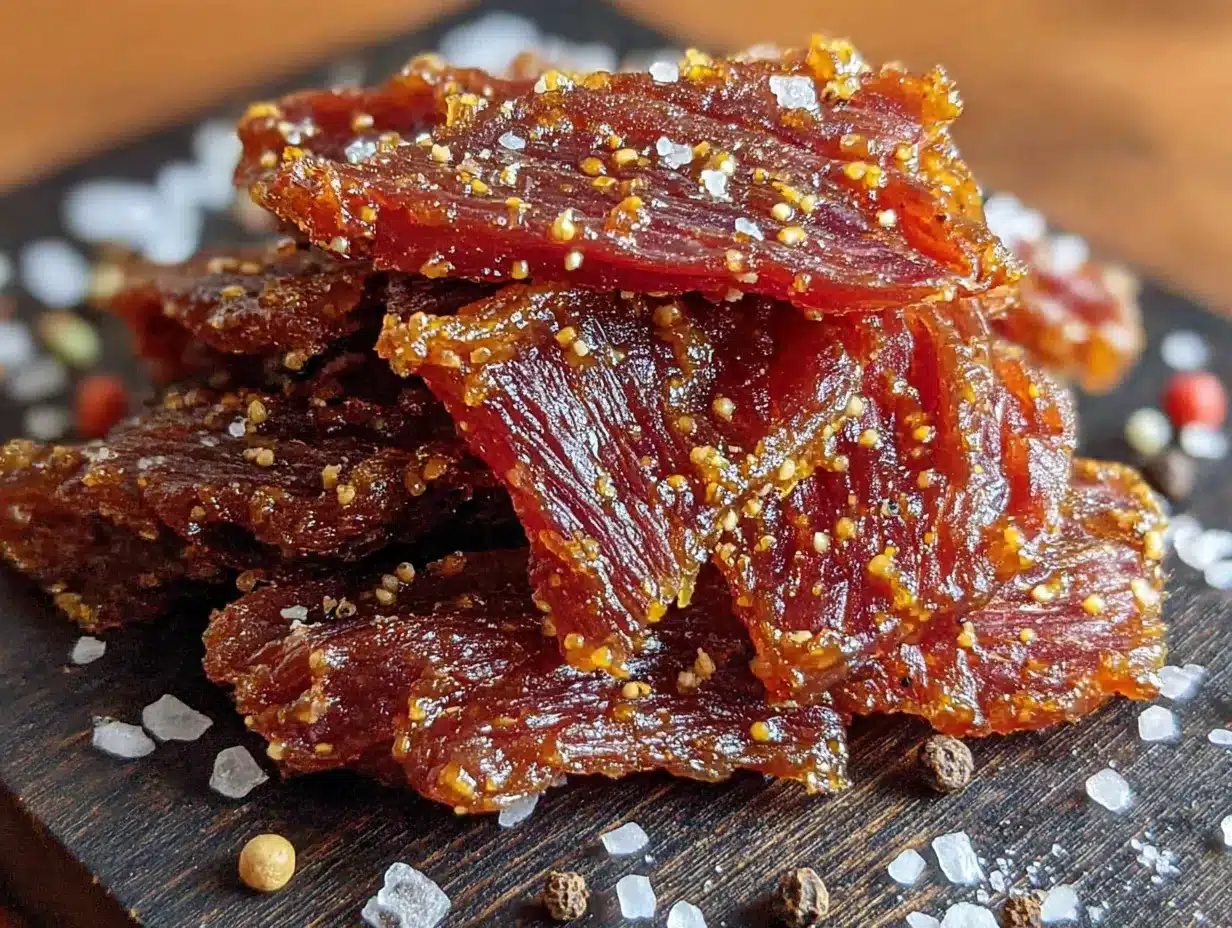
- 1 to 1.5 pounds venison, preferably from the hindquarter or backstrap (trimmed of all silver skin and fat)
Ingredient Tips: For the best texture, look for venison that’s been properly handled—gamey flavor is minimized when the meat is fresh and well-trimmed. I’ve used both whitetail and mule deer, and both work beautifully. If you’re buying from a butcher, ask for a roast cut that you can slice yourself. Pre-sliced stew meat works in a pinch, but you’ll get more consistent strips if you do it yourself. For the brown sugar, I recommend Domino dark brown sugar—it has more molasses content, which means deeper flavor and better caramelization during drying. If you’re out of liquid smoke, you can substitute with an extra teaspoon of smoked paprika, but the flavor will be milder. Soy sauce can be swapped with coconut aminos for a slightly sweeter, soy-free option.
Equipment Needed
You don’t need a fancy dehydrator to make great jerky—I’ve made this in a regular oven more times than I can count. Here’s what you’ll need:
- Sharp knife or a meat slicer (a good chef’s knife works; a deli slicer makes uniform strips if you make jerky often)
- Cutting board (preferably one with a groove to catch juices)
- Large mixing bowl or a gallon-sized zip-top bag for marinating
- Baking sheet with a wire rack (the rack lets air circulate underneath for even drying)
- Oven (or a dehydrator if you have one—both methods work)
- Tongs for handling the meat
- Paper towels for patting the meat dry before marinating
If you don’t have a wire rack, you can place the strips directly on the baking sheet, but flip them halfway through drying to ensure even results. I’ve used a cheap baking sheet from the dollar store and it worked fine—no need for expensive equipment. Just make sure your oven can hold a low temperature (170°F or the lowest setting). Some ovens run hot, so an oven thermometer is a smart investment. I learned that the hard way after turning my first batch into jerky chips!
Preparation Method
Follow these steps carefully, and you’ll have perfect jerky every time. Take your time with the slicing—it makes all the difference.
- Trim the venison: Place the meat on your cutting board. Using a sharp knife, remove all visible fat, silver skin, and connective tissue. Fat goes rancid in jerky, so be thorough. This takes about 10 minutes but is worth it.
- Slice against the grain: Cut the venison into strips about 1/4-inch thick. Slicing against the grain gives you a tender bite; slicing with the grain makes it chewier. For this recipe, I prefer against the grain for a more tender texture. Aim for strips that are roughly 1 inch wide and 3-4 inches long. Uniform thickness is key—if some strips are thicker, they won’t dry at the same rate.
- Pound lightly (optional): If your strips are uneven, place them between two sheets of plastic wrap and gently pound with a meat mallet to even them out. Don’t go crazy—you’re not making schnitzel.
- Make the marinade: In a large bowl, whisk together the brown sugar, soy sauce, Worcestershire sauce, liquid smoke, smoked paprika, garlic powder, onion powder, black pepper, and red pepper flakes (if using). Whisk until the brown sugar is mostly dissolved—it’s okay if a few granules remain.
- Marinate the meat: Add the venison strips to the bowl and toss to coat every piece. Alternatively, place everything in a gallon zip-top bag, seal, and massage the marinade into the meat. Refrigerate for at least 4 hours, but overnight is best. I usually let it go 8-12 hours for maximum flavor penetration. Give the bag a shake halfway through if you think about it.
- Preheat the oven: About 30 minutes before you’re ready to dry, preheat your oven to 170°F (or the lowest setting it has). If your oven doesn’t go that low, prop the door open with a wooden spoon handle—just be careful.
- Prepare the baking sheet: Line a baking sheet with aluminum foil for easy cleanup. Place a wire rack on top. Lightly spray the rack with non-stick cooking spray.
- Arrange the strips: Remove the venison from the marinade, letting excess drip off. Place the strips on the wire rack in a single layer, making sure they don’t touch or overlap. This allows air to circulate.
- Dry the jerky: Place the baking sheet in the oven and let it dry for 3-4 hours, depending on thickness. Check after 2 hours—the jerky is done when it bends and cracks, but doesn’t snap in half. It should feel dry to the touch but still pliable. If it’s still moist in the center, give it more time.
- Cool completely: Remove the baking sheet from the oven and let the jerky cool on the rack for 30 minutes. It will continue to dry as it cools. Don’t skip this step—hot jerky can seem softer than it actually is.
- Test for doneness: Once cool, take a piece and bend it. If it cracks but doesn’t break, you’re golden. If it’s still too soft, return to the oven for another 30 minutes.
Pro Tip: I always cut a test strip before marinating and dry it separately to check timing. That way, I don’t risk the whole batch. Also, pat the meat dry with paper towels before marinating if it seems wet—excess moisture dilutes the flavor.
Cooking Tips & Techniques
I’ve made plenty of mistakes with jerky over the years, and I’m sharing them so you don’t have to. Here’s what I’ve learned:
- Don’t skip the trimming: I once left a little silver skin on, thinking it would render out. It didn’t. That batch had tough, chewy spots that were impossible to eat. Trim it all.
- Slice evenly: Thick pieces take longer to dry, and thin pieces can burn. Use a ruler if you have to—consistency is everything.
- Watch the sugar: Brown sugar can burn at higher temperatures. Keep your oven at 170°F or lower. If you see the jerky darkening too fast, reduce the heat or prop the door open.
- Use a fan: If your oven has a convection setting, use it. The circulating air speeds up drying and gives a more even result. No convection? Just leave the oven door cracked.
- Patience is key: I’ve rushed batches and ended up with jerky that was still damp in the middle. Better to go longer at a lower temp than to crank the heat and ruin it.
- Test early: Start checking for doneness at the 2-hour mark. Every oven is different, and humidity levels affect drying time.
One of my biggest failures? I once doubled the brown sugar thinking more sweetness would be better. The jerky came out sticky and almost candied—not in a good way. Stick to the measurements. Trust me, it’s perfectly balanced as written.
Variations & Adaptations
This recipe is super flexible. Here are some ways to switch it up:
- Spicy Version: Add 1-2 tablespoons of sriracha or a teaspoon of cayenne pepper to the marinade. I did this for a tailgate party and it disappeared fast.
- Maple Bourbon Twist: Replace the brown sugar with 3 tablespoons maple syrup and add 2 tablespoons bourbon. The bourbon adds a smoky warmth that pairs beautifully with venison.
- Teriyaki Style: Swap the Worcestershire sauce for mirin (rice wine) and add a teaspoon of grated ginger. This gives a sweeter, more Asian-inspired flavor.
- Dehydrator Method: If you have a dehydrator, set it to 160°F and dry for 4-6 hours. No need to flip the strips. Just make sure they’re in a single layer.
- Gluten-Free: Use tamari instead of soy sauce and a gluten-free Worcestershire sauce (Lea & Perrins is not gluten-free, but many brands are).
I’ve tried the maple bourbon version on a camping trip, and it was incredible with a cold beer by the fire. The alcohol cooks off, so don’t worry about that.
Serving & Storage Suggestions
This jerky is best at room temperature—straight from the bag, no fuss. It’s perfect for:
- Hiking and camping: Pack it in a zip-top bag for a high-protein trail snack.
- Road trips: Keeps you full and alert without the sugar crash.
- Game day snacks: Serve it alongside nuts and cheese for a DIY charcuterie board.
- Lunchboxes: My daughter takes it to school—she says it’s way better than beef jerky from the store.
Storage: Keep the jerky in an airtight container or a vacuum-sealed bag. It will last 2-3 weeks at room temperature, or up to 3 months in the fridge. For long-term storage, freeze it in a freezer bag for up to 6 months. The flavors actually meld and deepen after a few days, so don’t be afraid to make it ahead. Just make sure it’s completely cool before sealing to prevent condensation, which can lead to mold.
Reheating: You don’t really need to reheat jerky, but if you want to soften it, pop it in a 300°F oven for 5 minutes. Let it cool before eating.
Nutritional Information & Benefits
This jerky is a nutritional powerhouse, especially if you’re active or watching your carb intake. Here’s a rough estimate per 1-ounce serving (about 3-4 strips):
- Calories: 80-100
- Protein: 15-18g
- Fat: 2-3g
- Carbohydrates: 4-6g (mostly from the brown sugar)
- Sugar: 3-4g
- Sodium: 300-400mg (varies by soy sauce)
Health Benefits: Venison is leaner than beef, with less saturated fat and more iron. It’s also rich in B vitamins, which support energy metabolism. The brown sugar gives a quick energy boost, making this a great pre-workout snack. Smoked paprika contains capsaicin, which may help with metabolism. Just watch the sodium if you’re sensitive—using low-sodium soy sauce helps.
Dietary Considerations: This recipe is naturally low-carb (keto-friendly if you use a sugar substitute), gluten-free with the right swaps, and dairy-free. It’s not vegetarian, obviously, but it’s a fantastic option for paleo and whole30 diets if you omit the brown sugar and use coconut aminos.
Conclusion
This Smoky Sweet Brown Sugar Deer Jerky is more than just a snack—it’s a little piece of that late-night kitchen magic that turned into something I make on repeat. It’s proof that the best recipes come from unexpected moments, when you’re just following your gut and using what you’ve got. The balance of sweet and smoky, the chewy texture, the protein punch—it all comes together in a way that feels both comforting and exciting.
I’d love for you to try it and make it your own. Maybe add a little more heat, or swap in maple syrup, or use beef if that’s what you have. The beauty of jerky is that it’s forgiving. So go ahead—raid your pantry, slice up that venison, and get drying. And when you take that first bite, let me know how it turned out. Drop a comment below or tag me in your photos—I can’t wait to see your version!
Frequently Asked Questions
Can I use beef instead of venison?
Absolutely. This marinade works beautifully with flank steak, sirloin, or top round. Just trim the fat well and slice against the grain. The cooking time will be similar.
How do I know when the jerky is done?
Bend a cooled strip—it should crack slightly but not break in half. If it’s still soft and pliable, it needs more time. If it snaps, it’s overdone. Practice makes perfect.
Can I make this in an air fryer?
Yes! Set your air fryer to 170°F and dry for 2-3 hours, checking every 30 minutes. You may need to work in batches since air fryers have less space.
Why is my jerky tough?
You likely sliced with the grain or dried it too long. Next time, slice against the grain and check for doneness earlier. Also, marinating overnight helps tenderize the meat.
How long does homemade jerky last?
Stored properly in an airtight container at room temperature, it lasts 2-3 weeks. In the fridge, it keeps for 3 months. Freeze it for up to 6 months. Just make sure it’s completely cool before sealing.
Pin This Recipe!
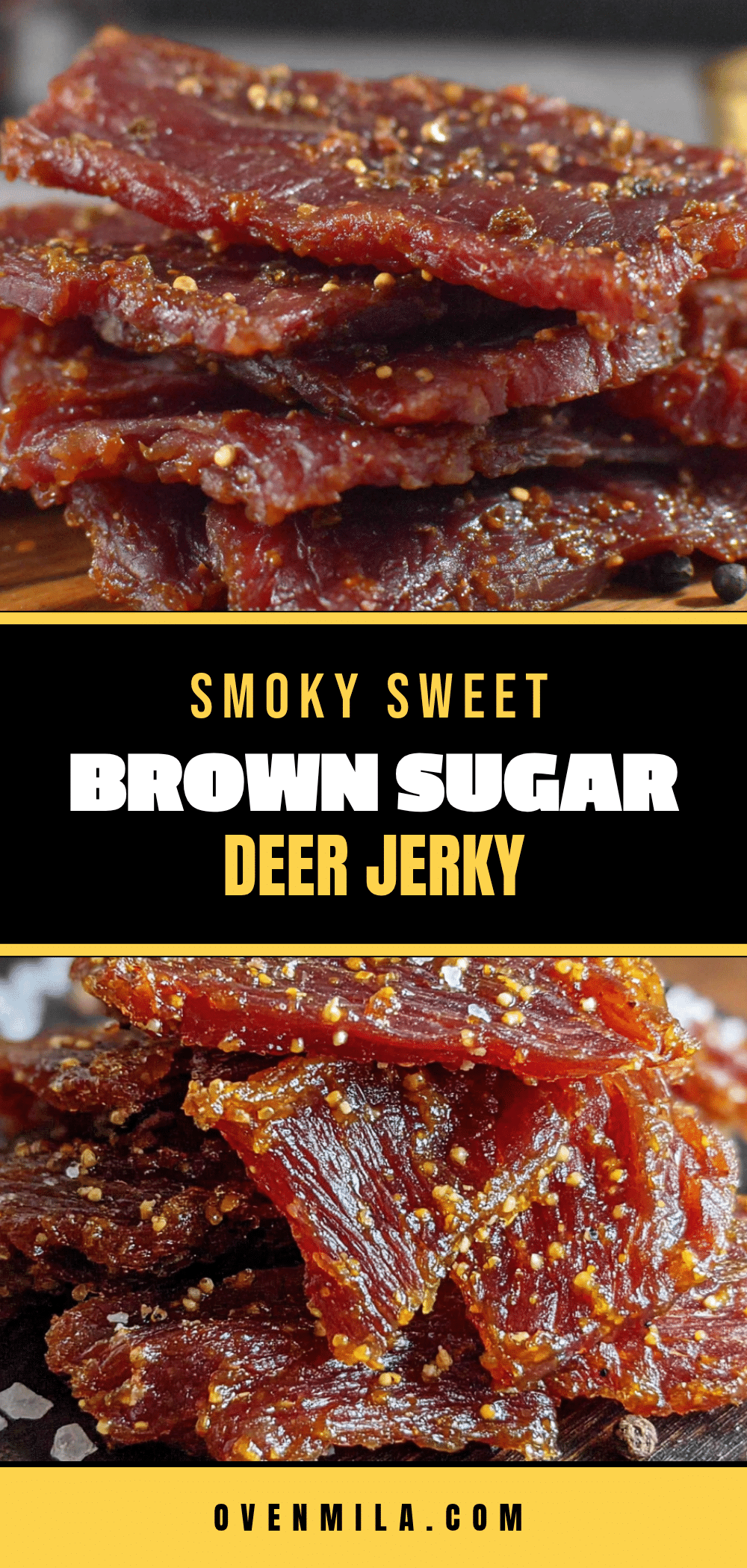
Smoky Sweet Brown Sugar Deer Jerky – Best 30-Minute Snack
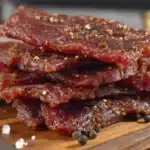
This Smoky Sweet Brown Sugar Deer Jerky is the perfect balance of deep, woodsy flavor from venison, a kiss of smoke from paprika and liquid smoke, and rich sweetness from brown sugar. It’s a protein-packed, low-fat, and totally addictive snack that’s quick and easy to make.
- Prep Time: 30 minutes
- Cook Time: 3-4 hours
- Total Time: 3 hours 30 minutes to 4 hours 30 minutes
- Yield: 4 servings 1x
- Category: Snack
- Cuisine: American
Ingredients
- 1/4 cup brown sugar, packed (dark brown sugar gives the deepest flavor, but light works too)
- 1/4 cup soy sauce (low-sodium preferred; tamari for gluten-free)
- 2 tablespoons Worcestershire sauce
- 1 tablespoon liquid smoke (hickory or mesquite)
- 1 teaspoon smoked paprika
- 1 teaspoon garlic powder
- 1 teaspoon onion powder
- 1/2 teaspoon black pepper, freshly ground
- 1/2 teaspoon red pepper flakes (optional, for heat)
- 1 to 1.5 pounds venison, preferably from the hindquarter or backstrap (trimmed of all silver skin and fat)
Instructions
- Trim the venison: Place the meat on your cutting board. Using a sharp knife, remove all visible fat, silver skin, and connective tissue. Fat goes rancid in jerky, so be thorough. This takes about 10 minutes but is worth it.
- Slice against the grain: Cut the venison into strips about 1/4-inch thick. Slicing against the grain gives you a tender bite; slicing with the grain makes it chewier. For this recipe, I prefer against the grain for a more tender texture. Aim for strips that are roughly 1 inch wide and 3-4 inches long. Uniform thickness is key—if some strips are thicker, they won’t dry at the same rate.
- Pound lightly (optional): If your strips are uneven, place them between two sheets of plastic wrap and gently pound with a meat mallet to even them out. Don’t go crazy—you’re not making schnitzel.
- Make the marinade: In a large bowl, whisk together the brown sugar, soy sauce, Worcestershire sauce, liquid smoke, smoked paprika, garlic powder, onion powder, black pepper, and red pepper flakes (if using). Whisk until the brown sugar is mostly dissolved—it’s okay if a few granules remain.
- Marinate the meat: Add the venison strips to the bowl and toss to coat every piece. Alternatively, place everything in a gallon zip-top bag, seal, and massage the marinade into the meat. Refrigerate for at least 4 hours, but overnight is best. I usually let it go 8-12 hours for maximum flavor penetration. Give the bag a shake halfway through if you think about it.
- Preheat the oven: About 30 minutes before you’re ready to dry, preheat your oven to 170°F (or the lowest setting it has). If your oven doesn’t go that low, prop the door open with a wooden spoon handle—just be careful.
- Prepare the baking sheet: Line a baking sheet with aluminum foil for easy cleanup. Place a wire rack on top. Lightly spray the rack with non-stick cooking spray.
- Arrange the strips: Remove the venison from the marinade, letting excess drip off. Place the strips on the wire rack in a single layer, making sure they don’t touch or overlap. This allows air to circulate.
- Dry the jerky: Place the baking sheet in the oven and let it dry for 3-4 hours, depending on thickness. Check after 2 hours—the jerky is done when it bends and cracks, but doesn’t snap in half. It should feel dry to the touch but still pliable. If it’s still moist in the center, give it more time.
- Cool completely: Remove the baking sheet from the oven and let the jerky cool on the rack for 30 minutes. It will continue to dry as it cools. Don’t skip this step—hot jerky can seem softer than it actually is.
- Test for doneness: Once cool, take a piece and bend it. If it cracks but doesn’t break, you’re golden. If it’s still too soft, return to the oven for another 30 minutes.
Notes
For the best texture, look for venison that’s been properly handled—gamey flavor is minimized when the meat is fresh and well-trimmed. I’ve used both whitetail and mule deer, and both work beautifully. If you’re buying from a butcher, ask for a roast cut that you can slice yourself. Pre-sliced stew meat works in a pinch, but you’ll get more consistent strips if you do it yourself. For the brown sugar, I recommend Domino dark brown sugar—it has more molasses content, which means deeper flavor and better caramelization during drying. If you’re out of liquid smoke, you can substitute with an extra teaspoon of smoked paprika, but the flavor will be milder. Soy sauce can be swapped with coconut aminos for a slightly sweeter, soy-free option. Don’t skip the trimming: I once left a little silver skin on, thinking it would render out. It didn’t. That batch had tough, chewy spots that were impossible to eat. Trim it all. Slice evenly: Thick pieces take longer to dry, and thin pieces can burn. U
Nutrition
- Serving Size: 1 ounce (about 3-4 s
- Calories: 80100
- Sugar: 34
- Sodium: 300400
- Fat: 23
- Saturated Fat: 0.51
- Carbohydrates: 46
- Protein: 1518
Keywords: deer jerky, venison jerky, brown sugar jerky, smoky jerky, homemade jerky, snack, high protein, low fat, game meat