I was killing time in a dusty antique shop last October, waiting for my car to get new tires, when the shop owner—a woman named Eileen who looked like she hadn’t smiled since 1997—started talking about Halloween charcuterie. I wasn’t expecting entertaining advice from someone surrounded by old porcelain dolls and tarnished silverware, but there I was, holding a chipped teacup I had no intention of buying, listening to her describe exactly how to make a spiderweb out of goat cheese. Honestly, it was the last place I’d expect to find inspiration for a party platter. But here’s the thing about unexpected sources—they often know what they’re talking about.
Eileen had been a caterer for thirty years before she retired to sell other people’s junk. She told me about a Halloween party she’d done for a wealthy client who wanted something “wholesome but spooky.” Not creepy, not gory—wholesome spooky. That stuck with me. I mean, how often do you hear those two words together? She scribbled the basic idea on a napkin, and I shoved it in my purse, fully expecting to lose it. But I didn’t. And now, years later, this Wholesome Spiderweb Charcuterie Board with Goat Cheese Dip has become my go-to for Halloween gatherings, fall parties, and even those random Tuesday nights when I want dinner to feel a little more fun.
Maybe you’ve been there—staring at a Pinterest board full of elaborate Halloween snacks that require fondant and food coloring and a degree in pastry arts. This isn’t that. This board comes together in under twenty minutes, uses ingredients you can actually find at a regular grocery store, and somehow manages to look impressive without making you want to pull your hair out. The goat cheese dip is the star, swirled into a spiderweb pattern that gets everyone talking. And the best part? It actually tastes good, not just cute. That’s the kind of recipe worth keeping around.
Why You’ll Love This Recipe
I’ve made this board for five different occasions now, and every single time, someone asks for the recipe. That’s not me bragging—that’s me telling you this one works. It hits that sweet spot between visually impressive and genuinely delicious, which is harder to find than you’d think.
- Quick & Easy : This board comes together in under 20 minutes. No baking, no complicated steps, no dirtying every dish in your kitchen. It’s perfect for last-minute gatherings or when you want to show up somewhere looking like you tried way harder than you actually did.
- Simple Ingredients : You can find everything at a regular grocery store. No specialty shops, no obscure ingredients you’ll never use again. The most “fancy” thing is goat cheese, and that’s available everywhere now.
- Perfect for Halloween Parties : The spiderweb design is instantly recognizable and always gets a reaction. But it’s not so themed that you can’t serve it for a fall harvest dinner or Thanksgiving appetizer.
- Crowd-Pleaser : I’ve served this to kids, adults, picky eaters, and foodie friends. Everyone finds something they love on the board. The goat cheese dip is the first thing to disappear.
- Unbelievably Delicious : The combination of creamy goat cheese, tangy marinara, and all those crunchy, salty, sweet nibbles around it? It’s next-level snack territory. You’ll catch yourself standing at the counter picking at leftovers.
What makes this recipe different is the technique—swirling marinara sauce into softened goat cheese creates that spiderweb effect without any special tools or artistic ability. I tested it three times to get the consistency right, and I’m telling you, it works every time. The goat cheese needs to be at room temperature, and you need to use a toothpick or skewer, not a knife. That’s the secret.
This recipe is the kind that makes you close your eyes after the first bite. It’s comfort food reimagined—healthier than a cheese platter loaded with processed stuff, faster than any baked dip, but with the same soul-soothing satisfaction. Perfect for impressing guests without stress, or turning a simple snack into something memorable.
What Ingredients You Will Need
This recipe uses simple, wholesome ingredients to deliver bold flavor and satisfying texture without the fuss. Most of these are pantry staples or easy to find at any grocery store. I’ve tested a few variations, so I’ll include substitution notes where they actually work.
- Goat cheese, 8 ounces, softened to room temperature (I prefer the log-style from Vermont Creamery—it’s creamier than some budget brands)
- Marinara sauce, ¼ cup, good quality (Rao’s is my go-to, but any thick, chunky marinara works. Avoid watery sauces—they’ll ruin the web)
- Assorted crackers, about 2 cups total (I like a mix of buttery rounds and seedy crisps for texture variety)
- Sliced salami, 4 ounces (or any cured meat you enjoy—prosciutto, soppressata, even turkey slices work)
- Fresh vegetables, about 2 cups total (cherry tomatoes, cucumber rounds, bell pepper strips, snap peas—whatever’s in season)
- Olives, ½ cup, mixed varieties (kalamata and green are my favorites for color contrast)
- Nuts, ½ cup (toasted almonds or pecans add crunch and healthy fats)
- Fresh fruit, 1 cup (red grapes are classic, but apple slices or figs work beautifully too)
- Dried fruit, ¼ cup (dried apricots or figs add sweetness that balances the tangy goat cheese)
- Fresh herbs, for garnish (rosemary sprigs or thyme look gorgeous and add a subtle aroma)
A few notes on ingredient selection. For the goat cheese, look for a log that feels slightly soft when you squeeze it through the packaging. Rock-hard goat cheese won’t spread well. If you’re dairy-free, there are some decent plant-based goat cheese alternatives now—Miyoko’s makes one that softens nicely. The marinara should be thick enough to hold its shape when dolloped. If yours is thin, simmer it on the stove for a few minutes to reduce it. And for the crackers, I’ve found that sturdy ones work better than delicate ones. You’ll be dipping them into goat cheese, so they need to hold up.
For the vegetables, go with what looks good at the market. In summer, I load up on cherry tomatoes and cucumber. In fall, I add roasted pumpkin seeds and sliced apples. The board is flexible—that’s the beauty of it. Just aim for a mix of colors and textures. You want crunchy, creamy, salty, sweet, and tangy all on one board.
Equipment Needed
You don’t need much for this recipe, which is part of why I love it. Here’s what you’ll need:
- Large wooden board or platter, at least 12 inches wide (a cutting board works perfectly—I use a round one for the spiderweb effect)
- Small bowl, about 4 inches wide, for the goat cheese dip (a shallow bowl works best so the web is visible)
- Toothpick or wooden skewer, for swirling the spiderweb design
- Butter knife or small spatula, for spreading the goat cheese
- Small spoon, for dolloping the marinara
- Cheese knife or spreader, for serving
If you don’t have a wooden board, a large ceramic platter or even a baking sheet lined with parchment paper works fine. I’ve used a marble slab before, and it looked gorgeous but was heavy to carry. For the bowl, any shallow dish will do—just make sure it’s not too deep, or the spiderweb pattern won’t show well. I found a small white ramekin at a thrift store for fifty cents, and it’s perfect.
One tip: if you’re using a wooden board, rub it with a cut lemon half before arranging the food. It prevents the wood from absorbing strong smells from the cheese or olives. I learned that the hard way after my board smelled like goat cheese for a week.
Preparation Method
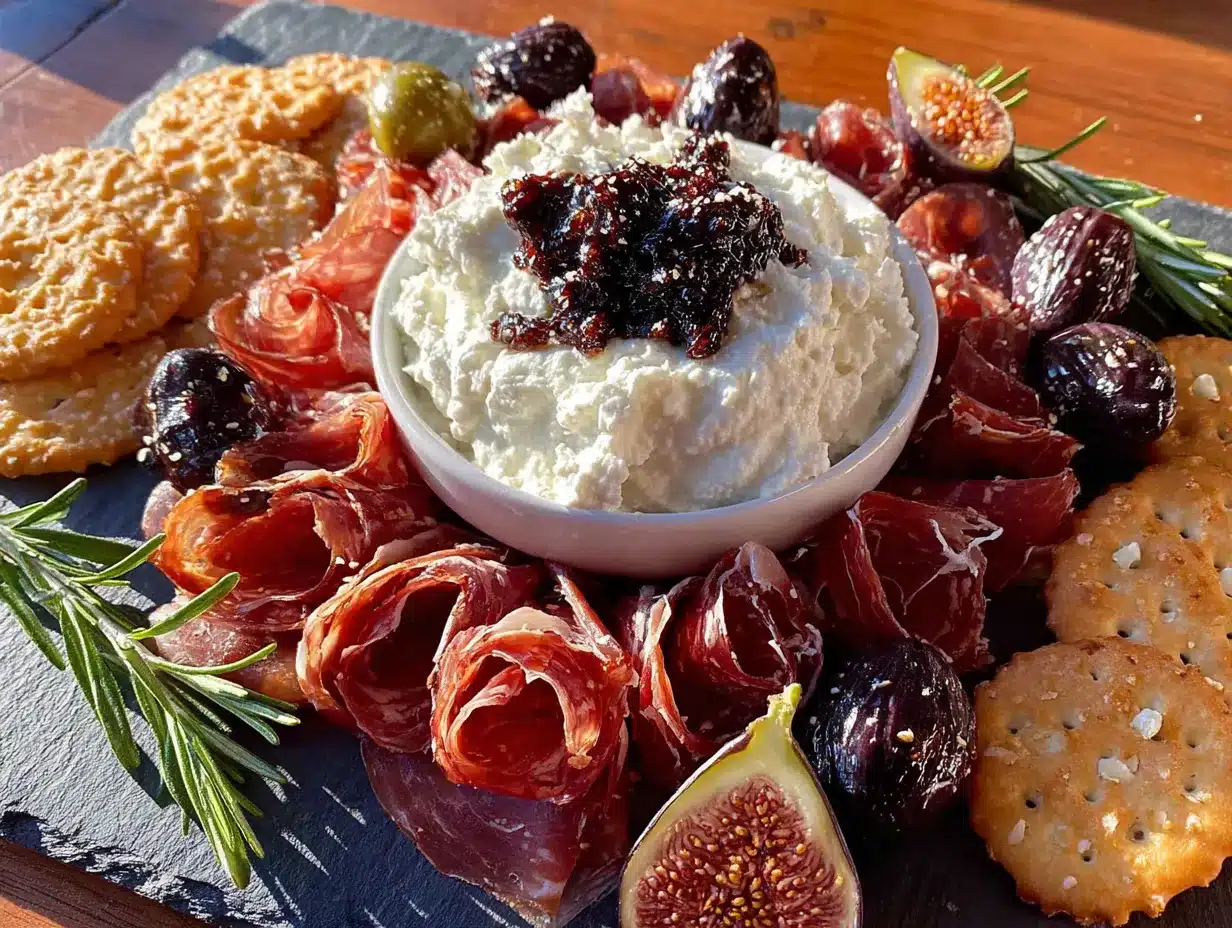
This comes together fast, so I recommend having all your ingredients prepped before you start arranging. Trust me on this—it makes the process so much smoother.
- Soften the goat cheese. Take the goat cheese out of the refrigerator at least 30 minutes before you plan to assemble the board. Unwrap it and place it in your small bowl. Let it sit at room temperature until it’s soft enough to spread easily. If you’re in a hurry, microwave it for 10 seconds—but watch it carefully. Goat cheese can go from soft to melted in a flash.
- Spread the goat cheese. Using a butter knife or small spatula, spread the softened goat cheese into an even layer in the bowl. Smooth the top as much as you can—it doesn’t have to be perfect, but an even surface makes the spiderweb look cleaner. The layer should be about ½ inch thick.
- Dollop the marinara. Spoon small dollops of marinara sauce onto the center of the goat cheese. Start with a nickel-sized dollop right in the middle, then add four to six smaller dollops around it in a circle, about 1 inch from the center. Don’t spread them—just leave them as dollops.
- Create the spiderweb. Take a toothpick or wooden skewer and drag it from the center dollop outward through the surrounding dollops, like you’re drawing spokes on a wheel. Then, drag the toothpick in a circular motion around the center, connecting the spokes. You’ll see the spiderweb pattern emerge as the marinara swirls into the goat cheese. Wipe the toothpick clean between strokes for the cleanest lines.
- Arrange the board. Place the bowl with the goat cheese dip in the center of your board. Start arranging the other ingredients around it in small clusters. I like to group similar items together—crackers in one area, vegetables in another, meat in another. This makes the board look intentional and organized.
- Add the meats. Fold or roll the salami slices and place them in a cluster near one side of the board. If you’re using larger slices of prosciutto, drape them loosely for a more elegant look.
- Add the vegetables. Scatter the cherry tomatoes, cucumber rounds, and bell pepper strips around the board. Place them in small groups rather than spreading them evenly—it looks more natural and inviting.
- Add the olives and nuts. Spoon the olives into small piles. Sprinkle the nuts in clusters, leaving some space between them so the board doesn’t look crowded.
- Add the fruit. Arrange the grapes or apple slices in small bunches. If you’re using apple slices, brush them with a little lemon juice to prevent browning.
- Garnish and serve. Tuck fresh rosemary sprigs or thyme around the board for a pop of green. Serve immediately, or cover loosely with plastic wrap and refrigerate for up to 2 hours. If refrigerating, let the board sit at room temperature for 15 minutes before serving so the goat cheese softens again.
A few troubleshooting notes. If the marinara starts to bleed into the goat cheese too much, you might have used too much sauce or your goat cheese was too warm. Next time, use slightly less marinara and make sure the goat cheese is just softened, not warm. If the spiderweb lines look messy, don’t worry—it’s supposed to look organic and hand-drawn. Imperfection is part of the charm.
Cooking Tips & Techniques
I’ve made this board enough times to learn a few things the hard way. Here’s what I wish someone had told me the first time.
Temperature matters more than you think. The goat cheese needs to be at room temperature—not cold, not warm. Cold goat cheese won’t spread smoothly, and the marinara won’t swirl into it properly. Warm goat cheese turns into a runny mess. Thirty minutes on the counter is usually perfect. If your kitchen is cold, give it forty-five minutes.
Don’t over-swirl the spiderweb. I made that mistake the first time—I kept dragging the toothpick back and forth, trying to make it perfect, and ended up with a muddy brown mess. Three or four strokes from the center outward, then two or three circular strokes around the center. That’s all you need. Less is definitely more here.
Use a shallow bowl. Deep bowls hide the spiderweb pattern. I tried using a small cereal bowl once, and the web was barely visible. A shallow ramekin or a wide, low dish works best. The goat cheese layer should be visible above the rim of the bowl.
Prep everything before you start arranging. This is the biggest time-saver. Wash and cut all your vegetables, open all your packages, have everything ready to go. Once you start arranging the board, you don’t want to stop to slice a cucumber or open a jar of olives. The flow is important—you want to build the board in one continuous motion.
Think about color contrast. The goat cheese dip is white with red swirls, so you want colorful ingredients around it to make it pop. Red cherry tomatoes, green cucumber, purple olives, orange bell peppers—the more colors, the better the board looks. I once made a board with all beige and brown ingredients, and it looked sad. Learn from my mistake.
Don’t overcrowd the board. Leave some empty space between ingredient clusters. It looks more intentional and makes it easier for people to grab what they want. A crowded board feels stressful, not inviting.
Variations & Adaptations
This recipe is flexible, and I’ve tried several variations over the years. Here are some that actually work.
Dairy-Free Version: Use a plant-based goat cheese alternative. Miyoko’s makes a cashew-based version that softens and spreads beautifully. The spiderweb technique works exactly the same way. For the crackers, check labels—many are dairy-free by default.
Gluten-Free Version: This is easy—just use gluten-free crackers. Most vegetables, meats, olives, and nuts are naturally gluten-free. Just double-check the marinara sauce label, as some brands add wheat as a thickener.
Fall Harvest Variation: Swap the summer vegetables for roasted pumpkin seeds, sliced apples, dried cranberries, and pear slices. Add a drizzle of honey over the goat cheese before adding the marinara for a sweet-savory combo that screams autumn.
Spicy Version: Mix a pinch of red pepper flakes into the goat cheese before spreading it. Use a spicy marinara or add a few dashes of hot sauce to the sauce before dolloping. This version gets devoured at parties—people love the heat.
Kid-Friendly Version: Skip the olives (kids tend to avoid them) and add more fruit—strawberries, apple slices, and grapes. Use mild salami or even turkey slices instead of stronger cured meats. My nephew calls this the “Halloween snack board” and asks for it every year.
Breakfast Board: Yes, this works for breakfast too. Use the goat cheese dip as a spread for bagels or toast. Add hard-boiled eggs, fresh berries, and smoked salmon around the board. It’s unexpected and absolutely delicious.
I tried a Mediterranean version once with feta instead of goat cheese and roasted red peppers instead of marinara. It was good, but the spiderweb didn’t show as clearly—feta is crumblier and doesn’t spread as smoothly. Stick with goat cheese for the visual effect.
Serving & Storage Suggestions
This board is best served at room temperature, so take it out of the refrigerator about 15 minutes before you’re ready to eat. The goat cheese will be softer and more spreadable, and the flavors will be more pronounced. Cold goat cheese tastes flat—room temperature brings out its tangy, creamy character.
For presentation, I like to place the board in the center of the table so everyone can reach it. If you’re serving a crowd, make two smaller boards instead of one giant one—it’s easier for people to access and looks more abundant. I’ve also made individual mini boards in small wooden trays for a dinner party, and everyone loved having their own.
This board pairs beautifully with a crisp white wine like Sauvignon Blanc or a light red like Pinot Noir. For non-alcoholic options, sparkling water with a splash of cranberry juice fits the fall theme perfectly. If you’re serving this as an appetizer before a meal, keep it light—this board is satisfying enough that people might fill up before dinner.
For storage, cover the board loosely with plastic wrap and refrigerate for up to 24 hours. The goat cheese dip will firm up, but it softens again at room temperature. The crackers might get slightly stale if stored with moist ingredients, so I recommend storing them separately and adding them just before serving. The vegetables and fruit will keep for a day, but they’re best fresh.
Leftover goat cheese dip is amazing spread on toast the next morning. I’ve also used it as a sandwich spread or stirred it into pasta for a quick creamy sauce. The marinara-goat cheese combination is more versatile than you’d expect.
Nutritional Information & Benefits
This board is surprisingly balanced for a snack platter. Goat cheese is lower in lactose than cow’s milk cheese, making it easier to digest for many people. It’s also a good source of calcium, protein, and probiotics. The vegetables add fiber, vitamins, and antioxidants, while the nuts provide healthy fats and protein.
Here’s an approximate breakdown per serving (assuming 8 servings from the full board):
- Calories: 280-320
- Protein: 12-15 grams
- Fat: 18-22 grams
- Carbohydrates: 18-22 grams
- Fiber: 4-6 grams
- Sugar: 8-10 grams (mostly from fruit)
These numbers vary depending on your specific ingredients and portions. The beauty of a charcuterie board is that you control what goes on it—load up on vegetables and nuts for a lighter option, or go heavier on the cheese and meat for a more indulgent experience.
Potential allergens include dairy (goat cheese), tree nuts (almonds, pecans), and gluten (crackers). If you’re serving a crowd, I recommend labeling the board with a small card noting the allergens, or offering gluten-free and nut-free options on the side.
From a wellness perspective, this board fits into a balanced eating pattern. It’s not a diet food—it’s real food made from whole ingredients. The protein and fat from the cheese and nuts will keep you satisfied, while the vegetables and fruit provide nutrients and fiber. I love that I can serve this at a party and feel good about what I’m eating.
Conclusion
This Wholesome Spiderweb Charcuterie Board with Goat Cheese Dip has become a staple in my fall entertaining rotation, and I don’t see that changing anytime soon. It’s the kind of recipe that looks like you spent hours on it when really, you just arranged some ingredients on a board and swirled a toothpick through some cheese. That’s my favorite kind of cooking—impressive without the stress.
I love that this board brings people together. There’s something about gathering around a shared platter, picking at this and that, that makes conversation flow more easily. And the spiderweb design always sparks a reaction—someone inevitably says “oh, that’s so clever!” and then everyone wants to know how you did it. You can tell them the truth: it’s just goat cheese and marinara and a toothpick. Or you can let them think you’re some kind of culinary magician. I won’t tell.
I’d love to hear how yours turns out. Did you add any unexpected ingredients? Did the spiderweb come out perfectly on the first try, or did you have to practice like I did? Drop a comment below and let me know—I read every single one, and I love seeing how people make this recipe their own. And if you’re looking for more fall entertaining ideas, don’t miss my wholesome pumpkin hummus board or these apple cider brussels sprouts that pair perfectly with any autumn gathering. Happy snacking, friends!
Frequently Asked Questions
Can I make this board ahead of time?
Yes, you can assemble the board up to 24 hours in advance. Cover it loosely with plastic wrap and refrigerate. Add the crackers just before serving to keep them crisp. Let the board sit at room temperature for 15 minutes before serving so the goat cheese softens.
What if I can’t find goat cheese?
You can substitute cream cheese or a soft spreadable cheese like Boursin. The spiderweb technique works the same way, though the flavor will be different. Cream cheese is milder, while Boursin has herbs mixed in. Both are delicious options.
How do I make the spiderweb design cleaner?
Wipe the toothpick clean between each stroke. Use a light hand—you’re just dragging through the marinara, not digging into the goat cheese. And don’t over-swirl. Three or four strokes from the center outward, then two circular strokes around the center is all you need.
Can I use a different dip instead of goat cheese?
Absolutely. Hummus works well for a dairy-free option, though the spiderweb will be less dramatic since hummus is thicker. White bean dip or ricotta also work. Just make sure whatever you use is soft enough to spread but thick enough to hold the swirl pattern.
What if I don’t have a wooden board?
No problem. Use a large ceramic platter, a marble slab, or even a baking sheet lined with parchment paper. The board doesn’t have to be fancy—it’s the food that matters. I’ve used a clean cutting board many times, and it works perfectly.
Pin This Recipe!
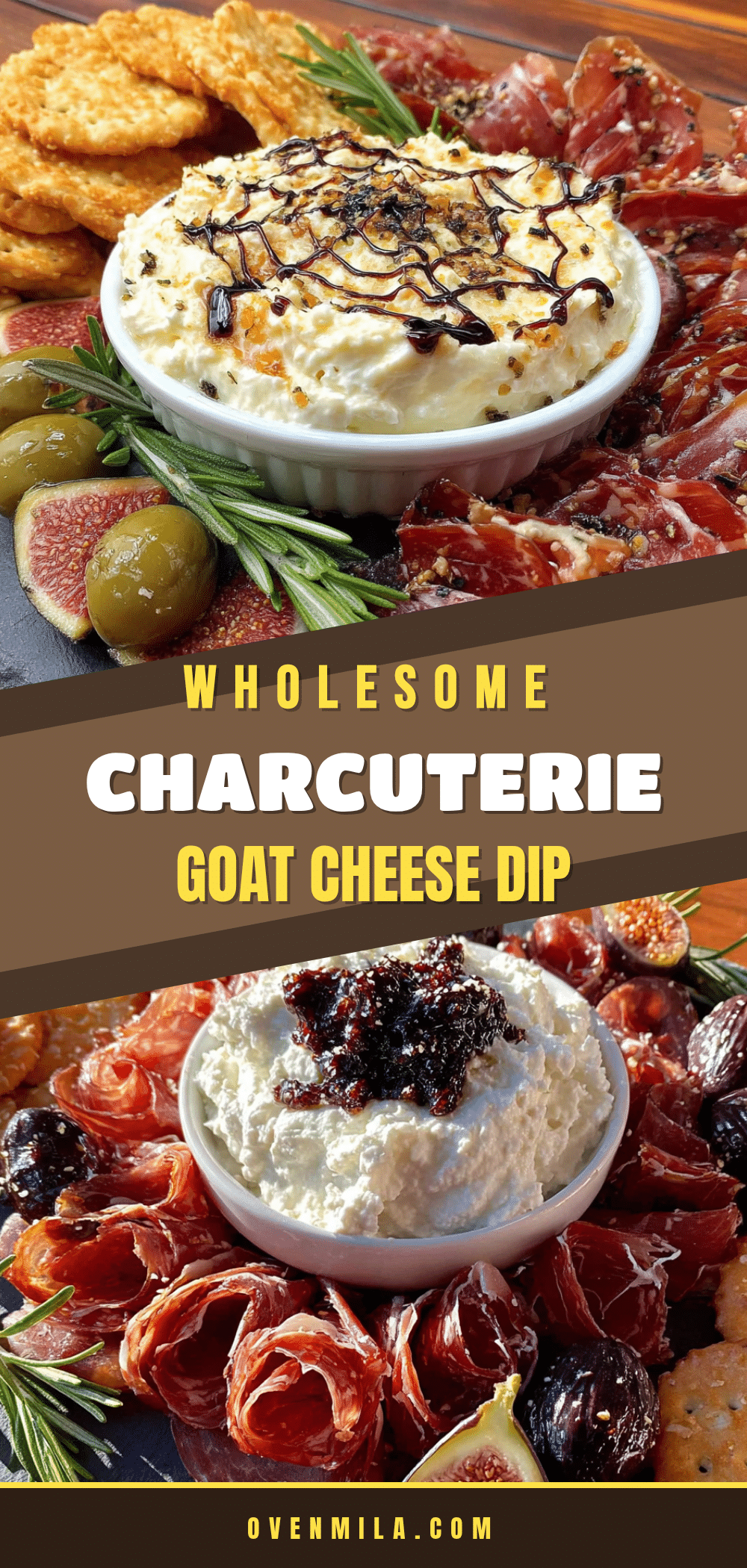
Wholesome Spiderweb Charcuterie Board with Goat Cheese Dip
A quick and easy Halloween charcuterie board featuring a creamy goat cheese dip swirled into a spiderweb pattern with marinara sauce. Perfect for fall parties, this board comes together in under 20 minutes with simple, wholesome ingredients.
- Prep Time: 20 minutes
- Cook Time: 0 minutes
- Total Time: 20 minutes
- Yield: 8 servings 1x
- Category: Appetizer
- Cuisine: American
Ingredients
- 8 ounces goat cheese, softened to room temperature
- ¼ cup marinara sauce, good quality (thick and chunky)
- 2 cups assorted crackers (buttery rounds and seedy crisps)
- 4 ounces sliced salami (or prosciutto, soppressata, turkey slices)
- 2 cups fresh vegetables (cherry tomatoes, cucumber rounds, bell pepper strips, snap peas)
- ½ cup mixed olives (kalamata and green)
- ½ cup nuts (toasted almonds or pecans)
- 1 cup fresh fruit (red grapes, apple slices, or figs)
- ¼ cup dried fruit (dried apricots or figs)
- Fresh herbs for garnish (rosemary sprigs or thyme)
Instructions
- Soften the goat cheese: Take the goat cheese out of the refrigerator at least 30 minutes before assembling. Unwrap and place in a small bowl. Let sit at room temperature until soft enough to spread easily. If in a hurry, microwave for 10 seconds, watching carefully.
- Spread the goat cheese: Using a butter knife or small spatula, spread the softened goat cheese into an even layer in the bowl, about ½ inch thick. Smooth the top.
- Dollop the marinara: Spoon small dollops of marinara sauce onto the center of the goat cheese. Start with a nickel-sized dollop in the middle, then add 4-6 smaller dollops around it in a circle, about 1 inch from the center.
- Create the spiderweb: Take a toothpick or wooden skewer and drag it from the center dollop outward through the surrounding dollops, like drawing spokes on a wheel. Then drag the toothpick in a circular motion around the center, connecting the spokes. Wipe the toothpick clean between strokes for cleanest lines.
- Arrange the board: Place the bowl with goat cheese dip in the center of a large wooden board or platter. Arrange other ingredients around it in small clusters—crackers in one area, vegetables in another, meat in another.
- Add the meats: Fold or roll the salami slices and place in a cluster near one side of the board. For larger prosciutto slices, drape loosely.
- Add the vegetables: Scatter cherry tomatoes, cucumber rounds, and bell pepper strips around the board in small groups.
- Add the olives and nuts: Spoon olives into small piles. Sprinkle nuts in clusters, leaving space between them.
- Add the fruit: Arrange grapes or apple slices in small bunches. If using apple slices, brush with lemon juice to prevent browning.
- Garnish and serve: Tuck fresh rosemary sprigs or thyme around the board. Serve immediately, or cover loosely with plastic wrap and refrigerate for up to 2 hours. If refrigerating, let sit at room temperature for 15 minutes before serving.
Notes
The goat cheese must be at room temperature for the spiderweb technique to work. Use a shallow bowl so the web is visible. Don’t over-swirl the marinara—3-4 strokes from center outward and 2-3 circular strokes is enough. Prep all ingredients before arranging for a smooth process. For a dairy-free version, use plant-based goat cheese like Miyoko’s. For gluten-free, use gluten-free crackers.
Nutrition
- Serving Size: 1 serving (approxima
- Calories: 300
- Sugar: 9
- Sodium: 450
- Fat: 20
- Saturated Fat: 8
- Carbohydrates: 20
- Fiber: 5
- Protein: 13
Keywords: Halloween charcuterie board, spiderweb dip, goat cheese dip, fall appetizer, party platter, easy charcuterie, wholesome Halloween snack