I was standing in line at the post office—if you can believe it—when the man ahead of me, holding a package wrapped in brown paper, turned around and started talking about meatloaf. Not just any meatloaf. His meatloaf. The one his grandmother made every Tuesday night for forty years, the one with a sweet, sticky glaze on top that caramelized into something almost like candy. I didn’t catch his name. I almost didn’t catch the recipe. But there I was, clutching a roll of stamps, listening to a total stranger describe exactly how to make the best meatloaf of my life.
Now, I’m not usually one to take cooking advice from people in line at the post office. Let’s face it—I’ve gotten some questionable tips from strangers over the years. But something about the way he talked about that brown sugar glaze made me stop and actually pay attention. He described how the glaze bubbled up around the edges of the loaf, how the kitchen smelled like comfort on a cold Tuesday night, how his kids would fight over the crispy corner pieces. I grabbed a piece of junk mail from the counter and scribbled down his instructions right there, standing between the package scale and a display of forever stamps.
Honestly, I forgot about that scribbled note for almost two months. It sat crumpled at the bottom of my purse, tucked next to an expired coupon and a grocery list from three weeks prior. But then came one of those chilly October evenings where all you want is something warm and familiar, something that feels like a hug on a plate. I rummaged through my bag for a pen and found that scrap of paper instead. And let me tell you—that night, I made the meatloaf that changed my mind about meatloaf forever.
This cozy classic meatloaf with brown sugar glaze isn’t just another dinner recipe. It’s the kind of dish that makes you slow down, that fills your home with that unmistakable aroma of something good baking in the oven. It’s the recipe I keep coming back to, the one that reminds me that sometimes the best things come from the most unexpected places—like a post office line on a random Tuesday afternoon. Maybe you’ve had a moment like that, where a recipe finds you when you least expect it. If not, get ready. This one’s about to find you.
Why You’ll Love This Recipe
Let me tell you why this cozy classic meatloaf with brown sugar glaze has earned a permanent spot in my weekly dinner rotation. I’ve tested this recipe more times than I can count—tweaking the seasoning, adjusting the glaze ratio, even trying different meat blends—and this version is hands-down the best. It’s the one my family requests for birthdays, the one I bring to potlucks when I want to impress without stress, and honestly, the one I make on those nights when I just need something reliable and delicious.
- Quick & Easy: Comes together in about 15 minutes of active prep time. The oven does the rest of the work while you relax, catch up on emails, or help the kids with homework.
- Simple Ingredients: No fancy grocery trips needed. Ground beef, breadcrumbs, eggs, ketchup, brown sugar—these are things you probably already have in your pantry and fridge right now.
- Perfect for Cozy Nights: This is the ultimate comfort food for chilly evenings, Sunday suppers, or anytime you need a meal that feels like a warm blanket.
- Crowd-Pleaser: Kids devour it. Adults ask for seconds. Even picky eaters who claim they don’t like meatloaf change their tune after one bite of this version.
- Unbelievably Delicious: The brown sugar glaze is the secret weapon here. It caramelizes into a sweet, tangy, slightly sticky coating that perfectly balances the savory meat. I’m not exaggerating when I say people fight over the end pieces.
What makes this recipe different from every other meatloaf out there? It’s the glaze, plain and simple. Most meatloaf recipes slap a layer of ketchup on top and call it done. This one uses a brown sugar and ketchup mixture that bakes into something magical—sweet, tangy, with just a hint of vinegar to cut through the richness of the meat. I also use a blend of ground beef and ground pork for extra moisture and flavor, plus a secret ingredient (Worcestershire sauce) that adds that deep, savory umami you can’t quite identify but definitely notice when it’s missing.
This isn’t just another meatloaf recipe. It’s the one that makes you close your eyes after the first bite. It’s comfort food reimagined—familiar but somehow better than you remembered. Perfect for impressing guests without hours of effort, or turning a simple Tuesday night into something memorable.
What Ingredients You Will Need
This cozy classic meatloaf with brown sugar glaze uses simple, wholesome ingredients that work together to create something truly special. Most of these are pantry staples, which means you can whip this up on a whim without a special trip to the store. Here’s everything you’ll need, broken down by category.
For the Meatloaf
- Ground beef (1 ½ pounds / 680g) – I recommend 80/20 blend for the best balance of flavor and moisture. Too lean and your meatloaf will be dry. Too fatty and it’ll be greasy. 80/20 hits that sweet spot perfectly. I personally prefer ground chuck for this recipe.
- Ground pork (½ pound / 225g) – This is my little secret. Adding pork adds incredible moisture and a subtle sweetness that beef alone can’t provide. If you can’t find ground pork, you can use all beef, but trust me—the pork makes a difference.
- Breadcrumbs (1 cup / 120g) – Plain or Italian-style both work fine. I use plain panko breadcrumbs for a lighter texture, but regular breadcrumbs work too. If you’re gluten-free, use gluten-free breadcrumbs or crushed pork rinds.
- Eggs (2 large) – These act as a binder, holding everything together. Make sure they’re at room temperature so they incorporate evenly. (Cold eggs can make the mixture seize up.)
- Milk (½ cup / 120ml) – Whole milk adds moisture and richness. You can use 2% or even oat milk in a pinch, but whole milk gives the best texture. The milk soaks into the breadcrumbs and keeps the meatloaf tender.
- Yellow onion (1 medium, finely diced) – About 1 cup once chopped. Don’t skip this—onion adds sweetness and moisture as it cooks. Sauté it first if you want a milder flavor, but I usually add it raw for more texture.
- Garlic (3 cloves, minced) – Fresh garlic is non-negotiable here. That jarred stuff? Save it for another day. Fresh garlic adds a punch of flavor that makes a real difference.
- Worcestershire sauce (2 tablespoons) – This is my secret weapon. It adds that deep, savory, slightly tangy flavor that makes people ask, “What’s in this?” I recommend Lea & Perrins brand—it’s the gold standard.
- Ketchup (¼ cup / 60ml) – For the meat mixture itself. It adds a touch of sweetness and helps keep the meatloaf moist. Use a good-quality ketchup without high fructose corn syrup if you can.
- Dried thyme (1 teaspoon) – Earthy and slightly floral, thyme pairs beautifully with beef. You can use fresh thyme if you have it—just triple the amount.
- Salt (1 ½ teaspoons) – I use kosher salt. If you’re using table salt, reduce to 1 teaspoon. Salt is crucial here—it brings out all the other flavors.
- Black pepper (½ teaspoon) – Freshly ground is always better. It adds a subtle heat that balances the sweetness of the glaze.
For the Brown Sugar Glaze
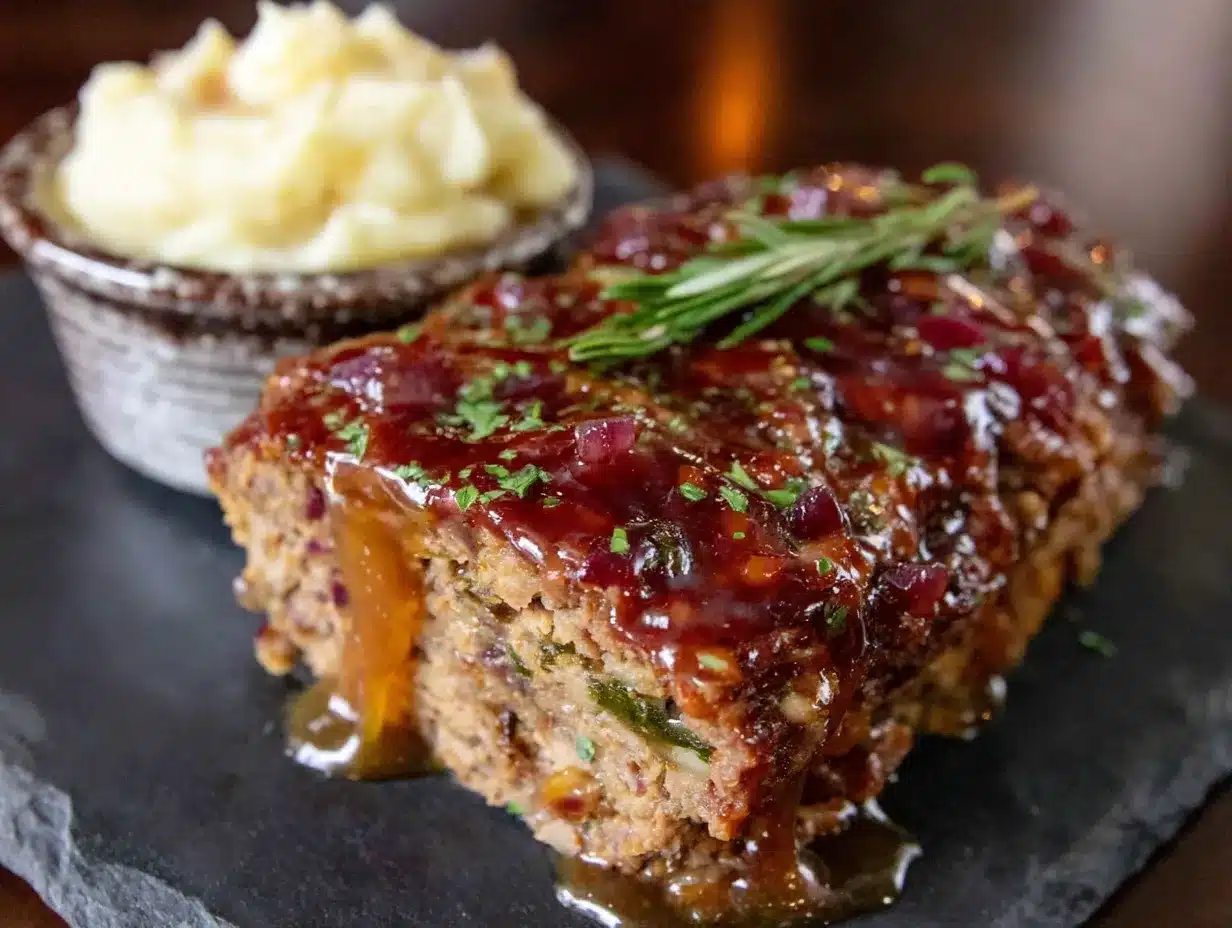
- Ketchup (½ cup / 120ml) – The base of the glaze. It provides tanginess and body.
- Brown sugar (⅓ cup / 70g, packed) – Light or dark brown sugar both work. Dark brown sugar has more molasses flavor and makes a deeper, richer glaze. Light brown sugar gives a milder sweetness. I usually go with dark brown sugar for maximum flavor.
- Apple cider vinegar (1 tablespoon) – This cuts through the sweetness and adds brightness. Don’t skip it—it balances the glaze perfectly. White vinegar works in a pinch, but apple cider vinegar adds a subtle fruity note.
- Worcestershire sauce (1 teaspoon) – Just a touch for depth. It rounds out the sweet and tangy flavors.
- Garlic powder (½ teaspoon) – Not fresh garlic here—powder dissolves better into the glaze and gives a more even flavor.
One quick note on ingredient selection: I’ve tested this recipe with different brands of ketchup and brown sugar, and honestly, the quality of your ketchup matters more than you’d think. I prefer Heinz for its balanced sweetness and acidity. And for the brown sugar, make sure it’s fresh and soft—hard, clumpy brown sugar won’t dissolve as easily into the glaze.
Equipment Needed
You don’t need a fancy kitchen to make this cozy classic meatloaf with brown sugar glaze. Here’s what you’ll need:
- Large mixing bowl – Big enough to get your hands in there and mix everything together. I use a stainless steel bowl because it doesn’t retain odors.
- Loaf pan (9×5-inch / 23x13cm) – A standard loaf pan works perfectly. If you don’t have one, you can shape the meatloaf free-form on a baking sheet lined with parchment paper. The free-form method actually gives you more crispy edges, which I personally love.
- Baking sheet – Place your loaf pan on a baking sheet to catch any drips. Trust me on this—the glaze can bubble over and make a mess in your oven.
- Small bowl – For mixing the glaze ingredients together.
- Measuring cups and spoons – Accuracy matters, especially with the glaze. I’ve learned the hard way that eyeballing brown sugar leads to inconsistent results.
- Chef’s knife and cutting board – For dicing the onion and mincing the garlic. A sharp knife makes this job much easier and safer.
- Meat thermometer – This is non-negotiable for food safety and perfect doneness. An instant-read thermometer costs about $10 and will save you from serving undercooked or overcooked meatloaf. I use a ThermoPro digital thermometer and love it.
- Parchment paper or aluminum foil – For lining the loaf pan if you want easy cleanup. I always line my pan with parchment paper with extra hanging over the sides—it makes lifting the meatloaf out so much easier.
If you don’t have a loaf pan, don’t worry. You can shape the meatloaf into a free-form loaf on a rimmed baking sheet. The cooking time will be slightly shorter (about 45-50 minutes instead of 55-60) because the heat circulates better. Just keep an eye on the internal temperature.
Preparation Method
Alright, let’s get cooking! Here’s how to make this cozy classic meatloaf with brown sugar glaze, step by step. I’ve included all the little details I’ve learned from making this dozens of times—the things that turn a good meatloaf into a great one.
- Preheat your oven to 350°F (175°C). Position the rack in the center of the oven. While it’s heating up, line your loaf pan with parchment paper if you’re using one, leaving some overhang on the long sides. This makes lifting the meatloaf out later a breeze.
- Start with the glaze. In a small bowl, whisk together ½ cup ketchup, ⅓ cup packed brown sugar, 1 tablespoon apple cider vinegar, 1 teaspoon Worcestershire sauce, and ½ teaspoon garlic powder. Set it aside. The flavors will meld together while you prepare the meat mixture. (Pro tip: taste the glaze now. It should be sweet, tangy, and slightly savory—if it’s too sweet for your liking, add another splash of vinegar.)
- Prepare your aromatics. Finely dice 1 medium yellow onion and mince 3 cloves of garlic. I like my onion diced small enough that it almost melts into the meatloaf—larger chunks can make the texture uneven. If you’re sensitive to raw onion flavor, you can sauté the onion in a little oil for 3-4 minutes until translucent before adding it to the mixture. I usually don’t bother, but it’s an option if you prefer a milder flavor.
- Combine the wet ingredients. In your large mixing bowl, whisk together 2 large eggs, ½ cup milk, ¼ cup ketchup, and 2 tablespoons Worcestershire sauce. Whisk until the eggs are fully incorporated and the mixture is smooth. This step is important—if you add the eggs directly to the meat, they might not distribute evenly.
- Add the dry ingredients. Add 1 cup breadcrumbs, 1 teaspoon dried thyme, 1½ teaspoons salt, and ½ teaspoon black pepper to the wet mixture. Stir until everything is combined. Let this sit for 2-3 minutes—the breadcrumbs need time to absorb the liquid. You’ll notice the mixture thickens up. This is a good thing; it means your meatloaf will be tender, not dense.
- Add the meat. Add 1½ pounds ground beef (80/20) and ½ pound ground pork to the bowl. Here’s where I have a strong opinion: use your hands. I know it’s messy, but your hands are the best tools for mixing meatloaf. Squeeze the mixture gently between your fingers, turning and folding until everything is evenly combined. Don’t overmix—overworking the meat can make your meatloaf tough. Stop as soon as you don’t see any more streaks of raw meat.
- Shape the meatloaf. Transfer the mixture to your prepared loaf pan. Press it in gently, making sure there are no air pockets. Shape the top into a slight dome—this gives you a nice rounded top that looks beautiful when glazed. If you’re doing a free-form loaf on a baking sheet, shape it into a rectangle about 8×4 inches and 2 inches tall.
- Apply the first layer of glaze. Spoon about half of the brown sugar glaze over the top of the meatloaf. Spread it evenly with the back of a spoon, letting some drip down the sides. Reserve the remaining glaze for later.
- Bake for 40 minutes. Place the loaf pan on a baking sheet (to catch any drips) and put it in the oven. Bake for 40 minutes at 350°F. Your kitchen will start smelling incredible about 20 minutes in—that’s the brown sugar caramelizing.
- Apply the second layer of glaze. After 40 minutes, carefully remove the meatloaf from the oven. Spoon the remaining glaze over the top, spreading it evenly. This second layer is what gives you that gorgeous, sticky, caramelized finish.
- Continue baking. Return the meatloaf to the oven and bake for another 15-20 minutes. The total baking time should be 55-60 minutes. The meatloaf is done when the internal temperature reaches 160°F (71°C) when measured with a meat thermometer inserted into the center. Don’t rely on visual cues alone—a thermometer is the only way to be sure.
- Rest before slicing. This is the hardest step, I know. Let the meatloaf rest in the pan for 10-15 minutes after removing it from the oven. This allows the juices to redistribute throughout the meat. If you slice it immediately, those juices will run out onto the cutting board, leaving you with a dry meatloaf. I usually set a timer and walk away, because the temptation to cut into it right away is real.
- Slice and serve. Use the parchment paper overhang to lift the meatloaf out of the pan. Transfer to a cutting board and slice into 1-inch thick pieces. Spoon any glaze that’s pooled in the pan over the slices before serving.
A few things to watch for during baking: If the glaze starts to get too dark or burn around the edges after you apply the second layer, tent the meatloaf loosely with aluminum foil for the remaining baking time. Every oven runs a little differently, so check your meatloaf at the 50-minute mark if you know your oven runs hot.
Cooking Tips & Techniques
Over the years, I’ve learned a few things about making the perfect cozy classic meatloaf with brown sugar glaze. Some of these lessons came from spectacular failures—like the time I forgot the eggs and ended up with meatloaf crumbles instead of slices. Here’s what I wish someone had told me:
Don’t skip the milk-breadcrumb soak. This is one of those steps that seems unnecessary but makes a huge difference. The breadcrumbs absorb the milk and create what’s called a panade—a paste that keeps the meatloaf tender and moist. Without it, your meatloaf will be dense and dry. I learned this the hard way when I was in a hurry and threw everything together without letting the breadcrumbs soak.
Use a light hand when mixing. I can’t stress this enough. Overmixing meatloaf develops the proteins in the meat, making it tough and rubbery. Mix just until everything comes together—you should still be able to see small flecks of the different ingredients. Think of it like making meatballs or burgers: gentle is the name of the game.
The glaze is all about layering. One of my early mistakes was putting all the glaze on at the beginning. It burned, and I ended up with a bitter, blackened top. Splitting the glaze into two applications solves this problem. The first layer bakes into the meatloaf, infusing it with flavor. The second layer stays on top, creating that beautiful, sticky caramelized crust.
Let it rest—seriously. I know I mentioned this in the instructions, but it bears repeating. Resting is not optional. The internal temperature will continue to rise by about 5°F during resting, which means your meatloaf will be perfectly cooked. And those juices that would have run out? They’ll stay right where they belong—inside the meatloaf.
Line your pan. This isn’t just about easy cleanup (though that’s a nice bonus). Parchment paper makes it so much easier to lift the meatloaf out of the pan without it falling apart. I’ve had meatloaves crumble into pieces when I tried to flip them out of the pan. Parchment paper sling? Perfect every time.
Check your oven temperature. Ovens lie. I’m serious. My last apartment had an oven that ran 25°F hot, which meant everything I baked came out overdone until I figured it out. An oven thermometer costs about $7 and will save you from countless baking disasters. Place it in the center of the oven and adjust your temperature accordingly.
Make extra glaze. If you’re like me and you love extra sauce on everything, double the glaze recipe. You’ll have plenty for the meatloaf and some left over to drizzle over mashed potatoes or rice on the side. Just don’t use raw glaze that hasn’t been cooked—make sure any extra glaze goes through a quick simmer on the stovetop if you plan to serve it on the side.
Variations & Adaptations
One of the best things about this cozy classic meatloaf with brown sugar glaze is how adaptable it is. I’ve tried quite a few variations over the years, and here are my favorites:
Turkey Meatloaf: Swap the ground beef and pork for 2 pounds of ground turkey (93/7 blend works best—any leaner and it’ll be dry). Add an extra tablespoon of olive oil to the mixture to compensate for the lower fat content. The cooking time stays about the same, but check the internal temperature at 50 minutes—turkey can dry out faster than beef.
Gluten-Free Version: Replace the breadcrumbs with gluten-free panko or crushed pork rinds. I’ve also used rolled oats (certified gluten-free if needed) with great success—just pulse them in a food processor first so they’re not too chunky. The texture is slightly different but still delicious.
Cheesy Stuffed Meatloaf: This is my indulgent weekend version. After mixing the meat mixture, press half of it into the loaf pan. Make a shallow well down the center and fill it with shredded mozzarella or cheddar cheese (about ½ cup). Top with the remaining meat mixture, seal the edges, and bake as directed. The melted cheese in the center is absolutely divine.
Spicy Kick: Add 1-2 tablespoons of sriracha or your favorite hot sauce to the meat mixture, and mix ½ teaspoon of cayenne pepper into the glaze. The sweetness of the brown sugar balances the heat beautifully. I made this version for a Super Bowl party and it disappeared in minutes.
BBQ Meatloaf: Replace the ketchup in the glaze with your favorite barbecue sauce. I like a smoky, slightly sweet Kansas City-style sauce for this. The flavor profile shifts from classic comfort food to something that tastes like it came off a grill. Serve with extra BBQ sauce on the side.
Vegetable-Packed Version: Finely grate 1 carrot and 1 zucchini, squeeze out the excess moisture with a clean kitchen towel, and add them to the meat mixture. This adds moisture, nutrients, and a subtle sweetness. My kids have never noticed the hidden veggies, which I consider a parenting win.
Mini Meatloaves: Press the mixture into a standard 12-cup muffin tin (greased or lined with parchment strips) for individual servings. Bake at 375°F for 20-25 minutes, applying the glaze in two layers as directed. These are perfect for meal prep or for portion control. Plus, they cook in half the time!
Serving & Storage Suggestions
This cozy classic meatloaf with brown sugar glaze is a star on its own, but the right sides can turn it into a truly memorable meal. Here’s how I like to serve and store it:
Serving Temperature: Serve the meatloaf warm, ideally within 15-20 minutes of it coming out of the oven. The glaze is at its stickiest and most flavorful when it’s fresh. That said, it’s also delicious at room temperature on a sandwich the next day—if there’s any left.
Classic Side Dishes: Mashed potatoes are the obvious choice, and for good reason—the glaze mixes with the potatoes in the most wonderful way. Creamy mashed cauliflower works too if you’re watching carbs. I also love serving this with roasted green beans or a simple side salad with a tangy vinaigrette to cut through the richness. Buttered egg noodles are another favorite in my house.
Beverage Pairings: A medium-bodied red wine like Merlot or Zinfandel pairs beautifully with the sweet and savory flavors. For beer drinkers, a brown ale or amber lager complements the caramel notes in the glaze. And honestly, a tall glass of cold milk is perfect for the kids (and for me, on nostalgic nights).
Storage Instructions: Leftover meatloaf keeps well in the refrigerator for 3-4 days. Wrap it tightly in aluminum foil or store it in an airtight container. I actually think the flavors meld and deepen overnight, so leftovers might be even better the next day. Slice it cold for sandwiches, or reheat it gently.
Freezing Instructions: Meatloaf freezes beautifully. You can freeze it whole or in individual slices. Wrap tightly in plastic wrap, then in aluminum foil, and place in a freezer bag. It will keep for up to 3 months. To thaw, transfer to the refrigerator overnight. To reheat from frozen, place in a 350°F oven for about 30-40 minutes, covered with foil to prevent the glaze from burning.
Reheating Tips: The best way to reheat meatloaf without drying it out is in the oven. Place slices on a baking sheet, cover with foil, and warm at 300°F for 10-15 minutes. You can also microwave individual slices, but the texture won’t be as good—the glaze can get gummy. If you’re in a hurry, a skillet with a splash of water or broth works surprisingly well: just cover and heat over medium-low for a few minutes.
How Flavors Develop: Here’s something I’ve noticed: this meatloaf actually tastes better on day two. The flavors have time to meld and mellow, and the texture firms up just enough to make slicing easier. If I’m serving this for a special dinner, I sometimes make it a day ahead, refrigerate it, and reheat it before serving. It’s a little trick I learned from a chef friend, and it works like a charm.
Nutritional Information & Benefits
While this cozy classic meatloaf with brown sugar glaze is definitely comfort food, it does have some nutritional upsides worth mentioning. Here’s the approximate breakdown per serving (based on 8 servings):
- Calories: Approximately 380-420 per serving
- Protein: 28-32g (excellent source of high-quality protein)
- Fat: 22-26g (includes healthy fats from the meat)
- Carbohydrates: 18-22g (mostly from the breadcrumbs and glaze)
- Fiber: 1-2g
- Iron: 15-20% of daily value (beef is rich in heme iron)
- Zinc: 25-30% of daily value (important for immune function)
- Vitamin B12: 30-35% of daily value (crucial for energy metabolism)
Health Benefits: Ground beef (especially grass-fed) is an excellent source of iron, zinc, and B vitamins. The onions and garlic in this recipe contain compounds that support heart health and immune function. And while the brown sugar glaze adds sugar, it’s used in moderation—about 2 teaspoons per serving.
Dietary Considerations: This recipe contains gluten (from breadcrumbs) and dairy (from milk). For a gluten-free version, use gluten-free breadcrumbs or crushed pork rinds. For a dairy-free version, substitute the milk with unsweetened oat milk or chicken broth. The recipe is naturally nut-free and egg-free options can be made by substituting the eggs with flax eggs (2 tablespoons ground flaxseed mixed with 6 tablespoons water).
Potential Allergens: This recipe contains eggs, dairy (milk), and gluten (breadcrumbs). Worcestershire sauce typically contains anchovies, so it’s not suitable for those with fish allergies—you can substitute with soy sauce or coconut aminos.
My Personal Perspective: I don’t believe in labeling foods as “good” or “bad.” This meatloaf is a balanced meal—it has protein, fat, and carbohydrates, and it’s made with real, whole ingredients. Pair it with a vegetable side and you’ve got a satisfying, nourishing dinner that also happens to be delicious. That’s what matters to me.
Conclusion
This cozy classic meatloaf with brown sugar glaze has become more than just a recipe in my kitchen—it’s a reliable friend on busy weeknights, a comforting presence on cold evenings, and a dish that brings people together around the table. It started with a scribbled note from a stranger at the post office, and now it’s the recipe I turn to again and again.
What I love most about this meatloaf is how forgiving it is. You can tweak the seasonings, swap the meats, adjust the glaze to your liking—and it still comes out delicious. It’s the kind of recipe that builds confidence in the kitchen, the kind that makes you feel like a really good cook even on days when everything else feels chaotic.
I’d love to hear how this recipe turns out for you. Did you try any of the variations? Did your family fight over the crispy ends like mine does? Drop a comment below and let me know—I read every single one. And if you make this for a special occasion or a cozy Tuesday night, tag me in your photos. There’s nothing that makes me happier than seeing this meatloaf find its way into your kitchen.
Until next time, happy cooking—and remember, sometimes the best recipes come from the most unexpected places. Keep your ears open and your scribble-ready junk mail handy.
Frequently Asked Questions
Can I make this meatloaf ahead of time?
Absolutely! You can assemble the meatloaf (without the glaze) up to 24 hours in advance. Cover it tightly with plastic wrap and refrigerate. When you’re ready to bake, add the first layer of glaze and proceed with the recipe. You may need to add 5-10 minutes to the baking time since you’re starting with a cold meatloaf.
Why did my meatloaf fall apart when I sliced it?
This usually happens for one of two reasons: either the mixture was too wet (too much milk or not enough breadcrumbs) or you didn’t let it rest long enough after baking. The resting period is crucial—it allows the proteins to set and the juices to redistribute. Next time, make sure you’re letting it rest for at least 10 minutes before slicing.
Can I use all beef instead of the beef and pork mixture?
Yes, you can use 2 pounds of ground beef instead of the beef-pork blend. The meatloaf will still be delicious, but it might be slightly less moist. I recommend using 80/20 ground beef if you’re going this route. You could also add an extra tablespoon of olive oil or an extra egg to help with moisture.
How do I know when the meatloaf is done without a thermometer?
While a meat thermometer is the most reliable method, you can check for doneness by inserting a knife into the center of the meatloaf. If the juices run clear (not pink), it’s likely done. The meatloaf should also pull away slightly from the sides of the pan, and the glaze should be bubbly and caramelized. But honestly, a $10 thermometer is one of the best investments you can make for your kitchen.
Can I cook this in a slow cooker or Instant Pot?
You can adapt this for a slow cooker! Shape the meatloaf to fit your slow cooker, place it on a foil sling for easy removal, and cook on low for 4-5 hours or on high for 2-3 hours. Apply the glaze in two layers as directed, but wait to apply the second layer until the last 30 minutes of cooking. I don’t recommend the Instant Pot for this recipe—the texture comes out quite different and the glaze doesn’t caramelize properly without dry heat.
Pin This Recipe!
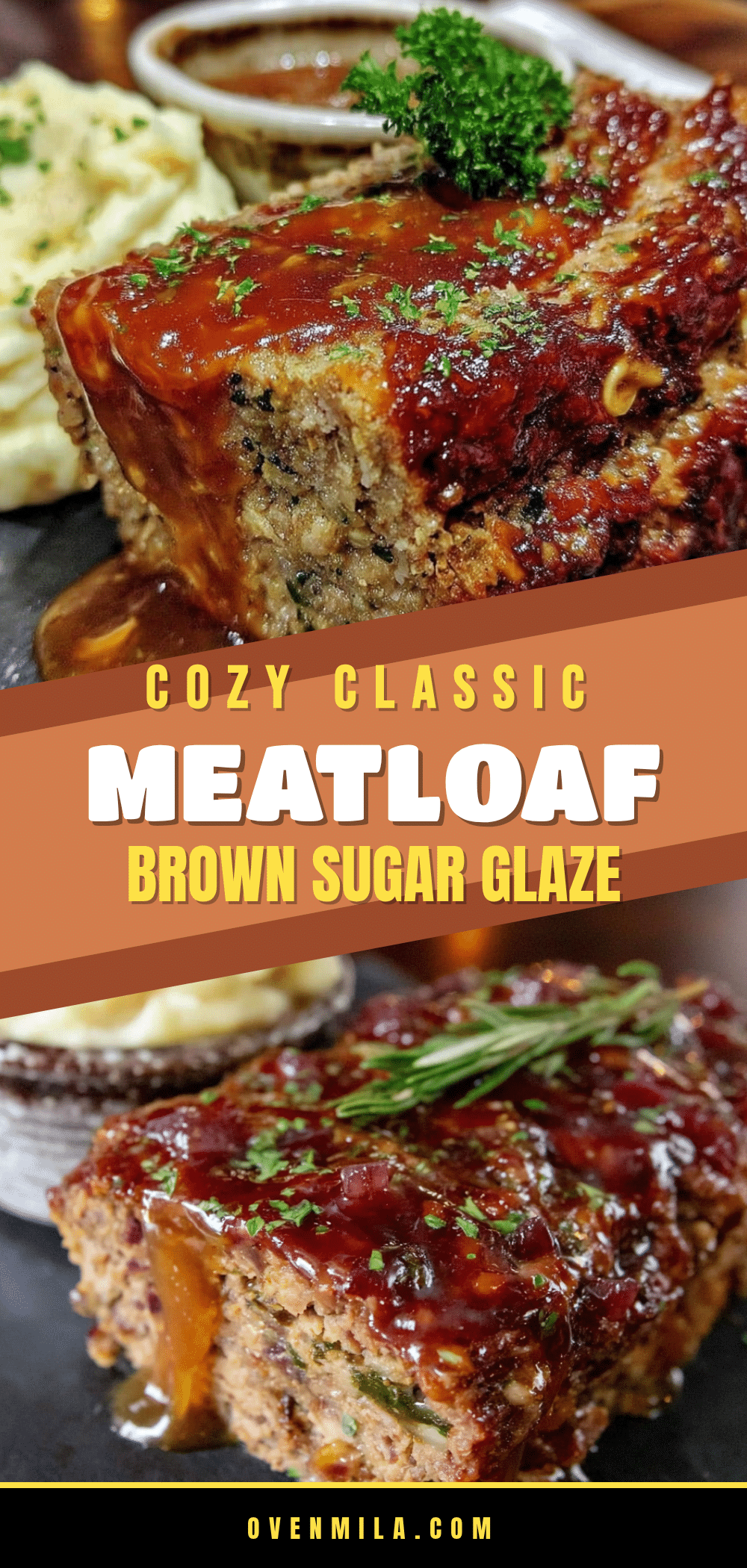
Cozy Classic Meatloaf with Brown Sugar Glaze
This cozy classic meatloaf with brown sugar glaze is the ultimate comfort food for chilly evenings. A sweet, sticky, caramelized brown sugar glaze perfectly balances the savory meat, making it a crowd-pleaser that even picky eaters will love.
- Prep Time: 15 minutes
- Cook Time: 55-60 minutes
- Total Time: 1 hour 15 minutes
- Yield: 8 servings 1x
- Category: Main Course
- Cuisine: American
Ingredients
- 1 ½ pounds (680g) ground beef (80/20 blend)
- ½ pound (225g) ground pork
- 1 cup (120g) breadcrumbs (plain or panko)
- 2 large eggs, room temperature
- ½ cup (120ml) whole milk
- 1 medium yellow onion, finely diced (about 1 cup)
- 3 cloves garlic, minced
- 2 tablespoons Worcestershire sauce
- ¼ cup (60ml) ketchup
- 1 teaspoon dried thyme
- 1 ½ teaspoons kosher salt
- ½ teaspoon black pepper, freshly ground
- ½ cup (120ml) ketchup (for glaze)
- ⅓ cup (70g) brown sugar, packed (light or dark)
- 1 tablespoon apple cider vinegar
- 1 teaspoon Worcestershire sauce (for glaze)
- ½ teaspoon garlic powder
Instructions
- Preheat your oven to 350°F (175°C). Position the rack in the center of the oven. Line a 9×5-inch loaf pan with parchment paper, leaving overhang on the long sides.
- In a small bowl, whisk together ½ cup ketchup, ⅓ cup packed brown sugar, 1 tablespoon apple cider vinegar, 1 teaspoon Worcestershire sauce, and ½ teaspoon garlic powder to make the glaze. Set aside.
- Finely dice the onion and mince the garlic.
- In a large mixing bowl, whisk together 2 large eggs, ½ cup milk, ¼ cup ketchup, and 2 tablespoons Worcestershire sauce until smooth.
- Add 1 cup breadcrumbs, 1 teaspoon dried thyme, 1½ teaspoons salt, and ½ teaspoon black pepper to the wet mixture. Stir to combine and let sit for 2-3 minutes until the breadcrumbs absorb the liquid.
- Add 1½ pounds ground beef and ½ pound ground pork to the bowl. Use your hands to gently mix until just combined. Do not overmix.
- Transfer the mixture to the prepared loaf pan. Press gently to remove air pockets and shape the top into a slight dome.
- Spoon about half of the glaze over the top of the meatloaf and spread evenly. Reserve the remaining glaze.
- Place the loaf pan on a baking sheet and bake for 40 minutes.
- After 40 minutes, remove the meatloaf from the oven and spread the remaining glaze over the top.
- Return to the oven and bake for another 15-20 minutes, until the internal temperature reaches 160°F (71°C).
- Let the meatloaf rest in the pan for 10-15 minutes before slicing.
- Use the parchment paper to lift the meatloaf out of the pan. Slice into 1-inch thick pieces and serve with any pooled glaze spooned over the top.
Notes
For a gluten-free version, use gluten-free breadcrumbs or crushed pork rinds. For a dairy-free version, substitute milk with unsweetened oat milk or chicken broth. The meatloaf can be assembled up to 24 hours in advance (without glaze) and refrigerated. Leftovers keep for 3-4 days in the refrigerator or up to 3 months in the freezer.
Nutrition
- Serving Size: 1 slice (1/8 of meat
- Calories: 380420
- Sugar: 1215
- Sodium: 600700
- Fat: 2226
- Saturated Fat: 810
- Carbohydrates: 1822
- Fiber: 12
- Protein: 2832
Keywords: meatloaf, brown sugar glaze, comfort food, easy dinner, classic meatloaf, ground beef, ground pork